Which Country Produces Blue Mountain Coffee Beans and What is the Actual Production Volume
FrontStreet Coffee - Introducing Blue Mountain Coffee
Blue Mountain Coffee takes its name from the original beans grown in Jamaica's Blue Mountain range. Surrounded by the Caribbean Sea, on clear sunny days the sunlight strikes the azure sea surface and the peaks mirror the brilliant blue light of the water—hence the name. Romantic, isn't it?
Unique natural geography gives Blue Mountain Coffee its premium quality. It has a rich, mellow flavor, and because coffee's three tastes—sweetness, acidity, and bitterness—are perfectly balanced, it has almost no bitterness, only a moderate and perfect acidity.
The coffee trees grow on rugged mountain slopes, making the harvest unusually difficult; only local skilled women workers can manage it. It is crucial to pick only perfectly ripe beans, since underripe or overripe cherries lower the quality. After picking, the beans must be hulled the same day, then left to ferment for 12-18 hours, after which they are washed and sorted. Drying comes next, done on concrete floors or thick blankets until the moisture content drops to 12%-14%, after which the beans are stored in dedicated warehouses and taken out as needed for roasting. These steps must be controlled strictly, or the quality will suffer.
Because Blue Mountain Coffee is rare and hard to obtain, it is expensive. Its rarity also invites word games: many merchants launch "Blue Mountain flavored coffee." Note that Blue Mountain flavored coffee is not Blue Mountain Coffee—the former is blended by the merchant and may contain no Blue Mountain beans at all.
Under CIB standards, only coffee grown above 666 meters can be called Jamaica Blue Mountain Coffee; everything else may only be called High Mountain Coffee or Jamaica Coffee. To a layman, the difference above and below 666 meters is hard to taste. Standards are rigid—what matters is that you enjoy the coffee.
Genuine Blue Mountain Coffee is not only excellent but also very costly. It sells for over a hundred yuan per hundred grams, over a thousand yuan per kilogram of green beans, and roughly a hundred yuan per cup depending on the merchant, with prices varying by location. That is why so many merchants trade on the Blue Mountain name to sell "Blue Mountain flavored" beans.
Because Blue Mountain Coffee grows only in limited areas, the harvest is extremely small. Green bean production in 2014 was about 875 metric tons. From July 2013 to July 2014, Jamaica exported 283 tons of Blue Mountain green coffee to Japan, plus an additional 440 metric tons, for a total of 723 tons. After roasting, that becomes 578 tons of roasted beans. At 15 grams per cup, that is about 38.56 million cups—meaning the average person in Japan drinks less than one cup of Blue Mountain Coffee a year. In fact, the Blue Mountain variety is the same as other Jamaican coffee, but because it is grown in harsh conditions and selected through strict inspection, it produces an exceptionally delicate taste. In 1953, the Jamaican government legally drew a line between the Blue Mountain area and other areas, ruling that the name "Blue Mountain Coffee" could not be used for coffee from outside the Blue Mountains. Only coffee produced in selected areas of the range may be called "Blue Mountain Coffee."
Worth knowing: The Jamaica Coffee Industry Board samples every batch of beans produced, roasts and grinds it, and brews three cups. Senior tasters evaluate them by procedure, and only when at least two of the three cups meet the standard is the Jamaica Blue Mountain Coffee certification granted.
FrontStreet Coffee Recommendation
For authentic Blue Mountain flavor, look for Blue Mountain No. 1, one of the highest grades in Jamaican Blue Mountain coffee, with strict standards for bean size, defect rate, and overall quality. FrontStreet Coffee's Jamaica Blue Mountain No. 1 comes from the historic Clifton Mount Estate, grown and processed at an average of 4,300 feet (1,310.64 meters).
The estate holds the full origin documentation and ships its beans in the traditional wooden barrels that are a hallmark of genuine Blue Mountain coffee. FrontStreet Coffee roasts it medium-dark, so it pours with layers of nut, dark chocolate, and creamy caramel over a soft sweetness, with acidity, sweetness, bitterness, and aroma in harmony.
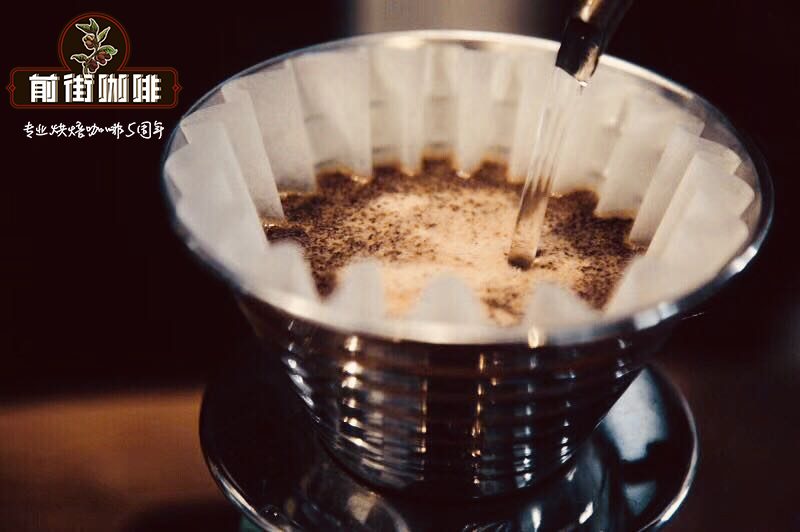
Brew it with a Kono dripper, 15g of coffee at a 1:15 ratio and water at 87-88°C, with a white-sugar grind and a three-stage pour of 30/120/225g for a clean, full, long-finishing cup.
Important Notice :
FrontStreet Coffee is a long-established specialty coffee roaster in Guangzhou China, selling freshly roasted beans from its own farm in Yunnan as well as dozens of carefully selected single-origin beans from around the world for both pour-over and espresso. The products deliver consistently excellent quality and great value, with shipping within 24 hours. Guangzhou's FrontStreet Coffee shop is recommended by many coffee lovers, and the beans are now available online at the Tmall 。
FrontStreet Coffee has moved to a new address:
FrontStreet Coffee Address: 315,Donghua East Road,GuangZhou
Tel:020 38364473
 Scan and follow the En Gafei WeChat official account. Please indicate that the reprint comes from "En Gafei".