Where are Blue Mountain coffee beans grown? Which Blue Mountain coffee brand is best? Brand is a guarantee of quality
FrontStreet Coffee - Introduction to Blue Mountain Coffee
Jamaican Blue Mountain coffee takes its name from the Blue Mountains that rise above the Caribbean Sea. It is prized for an exceptional balance of acidity, sweetness, and bitterness, and for a refined aroma that makes it a natural fit for single-origin brewing at a medium roast. Blue Mountain belongs among the world's finest coffees: Jamaica's climate, geology, and terrain provide close to ideal growing conditions. One thing worth knowing: the vast majority of "Blue Mountain" sold in China is merely grown in the vicinity of the Blue Mountains. Only coffee from the designated 6,000 hectares of land above 1,600 meters in elevation may truly be called Blue Mountain.
Jamaican coffee divides into two broad categories: coffee grown in the Blue Mountain region of eastern Jamaica, and coffee grown everywhere else on the island. The former accounts for roughly 25% of production and is authentic Blue Mountain Coffee; the remaining 75% can only carry names like Jamaican High Mountain or Jamaica Washed.
The official growing region is strictly bounded to elevations between 910–1,700 meters in Jamaica's Blue Mountain area. Coffee grown between 910 and 1,700 meters qualifies as Jamaica Blue Mountain; coffee from 460–910 meters is sold as Blue Mountain Style or Jamaica High Mountain; coffee below 460 meters is labeled Jamaica Prime. Above 1,700 meters lies a protected forest zone where no coffee is cultivated at all.
Jamaica is a tiny producer — its coffee represents just 0.02% of the world market, and 85% of that is exported to Japan. The Coffee Industry Board (CIB), established in 1948, has led the development of the island's coffee industry: raising farmer incomes, protecting quality, and marketing Jamaican coffee worldwide. Blue Mountain quality is graded into premium and regular tiers, with premium lots shipped in wooden barrels and the rest in burlap bags.
There is no doubt that the cool climate and mountain soils directly shape the cup, producing Blue Mountain's famously unmatched balance. Bright, delicate fruit acidity plays against an even, nutty sweetness. If the body strikes you as restrained, take a slow sip, close your eyes, and let the aftertaste settle — a nectar-like sweetness lingers on the tongue long after the swallow.
Knowledge Point: For every single export batch, the Jamaica Coffee Industry Board samples the beans, roasts and grinds them, and brews three cups. Senior tasters evaluate the cups according to fixed procedures, and only if two or more of the three cups meet the standard may the coffee be certified as Jamaica Blue Mountain.
FrontStreet Coffee Recommendation
Because so much coffee trades on the Blue Mountain name, buying from a seller who can prove provenance matters. The certification system is your best defense: authentic Jamaica Blue Mountain carries no QR traceability code, but legitimate importers hold complete export certification and origin documents — and the beans themselves carry unmistakable clues. Genuine Blue Mountain also travels in barrels: traditional packaging comes in 15, 45, and 70 kg wooden barrels stamped with batch details, and the barrels alone are a hallmark of the real thing.
FrontStreet Jamaica Blue Mountain No.1. Blue Mountain No.1 is among the very highest grades of Jamaican Blue Mountain, and FrontStreet's lot comes from historic Clifton Estate — a farm that has grown and produced coffee since roughly 1750, at an average elevation of 4,300 feet (1,310.64 meters). Adequate altitude, gentle afternoon cloud cover, generous sunshine, and mineral-rich soil lengthen the cherry's ripening and feed the cup's poise. Expect the classic profile: cream, caramel, chocolate, nuts, honey, and a whisper of fruit — no harsh fruit acidity, no heavy roast bitterness, just near-perfect harmony. The beans are shipped within 5 days of roasting and rested 4–7 days from roast date before brewing.
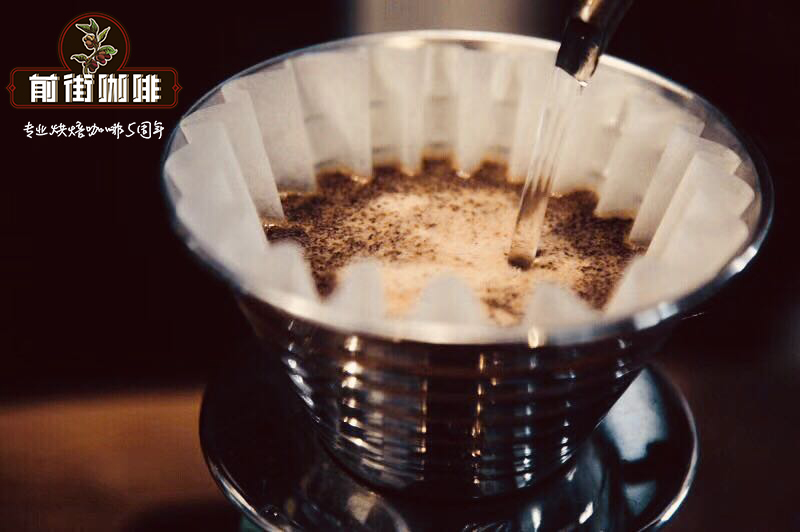
Brewing suggestion: use a Kono dripper to emphasize the coffee's rich body. Dose 15g for a single serving, grind slightly coarser than you would for a light roast — about the texture of white granulated sugar — and brew at 87–88°C (too hot pulls out scorched bitterness; too cool leaves the cup flat). A 1:15 ratio shows the coffee's full range: bloom with 30g of water for 30 seconds, pour to 120g with a slow, vertical, circular stream, then finish to 225g with a slightly faster pour to keep fines from clogging the bed and over-extracting the tail end.
Important Notice :
FrontStreet Coffee is a long-established specialty coffee roaster in Guangzhou China, selling freshly roasted beans from its own farm in Yunnan as well as dozens of carefully selected single-origin beans from around the world for both pour-over and espresso. The products deliver consistently excellent quality and great value, with shipping within 24 hours. Guangzhou's FrontStreet Coffee shop is recommended by many coffee lovers, and the beans are now available online at the Tmall 。
FrontStreet Coffee has moved to a new address:
FrontStreet Coffee Address: 315,Donghua East Road,GuangZhou
Tel:020 38364473
 Scan and follow the En Gafei WeChat official account. Please indicate that the reprint comes from "En Gafei".