Arabica Coffee Bean Varieties: The Relationship Between Mandheling and Arabica is Not as Complex as You Might Think
FrontStreet Coffee - Introduction to Mandheling Coffee Varieties
Asia's most celebrated coffee region is, without question, the islands of the Malay Archipelago — and within it, Sumatra in Indonesia enjoys particular acclaim. The Arabica varieties grown on mountain slopes at 750 to 1,500 meters are prized for their rich aroma, full body, and intense flavor, especially the distinctive chocolate and syrupy notes that linger long after each sip.
Mandheling coffee, produced on the island of Sumatra in Indonesia, is also known as "Sumatra coffee." It offers an exceptionally rich profile — aromatic, bitter, and full-bodied with only subtle acidity — making it one of the most sought-after coffees in the world.
Indonesia's coffee history reaches back to 1699, when the Dutch first planted Arabica seedlings on Java. In 1908, a devastating leaf-rust outbreak nearly wiped out Java's coffee trees, forcing growers to switch to the more disease-resistant Robusta. Today Indonesia is a major coffee producer, with Robusta accounting for 90% of total output — yet certain regions still cultivate outstanding Arabica, and Mandheling from Sumatra represents the finest of it.
These trees grow on highland slopes between 750 and 1,500 meters above sea level. Sumatra's mysterious, one-of-a-kind terroir gives Mandheling its intense aroma, heavy body, and bold flavor. Its bright acidity intertwines with the coffee's most concentrated aromatics, letting you easily pick out the vibrant elements within that gentle richness — a flavor profile that has captivated countless enthusiasts.
One reason Indonesian coffee can show such diverse flavor lies in the wet-hulled method (giling basah) used after harvest. This processing style borrows elements from both washed and natural methods. As a semi-washed process, it shapes quality dramatically: it strips out most of the acidity while building body, producing a coffee that is smooth, rounded, and full.
The method also creates wildly varied flavors — sometimes herbal or medicinal, sometimes woody, musty, or earthy. That doesn't mean all coffees processed this way taste the same; the quality spread is enormous, and the flavor divergence of semi-washed Indonesian coffees is famous throughout the industry. If an African or Central American coffee showed such characteristics, it would be judged defective no matter how precise the processing and rejected outright by buyers. Yet many drinkers find these rich, heavy, semi-washed Indonesian coffees exceptionally delicious, and demand within the industry remains strong.
Knowledge Point
In 1696, the governor of Jakarta (then named Batavia) received coffee seedlings as a gift from the Dutch governor of Malabar in India. Those new seedlings were completely destroyed in a flood in Jakarta.
In Summary
FrontStreet Coffee is a coffee research space dedicated to sharing coffee knowledge with fellow enthusiasts, hoping to help more people fall in love with coffee.
FrontStreet Coffee Recommendation
To taste wet-hulled Sumatran coffee at its best, FrontStreet Coffee recommends the PWN Golden Mandheling. PWN buys high-quality Mandheling green beans and grades them ruthlessly: only beans of 18 mesh and above are accepted, with fewer than 3 defective beans per 300-gram sample to meet the strict G1 standard, followed by three rounds of hand-sorting that remove every visible defect. The result is remarkably clean and sweet, with uniform, plump beans and, after a medium-dark roast, rich toasted aromas — a black coffee with a clean cup and full, heavy body that suits anyone who dislikes sour coffee. Its authenticity is easy to verify: FrontStreet displays the PWN certificates and PWN-marked jute bags alongside the product.
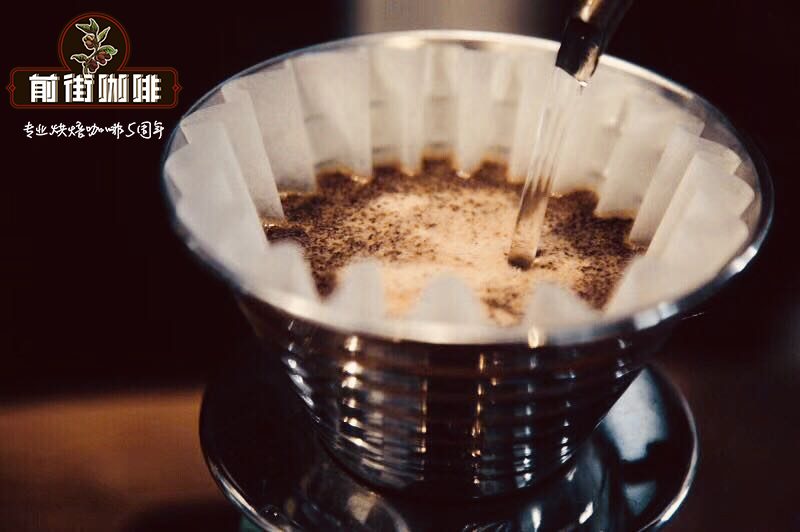
For pour-over, FrontStreet suggests 15g of coffee at a 1:15 ratio with 87-88°C water and a coarse-granulated-sugar grind, poured in three stages: 30ml to saturate the grounds and degas, 100ml to lift the bed and bring up the golden foam, then a gentle 95ml poured at the center to heighten sweetness — yielding a thick, syrupy body with caramel sweetness and chocolate and nut flavors. If you prefer a wilder, more traditional profile, the FrontStreet Lintong Mandheling offers strong, pungent clove and woody aromatics, low acidity, minty spice notes, and a long, dense sweetness.
Important Notice :
FrontStreet Coffee is a long-established specialty coffee roaster in Guangzhou China, selling freshly roasted beans from its own farm in Yunnan as well as dozens of carefully selected single-origin beans from around the world for both pour-over and espresso. The products deliver consistently excellent quality and great value, with shipping within 24 hours. Guangzhou's FrontStreet Coffee shop is recommended by many coffee lovers, and the beans are now available online at the Tmall 。
FrontStreet Coffee has moved to a new address:
FrontStreet Coffee Address: 315,Donghua East Road,GuangZhou
Tel:020 38364473
 Scan and follow the En Gafei WeChat official account. Please indicate that the reprint comes from "En Gafei".