What's the Difference in Coffee Bean Grind Sizes? Pour-Over Coffee's Characteristics Beyond Ritual: Great Taste
Ask any barista what most often ruins a good cup and you will hear the same answer: the grind. Get it right and a plain coffee tastes vivid and sweet. Get it wrong and even a superb bean turns weak or bitter. Here is how the sizes break down.
FrontStreet Coffee - Pour-Over Coffee Characteristics and Grind Size Introduction
Pour-Over Coffee
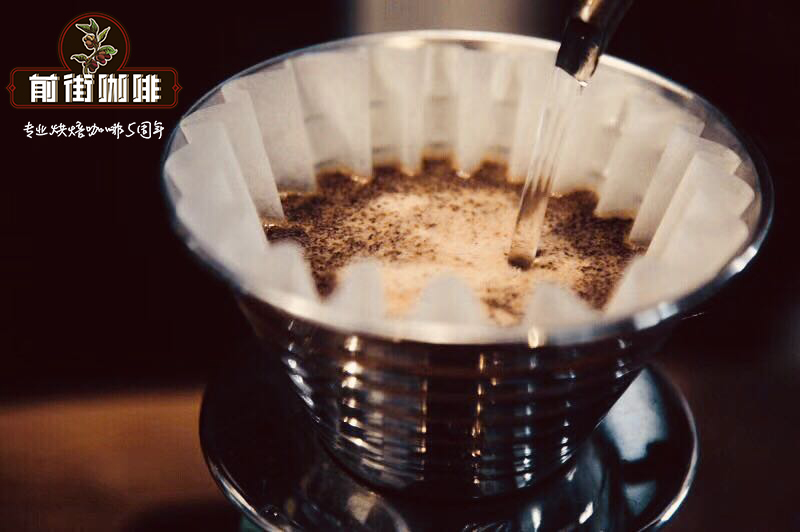
In an age crowded with coffee machines, pour-over stands out for its simple gear and its reliance on the human hand. It may well be the pinnacle of brewing: the simplest tools, backed by real experience, producing a highly distinctive cup through control of water temperature, dose, grind size, pouring speed, technique, and extraction time.
Characteristics of Pour-Over Coffee
Fast extraction and efficiency: compared with other brewing methods, pour-over keeps passing fresh hot water through the grounds, so extraction happens quickly and more compounds are pulled from the coffee surface. Because it moves fast, however, poor control can tip it into over-extraction.
Grinding exists for one reason, to brew better coffee. Finer grounds extract more completely, but more complete is not always better. We do not want every last thing in the bean in the cup, or the result would be undrinkable. Try chewing a coffee bean and you will see why. The full science of extraction compounds deserves its own article, and extraction also depends on time, water temperature, and roast level, not grind alone. Here we will focus on grind size.
Grind size can be roughly divided into five levels: coarse, medium, medium-fine, fine, and ultra-fine. It helps to compare their particle sizes to familiar reference points.
Of these, coarse grind is equivalent to raw sugar or brown sugar, medium grind to everyday white sugar, fine grind to table salt, and ultra-fine grind to rice flour or coarser flour particles.
Coarse Grind: Generally suited to the French press. Because a French press keeps the grounds in full contact with water and involves stirring, extraction is very thorough, so coarse grounds should be used whenever possible. If you can, sieve out the fine particles, since even a small amount of dust in this mode produces very prominent, noticeable bitterness.
Medium and Medium-Fine Grind: There is often no strict match with specific gear. In general, medium grind suits American drip brewers, while medium-fine grind suits pour-over and siphon pots.
Fine Grind: Suited to moka pots. Some people also prefer an ultra-fine grind for the moka pot. This is purely a matter of personal taste, with no right or wrong.
Ultra-Fine Grind: Suited to espresso machines. There is not much to discuss here, as adjustments of about 0.2 on the scale are typically made based on roast level or how long the beans have been stored. Fine-tune it to your own taste.
Knowledge Point: Pour-over uses single-origin, single-variety beans brewed by hand. Enthusiasts will even roast and grind their own.
In Summary
FrontStreet Coffee is a coffee research establishment dedicated to sharing what we know. We hold nothing back, simply to help more people fall in love with coffee. That has been our mission for the past six years.
FrontStreet Coffee Recommendation
Once your grind is dialed in, the next step is choosing the right bean. The Hario V60, with its 60-degree cone and single large hole, is built for a fast, controllable flow, and it flatters bright, aromatic coffees above all. FrontStreet Coffee's Yirgacheffe Gotiti Cooperative, washed and graded G1, and the natural-processed Huakui are textbook V60 beans, pouring out white florals, citrus, and tropical fruit that the dripper's quick extraction keeps vivid. If you want to push the floral, tea-like side even further, the Panama Red Label Gesha from Hacienda La Esmeralda is one of the most rewarding cups you can brew this way.
Not every great V60 cup has to be light-roasted, though. For those who prefer something rounder, work with the darker end of the menu, such as the PWN Indonesia Golden Mandheling with its herbal, dark chocolate, and earthy depth, or the Brazil Queen Estate with its balanced nut and cocoa sweetness. Pair a darker roast with a coarser grind and cooler water, grind a little finer for a light roast, and the V60 will reward you either way.
Important Notice :
FrontStreet Coffee is a long-established specialty coffee roaster in Guangzhou China, selling freshly roasted beans from its own farm in Yunnan as well as dozens of carefully selected single-origin beans from around the world for both pour-over and espresso. The products deliver consistently excellent quality and great value, with shipping within 24 hours. Guangzhou's FrontStreet Coffee shop is recommended by many coffee lovers, and the beans are now available online at the Tmall 。
FrontStreet Coffee has moved to a new address:
FrontStreet Coffee Address: 315,Donghua East Road,GuangZhou
Tel:020 38364473
 Scan and follow the En Gafei WeChat official account. Please indicate that the reprint comes from "En Gafei".