The Difference Between Coffee Bean Grind Sizes: Pour-Over Coffee's Appeal Beyond Its Ritualistic Charm and Great Taste
FrontStreet Coffee: An Introduction to Pour-over Coffee Characteristics and Grind Size
Pour-over Coffee
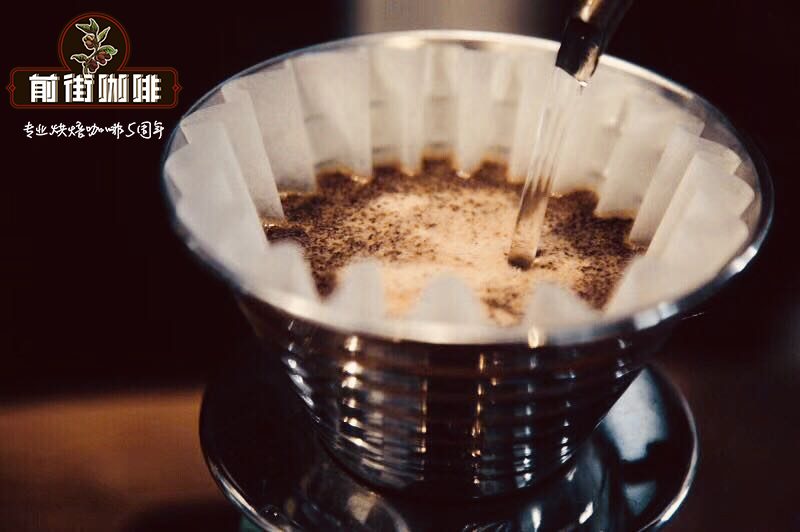
In an era when coffee machines flourish everywhere, pour-over coffee, with its simple equipment and emphasis on manual technique, has become a refreshing return to authenticity. Pour-over may represent the pinnacle of coffee brewing: the simplest tools, backed by rich experience, yielding a highly personalized cup through control of water temperature, coffee dose and grind size, pouring speed, technique, and extraction time.
Characteristics of Pour-over Coffee
Fast and efficient extraction: compared with other brewing methods, pour-over coffee continuously passes fresh hot water through the coffee grounds during extraction, which results in faster extraction and allows more substances to be drawn from the coffee surface. Because of that speed, though, improper control can lead to over-extraction.
In general, grinding coffee serves better extraction. The finer the grounds, the more complete the extraction, but more complete isn't always better. We don't want every last content of the coffee extracted, because that would make it undrinkable; you can try chewing a raw coffee bean to see. We'll discuss the details of coffee extractables in a separate article later. What's more, extraction isn't determined by grind size alone; time, water temperature, and roast degree also play a role. Here we focus specifically on grind size.
Grind size can be roughly divided into five levels: coarse, medium, medium-fine, fine, and ultra-fine. We can first look at the differences in coarseness and the references that go with them.
Coarse grind is equivalent to raw sugar or brown sugar, medium grind to common white sugar, fine grind to table salt, and ultra-fine grind to rice flour or coarse wheat flour.
Coarse Grind
Generally suitable for French press. Because the French press allows full contact with the grounds and stirring, which gives very complete extraction, it's best to use a coarse grind. If possible, prepare a sieve to remove fine particles, since even minimal fines in a French press will result in prominent bitterness.
Medium and Medium-fine Grind
Often there is no strict correspondence to specific equipment. Generally, medium grind suits American drip pots, and medium-fine grind suits pour-over and siphon pots.
Fine Grind
Suitable for moka pots. Some people also like to use an ultra-fine grind for moka pots. This is purely a matter of personal taste, with no distinction of superiority or inferiority.
Ultra-fine Grind
Suitable for espresso machines. There isn't much debate about these, since they generally require about 0.2 scale adjustments depending on the roast degree or the storage time of the beans. This can be adjusted according to personal taste.
Knowledge Point
Pour-over coffee is typically made by manually brewing single-origin, single-region coffee beans. Connoisseurs even roast and grind their own beans.
FrontStreet Coffee Recommendation
The V60's fast, even extraction is what allows delicate floral and fruit notes to come through, so FrontStreet Coffee recommends matching it with a light or medium-light roast. FrontStreet's Washed Gedingding from Yirgacheffe is the ideal starting point, showing citrus, berry, and floral notes with a green-tea finish, while FrontStreet's Huakui, a natural Sidamo, brings intense tropical fruit aromas of strawberry, passion fruit, and jackfruit with almost no bitterness. For a Gesha-style cup, FrontStreet's Strawberry Candy blend and FrontStreet's Mozart, with its raisin and honey-macerated character, both perform beautifully through a V60.
Important Notice :
FrontStreet Coffee is a long-established specialty coffee roaster in Guangzhou China, selling freshly roasted beans from its own farm in Yunnan as well as dozens of carefully selected single-origin beans from around the world for both pour-over and espresso. The products deliver consistently excellent quality and great value, with shipping within 24 hours. Guangzhou's FrontStreet Coffee shop is recommended by many coffee lovers, and the beans are now available online at the Tmall 。
FrontStreet Coffee has moved to a new address:
FrontStreet Coffee Address: 315,Donghua East Road,GuangZhou
Tel:020 38364473
 Scan and follow the En Gafei WeChat official account. Please indicate that the reprint comes from "En Gafei".