Pour-Over Coffee Grinding Standards: Complete Step-by-Step Guide
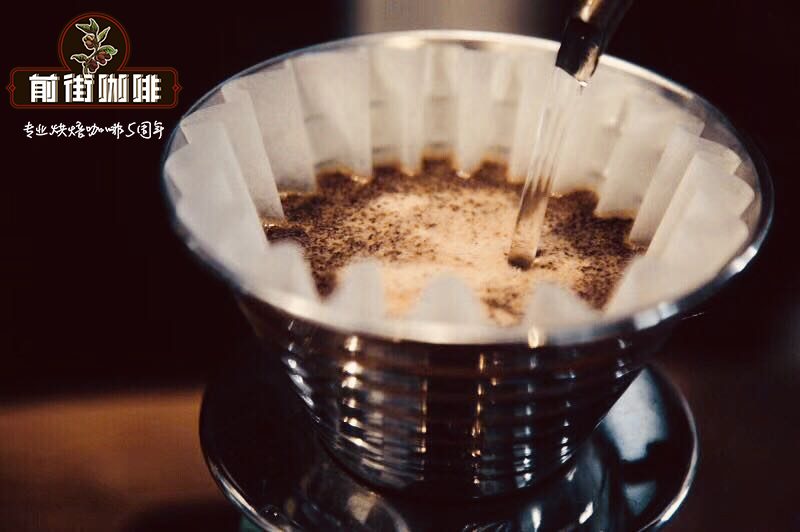
FrontStreet Coffee: Pour-Over Coffee Steps and Grind Guide
Pour-over coffee typically uses single-origin beans, since hand brewing brings out the personality and character of the coffee itself. Beans may be light, medium, or dark roasted. Pour-over is mostly brewed with a drip cone: grind the beans, place the grounds in filter paper, slowly pour hot water over the bed, and let the extracted coffee drip through the paper and cone into the server below.
Required equipment: coffee beans, grinder, temperature-controlled kettle, electronic scale, coffee server, drip cone, filter paper, timer.
Pour-Over Steps
Step 1: Bean Selection
Step 2: Grinding
Choose a grinder that suits you, and do not grind too fine—the grounds should be roughly the size of granulated sugar.
Step 3: Coffee-to-Water Ratio
The typical ratio is 1:12 to 1:17. The amount of coffee depends on how many people you are serving, but most standard drip cones handle roughly 20-30 grams.
Step 4: Water Temperature Control
Water temperature is crucial in brewing and directly affects the taste of the final cup. Use a temperature-controlled kettle to hold the ideal temperature at all times. The right range depends on the coffee's roast level:
Step 5: Blooming
Pour-over brewing follows "three pours and three pauses"—the water is added in three stages, and the whole brew should finish within 1 minute 40 seconds to 2 minutes 30 seconds. Use a timer.
Step 6: Second Pour
Pour with a fine stream, keeping the flow rate consistent. Work counterclockwise (depending on your cone), starting from the center and spiraling evenly outward.
Step 7: Third Pour
Pour faster with a coarser stream. Whether fine or coarse, the pour must be steady and even—steady, steady, steady! Watch the scale under the server: for a 20-gram dose, keep the total water strictly between 240-340ml and never above 340ml.
Knowledge Point
Pour-over coffee is always brewed by hand with single-variety, single-origin beans. True connoisseurs even roast and grind their own.
FrontStreet Coffee Recommendation
If you are choosing a first dripper, the Hario V60 is the safe bet. Hario, founded in Tokyo in 1921, began as a maker of heatproof laboratory glassware, and in 2004 it redesigned the V60 into the form we know today—named for its 60-degree V-shaped cone—and released it the following year. The cone and single large outlet force water to flow through the center of the bed, extending contact time for fuller extraction, while flow speed rests entirely in the brewer's hands. That fast, controllable extraction is exactly what flatters floral, fruit-accented coffees. FrontStreet favors the resin version: it holds heat well and, being industrially molded, has the tightest dimensional tolerances.
For beans, pick light-roast, floral-fruity lots to match the V60's strengths: the FrontStreet Yirgacheffe Worka Cooperative (citrus, berries, white florals, green-tea finish), the FrontStreet Ethiopia Huakui (strawberry, passion fruit, jackfruit—famously "the coffee that doesn't taste like coffee"), or the FrontStreet Kenya Little Tomato from the Thika region, grown at 1550-1750 meters on SL28 and SL34 and given a 72-hour double washed fermentation for its bright cherry-tomato and dark-plum juiciness. Brew with a medium grind around fine granulated sugar, and let the grind size—your single most powerful variable—shape each cup.
Important Notice :
FrontStreet Coffee is a long-established specialty coffee roaster in Guangzhou China, selling freshly roasted beans from its own farm in Yunnan as well as dozens of carefully selected single-origin beans from around the world for both pour-over and espresso. The products deliver consistently excellent quality and great value, with shipping within 24 hours. Guangzhou's FrontStreet Coffee shop is recommended by many coffee lovers, and the beans are now available online at the Tmall 。
FrontStreet Coffee has moved to a new address:
FrontStreet Coffee Address: 315,Donghua East Road,GuangZhou
Tel:020 38364473
 Scan and follow the En Gafei WeChat official account. Please indicate that the reprint comes from "En Gafei".