Single Origin Coffee Bean Grind Size Guide: Master Pour-Over Coffee Techniques
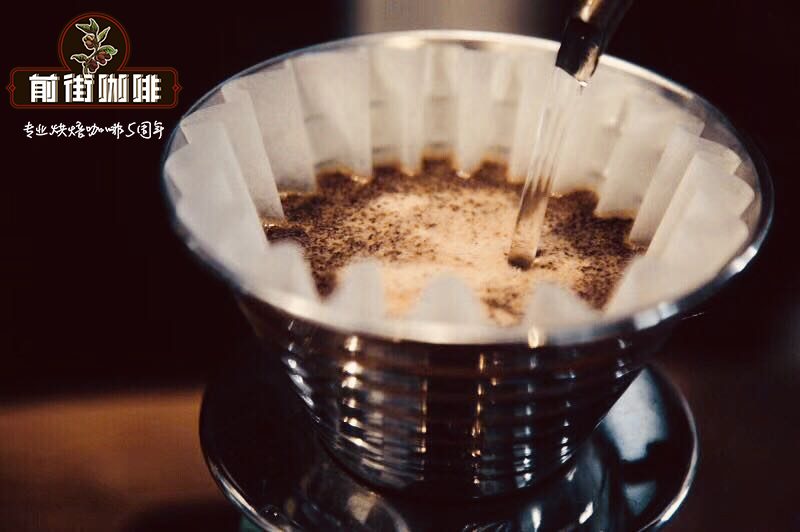
FrontStreet Coffee - Pour-Over Coffee Tutorial and Grind Size Introduction
Grind size determines how quickly the coffee's substances dissolve into water. With the same beans, finely ground coffee presents a larger surface area to the water than coarsely ground coffee. For example: fine sugar dissolves faster than granulated sugar, and fine coffee grounds dissolve faster than coarse ones.
Particle size also affects how quickly water passes through the bed. Water flows more quickly through large stones than through fine sand.
After coffee is ground, the depth of the grounds in the brewer increases because gaps open up between the particles.
If your grinder is not of high quality, it may produce particles of uneven sizes. When brewing, differently sized particles dissolve at different rates, easily leading to uneven extraction. It is like cooking meat: if some pieces are large and others small, the small ones are done while the large ones are still raw. To have all the meat finish at the same time, you must cut it into pieces of the same size.
The standard grind for pour-over coffee is medium-fine, using granulated sugar as a reference. Of course, some brewers prefer a slightly finer grind.
Equipment Needed
1. Coffee grounds (grind size: medium) 20g (corresponding to 300ml water)
2. Hario V60 pour-over dripper
3. Measuring cup
4. Mug
5. Filter paper
Brewing Method
1. After boiling the water, first warm the equipment. Pour water from the measuring cup into the mug to preheat it.
2. Set up the dripper and filter paper, add the coffee grounds, and level the surface.
3. Slowly pour hot water over the entire surface of the bed until drips begin to fall from the bottom, then let it rest for 20-30 seconds.
4. After the bloom, begin pouring. Slowly pour hot water in a spiral pattern from the center outward in circular motions.
5. When extraction reaches 200ml, separate the dripper from the measuring cup (even if water remains).
6. Empty the preheating water from the mug and pour in the freshly brewed coffee (if the handle is too hot, use heat-resistant tools to avoid burns).
Knowledge Point
Pour-over coffee is always brewed by hand from single-origin, single-variety beans. Enthusiasts even roast and grind their own.
In short: FrontStreet Coffee is a research hall dedicated to coffee, happy to share knowledge with everyone. We share without reservation only to help more friends fall in love with coffee - our mission for the past 6 years!
FrontStreet Coffee Recommendation
If you are choosing your first dripper, the Hario V60 is the classic answer - the company has made heatproof glassware in Tokyo since 1921, and the V60's 60-degree cone, single large hole, and spiral ribs let flow speed rest entirely in the brewer's hands. FrontStreet Coffee favors the resin version: it insulates heat well and, in mass production, holds the tightest tolerances, though ceramic, glass, copper, and stainless versions share the same geometry.
The V60 rewards aromatic, floral coffees: FrontStreet Coffee suggests the Yirgacheffe Workado (Guodingding) Cooperative with its citrus and white florals, the Ethiopia Hambela (Huakui) with tropical fruit, the Strawberry Candy Gesha-style blend, or the raisin-sweet Mozart. For a mellow, low-acid cup, the Jamaica Blue Mountain No.1 and PWN Golden Mandheling remain the timeless classics the V60's predecessors served so well.
Important Notice :
FrontStreet Coffee is a long-established specialty coffee roaster in Guangzhou China, selling freshly roasted beans from its own farm in Yunnan as well as dozens of carefully selected single-origin beans from around the world for both pour-over and espresso. The products deliver consistently excellent quality and great value, with shipping within 24 hours. Guangzhou's FrontStreet Coffee shop is recommended by many coffee lovers, and the beans are now available online at the Tmall 。
FrontStreet Coffee has moved to a new address:
FrontStreet Coffee Address: 315,Donghua East Road,GuangZhou
Tel:020 38364473
 Scan and follow the En Gafei WeChat official account. Please indicate that the reprint comes from "En Gafei".