Basic Knowledge of Pour-Over Coffee: A Beginner's Guide to 5 Coffee Bean Grind Levels
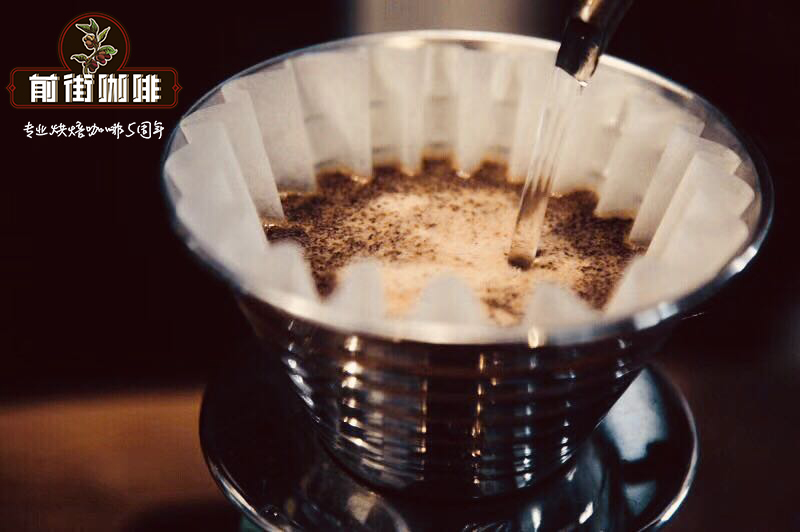
Walk into almost any cafe and you will find that coffee is built on espresso. The concentration pulled by machine under high temperature and high pressure is the base for lattes, mochas and cappuccinos alike.
FrontStreet Coffee: Pour-Over Basics and Grind Size
Roughly 90% of the cafes on the market serve espresso-based drinks. These concentrated coffees are extracted by machine using high temperature and high pressure, and the fancy drinks such as lattes, mochas and cappuccinos are all built on the same espresso concentrate.
As single-origin coffees named by origin and processing method, Yirgacheffe washed being the obvious example, have appeared more widely, they have overturned a lot of assumptions. Coffee does not have to be bitter. It can be tasted the way wine is tasted, letting you experience the fragrance and fruit of different beans. And the simplest method of all, a pour-over with no milk and no sugar, is the best way to bring out the true flavor of a single origin.
Sit with a cup and taste carefully, and the natural character of beans from Africa, South America and the Pacific islands starts to separate: the fruit of Kenya AA, the rich body and sweet aftertaste of Mandheling, the citrus acidity and floral aroma of Yirgacheffe, the balance and chocolate of Costa Rica, and on it goes.
Pour-over coffee, sometimes called drip coffee, may be the healthiest way to brew. The filter paper holds back almost all of the oils and cafestol, along with some aromatic volatiles, leaving a pure, elegant aroma and a sense of quiet.
The process of making a single-origin pour-over looks simple, but it depends on many factors at once: grind size, water-to-coffee ratio, water hardness, steeping time, water temperature, and the choice and pairing of equipment. Change any one of them and the final cup changes with it. It is exactly this variability that lets a single origin express the personality of the bean and the freshness of the roast.
Different grinders produce different results. Even two machines of the same brand and model shape particles differently depending on the burr, and the shape of the particle changes how the coffee extracts. Some grounds come out flaky, some chunky, some more rounded.
Grinders also differ in how evenly they distribute particle size, and that distribution matters just as much. Some produce a higher proportion of fines, some a lower one.
Suggestion: when you talk about grind with someone else, it is better not to quote a number setting on its own but to describe the texture you feel, whether it is like flour, like salt, like coarse salt, fine sugar, sugar or coarse sugar.
The Five Common Grind Levels
Most grind charts come down to five bands, and the texture is a more reliable guide than any single number:
- Extra coarse: roughly the size of peppercorns, used for a French press and long steeps.
- Coarse: like sea salt, suited to a Chemex or a large batch brew.
- Medium: like table salt, the everyday setting for most flat-bottom drippers.
- Medium-fine: like fine sugar, the classic range for a V60 or another cone dripper.
- Fine: finer than sugar, reserved for espresso and a moka pot.
Knowledge point: pour-over coffee is always made by hand from single-variety, single-origin beans. Serious drinkers even roast and grind their own.
FrontStreet Coffee's Philosophy
In short: FrontStreet Coffee is a coffee research establishment that enjoys sharing what it learns. We hold nothing back because we want more friends to fall in love with coffee, and we keep exploring the beans and methods worth passing on.
FrontStreet Coffee Recommendation
A Yirgacheffe is the friendliest single origin for learning grind size, because it rewards small changes clearly. FrontStreet Washed Yirgacheffe is the classic place to begin: white jasmine, bright citrus and lemon acidity with a tea-like body, at a price that makes it the first bag many drinkers buy. Brew it on a V60 at 90-91°C with 15g of coffee at a 1:15 ratio, ground to an EK43s setting of 10, or to the texture of fine sugar, and about 80% passing a No. 20 sieve. Start with a 30g bloom for 30 seconds, pour to 95g, which reads about 125g on the scale, in roughly 1 minute, then add the remaining 100g once the bed has dropped to about two-thirds, finishing near 225g at about 1 minute 35 seconds. The drawdown completes in 2 to 2 minutes 10 seconds.
FrontStreet Yirgacheffe Guodingding shows what a careful wash can add on top of that, with white florals, citrus, orange and green tea and a noticeably finer, cleaner structure. FrontStreet Natural Red Cherry offers the other side of the town: whole ripe cherries dried on raised beds for three to five weeks give citrus acidity, a juicy berry middle, honeyed sweetness and a creamy smoothness. Grind all three a step coarser if the drawdown runs past 2 minutes 30 seconds, and a step finer if it finishes well under 2 minutes, because the number on the grinder means less than the taste in the cup.
Important Notice :
FrontStreet Coffee is a long-established specialty coffee roaster in Guangzhou China, selling freshly roasted beans from its own farm in Yunnan as well as dozens of carefully selected single-origin beans from around the world for both pour-over and espresso. The products deliver consistently excellent quality and great value, with shipping within 24 hours. Guangzhou's FrontStreet Coffee shop is recommended by many coffee lovers, and the beans are now available online at the Tmall 。
FrontStreet Coffee has moved to a new address:
FrontStreet Coffee Address: 315,Donghua East Road,GuangZhou
Tel:020 38364473
 Scan and follow the En Gafei WeChat official account. Please indicate that the reprint comes from "En Gafei".