Coffee Grind Size for Pour-Over: How Fine Should You Grind Your Coffee to Avoid Making "Coffee Medicine"
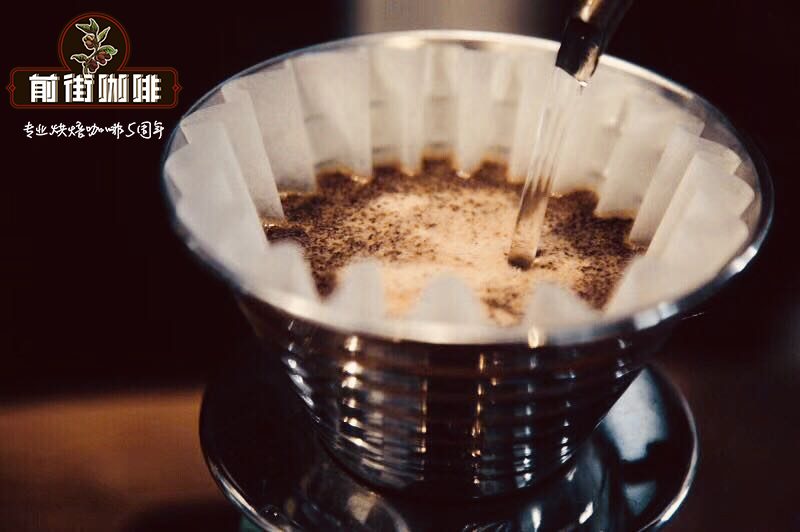
FrontStreet Coffee - Grind Size for Pour-Over: How Fine Should You Grind?
Grind size is one of the key variables in pour-over coffee. So how fine should you grind - and how do you avoid brewing a cup that tastes like coffee medicine?
Adjusting the coarseness of the grind changes the total surface area of the coffee particles. The finer the grind, the greater the surface area, the more room there is for water to make contact, and the more readily flavors are extracted.
In the same way, a finer grind raises both the coffee's concentration and its extraction yield; a coarser grind lowers both. We can use a coffee refractometer to measure the concentration of the brew and then calculate the extraction yield with the formula: (weight of liquid coffee x concentration) / weight of coffee grounds = extraction yield. The golden cup extraction chart developed by the SCA (Specialty Coffee Association) sets concentration at 1.15%-1.35% and extraction yield at 18%-22%. That standard usually gives us a useful data framework for adjusting the brew, but it is not absolute: even at the same extraction yield and concentration, the taste can vary dramatically. Everything ultimately depends on your own sensory judgment - the data can only assist you.
What if you don't have a refractometer when brewing pour-over at home? Then you have to judge concentration and extraction by taste alone. High concentration tastes strong and punchy, with amplified flavors; low concentration tastes bland, gentle and diluted. A high extraction yield has a forceful bitterness that masks other flavors, while a low extraction yield tastes sharp and stimulating.
When the concentration is high but the extraction low, or the concentration low but the extraction high, changing the grind size alone won't rescue the cup. Other parameters have to be adjusted too, which we can turn to another time.
Grinding inevitably produces very fine particles, known as fines. Their presence can add complexity to the coffee and is one source of flavor. Sifting those fines out makes the coffee very clean, which can compensate for a grinder that produces a lot of them.
When fines are removed, the pour-over usually flows faster, so keep an eye on it. When fines are retained, they settle during the later stages of extraction and slow the flow down. This can be improved by changing how you agitate the bed - through brewing technique or external stirring - and sometimes the effect can even be used to raise the extraction yield and concentration to where you want them.
Did You Know?
Pour-over coffee is typically made by manually brewing single-variety, single-origin beans. Enthusiasts even roast and grind their own beans at home.
In Summary
FrontStreet Coffee is a research-focused coffee establishment dedicated to sharing coffee knowledge with everyone. We share unreservedly to help more friends fall in love with coffee. We also hold three discounted coffee events each month, because FrontStreet Coffee wants to provide the best coffee at the lowest prices for more friends. That has been our principle for the past six years.
FrontStreet Coffee Recommendation
Once your grind is dialed in, the bean matters just as much. The V60 rewards coffees with clear floral and fruit aromatics, and FrontStreet Coffee's Washed Gedingding Cooperative beans are a textbook choice: jasmine florals, bright citrus acidity and a clean green-tea finish, roasted medium-light so nothing gets muddied.
If you like your pour-over fruitier, try FrontStreet's Huakui. This naturally processed Ethiopian coffee from Guji Hambela has long been one of the most popular beans on the shelf, and for good reason - it fills the cup with tropical fruit, and its balanced sweetness and bright acidity make it very forgiving as you learn to work the V60's flow.
Important Notice :
FrontStreet Coffee is a long-established specialty coffee roaster in Guangzhou China, selling freshly roasted beans from its own farm in Yunnan as well as dozens of carefully selected single-origin beans from around the world for both pour-over and espresso. The products deliver consistently excellent quality and great value, with shipping within 24 hours. Guangzhou's FrontStreet Coffee shop is recommended by many coffee lovers, and the beans are now available online at the Tmall 。
FrontStreet Coffee has moved to a new address:
FrontStreet Coffee Address: 315,Donghua East Road,GuangZhou
Tel:020 38364473
 Scan and follow the En Gafei WeChat official account. Please indicate that the reprint comes from "En Gafei".