How to Choose Pour-Over Coffee Grind Size: All Pour-Over Coffee Beans Are Ultimately Arabica
FrontStreet Coffee - Hand Pour Coffee Grinding and Single Origin Bean Varieties Introduction
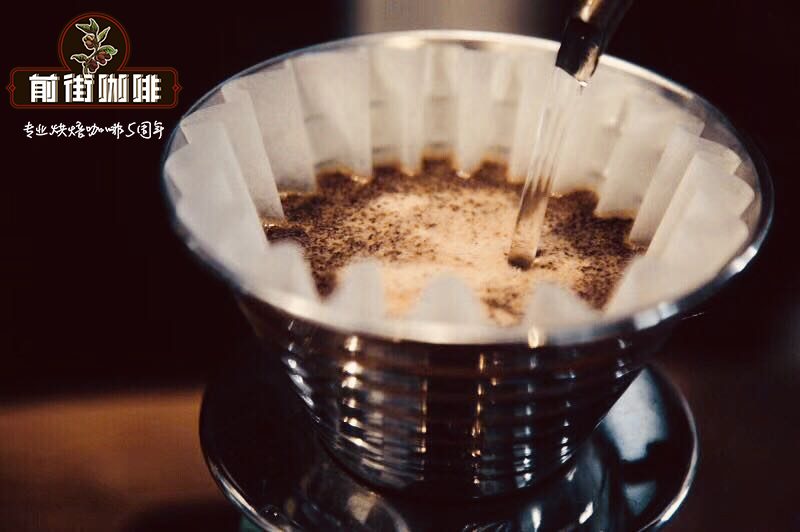
Grind size is one of the factors that affects hand pour coffee brewing.
Grind size refers to the size of the coffee particles. Put simply, particle size affects the contact time between coffee and water.
Grind coarseness determines the amount of contact surface and the extraction speed. A fine grind lets hot water extract more substances in the same time, but if it is ground too fine it may extract too much, leading to over-extraction. A coarse grind lets hot water extract fewer substances in the same time, but if it is ground too coarse it may extract too little, leading to under-extraction.
Grinders are mainly divided into blade grinders and burr grinders. For hand pour coffee, burr grinders are preferred. Blade grinders tend to cut unevenly and produce very fine powder, while burr grinders deliver a stable, uniform grind. For that reason, burr grinders are superior to blade grinders.
The finer the grind, the stronger the bitterness; the coarser the grind, the lighter the bitterness. If particle sizes differ, each particle extracts to a different degree, which affects the coffee's taste. Coffee grind size can therefore be matched to sugar particle size, which is a widely applicable reference.
Coffee grind coarseness can control bitterness, but different brewing methods require different grind sizes. Generally, an extremely coarse grind suits cold brew extraction; a coarse grind suits French press; a medium-coarse grind suits drip filtration; a medium grind suits hand pour or cone-shaped filter bowl drip filtration; a fine grind suits espresso; and an extremely fine grind suits Turkish coffee.
Beginners are advised to start with a medium grind for hand pour coffee. A medium powder does not easily produce very fine particles, nor does it easily cause water to pool on the filter cup because the flow is hard to control at the start, which would soak the coffee bed and cause over-extraction. Because individual tastes vary, you can also experiment between medium and fine grinds to find the coarseness that suits you; the grind size for hand pour coffee is medium-fine, using fine sugar particle size as the standard when grinding.
There are many varieties of hand pour coffee, and you should choose according to your flavor preferences. Put simply, choosing Arabica coffee beans is basically never wrong. Varieties such as Blue Mountain, Kona, Geisha, and Yirgacheffe are all Arabica.
Knowledge point: hand pour coffee uses single-variety, single-origin coffee beans for manual brewing. Connoisseurs even roast and grind their own beans.
FrontStreet Coffee's Philosophy
In short, FrontStreet Coffee is a coffee research hall, happy to share coffee knowledge with everyone. We share without reservation just to help more friends fall in love with coffee. Every month there are 3 low-discount coffee activities, because FrontStreet Coffee wants more friends to enjoy the best coffee at the lowest price. This has been FrontStreet Coffee's mission for 6 years.
FrontStreet Coffee Recommendation
If the extremely coarse cold brew grind mentioned above is what you plan to use, FrontStreet has a short list of beans built for it. FrontStreet Strawberry Candy combines a classic Panama Geisha variety with a Costa Rican honey process, one side offering delicate rose and orange notes and the other a grape, raisin, and strawberry-marshmallow sweetness. Cold brewed, it is bright and lively, and if left to settle it even takes on a fruit-wine character.
For a floral ice coffee, FrontStreet sun-dried Huakui is a strong pick. From Ethiopia, it is sun dried so the beans absorb sweetness from the fruit and skin, and in cold brew it shows magnolia, cream strawberry, dried mango, guava, and black tea. FrontStreet Kenya Cherry Tomato is the choice for maximum juice: its cherry tomato, snow pear, black plum, and smoked plum acidity shine at low temperature, with low bitterness and a long finish, thanks to the SL28 and SL34 varieties and the K72 double-washed process.
Because cold brew uses more coffee per batch, FrontStreet also suggests blending for value. Many drinkers love the passion fruit, grape, and apricot sweetness of FrontStreet Colombia Xizhua, but at cost it can be steeped with FrontStreet Costa Rica Tarrazu at 1:2 - you still get the Xizhua fruit and floral notes plus Tarrazu's clean citrus acidity, at a friendlier price. Washed coffees such as FrontStreet Gedingding Cooperative also cold brew beautifully, showing sweet berry and honey layers.
Important Notice :
FrontStreet Coffee is a long-established specialty coffee roaster in Guangzhou China, selling freshly roasted beans from its own farm in Yunnan as well as dozens of carefully selected single-origin beans from around the world for both pour-over and espresso. The products deliver consistently excellent quality and great value, with shipping within 24 hours. Guangzhou's FrontStreet Coffee shop is recommended by many coffee lovers, and the beans are now available online at the Tmall 。
FrontStreet Coffee has moved to a new address:
FrontStreet Coffee Address: 315,Donghua East Road,GuangZhou
Tel:020 38364473
 Scan and follow the En Gafei WeChat official account. Please indicate that the reprint comes from "En Gafei".