What Grind Size for Pour-Over Coffee: Selecting the Right Coffee Varieties
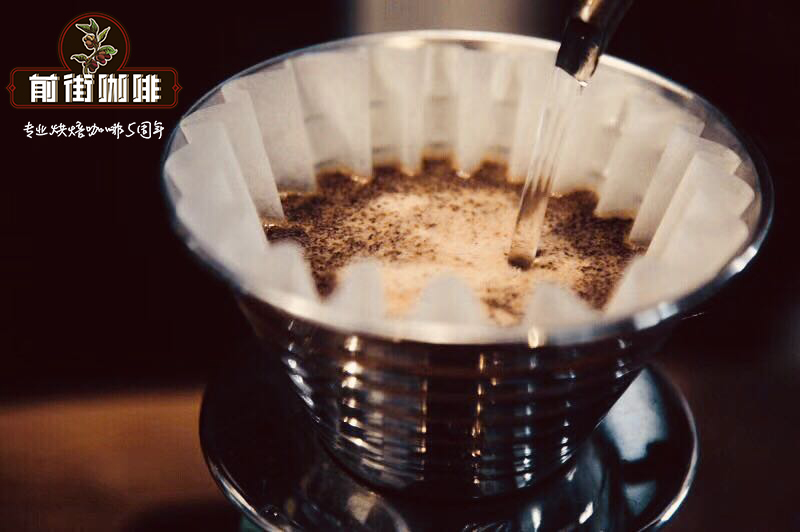
FrontStreet Coffee on Grind Size and Choosing Beans for Hand-Poured Coffee
As long as coffee particles stay larger than the pore size of the filter paper, they cannot clog the filter. Screen out enough of those extreme oversized particles and, in theory, you should get a clean, sweet cup with a high extraction rate and no bitter or muddled flavors.
When we ran repeated tests on this idea at FrontStreet Coffee, the results fell well short of ideal. Here is how the testing went, and what it taught us about picking the right grind size.
The first round of tests pushed the grind finer. Our bar uses two grinders — a small Fuji and a large Fuji — and because these were hand-poured tests without stable instrumentation, we won't list raw numbers; the examples speak for themselves:
Across those rough tests, we found that no matter how fine we ground the coffee, the flavor stayed remarkably consistent — only the concentration changed. And because both extraction yield and dissolved concentration climbed, the sweetness was impressively rich.
A fair question: "If you grind finer, the flow slows down — how did the brew time stay constant?" A stable, controlled pour was what kept the whole test series trustworthy.
But here comes the dreaded "however." Alongside the lush flavor and heavy sweetness, the cups were alarmingly dirty. Drinking them left the mouth and throat uncomfortably dry — beyond mere astringency. After several cups at each grind setting, we concluded the culprit was the growing population of ultra-fine particles.
A grinder does not work the way most people picture it — not like a knife slicing beans apart, but more like a mill that crushes them. In the process, particles collide and shatter, producing ultra-fines: fragments smaller than 100μm, essentially broken cell debris.
Time for a breather and a summary:
If the filter paper is doing its job, then under ideal conditions, moving the grind finer or coarser should not change the coffee's flavor profile at all. Grind size should not be treated as a flavor variable — it only scales the total amount of the same compounds (that is, concentration), not the range of compounds. With the same water, brew time is what actually governs which substances end up in the cup. And the longer extraction time that follows a finer grind is really a side effect of the filter paper slowing the flow.
Whatever grinder you own, a good starting point for pour-over is a grind roughly the texture of fine granulated sugar, then adjust from there. As for beans: pour-over coffee is built on single-origin Arabica, and the market offers many excellent varieties — Typica, Yellow Bourbon, Geisha, Pacamara, Caturra, Catuai, and more — all common, high-quality choices for single-origin brewing.
A useful definition to keep in mind: pour-over ("hand drip") coffee means manually brewing single-variety, single-origin beans — enthusiasts often roast and grind their own.
FrontStreet Coffee's Philosophy
FrontStreet Coffee has spent the past 6 years sharing what it learns, unreservedly, in the hope of helping more people fall in love with coffee.
FrontStreet Coffee Recommendation
Once your grind is dialed in, the bean matters just as much. Two light-roast single origins from our shelf are especially rewarding through a pour-over dripper:
FrontStreet Ethiopia Yirgacheffe Guodingding. For many coffee lovers, Yirgacheffe is the first stop on the journey into specialty coffee, and it remains hugely popular. Expect vivid citrus, berry, and floral aromatics with a green-tea-like sweet finish. Unlike the "sour coffee" stereotype, good Yirgacheffe acidity is soft and luminous — closer to the natural sweetness of ripe fruit than anything sharp — which makes it an easy, forgiving choice while you experiment with grind settings.
FrontStreet Ethiopia Huakui. One of the biggest star beans in the specialty market in recent years, Huakui is all about tropical fruit: strawberry, passion fruit, jackfruit, even lychee. It is distinctly sweet with very low bitterness, silky and juice-like in the mouth — regulars call it "the coffee that doesn't taste like coffee." If you usually avoid traditional coffee bitterness, this bean will reset your expectations, and a medium-fine pour-over grind shows its perfumed fruit character at its best.
Important Notice :
FrontStreet Coffee is a long-established specialty coffee roaster in Guangzhou China, selling freshly roasted beans from its own farm in Yunnan as well as dozens of carefully selected single-origin beans from around the world for both pour-over and espresso. The products deliver consistently excellent quality and great value, with shipping within 24 hours. Guangzhou's FrontStreet Coffee shop is recommended by many coffee lovers, and the beans are now available online at the Tmall 。
FrontStreet Coffee has moved to a new address:
FrontStreet Coffee Address: 315,Donghua East Road,GuangZhou
Tel:020 38364473
 Scan and follow the En Gafei WeChat official account. Please indicate that the reprint comes from "En Gafei".