Introduction to Pour-Over Coffee Extraction Methods and Three-Pour Technique for Better Coffee
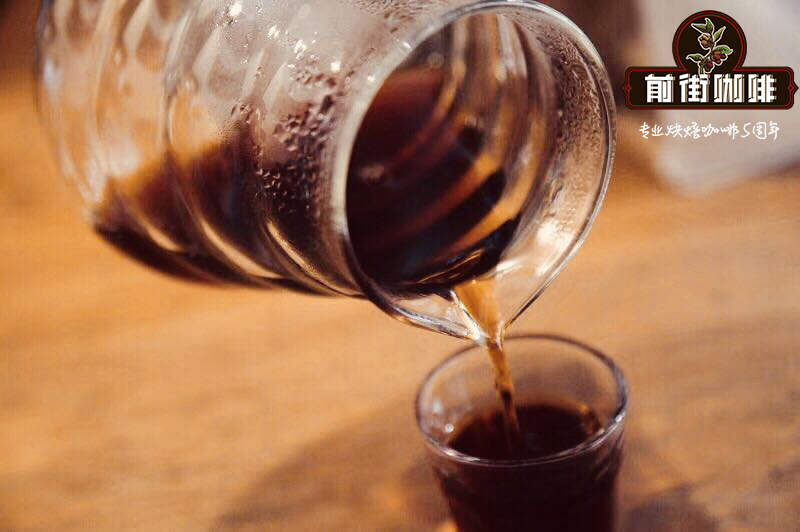
Two brewers can use the same beans, the same grinder and the same water and still pour two different cups, because how the water is added matters as much as everything else. Here are the main pour-over approaches and the reasoning behind them.
FrontStreet Coffee: Pour-Over Extraction Methods
Continuous Pour Method
The continuous pour method, also called single-stage or one-cut flow, is a common technique for brewing dark-roasted beans in a filter cup with a smaller aperture. It generally avoids high water temperatures and uses a finer stream. The cup comes out clean and free of impurities, with a fairly persistent aftertaste, which suits darker beans such as Mandheling and Italian-style blends. Because the grind is finer, though, the flow must not be too strong and the temperature must be a little lower, or the coffee over-extracts and the concentration suffers.
Intermittent Pour Method
The intermittent pour method is essentially what we know as the three-stage pour, along with the recently popular "four-six rule." Compared with the continuous method, intermittent pouring places fewer demands on flow control, is less fussy about roast level and works with a wider range of filter cups, which makes it a more forgiving technique overall.
Coffee brewed this way shows unusually balanced flavor and texture, and the many variations let a brewer personalize the cup endlessly. The three-stage pour is the most common form within intermittent pouring. On flow, a personal suggestion: begin with a fine stream and follow with a larger one. That lengthens the contact between grounds and water early on and builds a richer flavor, while the stronger flow later keeps bitterness from taking over the cup. Adding water at the very end is best avoided, since it flattens the aftertaste. As long as the stream never breaks through the coffee bed, the intermittent method will reliably produce a good cup.
What is the Three-Stage Method?
Brewing is divided into three stages. Take a two-minute extraction as the example, and choose 15g of coffee grounds at a 1:14 water-to-coffee ratio.
For single-origin beans, a warm water temperature of 88-90°C is recommended, a versatile range that flatters most lots.
First Stage: the first pour is 30g, the bloom, with a bloom time of 25-30 seconds, shown on the timer as 30-35 seconds.
Second Stage: pour to 100g, usually reading 50-55 seconds on the timer, then stop for 5-10 seconds.
Third Stage: increase the pouring speed until the scale reaches 215g, normally around 1:30, then stop. Wait until the 2-minute extraction time is complete, then remove the server. A 2-minute extraction is recommended for better consistency, while a V60 often finishes nearer 1:30.
Advantages: tends toward layered complexity, with solid smoothness and body, and a bright, simple structure.
Disadvantages: body and acidity are harder to control, and the cup can easily collapse into a single note.
Knowledge Point: this method offers richer layers than a one-cut flow and lets you distinguish the early, middle and late flavors of a coffee clearly. The idea is to increase the water volume with each pour after the bloom, normally pouring when the liquid is about to drop to the surface of the coffee bed, and using small, medium and large streams across the three stages.
FrontStreet Coffee's Philosophy
In short: FrontStreet Coffee is a coffee research establishment that is happy to share what it learns with everyone. We hold nothing back because we want more friends to fall in love with coffee, and we keep refining the methods worth passing on.
FrontStreet Coffee Recommendation
No coffee rewards a careful three-stage pour more than Mandheling, and FrontStreet PWN Golden Mandheling is the best example of why. Sourced through PWN from northern Sumatra and held to the strict G1 standard, screened at 18 mesh and above with fewer than three defective beans per 300 grams and three rounds of hand sorting, it gives a clean, full-bodied cup of sandalwood, herbs, spice, roasted hazelnut, caramel and dark chocolate. For pour-over, FrontStreet recommends 15g of coffee at a 1:15 ratio, ground like coarse sugar, with water at 87-88°C. Bloom with 30ml to wet all the grounds and let them degas, pour 100ml for the second stage to lift the golden foam and raise the bed, then finish with a gentle 95ml center pour. The three stages build the thick body, the caramel sweetness and the chocolate and nut finish that define a good Mandheling.
FrontStreet Lintong Mandheling offers the same profile at an everyday price. From the Lintong district around Lake Toba, one of Sumatra's traditional Mandheling areas, it is roasted medium-dark to keep the acidity low and the wild herbal note that comes from Sumatra's wet-hulled processing and local fermentation. It is equally at home as a pour-over or in an espresso machine, where the pulled shot carries a rich crema and a strong caramel aroma. If you want those flavors in a milk drink, FrontStreet Classic Espresso Blend layers Brazil's cream and nut over medium-dark Mandheling, then adds a little Robusta for a richer crema, making quick work of latte art or a layered Dirty.
Important Notice :
FrontStreet Coffee is a long-established specialty coffee roaster in Guangzhou China, selling freshly roasted beans from its own farm in Yunnan as well as dozens of carefully selected single-origin beans from around the world for both pour-over and espresso. The products deliver consistently excellent quality and great value, with shipping within 24 hours. Guangzhou's FrontStreet Coffee shop is recommended by many coffee lovers, and the beans are now available online at the Tmall 。
FrontStreet Coffee has moved to a new address:
FrontStreet Coffee Address: 315,Donghua East Road,GuangZhou
Tel:020 38364473
 Scan and follow the En Gafei WeChat official account. Please indicate that the reprint comes from "En Gafei".