How to Brew Delicious Coffee: A Liberal Arts Guide to Understanding Pour-Over Coffee and Segmental Extraction Principles
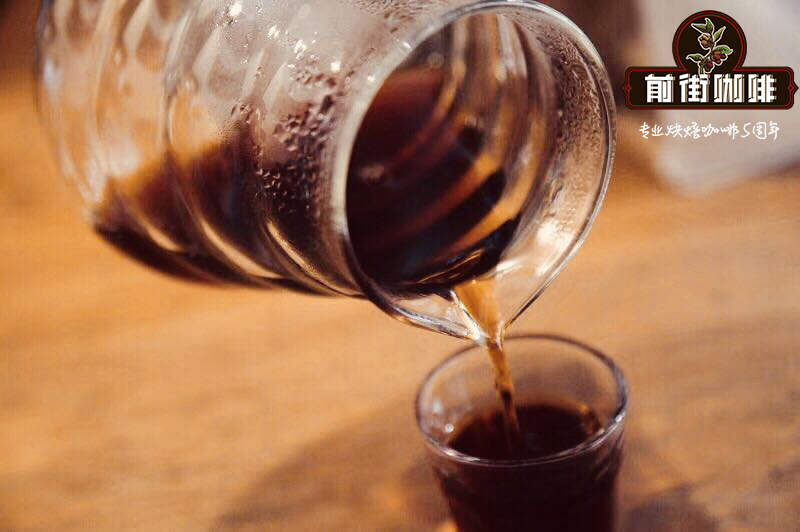
FrontStreet Coffee - Introduction to Pour-Over Extraction
The first stage of pour-over brewing is known as pre-infusion, or blooming. You pour a small amount of hot water to saturate the coffee grounds, then wait about 30 seconds. The goal is to let trapped carbon dioxide escape.
During roasting, gases build up inside the bean structure. After roasting, the beans continue to slowly off-gas, and they release even more gas the moment hot water hits them. This initial degassing is what we call the bloom. The fresher the coffee, the more gas it holds, and the more dramatically the coffee bed will rise and expand.
Blooming matters for two reasons. First, carbon dioxide itself tastes sharp and sour, and that harshness is not something you want dissolved into your cup. (This sourness is quite different from the bright, fruity acidity we prize in good coffee.)
Second, escaping CO2 actively interferes with the contact between water and coffee grounds, which disrupts even extraction. You want the degassing to happen during the bloom phase rather than midway through the brew. A proper pre-infusion leads to more consistent flavor from cup to cup.
2. Extraction
The next stage is where you begin to actively steer the flavor of the brew. Different compounds dissolve at different points during extraction: fruit acids come out first, followed by sweetness, and finally bitterness. (Keep in mind that not every acid tastes pleasant - chlorogenic acid, for instance, produces astringency, dryness, and harsh bitterness. Here we are only concerned with the acids responsible for vibrant, positive acidity.)
Because each moment of the brew pulls out different chemical compounds, adjusting your technique lets you shape the cup toward your preferred profile. The two most powerful levers are water temperature and total brew time. As a general rule, pour-over water sits somewhere between 90 and 96 degrees Celsius, but the ideal temperature varies with roast level, flavor profile, solubility, bean freshness, and grind size.
Another key element of this stage is the pour structure - dividing the total water into multiple pours rather than one continuous stream. Some brewers advocate minimizing the number of pours to improve reproducibility, since fewer interventions mean less human variability.
That said, multi-pour brewing is valuable because it promotes a more stable and efficient extraction. A single large pour shortens contact time, while several smaller, gentler pours keep the coffee bed level and increase contact between water and grounds. How many pours you use should depend on the coffee itself and your grind size.
3. Finishing
The finishing stage refers to the final 40% of the water you pour. This part demands the most care, because the tail end of extraction is where bitter and other unpleasant compounds are most easily drawn out. Even a brew that started perfectly can be undone by over-extraction in the final phase.
Pay close attention to your brew time and water temperature here. As the slurry cools toward the end, it extracts fewer compounds - and if you manage that temperature well, you can land a cup with excellent balance, sweetness, and acidity.
Water naturally loses heat during a manual pour-over, but if you brew with an automated machine that supports staged temperatures, you can program different temperatures for each phase. The right parameters differ from coffee to coffee, and water temperature remains one of the most decisive factors for sweetness, fruit character, and overall balance.
Key Takeaway
Splitting the pour into multiple stages produces more layered flavor than a single pour, making it easier to distinguish the coffee's front, middle, and back palate. The standard approach is to increase the volume of each successive pour after the bloom, timing each pour for when the liquid level is just about to drop below the coffee bed - small, medium, then large flows for a three-stage extraction.
Final Thoughts
FrontStreet Coffee is a coffee academy dedicated to sharing brewing knowledge openly, with the hope of helping more people fall in love with coffee.
FrontStreet Coffee Recommendation
If this brewing approach inspires you to try a brighter, more aromatic cup, we suggest starting with FrontStreet Coffee's Yirgacheffe Guodingding from Ethiopia. As a light roast, it responds beautifully to multi-pour brewing, releasing vivid citrus, berry, and floral notes with a green-tea-like sweetness in the finish. Its acidity is soft and luminous rather than harsh, making it an ideal first step into single-origin pour-over.
For something more fruit-forward, FrontStreet Coffee's Ethiopia Huakui (Blossom Queen) is a standout choice. Roasted light to preserve its tropical character, it offers striking aromas of strawberry, passion fruit, jackfruit, and lychee, with pronounced sweetness, a smooth juicy body, and almost no bitterness - a coffee that rewards careful, staged extraction with an explosion of layered fruit flavor.
Important Notice :
FrontStreet Coffee is a long-established specialty coffee roaster in Guangzhou China, selling freshly roasted beans from its own farm in Yunnan as well as dozens of carefully selected single-origin beans from around the world for both pour-over and espresso. The products deliver consistently excellent quality and great value, with shipping within 24 hours. Guangzhou's FrontStreet Coffee shop is recommended by many coffee lovers, and the beans are now available online at the Tmall 。
FrontStreet Coffee has moved to a new address:
FrontStreet Coffee Address: 315,Donghua East Road,GuangZhou
Tel:020 38364473
 Scan and follow the En Gafei WeChat official account. Please indicate that the reprint comes from "En Gafei".