How to Make Cold Brew Coffee at Home: Exploring Different Ratios for Varied Flavors
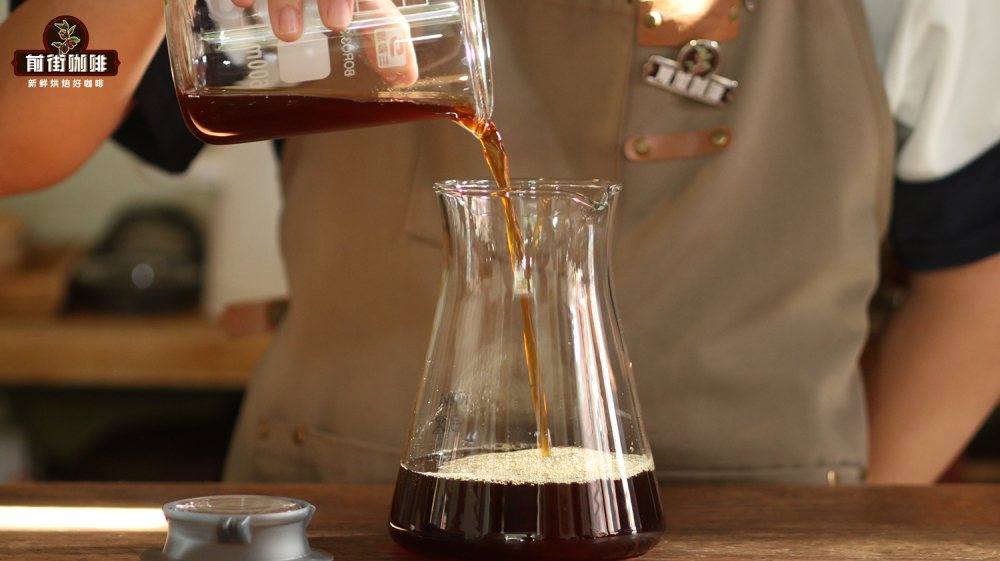
Beyond hot water, coffee can also be brewed with cold water. The result is what we call cold brew coffee, and it has a character all its own compared with coffee brewed hot.
Cold coffee drinks generally fall into two categories: cold brew and iced drip. Cold brew is made by steeping coffee grounds in cold water, while iced drip coffee is extracted drop by drop through a drip filtration setup. A question we are often asked at FrontStreet Coffee is whether cold brew should be made with hot or cold water. Coffee brewed with hot water cannot be called cold brew; true cold brew is steeped only in room-temperature or ice water, and the steeping environment must stay cold throughout.

Because the grounds only ever meet water at 4-10°C, extraction is extremely slow and bitter macromolecules are not readily released. A long, cold steep instead draws out sugars and organic acids more completely, giving the cup a more balanced acidity, sweetness and body.
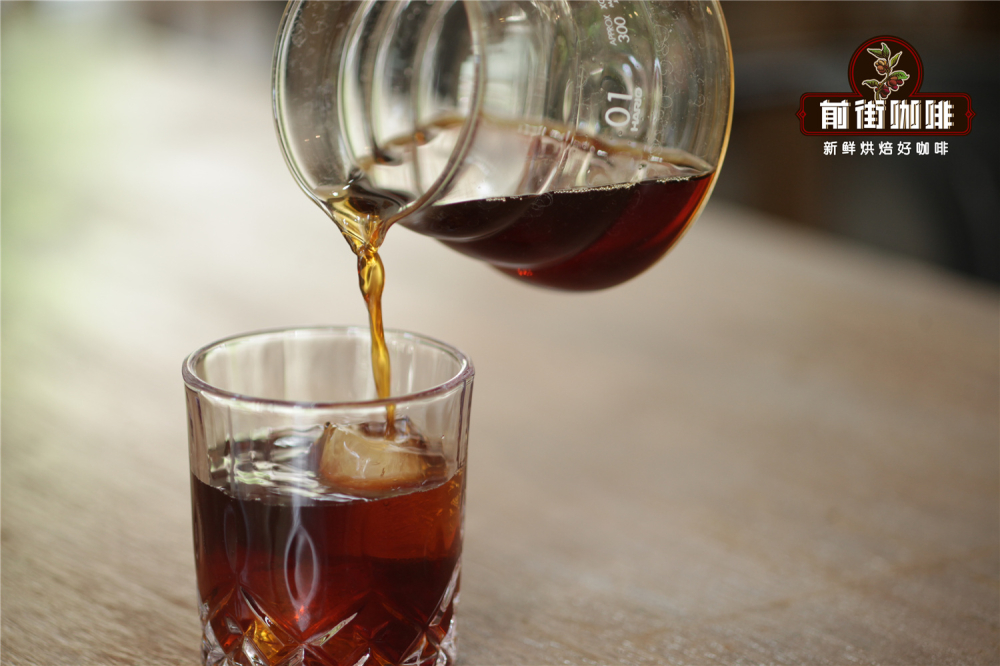
How to Make Delicious Cold Brew Coffee
So what does it take to make cold brew that actually tastes good? Here are a few practical details FrontStreet Coffee would like to share.
Coffee Bean Selection
To play it safe, FrontStreet Coffee suggests medium-light roasted beans, which are far more forgiving than medium-dark roasts. Today the market offers a huge range of beans across processing methods and roast levels; any single-origin bean labeled for pour-over use can be turned into cold brew.
Dark roast coffee brewed hot shows a rich aroma, with an initial bitterness that gives way to a sweet finish. Made as cold brew and served chilled, however, it tends to taste mostly of burnt, carbonized bitterness, and it struggles to match the refinement of the same coffee brewed hot.

For that reason, FrontStreet Coffee recommends light to medium roasts. If you want a refreshing, juice-like cup, reach for a light-roasted washed coffee such as FrontStreet Coffee's washed Yirgacheffe or FrontStreet Coffee's Kenya AA. If you prefer bolder fruit and wine-like aromas, try a barrel-fermented or honey-processed coffee such as FrontStreet Coffee's Colombia Rose Valley, FrontStreet Coffee's Honduras Sherry, or FrontStreet Coffee's Strawberry Sugar Geisha Blend. And if you dislike acidity and simply want a balanced "coffee" flavor, FrontStreet Coffee's Papua Paradise Bird works well too.

Coffee Grind Size
Because every step happens at a low temperature, cold water extracts the grounds far more slowly than hot water, and bitterness is released only with difficulty. That means grind size, coffee-to-water ratio and steeping time do not need the precision required for pour-over. Stay within a sensible range, pick the right beans, and a delicious iced coffee is only a few simple steps away.

Take FrontStreet Coffee's daily cold brew production as an example: the grind is set slightly finer than for pour-over, with 75-80% passing through a China #20 standard sieve. Visually this is roughly the texture of fine sugar, corresponding to about 9.5-10 on the EK43s scale, or roughly 22-26 clicks on a hand grinder such as the C40.
Steeping Time
In pour-over brewing we track water temperature and time closely, because water is the main extraction medium and directly governs efficiency; too hot or too cold and the flavor shifts. Cold brew is different. Its grounds only ever contact water at 4-10°C, so extraction is very slow and needs a longer window to release more aromatic compounds, drawing out sugars and organic acids more fully. The result is a cup with more balanced acidity, sweetness and body. As a rule, cold brew is best left to steep for 8-18 hours.
FrontStreet Coffee once ran a cold brew experiment using time as the variable, with no stirring so as not to influence the result. A single coffee was steeped for 6, 10, 16 and 24 hours respectively. The 6-hour batch tasted thin in the mouth with a flat aroma, while the 24-hour cold brew was noticeably bitter and showed signs of over-extraction. The 10-hour and 16-hour batches performed best, with a rich aroma and an intense mouthfeel.
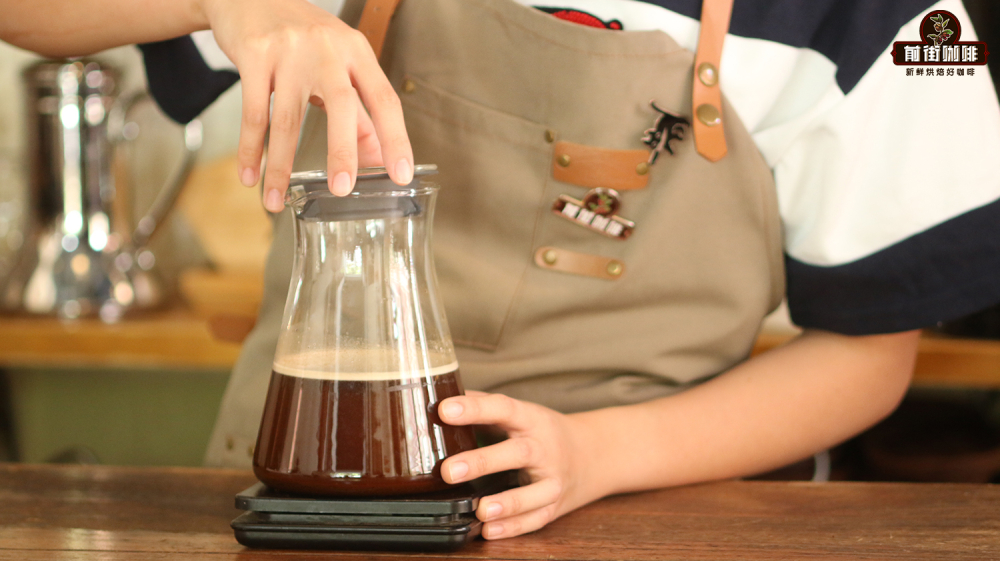
Coffee-to-Water Ratio
Some people, for convenience, simply dump grounds and water into a pot and let it steep. But every extraction involves a coffee-to-water ratio, and without measuring you are opening a blind box: you never know what you will get. For a reliably well-extracted cup, FrontStreet Coffee recommends keeping the ratio between 1:10 and 1:13. If the result is too concentrated, simply add a few ice cubes to dilute it.
FrontStreet Coffee's Cold Brew Method
Finally, here is FrontStreet Coffee's own cold brew method. For the beans, we lean toward a medium-light roast. As for the vessel, any clean, sealable container will do. Prepare 40 grams of coffee ground to a fine grind (85% pass-through on a #20 sieve), pour it into the container, add 480ml of cold water, stir evenly with a wooden stick and cover with a lid.
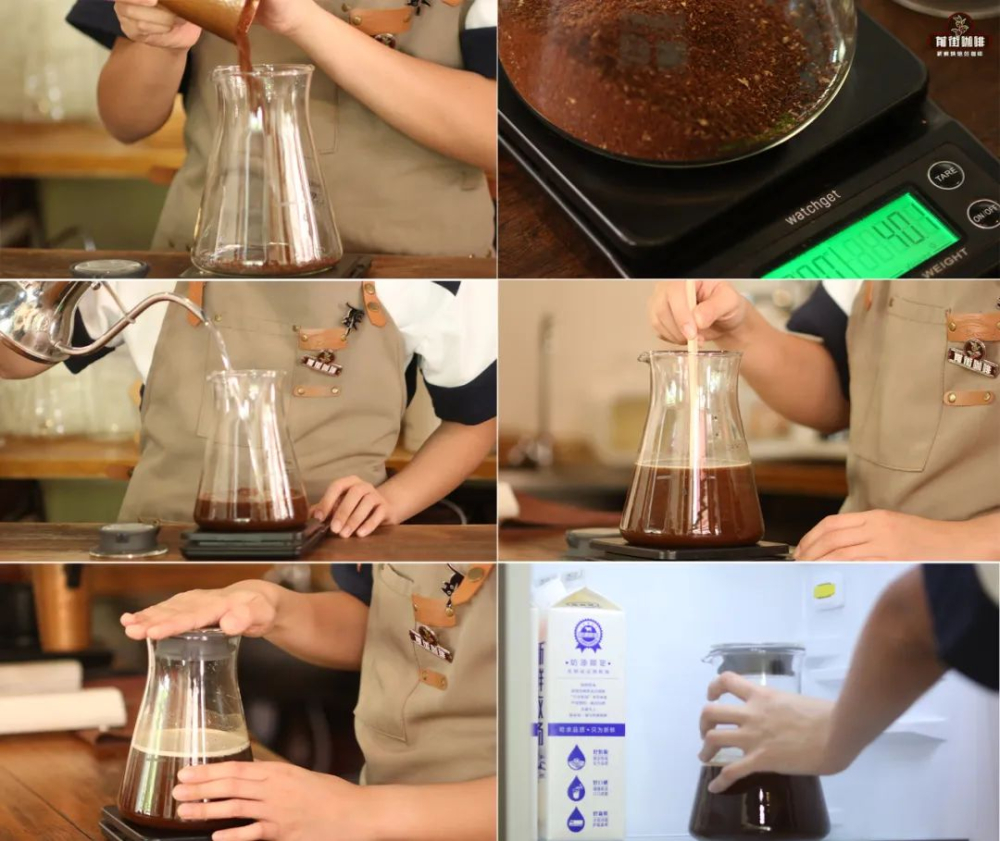
Once the mixture is evenly stirred, seal it with plastic wrap and refrigerate for 12 hours. Then remove it and filter out the grounds. The clear coffee liquid that remains is ready to drink straight away, or you can transfer it to a bottle and refrigerate it for a further 4 hours for even better flavor and mouthfeel.
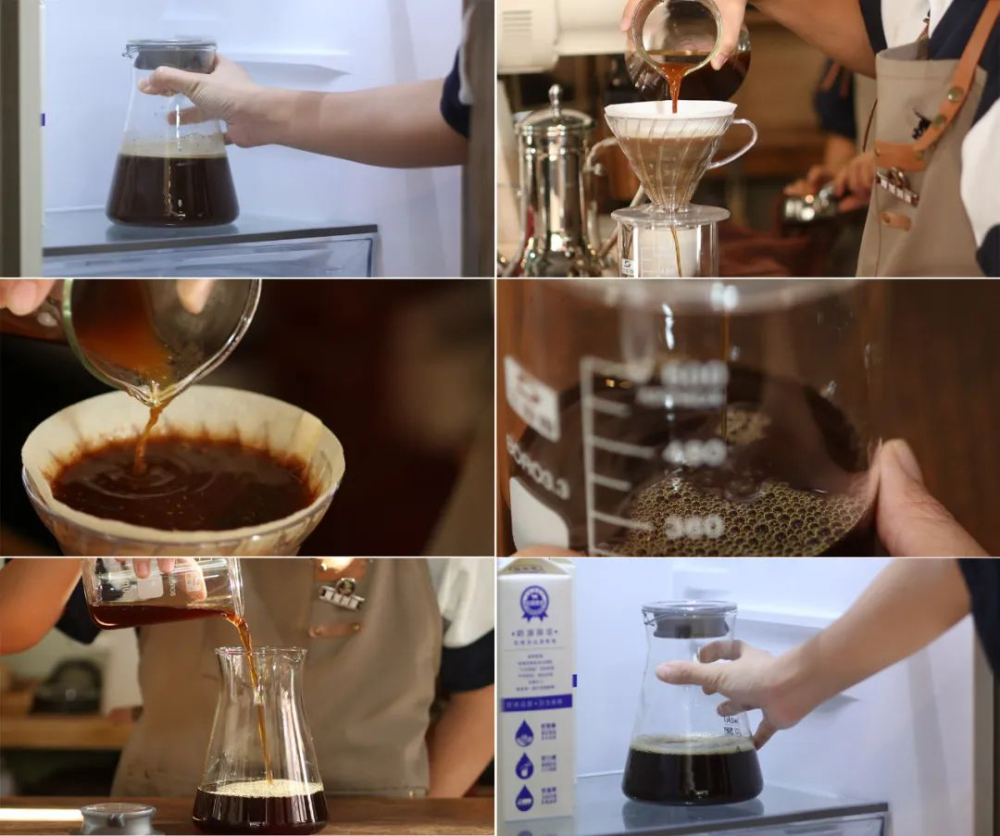
Generally speaking, for both flavor and food safety, with any extraction performed in a low-temperature environment, whether iced drip or cold brew, FrontStreet Coffee recommends drinking it within 5 days, counting from the day it is made.
FrontStreet Coffee Recommendation
For a cold brew with a full, juicy body, FrontStreet Coffee's Kenya Cherry Tomato is a standout. It comes from Kenya's Thika region, grown at 1,550-1,750 meters, and is built from the classic SL28 and SL34 cultivars at AA TOP grade. A 72-hour double washed fermentation (the local K72 method) coaxes out the fruit while keeping the cup clean and pure, and FrontStreet roasts it light to preserve the lively acidity and layered fruit. Cold brewed, its cherry tomato, snow pear, black plum and smoked plum notes really come through, with low bitterness, plenty of acidity and a clean, lingering finish. Steep it at the 1:10-1:13 ratio above and serve it over ice for a crisp, refreshing glass.
For something more floral and candy-sweet, reach for FrontStreet Coffee's Strawberry Sugar Geisha Blend, which pairs the most iconic Panama Geisha with a honey-processed Costa Rican coffee. The Geisha contributes delicate rose and orange, while the honey-processed half adds grape, raisin and strawberry gummy sweetness, building a rich, layered cup. As cold brew it is sweet-tart and lively, and if you let it ferment and settle gently it even takes on a wine-like fruit character. It is an easy bean to recommend when you want an outgoing, aromatic cold coffee.
If you prefer a floral, fruit-forward profile, try FrontStreet Coffee's Sun-Dried Huakui. Cold brew tends to amplify floral and fruit notes while muting woody and roasted tones, so a light-to-medium roast like this plays to its strengths. Grown in Ethiopia, the birthplace of coffee, it is dried naturally in the fruit, allowing the beans to absorb plenty of sweetness from the pulp and skin. Cold brewed, FrontStreet Huakui shows magnolia, cream strawberry, dried mango, guava and black tea, making it a fine choice for a bright, perfumed iced coffee.
Important Notice :
FrontStreet Coffee is a long-established specialty coffee roaster in Guangzhou China, selling freshly roasted beans from its own farm in Yunnan as well as dozens of carefully selected single-origin beans from around the world for both pour-over and espresso. The products deliver consistently excellent quality and great value, with shipping within 24 hours. Guangzhou's FrontStreet Coffee shop is recommended by many coffee lovers, and the beans are now available online at the Tmall 。
FrontStreet Coffee has moved to a new address:
FrontStreet Coffee Address: 315,Donghua East Road,GuangZhou
Tel:020 38364473
 Scan and follow the En Gafei WeChat official account. Please indicate that the reprint comes from "En Gafei".