Can Coffee Grounds Be Brewed Directly? Pour-Over vs. Brewing for a More Ritualistic Coffee Experience
FrontStreet Coffee - Introduction to Pour-Over Coffee Brewing
When coffee becomes part of daily life, brewing it by hand turns into a small ritual. From choosing the beans to grinding them to the pour itself, every decision shapes the final flavor and temperature of the cup—a satisfaction no café counter can hand you.
The ritual begins with choosing an origin. You might pick balanced Colombian beans, full-bodied Brazilian ones, or, if you enjoy vivid fruit acidity, Honduran or Kenyan coffee. And from Ethiopia, the birthplace of coffee, come beans with a chocolate-rich texture wrapped in floral and fruity notes.
Step One
Heat your water and weigh out 18 grams of coffee (assuming a 1:15 coffee-to-water ratio).
Fold the filter paper, seat it in the dripper, and rinse both with hot water. This removes any papery taste that would taint the brew and helps the paper cling snugly to the walls of the dripper (key technique one).
Step Two
Preheat both the dripper and the server. Otherwise the coffee cools as it filters, and temperature has a direct effect on flavor.
Step Three
Grind the coffee to a texture similar to raw sugar, pour the grounds into the dripper, and give it a gentle tap to level the bed evenly—flat grounds extract uniformly.
Step Four
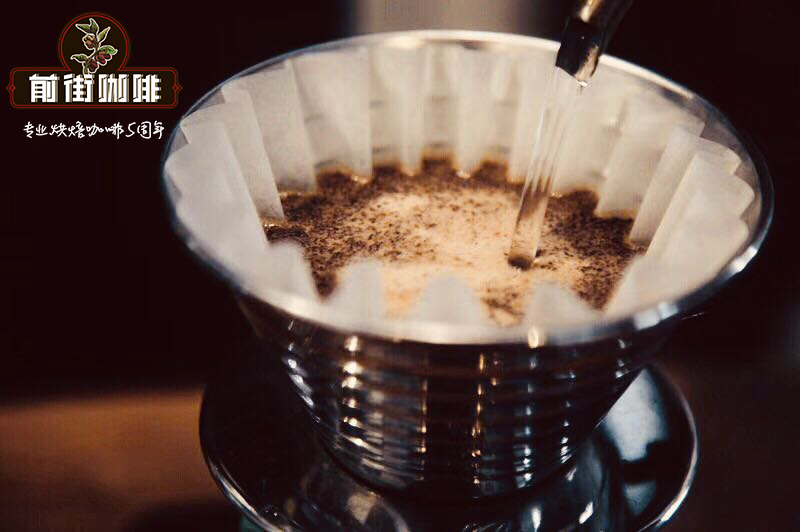
Start pouring 85-90°C water slowly from the center of the grounds (adjust the temperature for roast level and grind coarseness), keeping the stream off the filter paper (key technique two—controlling flow size and speed takes practice). Once the grounds are fully wet and the first drips reach the server, stop pouring and let the coffee bloom for 30-45 seconds (key technique three). Blooming releases trapped gases—mainly carbon dioxide—so the grounds can absorb water evenly afterward. Visually, you'll see the bed swell and rise.
Step Five
After the bloom, resume pouring in slow circles from the center (in one pour or several). The stream must stay gentle and continuous—never rushed—which again takes a trained hand.
Now the bed infuses fully: oils, soluble compounds, and aromatics release steadily, filling the room with fragrance.
Knowledge Point
Bean choice and roast level will define the taste of your pour-over. Choose a medium or light roast according to your own preference.
FrontStreet Coffee Recommendation
For beans worth building a ritual around, FrontStreet Coffee's pulped natural Cerrado Red Bourbon from Brazil is a dependable choice: medium roasted, with creamed peanut, toasted bread, caramel, and hazelnut aromas, a rounded mouthfeel, and no sharp acidity—equally good as a pour-over or through a moka pot, siphon, or French press.
If you prefer a brighter cup, FrontStreet Coffee's Queen Estate Yellow Bourbon from Mogiana carries a clean sugarcane sweetness with fruit and chocolate notes, and handles pour-over, moka pot, and home espresso brewing with equal ease.
Important Notice :
FrontStreet Coffee is a long-established specialty coffee roaster in Guangzhou China, selling freshly roasted beans from its own farm in Yunnan as well as dozens of carefully selected single-origin beans from around the world for both pour-over and espresso. The products deliver consistently excellent quality and great value, with shipping within 24 hours. Guangzhou's FrontStreet Coffee shop is recommended by many coffee lovers, and the beans are now available online at the Tmall 。
FrontStreet Coffee has moved to a new address:
FrontStreet Coffee Address: 315,Donghua East Road,GuangZhou
Tel:020 38364473
 Scan and follow the En Gafei WeChat official account. Please indicate that the reprint comes from "En Gafei".