Whether to Steep or Brew Coffee Powder Makes a Big Difference - Don't Miss Out on Pour-Over Coffee Process Steps
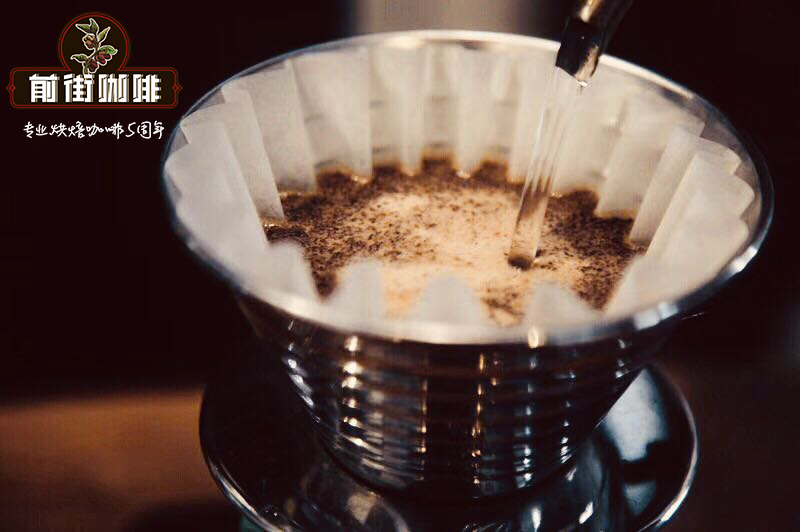
FrontStreet Coffee - Pour-Over Coffee Steps Introduction
Brewing means to extract something, or to obtain an extract. In chemistry, extraction refers to drawing valuable substances (flavors) out of raw materials (coffee beans). In coffee, the most common method is using hot water to extract flavor from the grounds. Many substances in coffee are soluble — fruit acids, caffeine, oils, melanoidins, carbohydrates, and plant fibers — and each dissolves at a different time and rate, carrying a different flavor.
Only 30% of these substances are water-soluble, and less than 22% carry positive flavors. The rest bring only excessive bitterness, a papery taste, or other negative flavors. Fortunately, these positive flavor substances dissolve first, while the negative ones need more time to be extracted.
Basic Steps for Pour-Over Coffee:
- Fold the filter paper: Take a fan-shaped filter paper, one side of which is machine-pressed and thicker. (Filter paper selection: filter papers come in different sizes and models, chosen to match your filter cup. They also come bleached and unbleached. Bleached filter papers have less papery taste, so we choose bleached.)
- Weigh coffee beans: Weigh 20g of coffee beans. (Some say you use 10g for one cup, and for two cups, 15g or slightly less than 20g. This actually doesn't align with extraction principles. If you want a milder coffee you can reduce the amount, but the idea of reducing the dose when making two cups is wrong. Try it yourself — the taste difference is significant.)
- Grind: Use a hand grinder or an automatic grinder to grind the beans.
- Heat water: It is best to use a thermometer for precision. The pour-over water temperature range is quite wide, from 82°C to 95°C. Different temperatures will produce noticeably different tastes, and different beans and roast levels need different temperatures, so adjust to find your optimal temperature.
- Wet the filter paper: Pour hot water evenly over the filter paper until it is completely wet and clings tightly to the filter cup, then pour out the hot water from the serving pot. (Many people skip wetting the filter paper, thinking it unnecessary. In fact, it serves three purposes: 1. rinse away impurities and paper taste; 2. make the paper conform to the cup; 3. warm the filter cup and serving pot.)
- Pour grounds into filter paper: Pour the ground coffee into the filter cup and gently level it.
- Bloom: Pour water evenly over the grounds using about 1.5 times the weight of the grounds in water (make sure to saturate them completely, but don't let too much water drip into the serving pot).
There is no fixed time for blooming. Fresh grounds begin to absorb water and expand after water is added. When all the grounds have absorbed water and expansion stops, the bloom is complete and you can begin pouring. (Whether expansion occurs, and how much, relates strongly to the coffee's roast level and freshness. Fresher grounds expand more, and darker roasts expand more.)
- Pour water: Circular method: start pouring from the center, then draw concentric circles in one direction out to the outer edge, avoiding pouring directly onto the filter paper. Then draw concentric circles back to the center, repeating the process, keeping the flow steady. You can pour in two to three stages, though many people debate whether to pause between stages.
Center pouring method: few people are familiar with this technique. Center pouring means pouring water only in the center without spreading it outward. After extraction it forms a small hole, as if water had been poured over the entire coffee surface.
- Complete extraction: When extraction is complete, you will have approximately 240ml of coffee liquid. Stop pouring, remove the filter cup, and your delicious coffee is ready in the serving pot.
Knowledge Point:
The predecessor of the HARIO company was Shibata Hiro Manufacturing, which made glassware for chemical use. In 1964, HARIO Trading Co., Ltd. was established to sell heat-resistant glass tableware. In 2005, HARIO released the conical filter cup HARIO V60.
FrontStreet Coffee Recommendation
For pour-over, the V60 is the classic cone to reach for. Designed by Hario — a Tokyo glassmaker founded in 1921 — the V60 was redesigned in 2004 and launched in 2005, named for its distinctive 60° cone angle and "V" shape. That design forces water toward the center before it drips through, lengthening contact between water and grounds for fuller extraction, while the single large hole lets water run freely, so flow rate depends on your pouring and shows directly in the cup.
Which beans suit it? FrontStreet's Yirgacheffe Gudingding brings the classic Yirgacheffe profile of jasmine, citrus, and a green tea-like finish, with soft, bright acidity. FrontStreet's Ethiopia Huakui is full of tropical fruit — strawberry, passion fruit, jackfruit, even lychee — with obvious sweetness and almost no bitterness, smooth and juicy on the palate. And FrontStreet's Strawberry Candy Gesha is a floral, fruit-forward pick for anyone who wants to explore the V60's ability to highlight delicate aromatics and lively acidity.
Important Notice :
FrontStreet Coffee is a long-established specialty coffee roaster in Guangzhou China, selling freshly roasted beans from its own farm in Yunnan as well as dozens of carefully selected single-origin beans from around the world for both pour-over and espresso. The products deliver consistently excellent quality and great value, with shipping within 24 hours. Guangzhou's FrontStreet Coffee shop is recommended by many coffee lovers, and the beans are now available online at the Tmall 。
FrontStreet Coffee has moved to a new address:
FrontStreet Coffee Address: 315,Donghua East Road,GuangZhou
Tel:020 38364473
 Scan and follow the En Gafei WeChat official account. Please indicate that the reprint comes from "En Gafei".