Which Coffee Brewing Method is Easy to Learn and Understand? Standard Pour-Over Coffee Steps Without Master Training
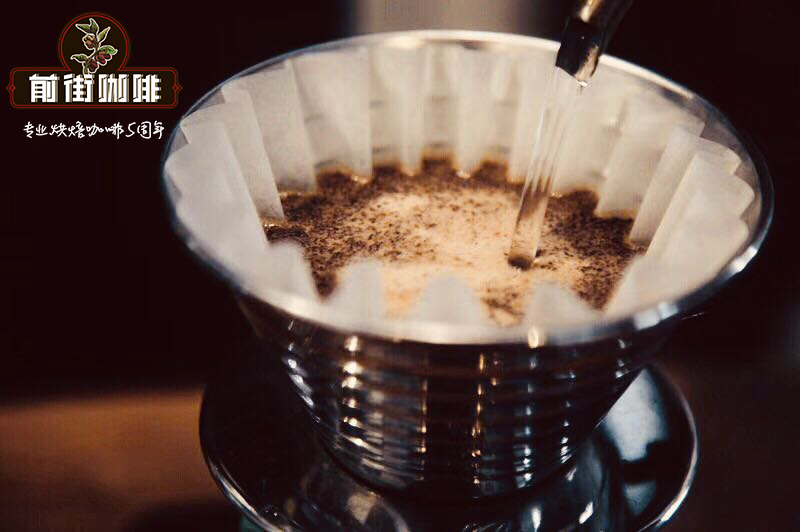
FrontStreet Coffee - An Introduction to the Pour-Over Method
Step 1: Boil the Water
Fresh hot water works best. As for quality, water that is too hard or too soft is not suitable, and different minerals affect extraction differently. Simple filtered water usually meets our needs, but avoid pure water or RO reverse-osmosis water - water completely stripped of minerals also affects extraction.
Hard water tends to extract bitter and astringent flavors.
Soft water tends to draw out sweet and sour flavor profiles.
Step 2: Weigh Out the Coffee
A good starting ratio is 15 grams of grounds to brew 200 ml of coffee. Using less than 15 grams makes the pour harder to control and more likely to extract unevenly.
Step 3: Preheat the Filter Cup and Server
Those who rinse the filter paper first mainly do so to remove the papery pulp taste.
Step 4: Grind the Beans
Medium-fine is a good starting reference. If you prefer a cleaner cup, add a step to sift out the fine powders.
Step 5: Set Up the Filter
Pour out the water from the bottom of the server, add the grounds loosely to the filter cup and give it a gentle shake to level them. Never tamp the grounds; keep them fluffy and full of space. After adding them, adjust the filter paper again so air can circulate between the paper and the cup.
Step 6: Prepare the Kettle
Fill the pour-over kettle with hot water; a starting temperature of 88-94°C is recommended.
Step 7: First Pour - Blooming
For the first pour, start at the center and circle outward, covering the coffee surface with a small amount of water to wet all the grounds. If the amount is right, a few drops of coffee will fall into the server, at most forming a thin layer at the bottom. More than that means too much water; none at all means too little. This step is called pre-infusion, also known as the bloom.
Step 8: Second Pour
Watch the surface of the grounds. If they keep expanding and stay glossy, wait a little longer. Once expansion stops and the surface gradually loses its wet sheen, the bloom is complete and you can begin the second pour - but do not wait until the bed starts shrinking inward. Start from the center and spiral outward. Take care to leave at least half a centimeter of coffee wall on the outermost ring unbroken. After reaching the outer edge, continue spiraling back inward.
Step 9: Segmented Extraction
This technique lets you adjust the flow to control extraction, avoiding both under- and over-extraction.
Knowledge Point
The predecessor of HARIO was Shibata Hiro Manufacturing, which made glass products for scientific use. In 1964, HARIO Shoji Co., Ltd. was established to sell heat-resistant glass tableware, and in 2005 HARIO released the conical HARIO V60 filter cup.
In Summary
FrontStreet Coffee is a coffee research institute that enjoys sharing coffee knowledge with everyone. We share without reservation only to help more friends fall in love with coffee. Every month we hold three low-priced coffee events, because FrontStreet Coffee wants more friends to enjoy the best coffee at the lowest prices. This has been FrontStreet Coffee's mission for the past six years.
FrontStreet Coffee Recommendation
A clean, layered bean rewards careful pouring, and FrontStreet Coffee's Yirgacheffe Gidding Cooperative is a perfect bean for learning on. Washed processing gives maximum jasmine and bright citrus acidity, and a light-medium roast brings green tea and honey notes, so every step of the pour is easy to read in the cup. It works for pour-over, cold brew and espresso.
Once your technique feels steady, step up to FrontStreet Coffee's Ethiopia Flower Kui. Medium-roasted and packed with tropical fruit - strawberry, passion fruit, jackfruit and lychee - it is sweet and smooth with almost no bitterness, and its generous bloom makes it a joy to brew as pour-over.
Important Notice :
FrontStreet Coffee is a long-established specialty coffee roaster in Guangzhou China, selling freshly roasted beans from its own farm in Yunnan as well as dozens of carefully selected single-origin beans from around the world for both pour-over and espresso. The products deliver consistently excellent quality and great value, with shipping within 24 hours. Guangzhou's FrontStreet Coffee shop is recommended by many coffee lovers, and the beans are now available online at the Tmall 。
FrontStreet Coffee has moved to a new address:
FrontStreet Coffee Address: 315,Donghua East Road,GuangZhou
Tel:020 38364473
 Scan and follow the En Gafei WeChat official account. Please indicate that the reprint comes from "En Gafei".