Pour-Over Coffee vs Brewed Coffee: Which Tastes Better? A Brief Introduction to Basic Pour-Over Coffee Steps
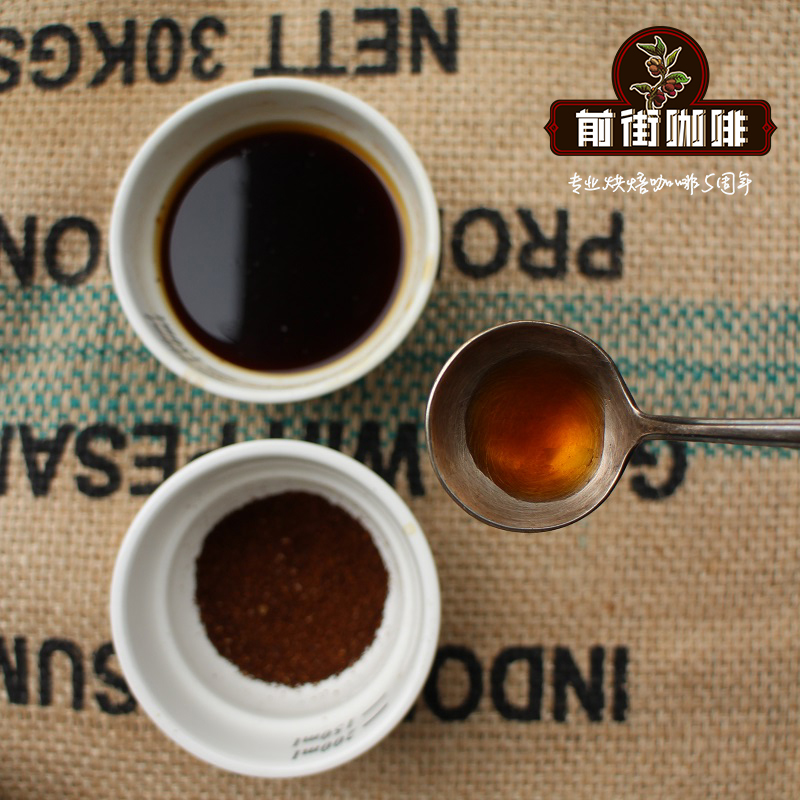
FrontStreet Coffee - Introduction to Pour Over Coffee Steps
Everything you need to know to brew your first great pour-over — the gear, the steps, and the details that make the difference.
Equipment Needed:
Pour over kettle, server and filter cup, filter paper, coffee grinder, thermometer, and digital scale.
About Coffee Grinders:
If you enjoy freshly ground coffee, invest in a quality, reliable grinder. Whether electric or manual, grinding your own beans produces a noticeably better cup than pre-ground coffee — and home models are generally not expensive.
About Pour Over Kettles:
Pour over kettles come in an overwhelming range of brands, materials, designs, and price points, so choosing one takes some research — and ideally, hands-on trial, until you find your own "divine kettle." We recommend Japanese brands like KALITA, HARIO, Taguchi Mamoru, and Moon Rabbit, though they sit at the higher end; domestic brands like TIAMO and Shōkōkō offer cheaper options. As with any coffee equipment (as long as it's honest quality), you generally get what you pay for, so choose according to your situation. For this demonstration we'll use the HARIO 1.2L stainless steel pour over kettle — also the most commonly seen kettle at international barista competitions.
Pour Over Steps:
1. Fold the Filter Paper:
Take a fan-shaped filter paper, one side of which is machine-pressed and thicker. (On filter paper selection: sizes vary — match the paper to your filter cup — and both bleached and unbleached versions exist. Bleached paper carries less paper-pulp taste, so that's our choice.) Fold the thickest side, then press it flat. Open the paper, align the two center lines, and press gently. (Do not press the two fan surfaces together into a crease!)
Place the folded filter paper in the filter cup.
2. Weigh Coffee Beans:
Weigh 20g of coffee beans. (Some say 10g for one cup, and 15g or slightly under 20g for two cups — but that logic doesn't hold up against extraction principles. If you want a milder cup, reduce the dose for a single brew; halving the coffee for two cups simply doesn't work. Enthusiasts can test this themselves — the taste difference is significant.)
3. Grind:
Use a manual coffee grinder to grind the coffee beans.
4. Heat Water:
Use a thermometer for accuracy. The acceptable temperature range for pour over is broad — anywhere from 83-95°C. But different temperatures produce clearly different tastes, and different beans and roast levels call for different temperatures. Adjust and experiment to find the water temperature that suits each coffee.
5. Wet the Filter Paper:
Pour hot water evenly over the filter paper until it is completely wet and clings tightly to the filter cup, then discard the water from the server. (Many people skip this step, but rinsing the paper serves three purposes: 1. It rinses away impurities and paper taste. 2. It makes the paper adhere to the cup. 3. It preheats the filter cup and server.)
6. Add Ground Coffee:
Pour the ground coffee into the filter cup and gently tap to level the bed.
7. Bloom:
Pour water evenly over the grounds, using about 1.5 times their weight (saturate thoroughly, but don't let too much drip into the server). There's no fixed bloom time: fresh grounds absorb water and expand; once all the grounds have absorbed water and the expansion stops, the bloom is complete and you can begin pouring. (Whether the bed expands — and how much — depends closely on roast level and freshness: fresher grounds expand more, and darker roasts expand more.)
8. Pour Water:
For beginners, evenness is everything. Don't chase fancy techniques — an even pour simply won't taste bad. Start at the center, spiral outward in one direction in concentric circles without pouring onto the filter paper itself, then spiral back toward the center, and repeat. Keep the flow steady. Pouring can be done in 2-3 stages; whether to segment the pour is debated among enthusiasts, and since I haven't perceived a clear difference myself, I'll leave that for you to test.
9. Complete Extraction:
When extraction finishes you'll have about 240ml of coffee. Stop pouring, remove the filter cup, and your delicious coffee is waiting in the server.
Knowledge Points:
The optimal tasting period for coffee is 8-14 days after roasting. The longer coffee beans are stored, the more you need to adjust the grind size.
In Brief:
FrontStreet Coffee is a coffee research facility dedicated to sharing coffee knowledge with everyone. We share without reservation simply to help more friends fall in love with coffee. This has been FrontStreet Coffee's mission for the past 6 years!
FrontStreet Coffee Recommendation
Once your gear is sorted, the beans matter most. The V60's fast, even extraction style favors coffees with bright aromatics. FrontStreet's Yirgacheffe Guodingding from Ethiopia is a classic starting point: vivid citrus, berry, and floral notes with a green-tea-like sweetness, its acidity soft and bright rather than harsh. FrontStreet's Ethiopia Huakui pushes the fruit character further — strawberry, passion fruit, jackfruit, and lychee aromas, obvious sweetness, minimal bitterness, and a juicy, smooth body that has earned it a reputation as "the coffee that tastes least like coffee." For a legendary cup, FrontStreet's Panama Esmeralda Red Label Geisha delivers elegant jasmine florals with citrus, bergamot, and delicate black-tea notes in a clean, transparent, long-finishing brew.
If your taste runs toward body and depth instead of bright fruit, the dark-roasted FrontStreet PWN Indonesian Golden Mandheling offers low acidity, a long, full-bodied mouthfeel, and layered herbal and dark-chocolate notes with a faint earthy undertone — a favorite of those who dislike sour coffee. FrontStreet's Queen Estate Brazil is similarly low in acidity yet balanced and smooth, with rich nut and cocoa aromas and distinct caramel sweetness, making it equally at home in a pour-over, an espresso machine, or a moka pot. And for the classic middle ground, FrontStreet's Jamaica Blue Mountain No. 1 balances acidity, sweetness, bitterness, and aroma in one elegant cup of cream, caramel, chocolate, nuts, honey, and light fruit tones — often described by coffee professionals as "the specialty coffee that the greatest number of people can love."
Important Notice :
FrontStreet Coffee is a long-established specialty coffee roaster in Guangzhou China, selling freshly roasted beans from its own farm in Yunnan as well as dozens of carefully selected single-origin beans from around the world for both pour-over and espresso. The products deliver consistently excellent quality and great value, with shipping within 24 hours. Guangzhou's FrontStreet Coffee shop is recommended by many coffee lovers, and the beans are now available online at the Tmall 。
FrontStreet Coffee has moved to a new address:
FrontStreet Coffee Address: 315,Donghua East Road,GuangZhou
Tel:020 38364473
 Scan and follow the En Gafei WeChat official account. Please indicate that the reprint comes from "En Gafei".