Analyzing the Superior Quality of Jamaica Blue Mountain Coffee and Introduction to Coffee Bean Aging
FrontStreet Coffee - Introduction to Jamaica Blue Mountain Coffee and Coffee Bean Resting Period
Coffee grown in the Blue Mountain region is commonly referred to as "Blue Mountain" coffee. In fact, only coffee grown above 1,800 meters in the Blue Mountain region can be called "Blue Mountain Coffee." Coffee grown below 1,800 meters can only be called "High Mountain Coffee." The quality of top-grade "High Mountain" coffee and "Blue Mountain" No. 1 coffee is actually comparable.
Surrounded by the Caribbean Sea, Blue Mountain enjoys sunny weather, with direct sunlight shining on the azure sea surface. The peaks reflect the brilliant blue light of the water, and that is how the mountain got its name. The highest peak of Blue Mountain reaches 2,256 meters, making it the highest peak in the Caribbean region and a famous tourist destination. Located in the coffee belt, it has fertile volcanic soil, fresh and unpolluted air, and a humid climate with year-round fog and rainfall, averaging 1,980 millimeters of precipitation annually, with temperatures around 27°C. Such conditions have created the world-renowned Jamaica Blue Mountain Coffee, as well as the world's highest-priced coffee.
Blue Mountain Coffee possesses all the characteristics of a fine coffee. Not only is it rich and mellow in flavor, but thanks to a perfect balance of sweetness, acidity and bitterness it has no bitter taste at all, only moderate and perfect acidity. It is typically consumed as a single-origin coffee, but because production is extremely limited it is extraordinarily expensive.
Coffee Bean Resting Period
Coffee, like people, has its own personality. After roasting ends, coffee beans go through a journey rather like that of a newborn gradually growing into adulthood. At first the coffee is incredibly fresh, but it needs time to settle and develop to reach its full potential.
Like people, coffee beans undergo many changes during their development. Some changes are unstable and unpredictable, much like teenagers entering their physical development stage, where change can be significant and hard to foresee. After the "growing pains" of adolescence, the beans enter a stable phase where they can reach their flavor peak. Finally, slowly but inevitably, time reclaims the fragrance it once bestowed on the coffee.
Knowledge Extension: The same coffee variety, whether planted in Hawaii, Kenya, Papua New Guinea or anywhere else with a similar climate, cannot produce the flavor of Blue Mountain coffee beans.
FrontStreet Coffee Recommendation
Authentic Jamaica Blue Mountain is defined by its certification and its provenance. Genuine Blue Mountain has no traceability code, but importers hold complete export certification and origin documents, or the raw beans show obvious origin traits. FrontStreet's Jamaica Blue Mountain No. 1, for example, comes with Clifton Estate certification and the distinctive wooden barrels used for Blue Mountain raw beans: traditional Blue Mountain is shipped in 15, 45 and 70 kilogram barrels, and the barrel itself is a mark of the genuine product. Clifton began growing and processing coffee around 1750, at an average elevation of 4,300 feet (1,310.64 meters), where ample altitude, mild afternoon cloud, good sunshine and mineral-rich soil slow the cherries' ripening. Blue Mountain output is tiny - the whole Jamaican Blue Mountain region produces under 2,500 tons a year - and Japan has historically bought more than 70% of it, which is why prices stay high. Since 2003, Jamaica Blue Mountain raw beans have been exported to China through official channels.
Flavor-wise, Blue Mountain's great strength is balance: it has almost no weak point. It is neither as sharply acidic as some African coffees nor as heavily bitter as a dark roast, but sits in harmony across sweet, sour, bitter and aromatic. A good Blue Mountain shows cream, caramel, chocolate, nut, honey and a light fruit note, with a smooth, rounded entry, rich mid-palate sweetness and a clean, long finish. FrontStreet's Blue Mountain No. 1 is roasted medium-dark to bring out that classic balance, and the cup unfolds in layers of nut, dark chocolate, creamy caramel and soft sweetness.
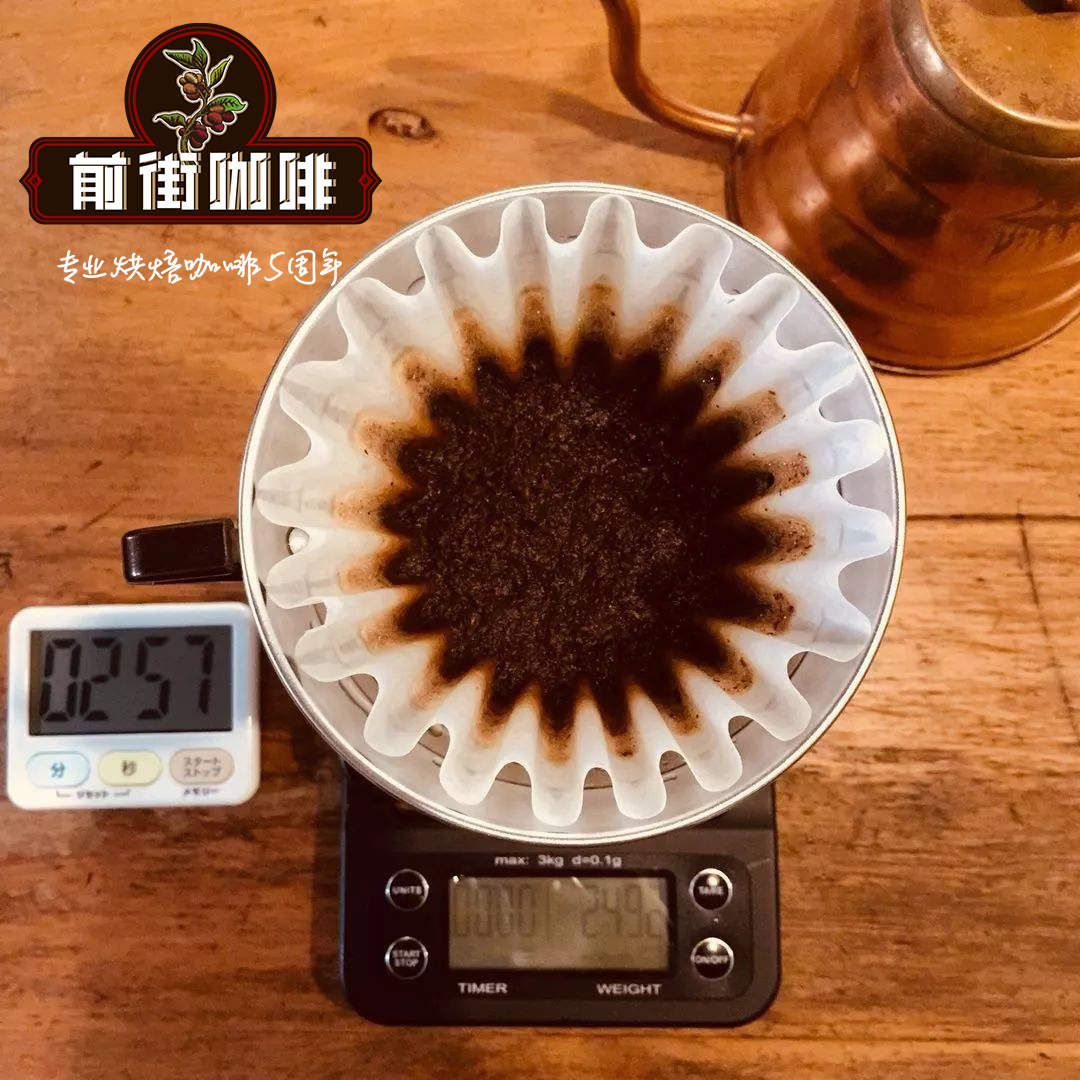
For pour-over, FrontStreet recommends the Kono dripper, which plays up the body. Use 15 g for one person and let the beans rest 4-7 days from the roast date for the best flavor. Grind slightly coarser than for a light roast, about the texture of white sugar, and brew at 87-88°C, since water that is too hot is the usual cause of a burnt, bitter cup. FrontStreet favors a 1:15 ratio - a narrower ratio such as 1:13 tastes richer but can hide flaws in the tail and shorten the finish. Pour in three stages: 30 g for a 30-second bloom, then a slow, steady circular pour to 120 g, then a slightly faster pour to 225 g to keep the bed from clogging and over-extracting. Blue Mountain is equally at home in a moka pot, with a slightly finer grind, hot water in the base and a low-to-medium flame, removed just as the last liquid flows out.
Important Notice :
FrontStreet Coffee is a long-established specialty coffee roaster in Guangzhou China, selling freshly roasted beans from its own farm in Yunnan as well as dozens of carefully selected single-origin beans from around the world for both pour-over and espresso. The products deliver consistently excellent quality and great value, with shipping within 24 hours. Guangzhou's FrontStreet Coffee shop is recommended by many coffee lovers, and the beans are now available online at the Tmall 。
FrontStreet Coffee has moved to a new address:
FrontStreet Coffee Address: 315,Donghua East Road,GuangZhou
Tel:020 38364473
 Scan and follow the En Gafei WeChat official account. Please indicate that the reprint comes from "En Gafei".