Jamaica Blue Mountain Coffee Authenticity by Altitude - How Many Days to Rest Freshly Roasted Coffee Beans
Professional coffee knowledge exchange and more coffee bean information, please follow Coffee Workshop (WeChat public account: cafe_style)
FrontStreet Coffee - Jamaica Blue Mountain Ranking and Coffee Bean Curing Period Introduction
Jamaica is a small republic in the Caribbean Sea, and the mountain slopes running through the island are its main coffee-producing areas. The most famous of these is Blue Mountain, located northeast of the capital Kingston. The beautiful Blue Mountain peaks are an outstanding coffee-growing region, named after the 2,256-meter highest peak of the range — and they lend that name to what is known as the supreme among coffees: "Blue Mountain Coffee."
With large beans and excellent quality, the taste is harmonious while keeping appropriate acidity, bitterness, aroma, richness, and sweetness all in check. It is recognized worldwide as a supreme product, usually accompanied by exquisite factory-specific markings and certificates, then exported in large wooden barrels similar to those used for beer. It carries grades such as No.1, No.2, No.3, and peaberry.
Blue Mountain Coffee takes its name from the Blue Mountain range in eastern Jamaica — a range whose summit reaches 2,256 meters, with coffee trees planted on steep slopes at around 1,000 meters. Annual production is only about 700 tons. Blue Mountain beans are full in shape, slightly larger than ordinary beans, and their acidity, aroma, richness, and sweetness are uniform and intense with only a slight bitterness, creating a harmonious taste and excellent flavor, ideal as a single origin. Because production is so low, most coffee sold as Blue Mountain on the market is actually "blended Blue Mountain" — a blend with a Blue Mountain base plus other coffee beans.
Coffee Bean Curing Period
Freshly roasted beans have what is commonly called a "dryness": more pronounced acidity, a cup that isn't yet smooth, sweetness not yet at its best, and a slight astringency lingering on the palate. Roasting is a complex chemical and physical process with variables we still don't fully understand — but this dryness is a very real taste sensation.
Every kilogram of coffee beans, in a non-saturated environment, releases approximately 6 to 10 liters of carbon dioxide — equivalent to 1% to 1.2% of the total bean weight — and about 35% of it escapes within the first 3 days after roasting. As the carbon dioxide leaves, an equal volume of aromatic volatile compounds (taste ≠ aroma) is lost with it. That is why brewing coffee immediately after roasting actually delivers poor flavor.
After coffee is bagged, though isolated from outside air, it continues reacting with the air inside the bag: chlorogenic acids in the coffee react with oxygen, releasing the fragrance held within the beans. Beans keep releasing gas (degassing) for about 48 hours after roasting, and the coffee's aroma and taste keep evolving over time.
The vast majority of single-origin coffee beans begin to slowly lose their aroma about 1 month after roasting (think of Maracaturra's florals or Yirgacheffe's fruit notes) — and those aromatics are one of the great charms of single-origin coffee.
Knowledge Expansion
The same coffee tree species — whether planted in Hawaii, Kenya, Papua New Guinea, or anywhere else with a similar climate — cannot produce the taste of Blue Mountain coffee beans.
In short: FrontStreet Coffee is a specialty coffee research center, happy to share coffee knowledge with everyone. We share without reservation just to help more friends fall in love with coffee. Every month, we hold 3 low-discount coffee events because FrontStreet Coffee wants to let more friends enjoy the best coffee at the lowest possible price, which has been our principle for 6 years!
FrontStreet Coffee Recommendation
To taste genuine Blue Mountain rather than a "blended Blue Mountain," look for certification, wooden-barrel packaging, and bean quality — exactly what FrontStreet Coffee's Jamaica Blue Mountain No. 1 provides. It comes from the Clifton Estate, farming coffee since around 1750 at an average of 4,300 feet (1,310.64 meters), where afternoon cloud cover, ample sunshine, mineral-rich soil, and the altitude slow the cherries' ripening and deepen their flavor. The lot carries complete Jamaican certification and origin documentation, ships in the original wooden barrels stamped with batch information, and is roasted no more than 5 days before shipping so it arrives with flavor fully intact.
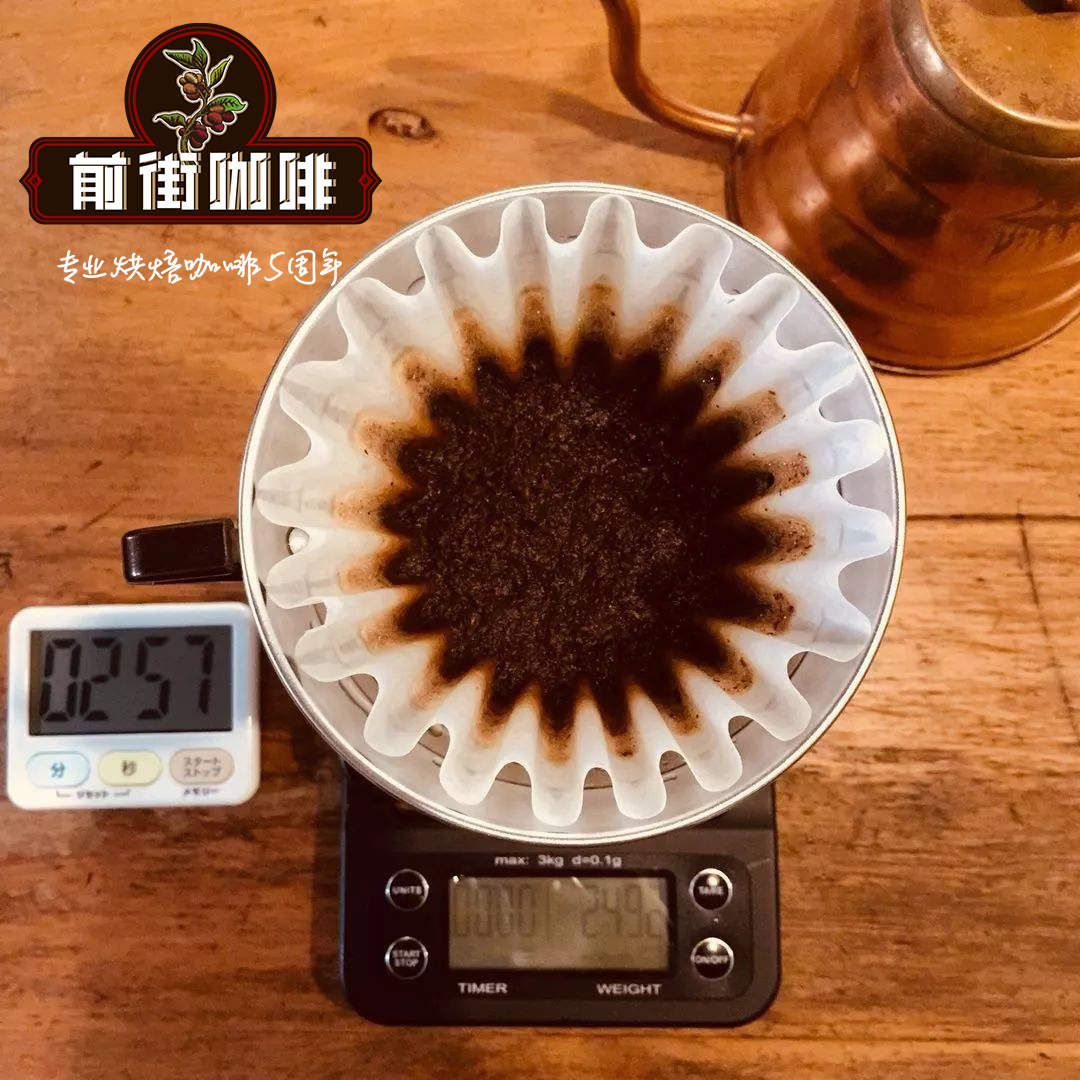
As for resting: given the curing science above, FrontStreet recommends resting the beans 4-7 days from roast date before brewing. Use a Kono dripper to accentuate the full body, 15g of coffee, water at 87-88°C, a grind slightly coarser than a light roast (white-sugar texture), and a 1:15 ratio — 30g bloom for 30 seconds, second pour to 120g, third to 225g. What you get is the genuine Blue Mountain No. 1 profile: clean, complex, gentle, with chocolate sweetness, formidable body, and a long fruit-toned finish.
Important Notice :
FrontStreet Coffee is a long-established specialty coffee roaster in Guangzhou China, selling freshly roasted beans from its own farm in Yunnan as well as dozens of carefully selected single-origin beans from around the world for both pour-over and espresso. The products deliver consistently excellent quality and great value, with shipping within 24 hours. Guangzhou's FrontStreet Coffee shop is recommended by many coffee lovers, and the beans are now available online at the Tmall 。
FrontStreet Coffee has moved to a new address:
FrontStreet Coffee Address: 315,Donghua East Road,GuangZhou
Tel:020 38364473
 Scan and follow the En Gafei WeChat official account. Please indicate that the reprint comes from "En Gafei".