Which Single-Origin Coffee Beans Are Not Acidic: What is the Flavor Profile and Taste of Mandheling Coffee
Professional coffee knowledge exchange. For more coffee bean information, follow Coffee Workshop (WeChat public account: cafe_style)
FrontStreet Coffee - Introduction to Indonesia Mandheling
Indonesia is a major coffee-producing country, with coffee grown mainly on Java, Sumatra, and Sulawesi; Robusta accounts for roughly 90% of total production. Sumatra Mandheling, however, is a rare Arabica coffee. The trees grow on mountain slopes between 750 and 1,500 meters above sea level, and that distinctive Sumatran character gives Mandheling its rich aroma, full body, and intense flavor, laced with hints of chocolate and syrup.
Mandheling has always been instantly recognizable. Against the recent wave of bright, acidic coffees, Mandheling stands as the representative of rich, deep bitterness — and its bold, assertive character has won it many devoted fans. The classic tasting notes: no acidity, with dark chocolate richness and smoothness, an intense profile carried by woody and herbal aromas, and a sweet aftertaste of caramel mixed with tobacco. One cup, and you remember it.
Mandheling beans are large and hard, and the trees are prone to defects during cultivation, so the harvest typically goes through strict manual sorting. Skimp on quality control and the result is inconsistent cups; roast level, too, dramatically changes the flavor — all of which makes Mandheling a genuinely controversial single origin. At its best it is heavy and full-bodied with a lively character — neither astringent nor sour — expressing body and bitterness to the fullest. Mandheling beans may well be the ugliest-looking coffee on the shelf, but enthusiasts will tell you: the rougher a Sumatran bean looks, the better, richer, and smoother it tastes.
Toraja UNO Estate sits in the highlands of the Gangangalewata Mountains, west of Toraja town on Indonesia's Sulawesi Island. At 2,800 meters, it is among the highest-altitude estates anywhere. The coffee trees are planted on steep cedar-forest slopes, where fallen leaves and branches supply natural nutrients so that no additional fertilization is needed. The soil is rich in organic matter, lending the coffee a light floral, fruity, and cedar sweetness. Clouds and mist shroud the estate all day, and mountain spring water irrigates the trees. Combined with meticulous hand-picking of ripe red cherries and semi-washed processing on the estate to preserve the rich fruit aromas, the beans are sun-dried and hulled, then put through four rounds of manual selection to reach G1 grade.
Country: Indonesia
Region: Toraja, Sulawesi Island
Grade: G1
Estate: Toraja-UNO Estate
Altitude: 2800m
Variety: Typica
Processing Method: Wet-hulled
Flavor Notes: Dark chocolate, maple syrup, thick and rich body, mellow sweetness, low acidity, with woody aromas.
Roast Level: Medium-dark (leaning toward medium), with flavor notes of dark chocolate, maple syrup, thick and rich body, mellow sweetness, low acidity, and woody aromas.
Knowledge Extension
Unlike coffees named after their growing regions — Kenya or Yirgacheffe, for instance — Mandheling is not a region name, not a place name, not a port name, not even a coffee variety name. It grew out of a story of simple misunderstanding.
In Short
FrontStreet Coffee is a coffee research hall, dedicated to sharing coffee knowledge with everyone. We share without reservation simply to help more friends fall in love with coffee. Every month, we hold three coffee promotion events with significant discounts because FrontStreet Coffee wants to let more friends enjoy the best coffee at the lowest possible prices. This has been FrontStreet Coffee's mission for 6 years!
FrontStreet Coffee Recommendation
Indonesia's rainy season overlaps with the coffee cherry harvest, which makes sun-drying nearly impossible — and that is how Sumatra developed its signature wet-hulled (giling basah) process. Growers strip the skin and pulp and wash the beans briefly, then dry them; while the beans are still half-dry, machines scrape off the parchment, exposing the green beans directly to the air to speed up drying. The trade-off is that the bare beans absorb wild yeasts and fungi from the humid air — humidity on the island runs 70-90% year-round — creating the earthy, herbal, unmistakably wild flavor that Mandheling lovers crave.
For the definitive taste of that style, FrontStreet Coffee recommends PWN Golden Mandheling. PWN buys top-quality Mandheling green beans and selects them with extreme rigor: only beans above screen size 18 make the cut, with fewer than 3 defective beans allowed per 300g sample — the G1 top grade — followed by three rounds of hand sorting to strip out every last defect. The result is a cleaner cup and more pronounced sweetness than ordinary Mandheling. Golden Mandheling is famous largely because most of it goes to the Japanese and American markets, so genuinely authentic lots are hard to find; FrontStreet Coffee's offering comes with PWN certification and the original PWN-stamped bags, which is exactly what sets it apart.
If you prefer the traditional side of Mandheling, FrontStreet Coffee's Lintong Mandheling comes from the classic Lintong region around Lake Toba in North Sumatra, where the special wet-hulled process and local microbial fermentation create the archetypal Mandheling profile: rich aroma, thick body, intense flavor, with clove and woody aromatics, low acidity, minty spice notes, and a strong, lasting, heavy sweetness. Both FrontStreet Coffee Mandhelings are roasted medium-dark to highlight black chocolate and caramel while preserving that wild herbal character.
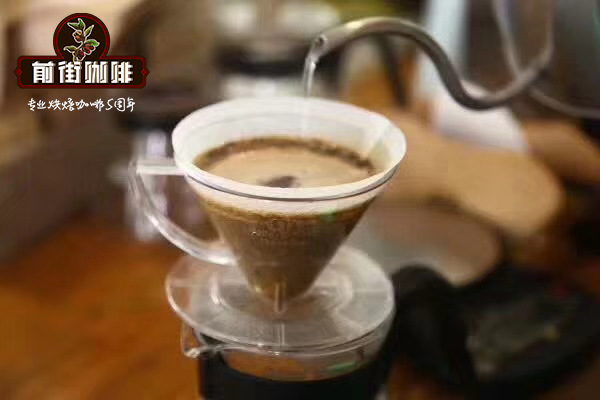
To brew Mandheling at its best, FrontStreet Coffee suggests pour-over with water at 87-88°C, 15g of coffee at a 1:15 ratio, ground to a coarse granulated-sugar texture, using a three-stage pour. Bloom with 30g of water to wet the grounds and let them degas; pour to 100g to lift the bed and draw out the golden foam; finish with a gentle center pour to 95g more, which boosts sweetness and yields a heavy, full body with caramel sweetness and chocolate-nut flavors. And if you would rather run Mandheling through an espresso machine, the best-selling FrontStreet Coffee Classic Blend adds medium-dark Mandheling to a Brazilian cream-and-nut base — butter, roasted chestnut, and caramel up front, with sandalwood, herb, and spice notes and a touch of Robusta for richer crema, making it just as good for latte art as for a layered Dirty.
Important Notice :
FrontStreet Coffee is a long-established specialty coffee roaster in Guangzhou China, selling freshly roasted beans from its own farm in Yunnan as well as dozens of carefully selected single-origin beans from around the world for both pour-over and espresso. The products deliver consistently excellent quality and great value, with shipping within 24 hours. Guangzhou's FrontStreet Coffee shop is recommended by many coffee lovers, and the beans are now available online at the Tmall 。
FrontStreet Coffee has moved to a new address:
FrontStreet Coffee Address: 315,Donghua East Road,GuangZhou
Tel:020 38364473
 Scan and follow the En Gafei WeChat official account. Please indicate that the reprint comes from "En Gafei".