Which Continent Does Sidamo Come From? Is the 2024 New Season Guji 8.0 Coffee Delicious?

Sidamo is a province in Ethiopia, and its growing area sits on the fertile highlands of the East African Rift Valley. It is one of Ethiopia's three registered trademark coffee-growing regions, with abundant rainfall, suitable temperatures, fertile soil and wide day-night temperature swings - excellent conditions for coffee. Roughly 60% of the beans produced here are wet-processed. Sidamo coffee is known for its rich flavor, full body, bright acidity and floral and citrus notes, which makes it a favorite among drinkers who love fruit-forward, aromatic coffee. The region also produces some of Ethiopia's highest-altitude coffee.
Ethiopia's geography suits coffee exceptionally well. Coffee is grown mainly on the southern highlands at altitudes between 1,100 and 2,300 meters. Ethiopian coffee is harvested once a year, with red cherries ripening and ready for picking from September to December. The new season's coffee begins exporting in November-December. Ethiopia still uses traditional cultivation methods: the trees are tended by hand, and growers consistently avoid harmful pesticides and herbicides, relying instead on organic fertilizer - mainly fallen leaves, dried grass and animal manure. Ethiopia enjoys a reputation as the world's only pollution-free, green, organic coffee producer.

Ethiopia's Main Coffee-Growing Regions
Ethiopian coffee comes primarily from eight major regions: Lekempti, Limu, Illubabor, Djimmah, Harar, Teppi/Bebeka, Sidamo and Yirgacheffe.
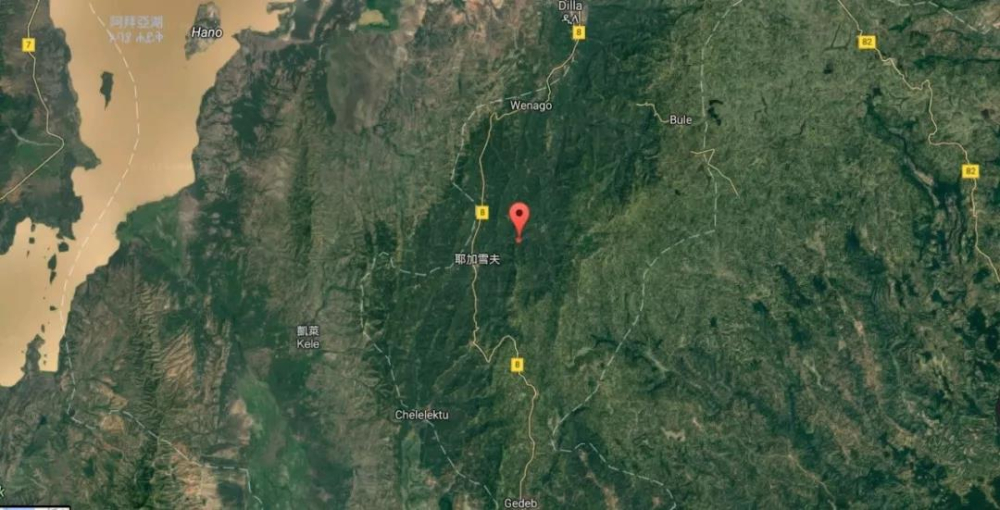
Sidamo - Guji Region
As one of Ethiopia's main specialty coffee regions, Sidamo lies in southern Ethiopia, spanning the highlands south of Lake Awasa in the East African Rift Valley, at altitudes from 1,500 to 2,200 meters. The wide day-night temperature swing extends the maturation of the beans, letting them absorb more nutrients, so the cherries develop layers of sweetness and acidity. The varied topography, different soil types and numerous microclimates make Sidamo's coffee flavors exceptionally diverse.
The Guji region was originally administered as part of Sidamo. Because it is remote and its infrastructure relatively undeveloped, Guji came to prominence later than areas like Yirgacheffe and Harar. In time, the quality of its beans earned it separation as a growing region in its own right. The area has fertile black soil, an average altitude above 1,800 meters, and geographical features that create terroir highly favorable to coffee.

Administratively, Guji belongs to the Oromia Region and is designated a Zone, which makes its coffee a regional green bean. Much as Yirgacheffe became widely known and was then established as an independent sub-region of the broader Sidamo area, Guji followed the same path. This particular batch is produced by smallholder farmers from the Shilcho Cooperative, near Dara Woreda in Sidamo Province. The cooperative was founded in 1976 and is now a member of the Sidama Coffee Farmers Cooperative Union (SCFCU). SCFCU is one of Ethiopia's large cooperative alliances, currently made up of roughly 46 member cooperatives, making it the country's second-largest coffee body.
Hambella Region
Ethiopia's administrative divisions run to four levels - Region, Zone, Woreda and Kebele - roughly equivalent to province, city, district and neighborhood. Queen Rose coffee comes from Guji in Sidamo Province, and can be traced further to Hambella Kebele in Shakisso Woreda. When people mention Hambella, they are usually referring to Queen Rose, since the Queen Rose coffee from Hambella is extraordinarily famous.

Hambella is a sub-region of the Guji growing area and currently has around 20 processing stations of various sizes. Queen Rose comes from the Buku processing station in Guji, located in the village of Buku Abel at an altitude of 2,200 meters. Alongside favorable natural terroir, local farmers take meticulous care of each tree: shade trees are planted beside the coffee so the cherries receive adequate sunlight without the plant spending nutrients it needs elsewhere, preserving more of what matters inside the fruit.
Queen Rose Coffee
In 2017, Ethiopia's DW company entered a natural-processed batch from the Buku Abel processing station, and it won the TOH (Ethiopia National Taste of Harvest) competition with its rich strawberry and cream aromas. That same year, at the World Brewers Cup China competition, Li Jianfei of Beijing CREMA Coffee Training used Queen Rose to defeat Geisha and take the national runner-up title. From then on, Queen Rose began appearing on bean lists everywhere.
In an interview, Brewers Cup runner-up Li Jianfei said he believed this Ethiopian bean's outstanding performance could compete with Panama's Geisha on the same stage.
After DW became famous overnight with Queen Rose, it expanded to four processing stations: Buku Abel, Buku Saysay, Haro Soresa and Tirtiro Goye. Strictly speaking, though, only the natural-processed coffee from the Buku Abel station can be called Queen Rose. The naming follows a sequence that began in 2017: the 2018 batch is Queen Rose 2.0, 2019 is Queen Rose 3.0, 2021 is Queen Rose 5.0, 2022 is Queen Rose 6.0, 2023 is Queen Rose 7.0, and so this year's 2024 batch is naturally called Queen Rose 8.0.

FrontStreet Coffee: Sidamo · Queen Rose 8.0 Coffee Beans
Country: Ethiopia
Region: Sidamo · Guji Zone
Altitude: 2,250-2,350 meters
Variety: Local heirloom varieties
Processing: Natural processing
Flavor: Floral, jackfruit, preserved fruit, apricot, juicy sensation
Arsi Region
Arsi is also a specialty coffee-producing region in Sidamo. West Arsi lies between the famous Yirgacheffe growing area and Hararge, with altitudes from 1,900 to 2,200 meters. It sits in the western part of the Sidamo region, and its name comes from a branch of the Oromo people who have long lived there.
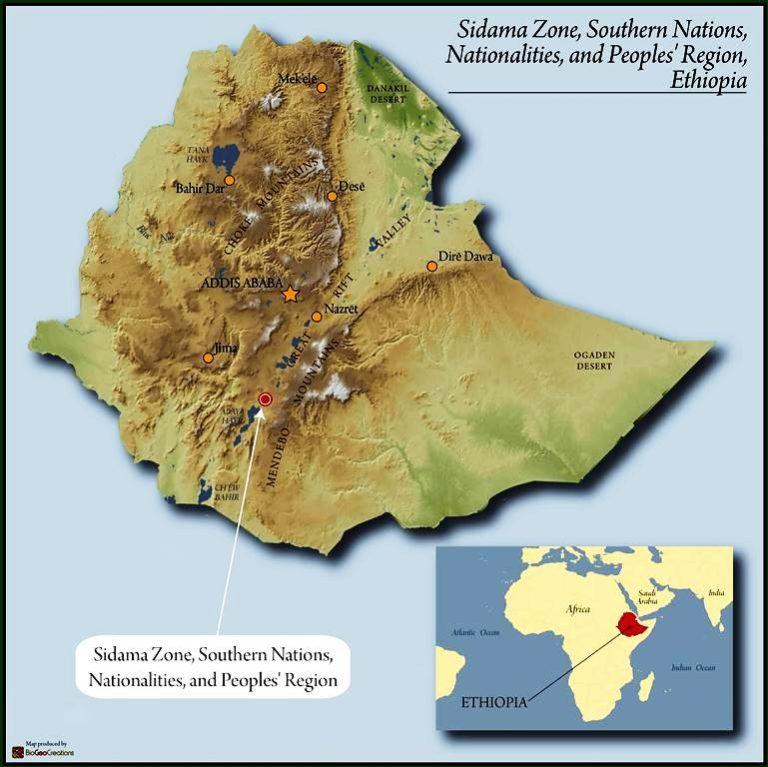
West Arsi is made up of three woredas, Ethiopia's third-level administrative divisions: Arsi, Bale and East Shewa. Around 88.52% of West Arsi's population is Oromo, which matters in coffee history because they were the first people in human history to drink coffee. Half of Ethiopia's coffee production comes from this region.
Coffee in West Arsi is grown on small farms, each averaging 2-3 hectares. Even so, these holdings tend to be slightly larger than the 1.5-2 hectares typical of most other Ethiopian regions. Cultivation techniques are still developing, but West Arsi is advancing quickly compared with other growing regions. Farmers do not need to hire temporary or full-time labor; instead the family selects the coffee together, which gives them better control over quality, and processing stations typically pay a premium for fully ripe red cherries, which is a strong motivation for growers.
Natural Processing
Coffee from Sidamo is predominantly natural-processed, and both of FrontStreet Coffee's Sidamo coffees are natural.

During the annual harvest season from December to January, the Buku processing station harvests only fully red cherries, selecting fruit with a sugar content above 30 and laying it out on African drying beds. Because the local day-night temperature difference is so large, farmers shade the beds at midday to prevent overheating and over-fermentation, and cover them with plastic at night against sudden rain. The cherries are turned continuously through the day and kept from piling too deep, so they dry evenly without sun scorch or unwanted fermentation flavors. After roughly 18 days of natural processing, the green beans have a moisture content of only 13% and can be bagged and stored.
FrontStreet Coffee believes different processing methods produce different flavors. Wet processing expresses Sidamo's original citrus acidity and florals more directly, while natural processing adds aroma, sweetness and fermented character on top. That is why most of FrontStreet Coffee's everyday beans are wet-processed.

Coffee Varieties
People sometimes ask FrontStreet Coffee why Ethiopia's native beans vary so much in size. Ethiopia is the genetic birthplace of coffee, in effect a natural gene bank for Arabica, with an enormous number of varieties. Local farmers often have limited resources, which makes classification extremely difficult, so the government groups them all under the label "Heirloom". As a result, Ethiopian heirloom beans often look uneven in size and shape, yet in the cup they express distinctive floral and fruit aromas.
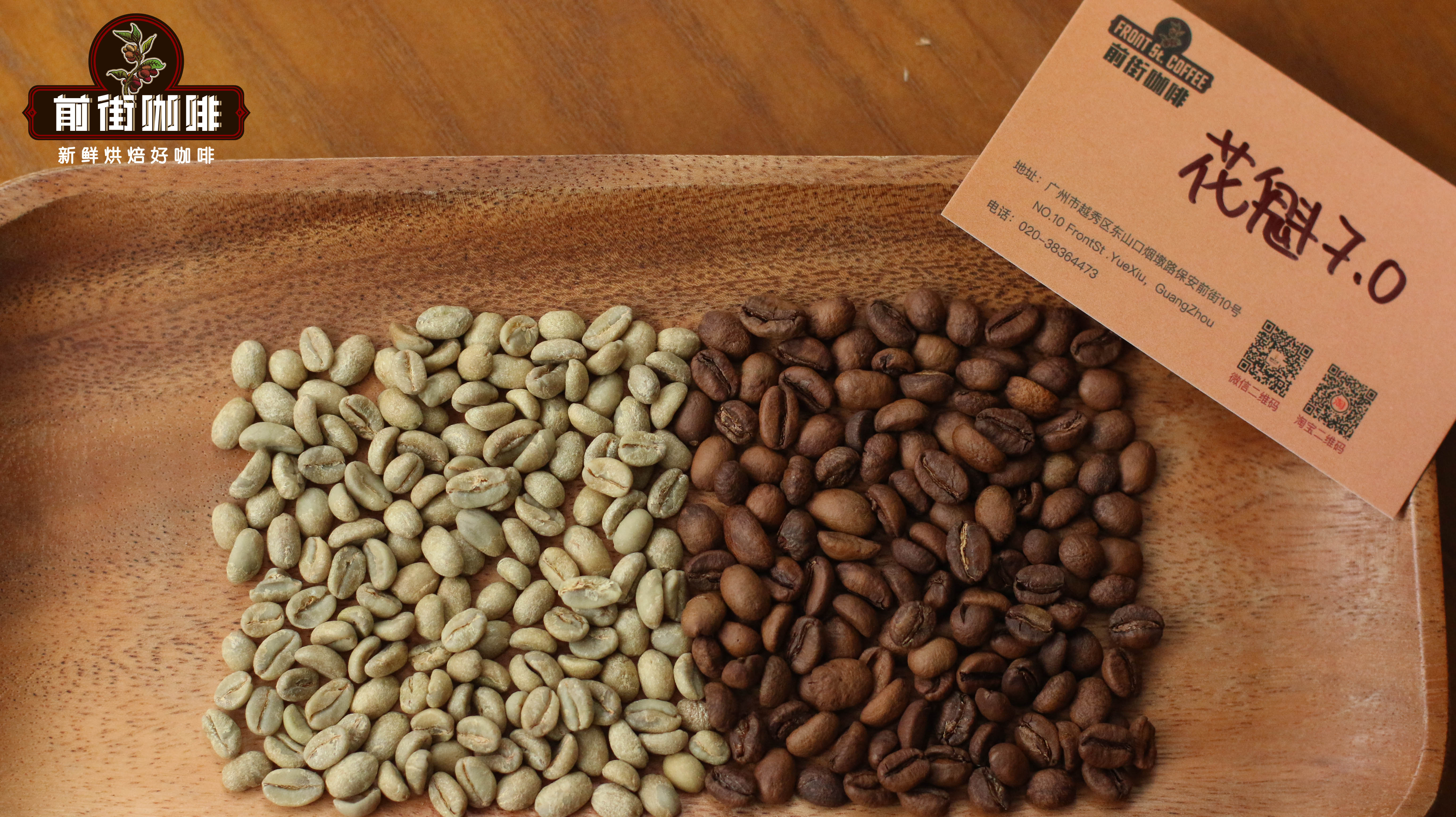
FrontStreet Coffee's brewing parameters for Sidamo coffee:
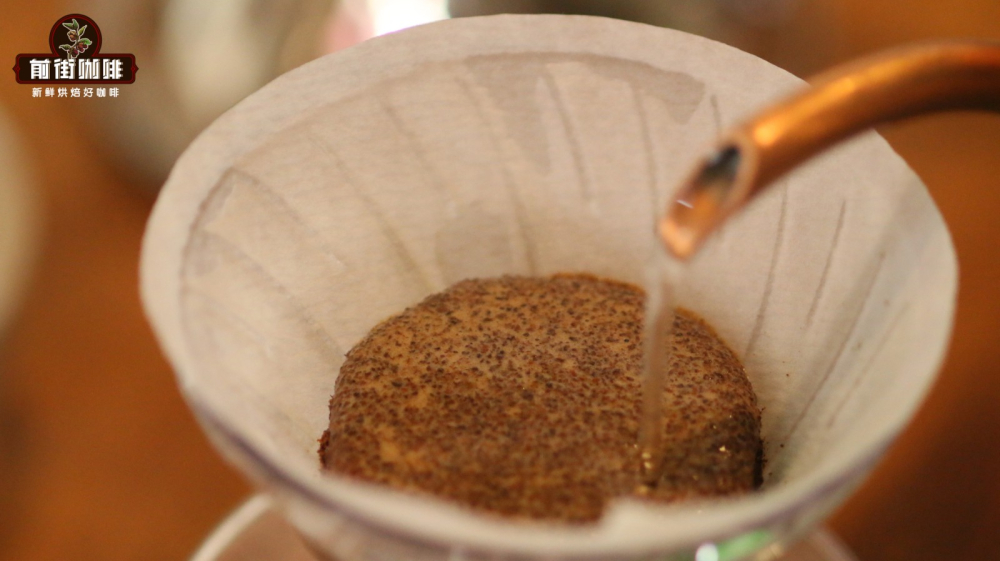
For a light-roasted Sidamo, FrontStreet Coffee uses a V60 dripper, a water temperature of 90°C, a water-to-coffee ratio of 1:15, 15 g of coffee and a grind size of 80% passing through the China No. 20 standard sieve.
Use segmented extraction: bloom with twice the coffee's weight in water, meaning 30 g of water for 30 seconds. The bloom is necessary to let the grounds release trapped carbon dioxide, which makes the later stages of extraction more stable. With a small stream, pour in a spiral to 125 g, then continue to 225 g and stop. Remove the dripper once the water has finished dripping through. Timing from the start of the pour, extraction takes about 2'00". Then take the whole cup, swirl it well and pour out for tasting.
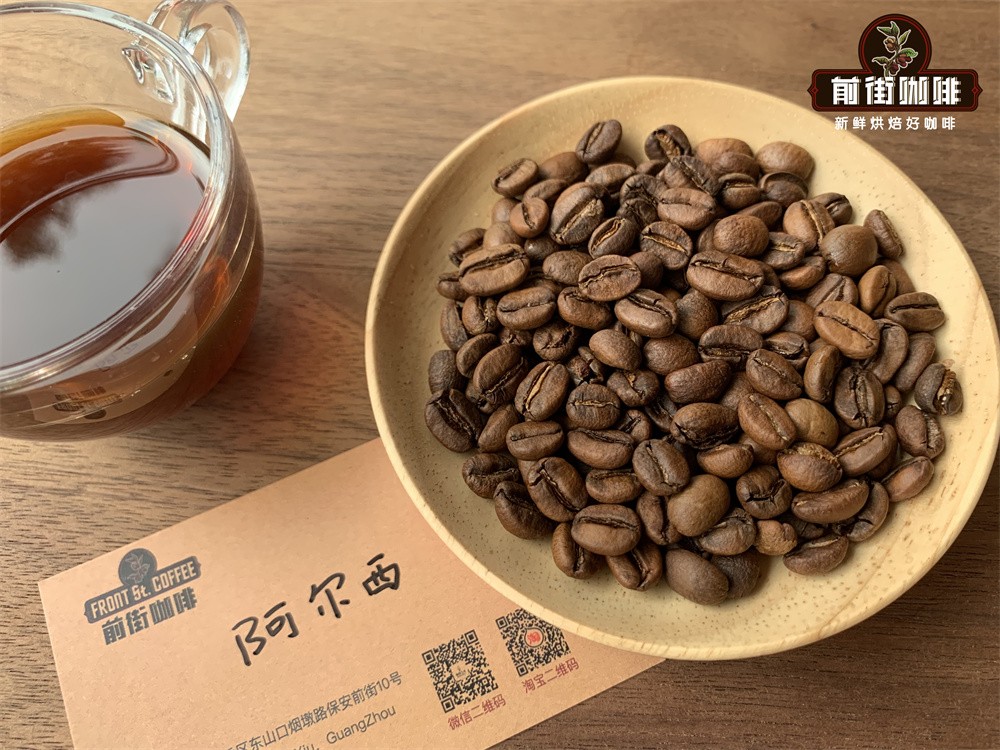
[Natural-processed Arsi]: aromas of berries and honey, with jam-like sweetness spreading across the mouth on entry, exceptionally sweet, finishing with nectarine and a juice-like texture. As it cools it comes to resemble plum and nectarine juice even more.
[Natural-processed Queen Rose 8.0]: very prominent floral and fruit aromas, with clear notes of berries, passion fruit, strawberry and oolong tea, and a high fermented sweetness.

Comparing the two, Arsi's fruit sweetness and juiciness edge ahead - especially while hot, when the jam and honey flavors are irresistible, and the juiciness becomes even more apparent as the cup cools, which is very pleasant.
Queen Rose leans toward tropical fruit, and the alternating contrast between sweetness and acidity is genuinely surprising. Of the two, Queen Rose's fermented character is more intense, as if you had been carried off into a world of fruit.
FrontStreet Coffee's Brewing Suggestions:
On brewing, FrontStreet Coffee has always believed that the freshness of the beans has a great influence on flavor. That is why the coffee FrontStreet Coffee ships is roasted within 5 days. Our roasting philosophy is "freshly roasted good coffee", and it ensures that every customer receives the freshest coffee on arrival. The resting period is about 4-7 days, so by the time the coffee reaches you it is at peak flavor.
For customers who need ground coffee, a friendly reminder: once beans are ground in advance they no longer need a resting period, because the pressure of carbon dioxide building up in the packaging during transit also helps round out the flavor, so you can brew as soon as the ground coffee arrives. Ground coffee should be used promptly, however, since grounds oxidize relatively quickly once exposed to air, meaning the flavor fades faster and the coffee tastes less good. That is why FrontStreet Coffee recommends buying whole beans and grinding fresh before brewing, so you can better appreciate the coffee's flavor.
Ethiopian coffee is like a cup of fruit tea - a refreshing thirst-quencher on a hot summer day, and even more tangy and refreshing as a single-origin espresso. Not every single origin works as SOE, of course; a washed Yirgacheffe in particular would be positively bracing as SOE. Queen Rose, by contrast, is excellent for it.
FrontStreet Coffee Recommendation
If the natural-processed Sidamo described above appeals to you, FrontStreet Natural Red Cherry is the closest thing on our list. It is a naturally processed Yirgacheffe made only from fully ripe, sound cherries: the fruit is hand-sorted at the mill, dried straight on raised beds and turned every two to three hours during the first days to prevent uneven heating and over-fermentation, then finished over three to five weeks before the dried pulp is scraped away. Because the cherry dries with the fruit attached, it keeps the classic Yirgacheffe character while layering on the tropical fruit of the natural process - citrus acidity, juicy berry, honeyed sweetness and a creamy body - with notes of peach, cocoa, honey and lemon.
For the cleaner, more floral side of Ethiopia, FrontStreet Washed Yirgacheffe is our everyday lot and the classic introduction to the region: white jasmine, bright citrus and lemon acidity and a tea-like body, at a price that makes it a natural first specialty bean. If you want the same profile from a single washing station, FrontStreet Gudiding Cooperative comes from a village at the southeastern edge of Yirgacheffe in the Worka district. Once part of the Worka cooperative under the YCFCU union, Gudiding was later recognized as a single origin in its own right as buyers pursued traceability, and its traditional washed processing delivers the same jasmine and citrus clarity with a remarkable absence of bitterness.
Important Notice :
FrontStreet Coffee is a long-established specialty coffee roaster in Guangzhou China, selling freshly roasted beans from its own farm in Yunnan as well as dozens of carefully selected single-origin beans from around the world for both pour-over and espresso. The products deliver consistently excellent quality and great value, with shipping within 24 hours. Guangzhou's FrontStreet Coffee shop is recommended by many coffee lovers, and the beans are now available online at the Tmall 。
FrontStreet Coffee has moved to a new address:
FrontStreet Coffee Address: 315,Donghua East Road,GuangZhou
Tel:020 38364473
 Scan and follow the En Gafei WeChat official account. Please indicate that the reprint comes from "En Gafei".