Sidamo: A Region or Coffee? Rich Sweet Fruity Aroma of Guji Sidamo Coffee Beans
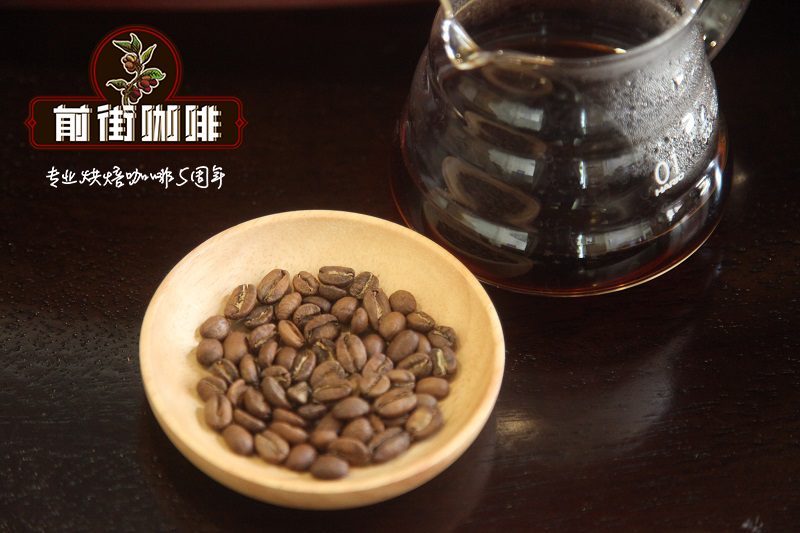
FrontStreet Coffee - Sidamo Region Introduction
As one of Ethiopia's premium coffee-producing regions, Sidamo is globally renowned for its "Hagua" (Horse Governor) coffee. All of FrontStreet Coffee's Hagua beans come from the Sidamo region, spanning version 2.0, 3.0, and the latest 3.1. Its rich fruity aroma is the most alluring characteristic.
Geographic Location and Characteristics
The premium Sidamo region lies in southern Ethiopia, southwest of the Yirgacheffe area. Seasoned coffee lovers know that Ethiopian coffee has long been synonymous with specialty coffee and ranks among the world's finest. Ethiopia is the birthplace of coffee, and its coffees are essentially named after their producing regions: the celebrated Yirgacheffe region yields Yirgacheffe coffee, and the Sidamo region yields Sidamo coffee - each named for its home.
The Sidamo region's economy is predominantly agricultural. The coffee-growing areas sit around the East African Rift Valley at altitudes of 1,500 to 2,200 meters, with high elevation, abundant sunshine, and plentiful rainfall.
The region's greatest advantage is its soil fertility, sustained through the cycling of organic matter - fallen leaves from surrounding trees and residual plant roots serve as fertilizer. This pristine growing environment gives the coffee of each town its own distinct character.
Coffee Processing Methods
Processing profoundly shapes a coffee's flavor expression, and Sidamo is no exception. Washed Sidamo coffee shows bright, clean characteristics: fresh fruit flavors, straightforward florals, and a luminous texture.
Natural processed Sidamo, meanwhile, delivers rustic yet rich fruity flavors - sweet and juicy with ripe fruit notes and a red-wine-like body. Sidamo Hagua, for example, reveals the sweetness of passion fruit in both the dry aroma and the aftertaste. High-quality natural coffee demands more meticulous care and imposes stricter requirements on weather and cherry ripeness, which makes it more precious than washed. This distinction holds for almost all coffees.
The Renowned Hagua Coffee
Sidamo's coffee flavors are astonishingly diverse, thanks to varied soils, regional microclimates, and countless native varieties - each town's coffee has its own distinct personality. Among them stands the famous specialty coffee "Hagua."
"Hagua" is the product of DW Company, which owns its own coffee estate in Ethiopia. The estate's unique location and special microclimate have cultivated coffee with flavors unlike those of any other Ethiopian region. The harvest and processing season falls annually in December-January. Farmers are required to pick red cherries with a sugar content above 30 before natural processing begins, which locks in the cherries' moisture and lets their fructose ferment fully. Meanwhile, the high altitude lets nighttime temperatures at the processing station drop to around 12°C, preventing the over-fermented odors that excess heat can cause. During hotter midday hours, the cherries are shaded to prevent sun damage, and at night they are wrapped in thick plastic sheeting to guard against sudden rainfall.
This allows the red cherries to ferment and dehydrate at relatively low temperatures. After 18 days of natural processing, once the green beans' moisture content falls to around 13%, drying stops. The beans are packed into jute bags and stored in warehouses under natural conditions of 12-22°C and 45-55% humidity for roughly 50 days of resting and further dehydration. When moisture reaches about 11%, the beans are trucked to the processing station for hulling, screening, and sale.
During the annual December harvest, the mountainsides are blanketed in red coffee cherries. This is "Hagua" Estate, where neatly arranged traditional African drying beds at the village entrance serve as the Hagua processing station.
Knowledge Expansion
The hand-picked cherries and beans destined for specialty coffee are natural-processed on African beds: coffee cherries are spread across breathable, mesh-like beds to sunbathe, with the layer thickness adjusted to local conditions.
FrontStreet Coffee's Commitment
In summary: FrontStreet Coffee is a coffee research establishment dedicated to sharing coffee knowledge with everyone. We share without reservation, hoping to help more friends fall in love with coffee. Every month we run three tasting events with significant discounts, because FrontStreet Coffee wants more friends to enjoy the finest coffee at the lowest possible prices - this has been our mission for the past six years!
FrontStreet Coffee Recommendation
For newcomers eager to understand Ethiopian coffee regions, begin with the most classic FrontStreet Coffee washed Yirgacheffe daily coffee. It is known for white jasmine florals, bright citrus and lemon acidity, and a tea-like character, and its affordable price has made it the first bean for countless people entering specialty coffee.
Yirgacheffe itself is a small town in southern Ethiopia's Sidamo province at 1700-2100 meters, with coffee trees planted above 1800 meters - one of the world's highest coffee origins. An ancient wetland, its name combines "Yirga" (to settle down) and "Cheffe" (wetland); in 2010, its fame was such that the Ethiopia Commodity Exchange split it off from Sidamo as its own region. Its unmistakable white floral and lemon-citrus profile has made it a byword for Ethiopian specialty coffee.
For a micro-lot, try FrontStreet Coffee's Idido Cooperative coffee from the Worka zone at Yirgacheffe's southeastern tip. Once part of the Worka Cooperative under the YCFCU union, it was singled out as an independent "single origin" as traceability became the pursuit of coffee hunters worldwide. Processed in the most traditional washed style - and called the last pristine washed corner of Yirgacheffe - it has none of the traditional bitterness, offering instead fresh, bright citrus and lemon acidity plus jasmine fragrance that makes people fall in love at first sip.
And for naturals, FrontStreet Coffee's Red Cherry coffee uses fully red-cherry natural processing: only completely ripe, defect-free fruit is picked, sorted again at the station, then dried on raised beds and turned every 2-3 hours during the early days to prevent uneven heating and over-fermentation. After three to five weeks of sun-drying, the outer pulp is machine-stripped depending on weather and temperature before storage. Because the fruit dries with its pulp on, the coffee keeps classic Yirgacheffe character while gaining tropical fruit from the natural process - citrus acidity, a berry-juice feel, honeyed sweetness, and creamy smoothness.
Brewing suggestion: V60 dripper, 90-91°C water, 15g dose, 1:15 ratio, grind at EK43s setting 10 (fine-granulated sugar, 80% pass-through on a #20 sieve). Pour 30g for a 30-second bloom, then 95g more (scale around 125g) finishing near 1 minute; when the water level falls to two-thirds of the bed, add the final 100g (scale around 225g) finishing around 1:35. Drawdown completes at 2:00-2:10 - lift the dripper and the brew is done.
Important Notice :
FrontStreet Coffee is a long-established specialty coffee roaster in Guangzhou China, selling freshly roasted beans from its own farm in Yunnan as well as dozens of carefully selected single-origin beans from around the world for both pour-over and espresso. The products deliver consistently excellent quality and great value, with shipping within 24 hours. Guangzhou's FrontStreet Coffee shop is recommended by many coffee lovers, and the beans are now available online at the Tmall 。
FrontStreet Coffee has moved to a new address:
FrontStreet Coffee Address: 315,Donghua East Road,GuangZhou
Tel:020 38364473
 Scan and follow the En Gafei WeChat official account. Please indicate that the reprint comes from "En Gafei".