Origin Story of Authentic Guanyin Coffee Beans - Can Guanyin Coffee Beans Be Used for Lattes?
In recent years, Geisha coffee has maintained its high popularity in the specialty coffee world. The English name for Geisha is also "Geisha," which means "geisha" in Japanese. At the same time, there is another coffee from Ethiopia's Sidamo region that is similar to Geisha coffee: Flower Queen coffee.
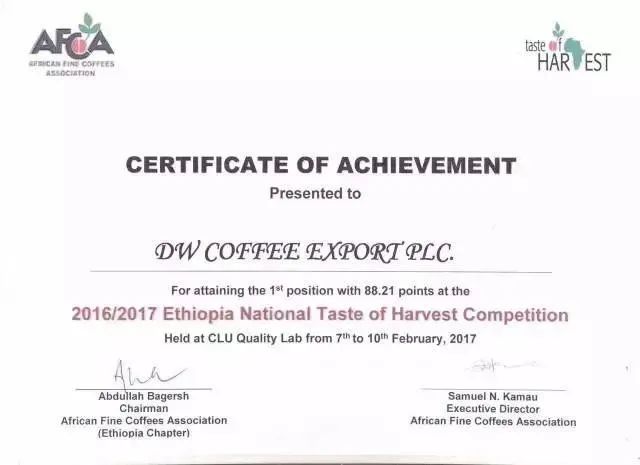
In 2017, Li Jianfei won the China region of the World Brewers Cup with this sun-dried Flower Queen coffee. The popularity of Flower Queen continued to climb afterward. FrontStreet Coffee would even say that it ranks at the top of the specialty coffee list. This Flower Queen broke the legend of Geisha and became a coffee that could compete with Geisha coffee.
In traditional Chinese culture, the top three in the ancient imperial examinations were generally called Zhuangyuan, Bangyan, and Tanhua. What many people do not know is that the Flower Queen from the Guji region of Sidamo also originates from Chinese terminology. If you observe carefully, you will notice that the Chinese and English names of this "Flower Queen" coffee bean do not correspond. The Chinese name is "Flower Queen" (Flower Champion), while the English is more often "Hambella." FrontStreet Coffee will briefly explain the origin of Flower Queen coffee's name.

What is Flower Queen Coffee?
Flower Queen, literally speaking, means the first among all flowers. When Chinese green bean merchants first encountered the Flower Queen from the Hambella area of the Guji region in Sidamo, they were deeply captivated by its vanilla cream flavor. As long as this Flower Queen coffee bean continues to strengthen its processing technique, it has the potential to become the next Geisha. Chinese green bean merchants therefore gave this sun-dried coffee from the Guji region the title of Flower Queen, expressing their high hopes for it.

However, the barista at FrontStreet Coffee would like to remind everyone that not all sun-dried coffee from the Guji region of Sidamo is Flower Queen coffee. Generally, only sun-dried coffee produced and processed by the Buku Abel estate is considered "Flower Queen," so Buku Abel estate is also known as the "Flower Queen Estate." The area where Flower Queen is grown is surrounded by sugarcane and banana plants. Under high-altitude climate conditions, this has created a smooth mouthfeel for Flower Queen coffee, with passion fruit acidity and the fermented wine notes brought by the sun-drying process.
Unlike the lemon and citrus tones of the Yirgacheffe region, which are very popular at FrontStreet Coffee, coffee beans from the Guji region have more intense floral aromas. Moreover, the sun-drying method used for coffee beans from the Guji region further enhances the aroma and sweetness of the Flower Queen coffee beans. Because the flavors from these two regions are so outstanding, they were separately established by the Ethiopian Commodity Exchange.
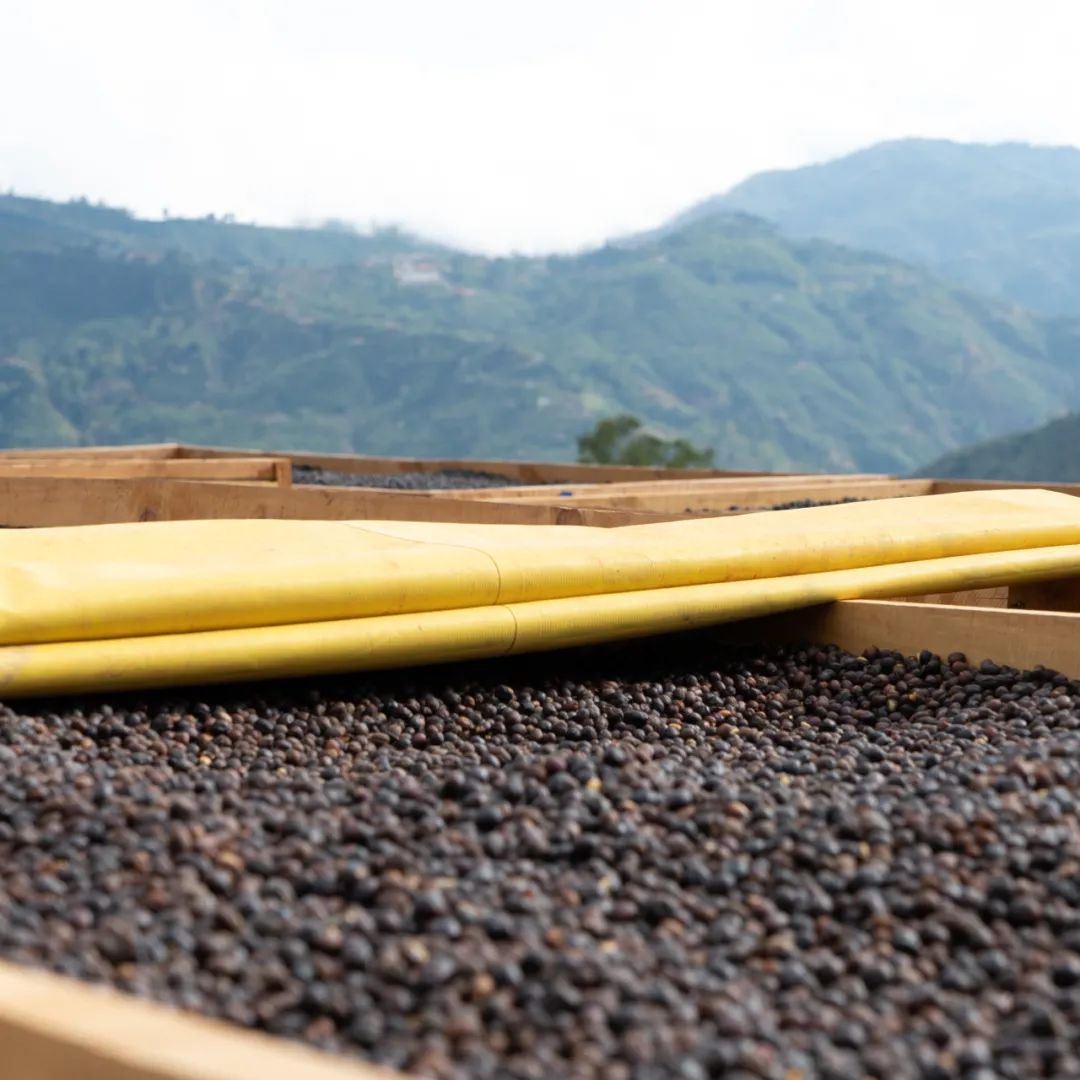
The unique flavor of Flower Queen is inseparable from its sun-drying method. According to FrontStreet Coffee's understanding, coffee farmers harvest coffee fruits each year from December to January. Coffee cherries must have a sugar content of over 30% before they can undergo sun-drying processing. The sun-drying process is very meticulous: for the first two days, it is essential to maintain the humidity of the coffee cherries to allow their fructose to fully ferment. When temperatures are high at noon, timely shading is necessary to prevent the cherries from getting sunburned, which would be detrimental to fermentation. Then at night, to prevent sudden rain, thick plastic is used to wrap them.
Coffee cherry fermentation and dehydration require relatively low temperatures. After 18 days of sun-drying, the moisture content of the green coffee beans drops to around 13%, then the sun-drying process stops and they are placed in sacks in the warehouse. On this basis, the beans continue to be aged and further dehydrated for about fifty days. When the moisture content of the green coffee beans reaches around 11%, they are transported to the processing plant for subsequent processing such as hulling. The choice of processing method is therefore very important for the formation of coffee flavor.

Have you noticed that sometimes when FrontStreet Coffee lists Flower Queen coffee, numbers are added after Flower Queen, such as Flower Queen 2.0, Flower Queen 3.0, Flower Queen 3.1, and Flower Queen 4.0? You might wonder why there are so many versions of Flower Queen. This is because only coffee produced by the Buku Abel processing plant in the Guji region is the real Flower Queen, while coffee beans from other processing plants are all referred to as versions of Flower Queen.
Additionally, most of these Flower Queen coffee varieties are Ethiopian local native varieties. Some readers might not understand what Ethiopian native varieties are. FrontStreet Coffee will give a brief introduction. Because Ethiopia is the homeland of coffee, it can be considered the gene bank of coffee, with a very large number of coffee varieties. Furthermore, Ethiopia's local economic conditions do not support large-scale verification of coffee varieties. On the other hand, the Ethiopian government, to protect native coffee tree species data, is also unwilling to disclose it publicly. These unknown coffee varieties are therefore called Ethiopian local native varieties.

However, FrontStreet Coffee has also cupped several of these Flower Queens and found that Flower Queen 3.1 differs significantly from the original Flower Queen flavor, being instead closer to the Geisha flavor of Panama's La Esmeralda estate. Meanwhile, Flower Queen 4.0's flavor is very close to the original Flower Queen flavor, but through cupping, FrontStreet Coffee still feels that both the aftertaste and body do not match up to the original Flower Queen.
The flavor of Flower Queen changes every year, mainly because coffee is an agricultural product, and it is impossible to grow coffee with the same flavor every year. Agricultural products are very easily affected by uncertain factors such as climate and rainfall. It is therefore very normal for coffee bean flavors to differ each year. This applies not only to the Flower Queen coffee variety but also to every coffee listed by FrontStreet Coffee.
For example, sun-dried coffee beans processed from the same Sidamo region can be very different. Take the Sidamo Arsi coffee listed by FrontStreet Coffee as an example. Through cupping and comparing the flavors of these two coffees, FrontStreet Coffee found that Arsi coffee has a more intense juice-like quality than Flower Queen coffee, while Flower Queen's flavor leans more toward tropical fruit notes, and Flower Queen's fermented quality is more intense than Arsi's.

How to Brew Flower Queen Coffee?
To brew a cup of pour-over coffee, you generally need the following equipment: pour-over kettle, filter cup, serving pot, grinder, filter paper, electronic scale, and thermometer. Among these, the filter cup and filter paper are responsible for filtering coffee grounds while absorbing oils from the coffee, making the taste cleaner. FrontStreet Coffee's daily production in its stores chooses two filter cups: V60 and Kono. The V60 filter cup is mainly responsible for brewing lightly roasted coffee beans, while the Kono filter cup handles darker roasted coffee beans.

The electronic scale is responsible for weighing coffee beans and the weight of water added. Making every parameter data-driven allows for replication while ensuring consistency in production. The same applies to the thermometer: before each pour, ensure the water temperature is within the appropriate range. When using a V60 filter cup to brew lightly roasted coffee beans, choose water temperatures between 90 to 92 degrees Celsius, while for darker roasted coffee beans, choose 88 to 89 degrees Celsius.
The grinder is also very important. The coarseness of the coffee grind directly affects the taste of a cup of pour-over coffee. If the coffee grounds are too coarse, the taste will be weak; if too fine, the taste will be bitter. FrontStreet Coffee recommends a medium-fine grind for pour-over coffee, with an 80% pass rate through a 0.85mm standard sieve.

Brewing pour-over coffee is actually quite simple. What needs attention is controlling several factors that affect coffee taste: coffee-to-water ratio, grind size, water temperature, and extraction time. When FrontStreet Coffee prepares coffee, it first weighs 15 grams of coffee beans, with a ratio of 1:15, meaning 225 grams of hot water will be added.
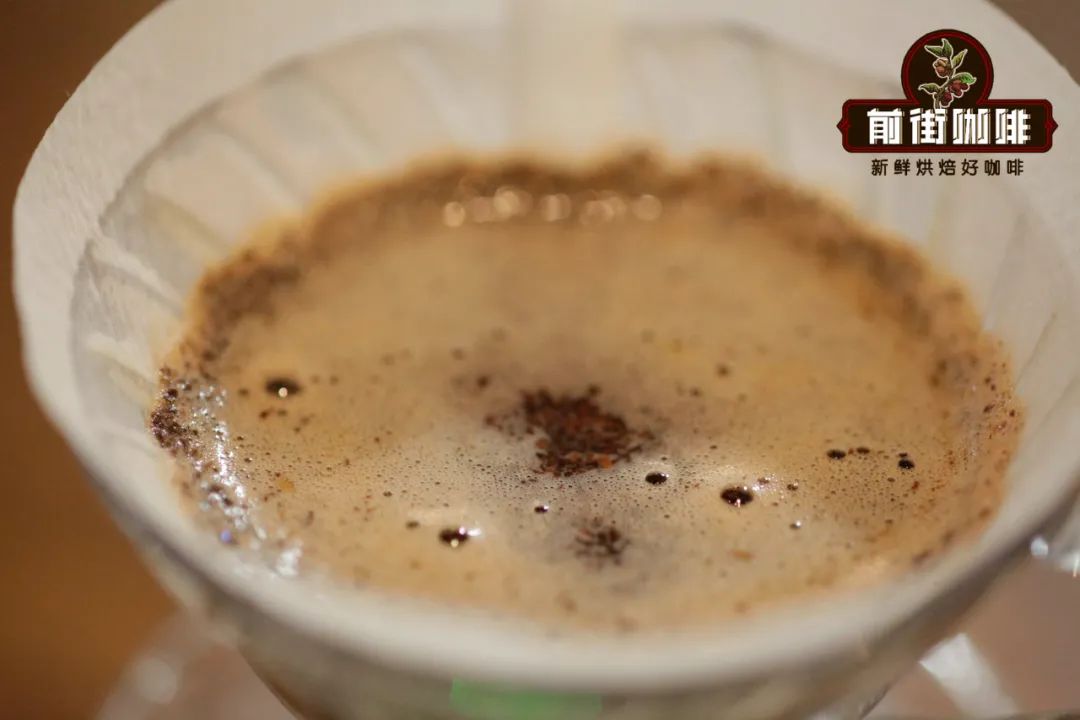
Before brewing, wet the filter paper with hot water to make the filter cup and filter paper fit better. Next, grind the coffee beans to the required grind size, that is, the medium-fine level just mentioned.

Pour the ground coffee into the filter cup and wait for the water temperature to reach the required level for brewing. The entire brewing process divides the water pouring into three stages. In the first stage, pour 30 grams of water for blooming, ensuring all coffee grounds are wetted. The blooming time is 30 seconds, aiming to release carbon dioxide and allow subsequent water flows to better extract the coffee. In the second stage, pour water to 125 grams, then wait for the coffee liquid to drop to half. Finally, pour the last amount of water to reach 225 grams, again waiting for the coffee liquid to filter. The total extraction time is 2 minutes.
Can Flower Queen Coffee Beans Be Used for Espresso?
To satisfy friends who love Italian-style coffee, FrontStreet Coffee has specifically adjusted the roasting curve for Flower Queen 8.0 coffee, making the coffee beans' oils more abundant, thereby making Americanos (with added water) or lattes (with added milk) fuller in flavor.

When using Flower Queen coffee beans to extract espresso, FrontStreet Coffee's extraction parameters are: Galileo Q18 at setting 1.4, 20 grams of coffee grounds, 40 grams liquid weight, coffee-to-liquid ratio of 1:2, with a time of 28-32 seconds. The resulting Flower Queen SOE can have fresh floral and fruit notes. When drinking espresso directly, FrontStreet Coffee can taste the balanced aromas of dark berries, dried apricots, caramel, and creamy chocolate. When made into an Americano, you can feel fresh citrus-like fruit acidity. When made into a latte by adding milk, it presents rich flavors of butter cookies, plums, almonds, and chocolate biscuits.

How to Make Americano with Flower Queen Coffee Beans?
For Americano, choose a 200ml cup capacity. Use 20 grams of coffee to extract 40 grams of coffee liquid, then add 160ml of warm hot water. The ratio of coffee liquid to water is 1:4.
Hot Americano is not too acidic at high temperatures. Surprisingly, at medium temperatures, it has soft berry-like acidity with slight tropical fruit notes, a juice-like mouthfeel, and a creamy, caramel aftertaste.

For iced Americano, initially use 20 grams of coffee to extract 40 grams of coffee liquid, then mix with 260 grams of ice-water mixture. The entry has relatively obvious citrus acidity, refreshing, but the drawback is that there is no aftertaste and insufficient body. To solve this problem, FrontStreet Coffee's barista increased the amount of coffee grounds and readjusted the parameters, using 22 grams of coffee grounds to extract 40 grams of coffee liquid, with an extraction time of 28 seconds.
The readjusted iced Americano has a noticeably softer taste. Stir the coffee and ice water evenly, and the first sip reveals more vibrant acidity with a slightly fuller mouthfeel and dark berry-like flavor notes, while maintaining a juice-like texture. In FrontStreet Coffee's view, when making iced Americano and iced pour-over coffee (extracted with hot water, then cooled and diluted with ice), there must be plenty of ice, and the coffee liquid must be sufficiently concentrated. Otherwise, when ice meets heat and melts into water, it will dilute the coffee until it is very bland and tasteless.

What Does Latte Made with Flower Queen Coffee Beans Taste Like?
When FrontStreet Coffee's barista tried making latte with Flower Queen coffee beans, they also chose a 300ml latte cup, using espresso parameters of 20 grams of coffee grounds to extract 40 grams of coffee liquid, with an extraction time of 30 seconds. Because Flower Queen coffee beans themselves are lightly roasted, and with the addition of a large amount of milk, when made into latte the coffee taste is relatively light. The first sip is the sweetness of milk, dense and smooth, until the aftertaste reveals the berry aroma of Flower Queen coffee.

The preparation method for iced latte is the same as iced Americano, just replacing water with milk. The overall taste is light with slight berry flavors, but the drawback remains insufficient body and a slightly short aftertaste.
FrontStreet Coffee Recommendation
Flower Queen rose to fame as a coffee that could stand alongside Geisha, so if its vanilla-cream and passion-fruit character intrigues you, FrontStreet Coffee's Geisha selection is a rewarding next step. For an accessible introduction, the FrontStreet Boquete Geisha from Panama offers the classic citrus-honey profile at a fair price, while the FrontStreet Gesha Village Gold Label and Red Label bring the Ethiopian side of the family into focus with their complex, layered florals. If you prefer a fruit-driven twist, the FrontStreet Strawberry Candy blend pairs a Costa Rican honey process with Panama Geisha and works equally well for pour-over, moka pot, and cold brew.
Important Notice :
FrontStreet Coffee is a long-established specialty coffee roaster in Guangzhou China, selling freshly roasted beans from its own farm in Yunnan as well as dozens of carefully selected single-origin beans from around the world for both pour-over and espresso. The products deliver consistently excellent quality and great value, with shipping within 24 hours. Guangzhou's FrontStreet Coffee shop is recommended by many coffee lovers, and the beans are now available online at the Tmall 。
FrontStreet Coffee has moved to a new address:
FrontStreet Coffee Address: 315,Donghua East Road,GuangZhou
Tel:020 38364473
 Scan and follow the En Gafei WeChat official account. Please indicate that the reprint comes from "En Gafei".