Which Ethiopian Coffee Ranks Best? What are the Differences Between Gesha Village's Red Label and Gold Label?

FrontStreet Coffee - Gesha Village Gold Label and Red Label Coffee Knowledge Sharing
In 2007, documentary director Adam Overton and his photographer wife Rachel Samuel were filming a documentary about Ethiopian coffee for the Ethiopian government when they came upon the Gera coffee forest in the Bench-Maji region. The experience gave them a new appreciation for Ethiopia's magnificent land and planted the idea of building their own coffee estate and brand.
In 2009 they met Willem Boot, a well-known mule estate owner and BOP judge, whose ideas offered the Overtons an opportunity: return to Ethiopia and find the birthplace of Gesha.
They eventually reached Bench-Maji, in southwestern Ethiopia near South Sudan. Many places in the area are called Gesha Village, making it the most likely place to find the original Gesha. Adam joined Willem Boot on "expeditions" through the forests around the estate, finding all kinds of wild tree species in jungle wrapped in dense forest — and, to their great surprise, wild Gesha.
They later learned that this was the Gori Gesha forest, where the Gesha variety was first discovered. They collected seed from the original Gesha trees, selected among them, and planted them at Gesha Village. They decided to build their estate here and named it Gesha Village Coffee Estate, a 475-hectare coffee farm about 12 miles from the Gori Gesha forest.
Gesha Village Coffee Estate is quite unlike most Ethiopian farms: it is not a smallholding but a 475-hectare estate with its own washing station and laboratory, in the southwest near the Sudan border. Most notably, the whole farm grows only Gesha varieties rather than the usual Ethiopian heirloom varieties of uncertain genetic background.
Gesha Village divides the farm into 8 zones and 3 main Gesha varieties, with all Gesha seed collected from nearby forests rather than from Panama.
Gesha Village runs a strict internal grading system: Auction, Gold Label, Red Label, Green Label, and CHAKA lots.
Gold Label
The Gold Label accounts for only 5% of Gesha Village's total annual production and is almost on par with the auction lots. Quality-focused roasters buy these lots too, and they are fully traceable. Each lot shows outstanding flavor complexity, making it the estate's second-highest grade after the auction lots.
Red Label
Fully traceable lots showing the typical Gesha Village profile. The flavor intensity and complexity are slightly lower than the Gold Label, making them a very cost-effective single-origin option.
Knowledge Extension
Both the Gold Label and Red Label are Gori Gesha, while CHAKA is made up of three varieties: Gori Gesha, Gesha 1931, and Illubabor.
FrontStreet Coffee Recommendation
FrontStreet's Gesha Village Gold Label is drawn from the Gesha 1931 variety and accounts for about 10% of the village's annual output — the estate's top coffee apart from the auction lots. Processed as a refined natural and roasted to bring out complexity, it pours a cup that is remarkable in both dry fragrance and slurped flavor, with a long, resonant finish.
The Gesha Village Red Label belongs to the Gori Gesha variety and makes up around 15% of production, scoring 88 or above on the SCA 100-point scale. It is the estate's single-terroir series, so every lot carries full traceability — farm block, variety, and processing date.
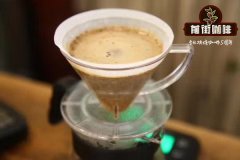
If you are new to Geisha, FrontStreet usually points people to Panama first. The Boquete Geisha is an entry-level Geisha that lets you taste classic Panamanian orange-blossom honey, an oolong-tea sensation, and fine fruit acidity at a friendly price. FrontStreet brews Geisha at a medium-light roast with a grind of about 78% passing a No. 20 standard sieve, water at 91°C, 15 g of coffee to a 1:16 ratio in a small Hario V60, using three pours: 30 g to bloom for 30 seconds, then to 125 g, then slowly to 225 g, for a total of about 2:10-2:20.
Important Notice :
FrontStreet Coffee is a long-established specialty coffee roaster in Guangzhou China, selling freshly roasted beans from its own farm in Yunnan as well as dozens of carefully selected single-origin beans from around the world for both pour-over and espresso. The products deliver consistently excellent quality and great value, with shipping within 24 hours. Guangzhou's FrontStreet Coffee shop is recommended by many coffee lovers, and the beans are now available online at the Tmall 。
FrontStreet Coffee has moved to a new address:
FrontStreet Coffee Address: 315,Donghua East Road,GuangZhou
Tel:020 38364473
 Scan and follow the En Gafei WeChat official account. Please indicate that the reprint comes from "En Gafei".