Which Ethiopian Coffee is Recommended? Chaka Geisha Flavor Profile Introduction
FrontStreet Coffee - Gesha Village Chaka Coffee Knowledge Sharing
Geisha is a precious coffee variety, blessed with a unique jasmine fragrance and bright fruit acidity. It dominates coffee competitions year after year, and its price climbs ever higher.
Geisha seeds were first collected in the 1930s from the wild Kaffa forest in southwestern Ethiopia, during the search for new disease-resistant varieties. The name comes from the nearby Gesha Mountain. The seeds traveled first to Tanzania and then to Costa Rica, where the Tropical Agricultural Research Center (CATIE) catalogued them as T2722. Through the 1950s and 1960s, T2722 was planted on some farms as a disease-resistant variety, but its low yields kept it from ever being widely cultivated.
The native Geisha variety was discovered in Ethiopia's Kaffa forest, and other varieties collected from the same region can also legitimately be called Geisha—in the CATIE database, for instance, T2917 and T3214 are both named Geisha. Varieties from the Kaffa forest region carry enormous genetic diversity, and their genetics may differ considerably from one another.
Gesha Village's coffee grading includes: Auction, Gold Label, Red Label, Green Label, and CHAKA.
Gesha Village Chaka
This bean comes from Gesha Village in Bench Maji, Ethiopia. It is a Geisha blend produced by Gesha Village Estate itself, composed of Gori Gesha, Gesha 1931, and Illubabor.
So what are Chaka's flavor characteristics? FrontStreet Coffee shares a brewing experience with this coffee below.
Gesha Village Coffee Estate CHAKA
Gesha Village · Chaka Batch
- Region: Bench Maji
- Altitude: 1900-2100m
- Varieties: Gori Gesha, Gesha 1931, Illubabor
- Processing: Natural
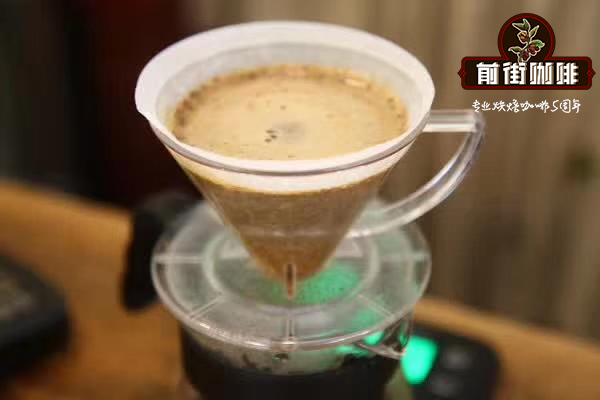
- Recommended Brewing Method: Pour-over, Filter: Hario V60, Water Temperature: 90-92°C, Grind Size: BG 6S (Chinese standard 20-mesh sieve pass rate 58%), Coffee-to-Water Ratio: 1:15
Brewing Technique
Segmented extraction. Bloom with 30g of water for 30 seconds. Pour with a small water flow to 130g, then pause when the water level is about to expose the coffee bed. Continue pouring to 225g to finish, and remove the filter cup when the water level is about to expose the bed again. (Timing starts from the bloom.) Extraction should complete within 2 minutes.
Flavor Profile
Brewed with high-temperature water, this bean shows a distinct caramel sweetness with citrus acidity and oolong tea notes in the finish—noticeably sweet overall. Brewed with lower-temperature water, it takes on a light fermented aroma, with citrus and grapefruit acidity plus cream, chocolate, and caramel flavors, for a gentler profile.
Knowledge Extension
Gesha 1931 (G31) combines traits of several forest varieties and closely resembles Panamanian Gesha. It was selected by observing plant morphology, bean appearance, sieve size, and cupping flavor.
FrontStreet Coffee Recommendation
Panama is where Geisha made its name; Ethiopia is where it was born. In 2003, Hacienda La Esmeralda sent its Geisha to the Best of Panama competition, where an average cupping score of 94.6 broke the BOP's historical record and turned Geisha overnight into the world's most coveted champion variety.
Esmeralda's Geisha line is now divided into two grades. The Red Label, formally "Esmeralda Special," grows at 1,600-1,800 meters, must cup above 90 points per batch, and each numbered batch comes from a single small plot—FrontStreet's Red Label Geisha, for example, is drawn from just one named plot—so buyers can choose lots by subtle flavor preferences. The Green Label, "Private Collection," blends lots across multiple plots to express the estate's signature high-altitude Geisha character at a more affordable price, making it exceptional value.
In Ethiopia itself, Gesha Village Estate was founded by a couple 12 miles from the Geisha forest on 475 hectares; by studying plant morphology, bean shape, and cupping performance, they identified the variety closest to Panamanian Geisha and brought it back to plant. Gesha Village's grading is even more elaborate than Esmeralda's: it grows three Geisha varieties—Gori Gesha, Gesha 1931, and Illubabor Forest—and grades them into Gold Label RARITIES, Red Label GROWERS RESERVE, Green Label SINGLE-TERROIR, and CHAKA lots, further divided by variety. The Gold Label, a Gesha 1931 lot representing 10% of the estate's output, is its finest coffee outside the auction lots and a frequent pick of competitive baristas. The Red Label, a Gori Gesha lot making up 15% of production, scores 88 or above on the SCA's 100-point scale and offers full traceability—farm block, variety, and processing date—on every batch number.
Important Notice :
FrontStreet Coffee is a long-established specialty coffee roaster in Guangzhou China, selling freshly roasted beans from its own farm in Yunnan as well as dozens of carefully selected single-origin beans from around the world for both pour-over and espresso. The products deliver consistently excellent quality and great value, with shipping within 24 hours. Guangzhou's FrontStreet Coffee shop is recommended by many coffee lovers, and the beans are now available online at the Tmall 。
FrontStreet Coffee has moved to a new address:
FrontStreet Coffee Address: 315,Donghua East Road,GuangZhou
Tel:020 38364473
 Scan and follow the En Gafei WeChat official account. Please indicate that the reprint comes from "En Gafei".