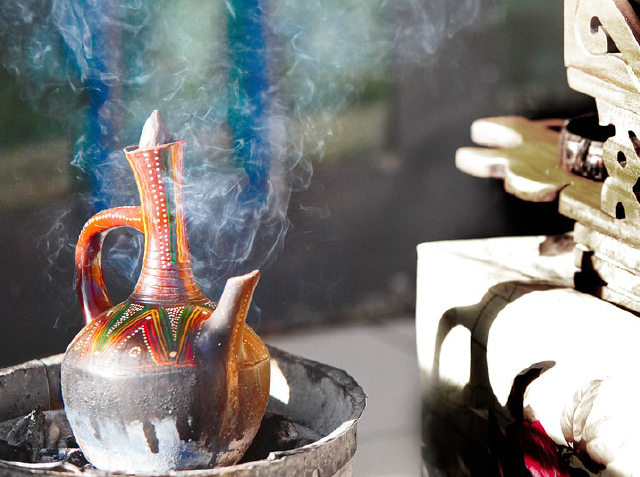
What are the Characteristics of Ethiopian Coffee - Introduction to Common Coffee Varieties

FrontStreet Coffee - Ethiopian Coffee and Common Coffee Varieties Introduction
Ethiopia has unique natural conditions suited to growing every conceivable coffee variety. As a highland crop, Ethiopian coffee is grown mainly at altitudes between 1,100 and 2,300 meters above sea level, largely in the southern part of the country.
Deep, well-drained, slightly acidic red soils with a soft, loamy texture are ideal for coffee: nutrient-rich and full of humus. Rainfall is evenly spread across the seven-month rainy season, and over the growth cycle the fruit develops from flowering to ripening with annual rainfall ranging from 900 to 2,700 millimetres, while temperatures stay between 15°C and 24°C.
Ethiopia is the homeland of Arabica coffee, where wild Arabica can still be found in the forests of the Kaffa region. In the local language coffee is called "Bun" or "Buna," and "coffee bean" may derive from "Kaffa Bun." The Harar region was one of the earliest places Arabica was discovered, and the species likely originated in the Kaffa forests.
Ethiopian coffee is processed both naturally (sun-dried) and by the washed method, and the two produce significantly different flavours. Generally, washed Sidamo, Yirgacheffe and Limmu coffees have slightly lower body and earthier flavours, while natural-processed coffees taste more wild. Each batch of Ethiopian coffee can vary, so extensive cupping is needed to find the truly exceptional lots.
Worldwide there are four main types of coffee tree, but only two have real commercial value and are cultivated widely, and the beans they produce are superior to those of the others. The first is Arabica, the second Robusta, with the other two being Liberica and Excelsa.
From a biological classification standpoint, coffee varieties can be divided into Arabica, Robusta and Liberica.
Typica
Typica was the first commercial variety to be cultivated outside the Arabian Peninsula, originating from an unknown location in Yemen. It was brought out of Ethiopia in the mid-15th century and evolved in this region before reaching India. The Dutch brought Typica to Java at the end of the 17th century, introducing it to Indonesia, and eventually it was cultivated worldwide.
Morphologically, Typica trees are conical with narrow leaves and elongated fruit and seeds. Although some classify Jamaican Blue Mountain as a distinct variety, genetically it belongs to the same one.
Bourbon
Bourbon was the second variety to be cultivated globally after Typica, also originating in Yemen. Early French traders introduced local Yemeni coffee varieties to Bourbon Island, now Reunion Island, for cultivation. In 1859 it was first planted in Brazil and quickly spread worldwide. Its productivity is higher than Typica's. The famous Yellow Bourbon of Brazil today is a variation of this variety.
The original Red Bourbon gradually replaced Typica in Central America because of its higher productivity. Later, French missionaries brought Bourbon to Tanzania, from where it spread throughout East Africa.
Bourbon trees are rounder in shape than Typica, with broader leaves and rounder fruit.
Geisha
Geisha originated near Geisha village in the Bench Maji zone of Ethiopia. In 1931 the British collected it from forests around Kaffa and transported it to Kenya. In 1936 seeds were sent to Uganda and Tanzania.
In 1953 seeds were planted and studied by the Tropical Agricultural Research and Higher Education Center (CATIE) in Costa Rica, and shortly afterwards planted in Panama. Because of low productivity and unremarkable quality, most regions abandoned cultivation. Yet the award-winning Panamanian Geisha of 2004 originated from this sample, and the variety became world-famous, also known as Panama Geisha.
Knowledge Bonus
Generally, Arabica is used mainly for single-origin or specialty coffee, while Robusta is used for instant coffee. Although Arabica can be defined as premium and Robusta as secondary, that classification is not absolute; it is more appropriate to distinguish the two by personal taste.
FrontStreet Coffee Recommendation
The variety that best demonstrates Ethiopia's floral, citrus character is Yirgacheffe, and FrontStreet Coffee's washed Yirgacheffe is the most accessible example. It is known for white jasmine, bright citrus and lemon acidity and a tea-like body, and its price makes it the first specialty bean for many drinkers. Yirgacheffe is a small town in southern Ethiopia, mild and misty year-round with abundant moisture, and its thousands of coffee varieties give the region its signature blend of floral aroma and fruit acidity, light, elegant and refreshing.
FrontStreet Gutingding Cooperative represents the next step. Yirgacheffe town contains many smaller districts and villages, and several of them have skilled cooperatives that turn out finer coffee. The most representative is the Gutingding cooperative in Gotiti village in the Woka district at the southeastern edge of Yirgacheffe. It began as part of the YCFCU's Woka cooperative; as buyers pursued traceability, it was uncovered as a single origin and formally established in 2012 with roughly 300 member farmers. Its traditional washed processing removes the fruit before drying, so the bean's inherent aroma comes through more clearly, giving citrus and lemon notes and an elegant white floral character, bright and delicate overall.
For a natural coffee, FrontStreet Natural Red Cherry selects only fully ripe, defect-free fruit and sun-dries it for about two weeks until the sugars and essence of the fruit have permeated the bean. The cherries are turned every two to three hours in the first days to prevent uneven heat and over-fermentation, and after three to five weeks the softened fruit is machine-depulped and the beans stored. The result keeps the classic Yirgacheffe profile while adding the tropical fruit of natural processing: citrus acidity, berry juice, honeyed sweetness and a creamy smoothness. FrontStreet Huakui, from the Hambella area of Guji in Sidamo, is dried on raised beds for 21 days with regular turning and hand sorting every three to five days; roasted light-to-medium it shows a light fermented wine note, florals, citrus and mango, with honey sweetness, a cocoa bass note and a hint of spice.
Important Notice :
FrontStreet Coffee is a long-established specialty coffee roaster in Guangzhou China, selling freshly roasted beans from its own farm in Yunnan as well as dozens of carefully selected single-origin beans from around the world for both pour-over and espresso. The products deliver consistently excellent quality and great value, with shipping within 24 hours. Guangzhou's FrontStreet Coffee shop is recommended by many coffee lovers, and the beans are now available online at the Tmall 。
FrontStreet Coffee has moved to a new address:
FrontStreet Coffee Address: 315,Donghua East Road,GuangZhou
Tel:020 38364473
 Scan and follow the En Gafei WeChat official account. Please indicate that the reprint comes from "En Gafei".