Introduction to the Characteristics of Jamaica's Blue Mountain Coffee and Famous Varieties of Typica
FrontStreet Coffee - Introduction to Blue Mountain Coffee Characteristics
Blue Mountain Coffee is one of the finest coffees in the world, and its limited production makes it precious for its rarity alone. The Blue Mountain range lies in eastern Jamaica. On clear days the peaks reflect the brilliant blue light of the surrounding Caribbean Sea, which is how the range got its name. The highest peak reaches 2,256 meters, making it the tallest in the Caribbean region and a well-known tourist destination.
The area sits within the coffee belt, with fertile volcanic soil, fresh, unpolluted air, and a humid climate of year-round fog and rain, averaging 1,980 mm of precipitation and temperatures around 27°C. Those conditions created the world-renowned Jamaica Blue Mountain Coffee, which also commands the highest price in the world. The coffee carries every mark of a fine coffee: not only is it rich and mellow, but because sweetness, acidity, and bitterness are so perfectly balanced, it shows no bitterness at all, only a moderate and beautifully judged acidity.
Jamaica grows three categories of coffee: Jamaica Blue Mountain Coffee, Jamaica High Mountain Supreme Coffee Beans, and Jamaica Prime Coffee Beans. Both Blue Mountain Coffee and High Mountain Coffee are further divided into four grades each.
Ranked by quality from highest to lowest, the grades are NO.1, NO.2, NO.3, and PB (Peaberry). Under CIB standards, only coffee grown above 666 meters may be called Jamaica Blue Mountain Coffee; coffee produced below 666 meters within the Blue Mountain region is called High Mountain Coffee; and coffee grown outside the Blue Mountain range is called Jamaica Coffee. Chinese coffee professionals once widely mistook the rule as requiring an altitude above 1,800 meters for coffee to be called Blue Mountain.
Jamaica Blue Mountain Coffee is a high-quality, low-yield Typica variety, part of the finest Arabica species. The harvest runs from June to November each year and is generally carried out by hand-picking. After harvest, the beans go through washing, pulping, fermentation, dehydration, drying, hulling, and roasting to produce premium roasted Blue Mountain Coffee.
During green bean processing, every step is monitored by dedicated quality control staff. For this precious coffee, the Jamaican government also uses distinctive packaging and shipping. Unlike other coffees packaged in 60kg burlap bags, Blue Mountain Coffee is packed in wooden barrels at 70kg per barrel. Jamaica is also the last country that still uses traditional wooden barrels for coffee packaging and transportation.
Did you know? Brazil, the world's largest coffee exporter, produces 30 million bags of coffee a year, while Blue Mountain Coffee produces only about 40,000 bags annually.
FrontStreet Coffee Recommendation
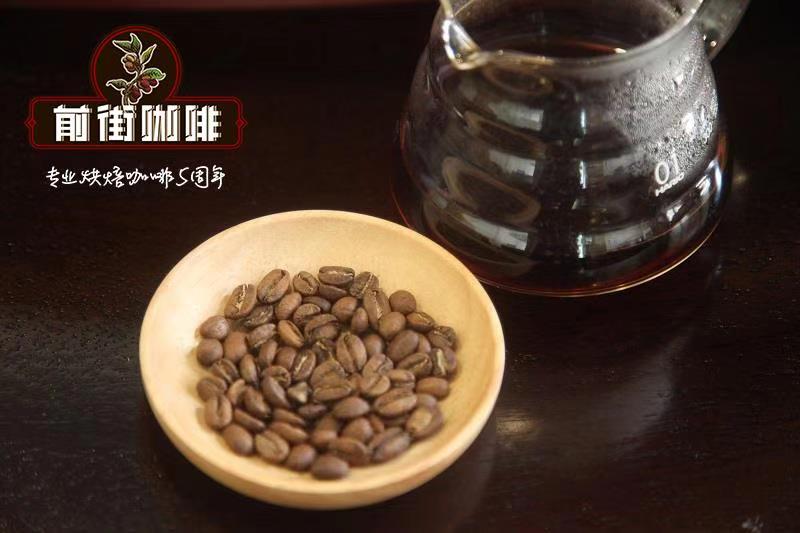
FrontStreet's Jamaica Blue Mountain No.1 comes from the historic Clifton Mount Estate, which began growing and producing coffee around 1750 and sits at an average elevation of 4,300 feet (1,310.64 meters). The altitude, the gentle afternoon cloud that shades the slopes, abundant sunshine, and mineral-rich soil give the trees ideal conditions and draw out the ripening of the cherries. Blue Mountain No.1 is among the highest grades of Jamaican Blue Mountain coffee, held to strict standards for bean size, defect rate, and overall quality, and FrontStreet roasts it medium-dark so its classic balance fully emerges. In the cup you find nutty, dark chocolate, and creamy caramel notes over a soft sweetness, with acidity, sweetness, bitterness, and aroma woven into one harmonious whole: smooth and rounded on entry, rich in mid-palate sweetness, with a clean, long finish.
Authenticity matters as much as flavor for a coffee this famous and this counterfeited. Authentic Blue Mountain has no traceability QR code, but importers hold complete export certification and proof of origin, and the traditional wooden barrels stamped with detailed batch information are themselves a sign of the real thing. As a scarce, high-grade coffee, genuine Blue Mountain green beans are also bright green and notably regular and plump, with slightly upturned ends. FrontStreet's beans carry the estate's own certification, proving they were produced at Clifton Mount Estate in Jamaica, so the source is fully traceable for buyers who want certainty.
For brewing, FrontStreet recommends a Kono dripper, which helps raise the full body of the coffee. Use 15g for a single serving and let the beans rest four to seven days from the roast date for the best flavor. Grind slightly coarser than for a light roast, roughly the texture of caster sugar, because Blue Mountain is medium-dark roasted and more porous, absorbing water and releasing solubles quickly; too fine turns the cup burnt and bitter, too coarse leaves it thin and watery. Brew with water at 87-88°C, since too hot is the usual cause of bitterness and too cool flattens the coffee, and use a ratio of 1:15 to 1:16. With the three-pour method, start with a 30g bloom for 30 seconds, pour to 120g with a vertical, slow circling stream, then pour to 225g with a slightly faster stream to keep the bed from clogging and over-extracting. Because Blue Mountain is so well balanced, it is not limited to pour-over: it also shines in a moka pot, where a slightly finer grind than pour-over, hot water in the base, medium-low heat, and removing the pot from the heat just as the coffee finishes flowing intensify its chocolate, caramel, and nutty notes and make an excellent latte or flat white.
Important Notice :
FrontStreet Coffee is a long-established specialty coffee roaster in Guangzhou China, selling freshly roasted beans from its own farm in Yunnan as well as dozens of carefully selected single-origin beans from around the world for both pour-over and espresso. The products deliver consistently excellent quality and great value, with shipping within 24 hours. Guangzhou's FrontStreet Coffee shop is recommended by many coffee lovers, and the beans are now available online at the Tmall 。
FrontStreet Coffee has moved to a new address:
FrontStreet Coffee Address: 315,Donghua East Road,GuangZhou
Tel:020 38364473
 Scan and follow the En Gafei WeChat official account. Please indicate that the reprint comes from "En Gafei".