Japanese Drip Method: Flattened Wide Spout Kettle vs. Pointed Gooseneck Kettle - Which is Better?

FrontStreet Coffee Explains the Differences Between Flattened Wide-Spout Kettles and Pointed Crane-Neck Kettles for Japanese-Style Drip Brewing
The drip method, as the name suggests, brews through water droplets, much like an hourglass, dripping drop by drop onto the coffee grounds. It is slow, but visually striking and rhythmic. You begin by moistening the grounds bit by bit for the pre-infusion. Once about one-third has dripped through, you can start pouring. When the water level reaches the top of the coffee bed, pause briefly; when it falls to halfway, pour again.
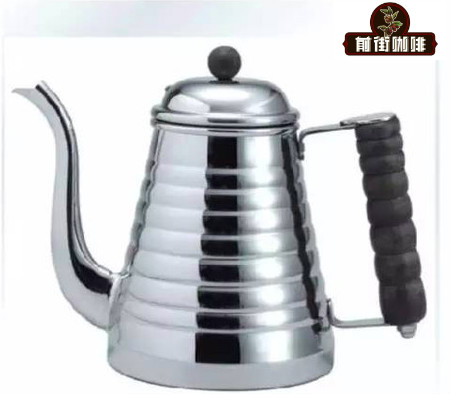
Because the kettle has to release water drop by drop, a flattened wide-spout kettle or a wide-spout crane-neck kettle is the right tool. The advantage of these pour-over kettles is their fine control over the thickness of the stream, which makes them better suited to the drip method.
Two kettle types show up most often in French and Japanese-style drip brewing: the flattened wide-spout kettle and the pointed crane-neck kettle. So what separates them?
Flattened Wide-Spout Kettle:
It gives better control over stream thickness and produces a larger water column. Achieving a genuinely thin stream can be difficult—you may end up with a thicker flow than intended—so this is a kettle that takes practice. Once mastered, though, you can vary the flow size as needed, and brewing several servings at once in daily use is not too hard. (Challenging to control)
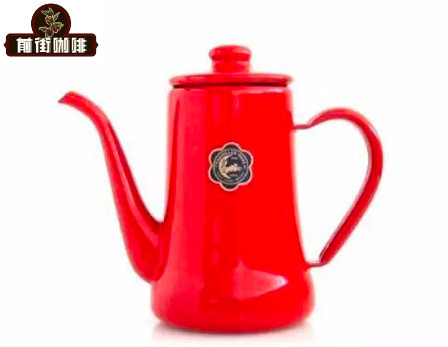
Pointed Crane-Neck Kettle:
Its advantage is that both large and small streams pour smoothly and steadily. Paired with changes in water temperature and pouring height, it can build more refined, detailed layers in the cup. The difficulty lies in controlling a very small stream—genuinely hard to manage. Experts can use this kettle for true drop-by-drop pouring, but most users will find it tough.
When paired with a conical dripper, its ribs stop at less than half the height of the filter. That design lets the paper fully adhere to the wall once it absorbs water, greatly limiting the space for air to escape. This setup is better suited to medium-roasted or darker beans.
FrontStreet Coffee Recommendation
Whichever kettle you choose, the dripper and the beans matter just as much. FrontStreet Coffee favors the resin Hario V60. Hario was founded in Tokyo in 1921 as a maker of heat-resistant glassware for research institutions—its heat-resistant glass server is a popular companion to pour-over gear—and in 2004 it redesigned the V60 prototype into the shape we know now, named for its 60° cone angle and V-shaped body, releasing it the following year. The conical 60° design lengthens the contact between water and grounds by forcing flow toward the center, while the single large hole leaves flow rate almost entirely up to the brewer. Resin is FrontStreet's material of choice because it blocks heat loss well and holds the tightest tolerances in mass production.
For a medium or darker roast—the kind these kettles handle best—FrontStreet Blue Mountain No.1 and FrontStreet PWN Golden Mandheling are classic choices. Blue Mountain No.1 is a medium-dark roast with a clean, complex, gentle cup, chocolate sweetness, and a strong body. PWN Golden Mandheling is dark roasted with very low acidity and a full, lingering body, packed with herbal and dark chocolate aromas and a faint earthy note—ideal if you like a heavier cup and dislike acidity.
If you brew mostly light-roast, floral and fruity coffees, FrontStreet Gedeb and FrontStreet Huakui are better matches. Gedeb delivers the classic Yirgacheffe profile of citrus, berry, and floral notes with a green-tea finish, while Huakui leans heavily into tropical fruit—strawberry, passion fruit, jackfruit—with high sweetness and almost no bitterness. Both are forgiving in a V60 and rewarding when you slow the pour down.
Important Notice :
FrontStreet Coffee is a long-established specialty coffee roaster in Guangzhou China, selling freshly roasted beans from its own farm in Yunnan as well as dozens of carefully selected single-origin beans from around the world for both pour-over and espresso. The products deliver consistently excellent quality and great value, with shipping within 24 hours. Guangzhou's FrontStreet Coffee shop is recommended by many coffee lovers, and the beans are now available online at the Tmall 。
FrontStreet Coffee has moved to a new address:
FrontStreet Coffee Address: 315,Donghua East Road,GuangZhou
Tel:020 38364473
 Scan and follow the En Gafei WeChat official account. Please indicate that the reprint comes from "En Gafei".