What is Hokuto Coffee Bean? Introduction to Sun-Dried Hokuto Coffee Bean Characteristics
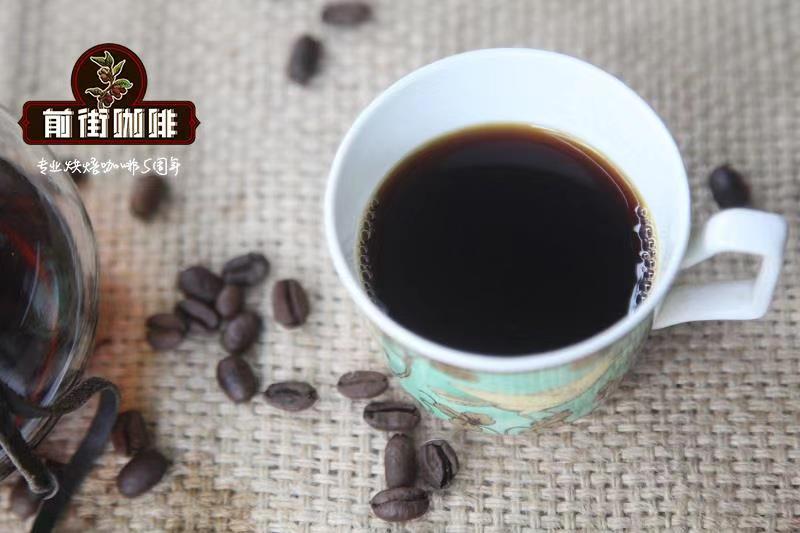
FrontStreet Coffee - Ethiopia Sidamo Guji Hambella Huakui (Flower Queen) Coffee
The term "Heirloom" refers to the original plant varieties first cultivated for consumption. Some people define heirlooms as varieties over 100 years old, others say 50. Some draw the line at varieties that existed before 1945 — roughly when hybrid varieties began to appear — or before 1951, when hybrids became widespread.
Seen broadly, Ethiopian coffee varieties fall into two categories: JARC varieties and regional landrace varieties.
JARC varieties were bred by the Jimma Agricultural Research Center, an institution under the Ethiopian Federal Agricultural Research Center, which was established primarily to study pest resistance and raise yields; it holds around 40 varieties. Regional landraces, by contrast, are the wild varieties that grow throughout the Ethiopian countryside — and by some counts, such as Getu's, there may be more than ten thousand of them.
This means that when you buy a bag of Ethiopian coffee labeled "Heirloom," the beans could be a blend drawn from any of those ten-thousand-plus varieties. Huakui — "Flower Queen" — is one of them.
The plots where red cherries are harvested are tightly clustered, and the new processing station sits nearby, so cherries can be collected and processed at top speed. The entire process is managed with scientific measuring instruments, without any radical departures from tradition. Sun-drying only begins once the red cherries' sugar content reaches 21 or above, which is why the sweetness is so pronounced. Huakui processed this way — fully natural — shows low acidity and high sweetness.
The Huakui Production Region
Guji, Shakisso, Hambella — the Hambella region currently has around 20 processing stations of various sizes. As a green coffee company "rooted" in Ethiopia's producing regions, Hongshun has, since 2016, set up four natural processing stations in the Hambella area of the Guji zone through local partnerships, and during the 17/18 harvest season it used the region's high-quality varieties to run a series of experiments with natural processing.
During the harvest and processing season (December–January), the region's unique growing environment and natural climate shape Huakui's distinctive flavor. Natural processing only begins when the harvested red cherries reach a sugar content of 21 or above. In the first two days of drying, the cherries' humidity must be maintained so their fructose can fully begin fermenting. Meanwhile, the high-altitude location lets nighttime temperatures at the station drop to around 12°C, preventing over-fermentation odors from excess heat, and the cherries are shaded at midday when temperatures peak, to avoid sunburn.
Huakui - GUJI, HAMBELLA
Origin: Ethiopia, Africa
Variety: Ethiopian Heirloom
Altitude: 2250–2350m
Grade: G1
Process: Natural (African drying beds)
Flavor Profile: High sweetness, full mouthfeel, with jackfruit, passion fruit, and strawberry notes
FrontStreet Coffee Recommendation
FrontStreet's natural Huakui comes from the Hambella region of Guji, Sidamo, where the farm spans 200 hectares and uses traditional natural processing. To keep the cherries from molding or picking up earthy odors during drying, workers spread them on raised beds for 21 days of sun-drying, turning them constantly for even dehydration and hand-sorting out defective or moldy beans every three to five days. Once the dried husk hardens it is removed with a huller, and the green beans go through one final hand-sorting for perfection. Because the beans dry with the fruit and skin intact, a medium-light roast reveals a light fermented winey note, florals, citrus, and mango — a much richer, more complex cup with honeyed sweetness, cocoa undertones, a hint of spice, a thick body, and a long finish.
If you'd like to explore more of Ethiopia, FrontStreet's washed Yirgacheffe is the classic starting point, with clear jasmine florals and bright citrus acidity over a light, elegant, tea-like body. For wilder origins, the Kaffa Forest coffee — grown wild at 1,400–2,100 meters under shade — offers white florals, bright lemon acidity, sweet orange and bergamot, and a green-tea-like finish at a medium-light roast.
Important Notice :
FrontStreet Coffee is a long-established specialty coffee roaster in Guangzhou China, selling freshly roasted beans from its own farm in Yunnan as well as dozens of carefully selected single-origin beans from around the world for both pour-over and espresso. The products deliver consistently excellent quality and great value, with shipping within 24 hours. Guangzhou's FrontStreet Coffee shop is recommended by many coffee lovers, and the beans are now available online at the Tmall 。
FrontStreet Coffee has moved to a new address:
FrontStreet Coffee Address: 315,Donghua East Road,GuangZhou
Tel:020 38364473
 Scan and follow the En Gafei WeChat official account. Please indicate that the reprint comes from "En Gafei".