What are the characteristics of Guatemala coffee beans? Introduction to Guatemalan coffee origin flavor profiles

When we think of American coffee beans, representative producing countries like Brazil, Colombia, Costa Rica, and Panama come to mind first. Each owes its signature character to geography, varieties, and processing methods. Beyond these, FrontStreet Coffee holds a special fondness for the beans of Guatemala.
Guatemala has one almost magical ingredient: its terrain. From plains to high mountains down to the Pacific coastal belt, dotted with volcanoes, the country's fertile volcanic soil nurtures specialty coffee of remarkable character.
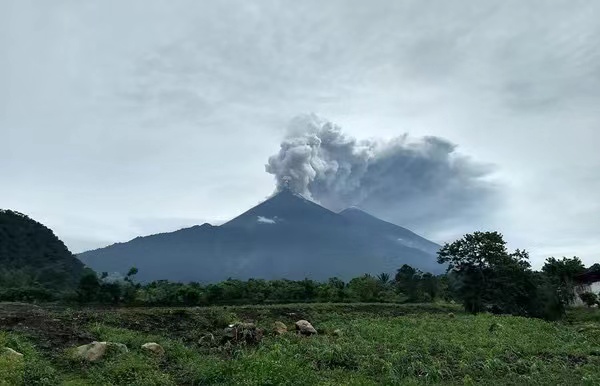
Guatemala has multiple volcanoes exceeding 3,000 meters. The country can be roughly divided into the northern lowland plains, the high central plateau, and the southern Pacific coastal zone. Taking advantage of this range of terrain and climates, coffee is cultivated from the highlands to the northern plains and along both the Pacific and Atlantic sides. Major producing regions include Antigua, Atitlán, San Marcos, and Cobán.
Thanks to fertile volcanic ash soil and favorable climate, Huehuetenango has attracted worldwide attention in recent years. The Guatemalan National Coffee Association, jointly run by producers and exporters, actively provides agricultural assistance to growers. Although the country's farms vary in size and rely on traditional methods, they still produce many distinctive specialty coffees.
Major Guatemala Coffee Producing Regions
Such rich regional diversity comes down to the soils and climates of the country's eight producing regions. Five of them - Antigua, Acatenango Valley, Atitlán, San Marcos, and Volcán - sit on volcanic geology, while the other three - Huehuetenango, Cobán, and New Oriente - are non-volcanic highlands or tropical rainforest climates. Guatemala boasts more than 300 microclimates, the most of any country in the world.
The Guatemalan National Coffee Association (ANACAFE) divides the country into eight producing regions based on flavor, climate, soil, and altitude:
Antigua
Antigua lies in the mountainous basin centered on the Madre plateau that crosses Guatemala. Its natural conditions have made it the most famous of the eight regions: high altitude, unique volcanic soil, and shade-grown cultivation give the beans their distinctive regional flavor.
Huehuetenango
Huehuetenango is one of Guatemala's most important coffee regions, and its name has a charming origin - it comes from the Nahuatl language and means "land of the ancients (or ancestors)." Unlike Antigua, Huehuetenango coffee is aromatic and brightly fruity with a refreshing taste. Thanks to the high altitude, the beans are of superior quality with rich flavor and full body, long favored by European royalty. The region occupies Guatemala's northwestern highlands at 1,800-2,100 meters, the highest coffee-growing elevation in the country, and is renowned for top-grade beans.
Because Guatemala is threaded with rivers and lakes, Huehuetenango enjoys abundant mountain water. The climate is dry yet water is plentiful and the water infrastructure is well developed, so most coffee here is processed by the washed method.
Cobán
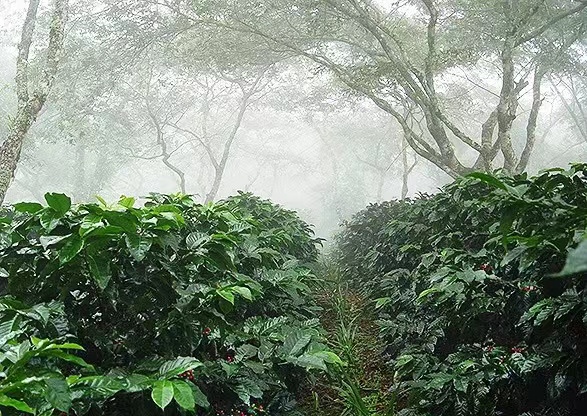
The Cobán region lies in Alta Verapaz province, 220 kilometers from Guatemala City. It is famous for its untouched natural environment and singular microclimate. Alta Verapaz borders Petén to the north - the heart of Mayan culture and the source of Guatemala's largest tropical rainforest - while to the south rise mountains above 1,600 meters, creating a striking contrast between high ranges and humid rainforest. The area is perpetually veiled in mist: the name "Cobán" derives from the Q'eqchi word "Cob'An," meaning "foggy place."

Lake Atitlán
Among Guatemala's volcanic regions, this one has the most organic matter in its soil. About 90% of the coffee is grown on extremely steep volcanic slopes, and the cool daily breezes off Lake Atitlán give the microclimate its own distinctive style. The soil around the lake is very fertile, lakeside elevations still reach 1,500 meters, and Atitlán is Guatemala's largest and most famous high-altitude volcanic lake.
Fraijanes Plateau
The Fraijanes region surrounds the capital, Guatemala City, with high altitude, abundant rainfall, and marked swings in humidity. Volcanic ash from Pacaya, Guatemala's most active volcano, supplies important minerals to the soil - though it occasionally threatens personal safety and infrastructure.
Volcanic San Marcos
This is the warmest of the eight regions and also the wettest, receiving up to 200 inches (5,000 millimeters) of rain. The rainy season arrives earlier than elsewhere and flowering starts sooner too. Like many remote Guatemalan regions, most San Marcos farms have their own washing stations, drying coffee partly in courtyards and then finishing it at low temperatures.
Acatenango Region
Acatenango is one of Guatemala's most distinctive regions and the smallest of the eight. It sits on the slopes of the Acatenango volcano at an average altitude of 1,600 meters, in soil rich with volcanic material from fresh ash ejected by the nearby, frequently erupting Fuego volcano.
The local microclimate has clearly defined seasons: in spring farmers can sun-dry their coffee, in summer abundant rainfall keeps the trees hydrated, and in winter warm, humid Pacific sea breezes shield the coffee from cold.
New Oriente Region
New Oriente is Guatemala's youngest coffee region. Rainfall is plentiful, cloud cover is nearly constant, and the climate resembles the Cobán rainforest. It was an ancient volcanic zone, and the soil - formed from metamorphic rock - is rich in minerals. Before coffee arrived, New Oriente was among the poorest parts of Guatemala; since the 1950s, mountain farmers have used this naturally fertile land to build a coffee industry that has blossomed into one of the country's rising stars.

Coffee Varieties
Guatemala's main varieties are Bourbon, Typica, Catuai, and Caturra, with smaller amounts of Yellow Bourbon, Geisha, and Pacamara. The variety palette is broad, but it is precious that the old Typica and Bourbon lines have been preserved. FrontStreet Coffee's Flora de Dios is made up of Caturra and Catuai.
Grading Method
Although grading is based on altitude, flavor often determines the final grade as well. Beans grown above 1,300 meters are graded "Strictly Hard Bean" (SHB); 1,200-1,300 meters as "Hard Bean" (HB); and 900-1,050 meters as "Extra Prime Washed" (EPW).
Guatemala's Processing Methods
American coffee countries rely mainly on washed processing - Colombia and Costa Rica among them - and Guatemala is no exception. How does it work? After harvest, the cherries go straight to the washing station, where they are floated in water channels to select fruit of sufficient density. Cherries with short growth cycles lack density and float, while dense cherries sink and move with the current to the next stage.
Next, machines remove the skin and pulp, and the beans, still coated in mucilage, go into fermentation tanks where the mucilage layer is broken down. After fermentation, the beans are rinsed with clean water to wash away the decomposed mucilage and any remaining pulp.
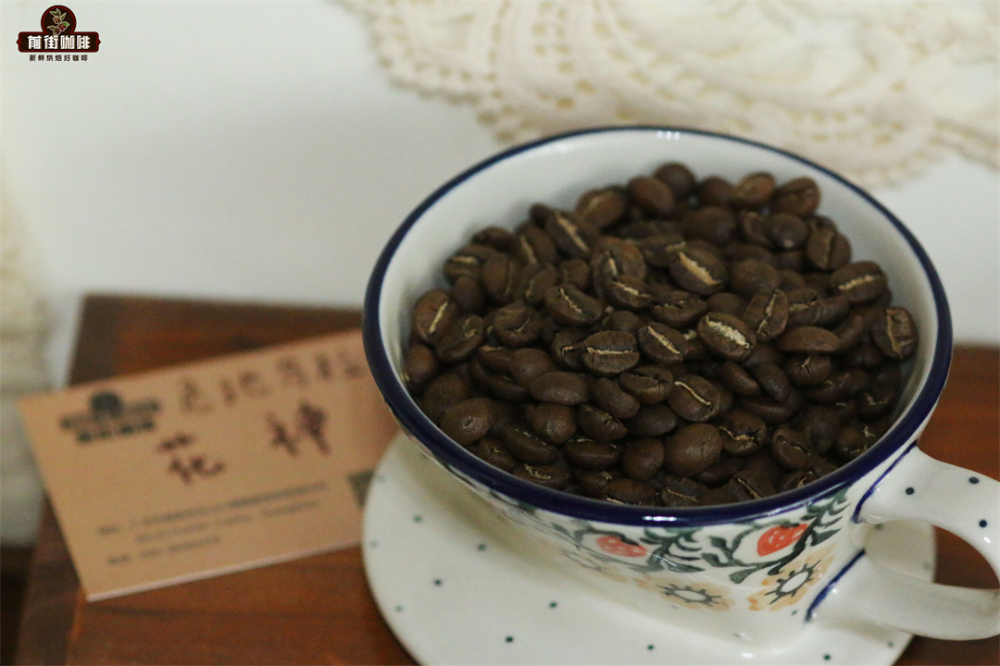
Guatemala Coffee Bean Flavor
Guatemala coffee beans have been called the finest in the world. The strictly hard beans they produce are full-bodied and beautifully balanced, brewing into a pure, rich cup. They show firm acidity, aromatic intensity with a slightly wild edge, and work equally well as single-origin or in blends.
Guatemala strictly hard beans are prized for elegant, lively acidity that is clean and layered: green apple tartness, berry fragrance, jasmine florals, orange peel, green pepper notes, fruity sweetness and sourness, chocolate sweetness, and even a smoky note in the aftertaste.

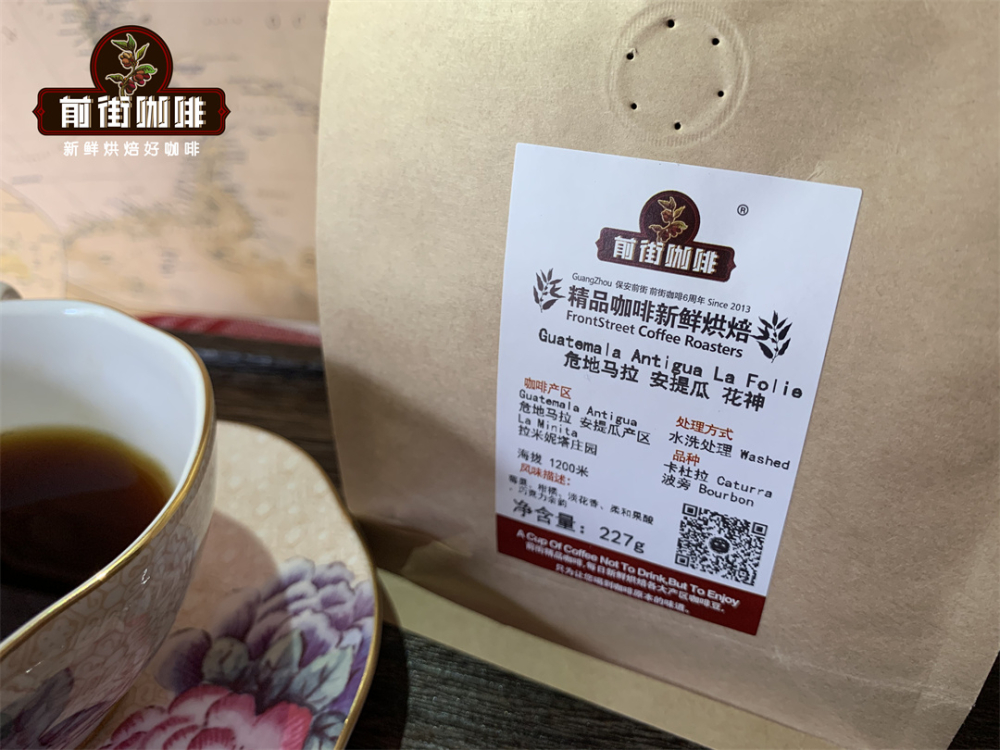
Beyond Huehuetenango's special character, there is also Antigua, whose charm lies in balanced, pleasant fruit acidity and rich spice. Its beans have smooth surfaces, high hardness, and excellent quality, combining richness with acidity and sweetness - plus a hint of smoke that adds depth and a touch of mystery. FrontStreet Coffee's bean list includes Flora de Dios from the Antigua region: a washed coffee of Caturra and Catuai, offering citrus, nuts, and a cocoa aftertaste - refined overall.
FrontStreet Coffee Recommendation
Geisha is one of the most beloved varieties within Arabica, prized for its unique florals and superb sweet-sour balance - and, because of low yields, weak disease resistance, and demanding cultivation, it commands persistently high prices. Knowing the different types of Geisha is the key to finding one that is delicious without being expensive.
FrontStreet Coffee Esmeralda Red-Label and Green-Label Geisha
Hacienda La Esmeralda in Panama is the estate that made Geisha famous. Its Red Label ("Esmeralda Special") grows at 1,600-1,800 meters, must score above 90 points in cupping for every lot, and each lot carries an independent lot number sourced from a single plot, letting buyers choose by subtle flavor differences. The Green Label ("Private Collection") blends lots from multiple plots to express Esmeralda's signature high-altitude Geisha profile, at a more affordable price - an excellent value pick.
FrontStreet Coffee Boquete Geisha
For newcomers curious about the legendary Geisha flavor, FrontStreet Coffee most often recommends the entry-level Boquete Geisha from Panama: classic orange-blossom honeyed character, oolong-tea texture, delicate fruity acidity, and clear layering, all at a friendly price.
FrontStreet Coffee Gesha Village Gold-Label and Red-Label
Ethiopia, coffee's birthplace, also has its own Geisha stronghold: Gesha Village. Its grading is even more layered than Esmeralda's, built around three planted varieties - Gori Gesha, Gesha 1931, and Illubabor Forest - with tiers including Gold Label (RARITIES), Red Label (GROWERS RESERVE), Green Label (SINGLE-TERROIR), and the CHAKA lot. Gold Label comes from Gesha 1931, accounts for 10% of the estate's output, and is its top coffee outside auctions. Red Label, from Gori Gesha, makes up 15% of production and scores 88 points or above on the SCA 100-point scale, with full traceability for every lot.
Important Notice :
FrontStreet Coffee is a long-established specialty coffee roaster in Guangzhou China, selling freshly roasted beans from its own farm in Yunnan as well as dozens of carefully selected single-origin beans from around the world for both pour-over and espresso. The products deliver consistently excellent quality and great value, with shipping within 24 hours. Guangzhou's FrontStreet Coffee shop is recommended by many coffee lovers, and the beans are now available online at the Tmall 。
FrontStreet Coffee has moved to a new address:
FrontStreet Coffee Address: 315,Donghua East Road,GuangZhou
Tel:020 38364473
 Scan and follow the En Gafei WeChat official account. Please indicate that the reprint comes from "En Gafei".