Why Kopi Luwak is Called Civet Coffee: Introduction to Cold Brew Coffee Making
FrontStreet Coffee's Indonesian Civet Coffee and Cold Drip Guide
Civet coffee (Kopi Luwak): "Kopi" is Indonesian for coffee, and "Luwak" is what Indonesians call a tree-dwelling wild animal known in English as the Asian palm civet.
Civet coffee, produced in Indonesia, is among the most expensive coffees in the world. Indonesia grows vast quantities of coffee, and it is home to the palm civet — an omnivore with a pointed snout and dark gray fur. Its favorite food is fresh coffee cherries. Inside its body the fruit ferments and is digested, and the beans pass through intact, excreted with the droppings — making these beans, improbably, the world's most expensive excrement. Extreme rarity drives the extreme price. Palm civets range across the Indochinese Peninsula, northeastern India, Bangladesh, Bhutan, Sikkim, Nepal, and Kashmir, but only the Sumatran civet — the Indonesian palm civet — produces true civet coffee.
After cleaning and roasting, civet coffee becomes a luxury beverage that has spread to wealthy circles worldwide. Local farmers, chasing high profits, now capture wild civets and cage them to produce more. But coffee from farmed civets is correspondingly inferior in color and taste. Even so, production remains extremely scarce — beyond the budget of most coffee lovers.
Though the beans come from animal droppings, one sip reveals a mouthful of rich fragrance and an indescribable sweetness. Wild civets love plump, juicy coffee cherries but cannot digest the hard seeds (the raw beans), which are excreted whole. Washed clean, they become Kopi Luwak green beans — hence the "cat poop coffee" nickname.
Indonesians discovered that beans fermented in the civet's stomach taste exceptionally thick and mellow, so they collect the droppings, separate the beans, and brew them. Scarce production and the unique fermentation give a flavor far removed from ordinary coffee. Traditionally, coffee cherries are washed or sun-dried to strip away skin, pulp, and parchment; Luwak instead relies on natural fermentation inside the animal's body, producing its special character.
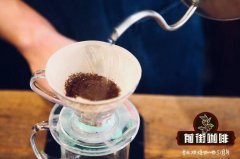
Cold Drip Coffee: Step by Step
1. Grind the coffee beans with a grinder set to 2-3.
2. Place the filter screen at the bottom of the extraction bottle.
3. Pour the ground coffee into the extraction bottle and level it gently — remember not to press too hard.
4. Set the extraction bottle above the collection bottle, then place the drip tray above the extraction bottle.
5. Prepare ice cubes and filtered purified water, pouring them into the water reservoir at a 1:1 ratio.
6. Open the control valve to evenly wet the surface of the coffee grounds.
7. Adjust the throttle valve to roughly 40-60 drops per minute for the best results.
FrontStreet Coffee Recommendation
Indonesia's wild flavors don't have to cost a fortune. The FrontStreet Mandheling comes from the Lake Toba area of the Lintong region in northern Sumatra, where the local wet-hulled process — hulling the beans while they are still half-dry, leaving them fully exposed as they finish drying — creates the classic herbaceous, spicy Mandheling character. Roasted medium-dark, it is low in acidity, thick and mellow, with rich caramel, dark chocolate, and toasted bread aromas and a long sweet finish — perfect for lovers of strong coffee.
For the top tier, choose the FrontStreet PWN Golden Mandheling from the Aceh highlands. The PWN trading company buys only premium lots and screens them relentlessly — density, size, shape, and color, plus machine sorting and hand-picking to remove defects — for large, uniform, luminous beans with far less earthiness than typical Mandheling. Legend says the beans gleam golden in the sun, hence the name. Expect sandalwood, herb, spice, roasted hazelnut, caramel, and dark chocolate in a clean, richly layered cup. And for espresso lovers, the FrontStreet Classic Blend adds a touch of Robusta to a Mandheling-and-Brazil base and roasts it dark, maximizing black chocolate, nut, and caramel aromas — the famous "Mamba" pairing that even beginners can brew well.
Important Notice :
FrontStreet Coffee is a long-established specialty coffee roaster in Guangzhou China, selling freshly roasted beans from its own farm in Yunnan as well as dozens of carefully selected single-origin beans from around the world for both pour-over and espresso. The products deliver consistently excellent quality and great value, with shipping within 24 hours. Guangzhou's FrontStreet Coffee shop is recommended by many coffee lovers, and the beans are now available online at the Tmall 。
FrontStreet Coffee has moved to a new address:
FrontStreet Coffee Address: 315,Donghua East Road,GuangZhou
Tel:020 38364473
 Scan and follow the En Gafei WeChat official account. Please indicate that the reprint comes from "En Gafei".