Panama Geisha Coffee Bean Grading System: What Do Red, Green, and Blue Label Geishas Mean?
The Story of Gesha Coffee
When Gesha comes up, many people think immediately of the Gesha from Panama's Hacienda La Esmeralda. The variety originated in Ethiopia, but it was at Hacienda La Esmeralda in Panama that it found its fame. FrontStreet Coffee would add one clarification, however: Ethiopian Gesha and Hacienda La Esmeralda Gesha are different varieties with distinct flavor profiles — and the Esmeralda Gesha's flavors are generally considered slightly superior.
Panamanian Coffee
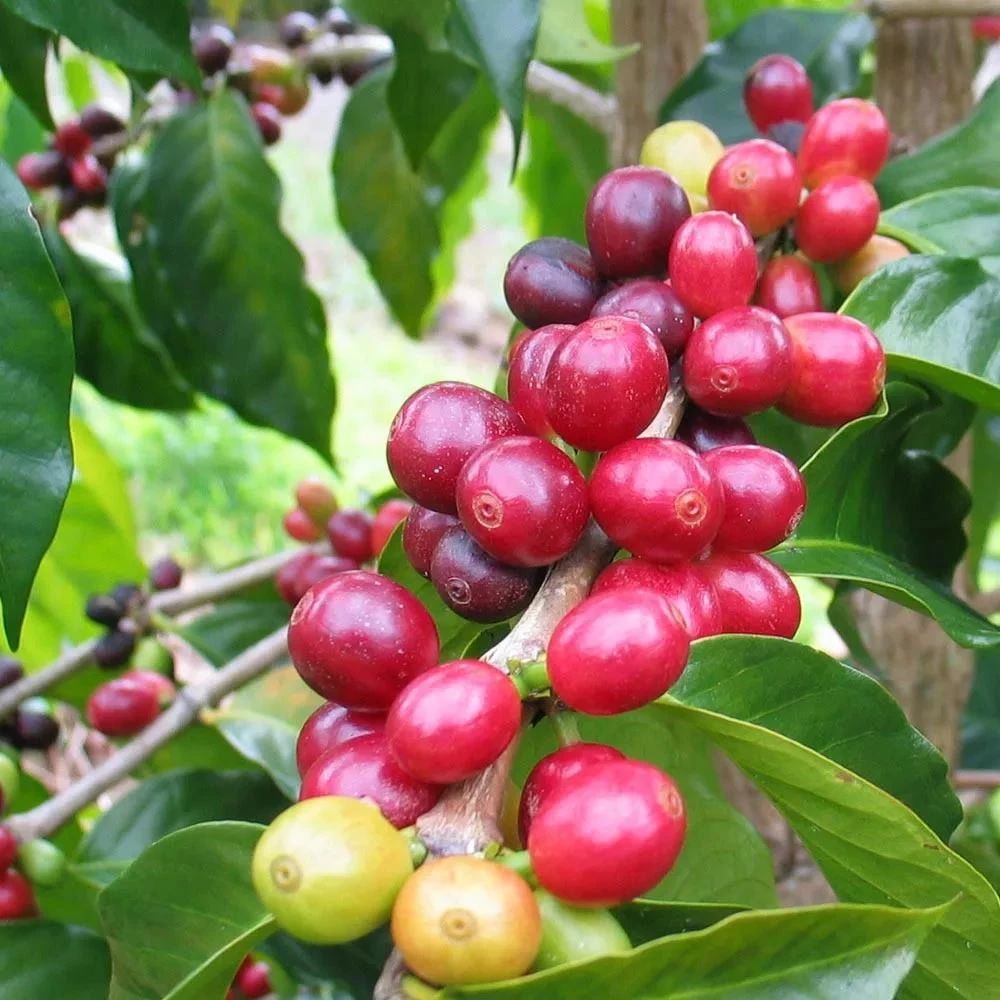
Why are Panamanian coffee beans so renowned? Coffee is an agricultural crop, and its fortunes rise and fall with climate and environment — and Panama's climate built its reputation. Bordering Costa Rica and Colombia, Panama's east-to-west geography channels cold air currents through the central mountain range, where they converge at elevations above 1,900 meters. This produces a highly unusual microclimate in the Boquete and Piedra de Candela regions, with temperatures and rainfall almost perfectly matched to the needs of the plant. That microclimate zone is the heartland of Panamanian coffee.
Climate aside, the surrounding land is nutrient-rich, and the fertile soil provides ideal growing conditions — shaping numerous unique, high-quality coffees.
Hacienda La Esmeralda
Any discussion of Gesha must include Hacienda La Esmeralda. In 1964, the American banker Rudolph Peterson retired, moved to Panama, and bought Hacienda La Esmeralda in Boquete, initially running it as a dairy farm. Later his son Price gave up his medical practice to help manage the farm. In 1987 they planted the Caturra and Catuai varieties, and in 1994 they built a washed processing plant, giving the farm its own processing capability.
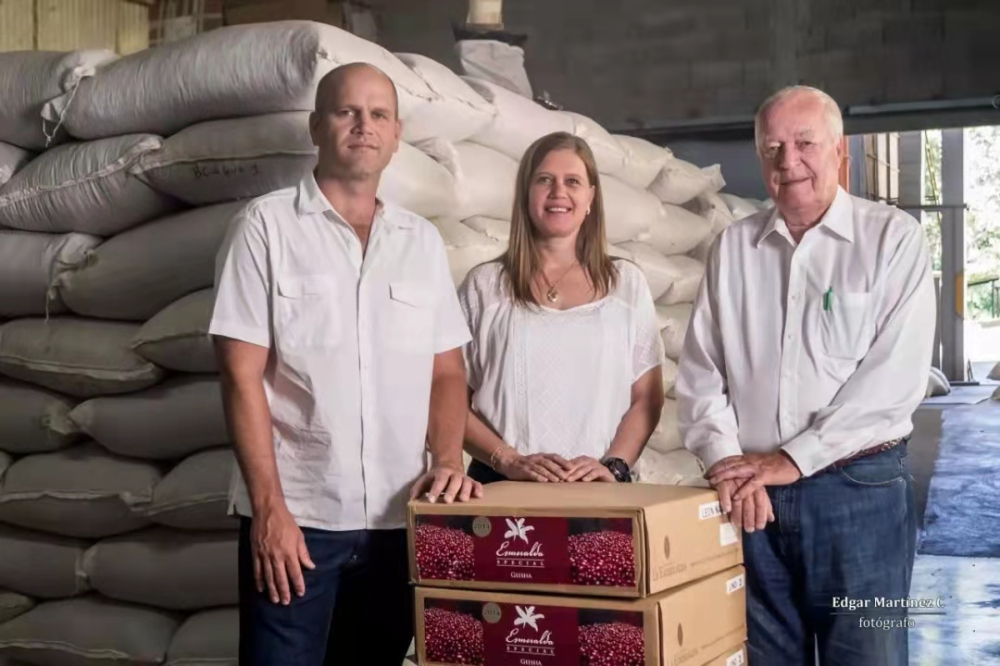
Today, Hacienda La Esmeralda farms Gesha across three main estates: El Velo, Cañas Verdes, and Jaramillo. It acquired the neighboring Jaramillo in 1996, drawn by its superior geography and coffee varieties with exceptional flavors; El Velo followed in 2012. FrontStreet Coffee views the Peterson family's strategy of buying high-altitude estates of outstanding quality as a uniquely farsighted decision for its time — and the foundation of the estate's commanding position in the coffee world.
The turning point came with their championship at the 2004 Best of Panama (BOP) competition. Subsequent expert identification revealed the winning bean to be the Gesha variety from Ethiopia, after which the Petersons devoted most of their energy to infrastructure that supported meticulous batch separation and fine processing.
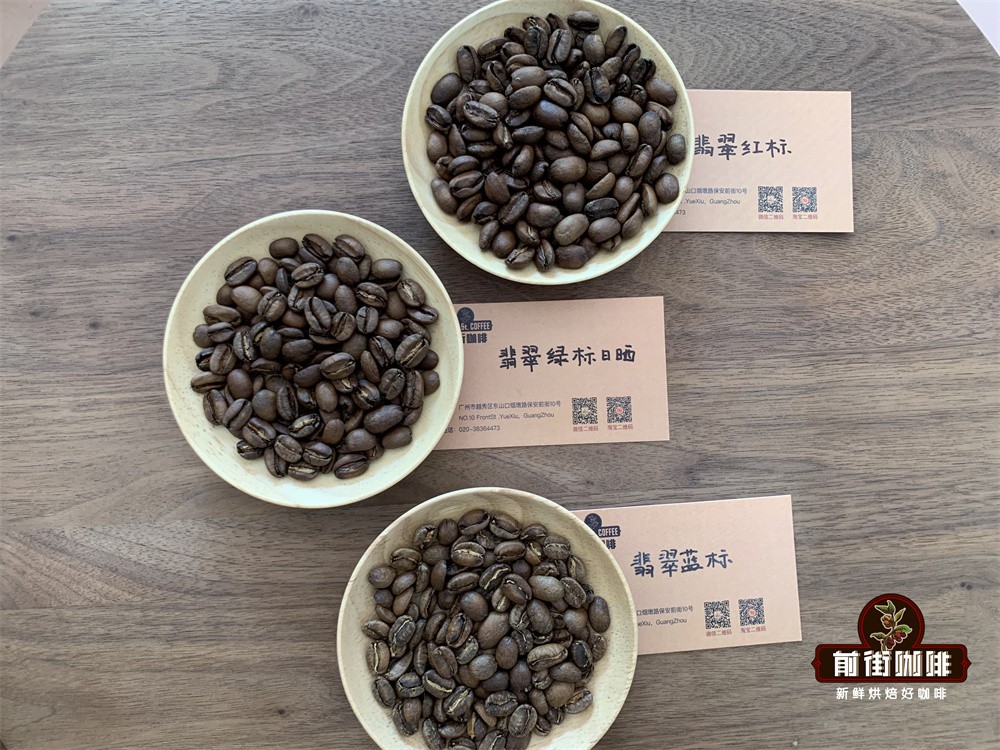
Hacienda La Esmeralda's Red, Green, and Blue Label Grading Standards
Although Gesha was discovered and made famous by Hacienda La Esmeralda — and is now researched and grown across every coffee-producing country — the estate still grades its own beans with strict discipline. What do the ubiquitous red, green, and blue labels actually mean, and what are they based on?
Coffee can be graded by bean size, cupping results, defect ratio, altitude, and more. At Hacienda La Esmeralda, FrontStreet Coffee has learned, Gesha is graded primarily by planting altitude, with actual cupping results as the supporting criterion — yielding the "Red, Green, and Blue Label" system.
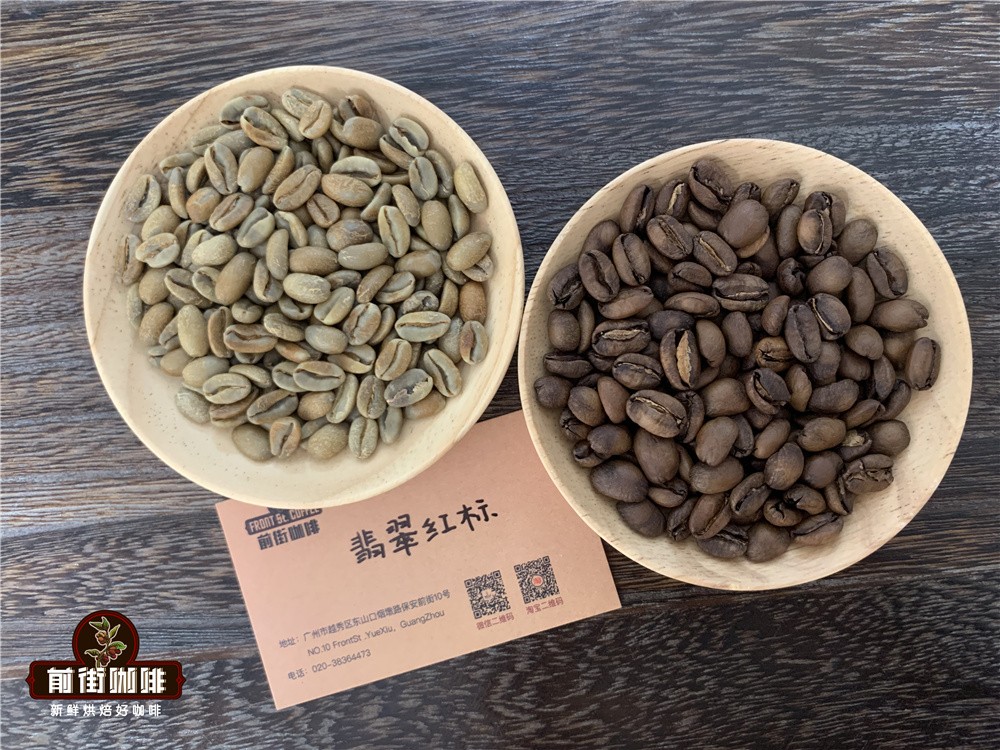
Premium - Red Label [Auction Batches]
The estate's specially selected Gesha is the red label most of us have heard of. It comes from coffee grown at 1,600-1,800 meters in the Jaramillo and Cañas Verdes regions, with cupping scores above 90 points. These are the estate's finest Gesha beans — auction-lot coffees traceable to a specific plot. Red label Gesha comes exclusively from a single plot and is never blended with Gesha from elsewhere. This grade is processed either naturally or washed, with flavors of singular, luminous florals and citrus.
Green Label [Reserve Batches]
Green label grows at 1,500-1,800 meters and is harvested as micro-batch blends from three different estates: Jaramillo, Quiel, and Cañas Verdes — effectively a blend of plots from across Hacienda La Esmeralda. While it doesn't reach red label's tier and isn't auction beans, it still delivers Gesha's classic profile: florals, fruit, citrus acidity, and a thick, juicy mouthfeel. Green label Gesha is available washed or natural. Because it grows at the same altitudes as red label and differs mainly in being harvested as a blend, FrontStreet Coffee regards it as the best-value grade at the estate. The classic Gesha flavors — floral, fruity, citrus acidity, juicy body — remain fully intact.
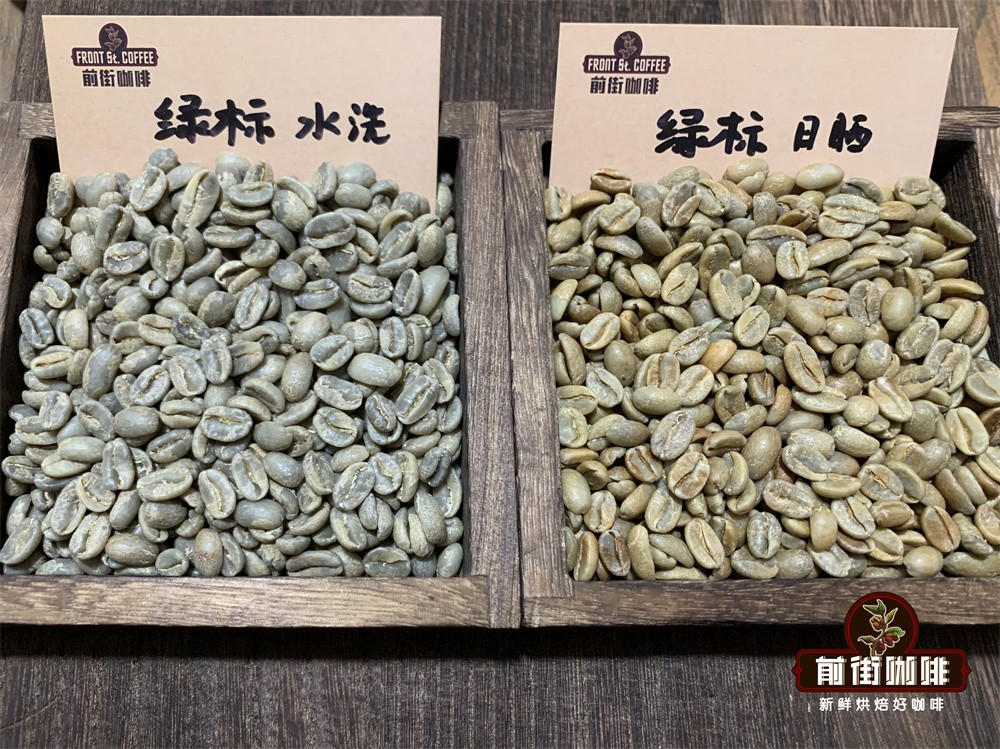
Blue Label [Select Batches]
Blue label represents Gesha grown at 1,500 meters and below, harvested as blends from three estates: Jaramillo, Cañas Verdes, and El Velo, including Gesha from plantations near Hacienda La Esmeralda. The "Gesha 1500" we often see on the market is in fact blue label Gesha. It is available washed and natural, with natural-processed batches introduced in small quantities in late 2019.
In 2021, word came that Hacienda La Esmeralda would discontinue the blue label brand. That same year, a Gesha called "Volcanic Rock" from the same region appeared. After FrontStreet Coffee's verification, Volcanic Rock Gesha is processed by Hacienda La Esmeralda, and its flavor profile closely matches previous years' blue label.
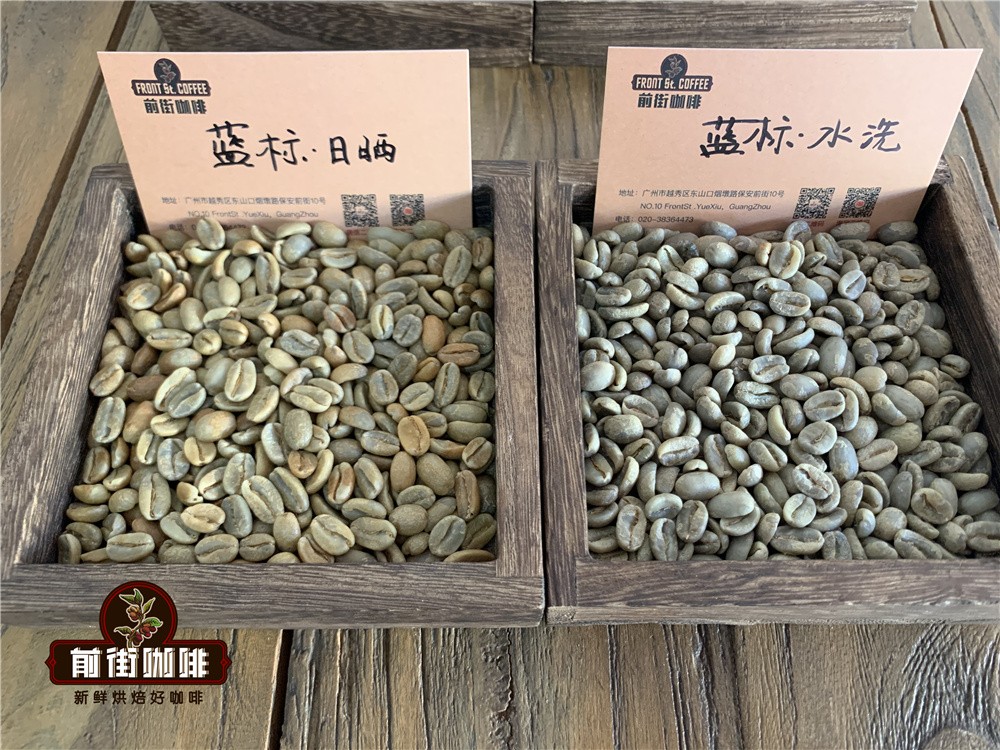
The upshot: the biggest difference between red, green, and blue labels is altitude. Higher-grown beans taste better, so red and green outclass blue. That said, FrontStreet Coffee believes all three are excellent coffees, and palates differ — some prefer fuller-bodied flavors, others brighter ones. Which Gesha to choose comes down to personal preference.
FrontStreet Coffee's Gesha Brewing Recommendations
For brewing, FrontStreet Coffee always recommends freshly roasted beans to best express the coffee's rich flavors — every bean sold is roasted within 5 days. The roasting philosophy is "Freshly Roasted Good Coffee," and since coffee's resting period runs about 4-7 days, each order arrives at its flavor peak.
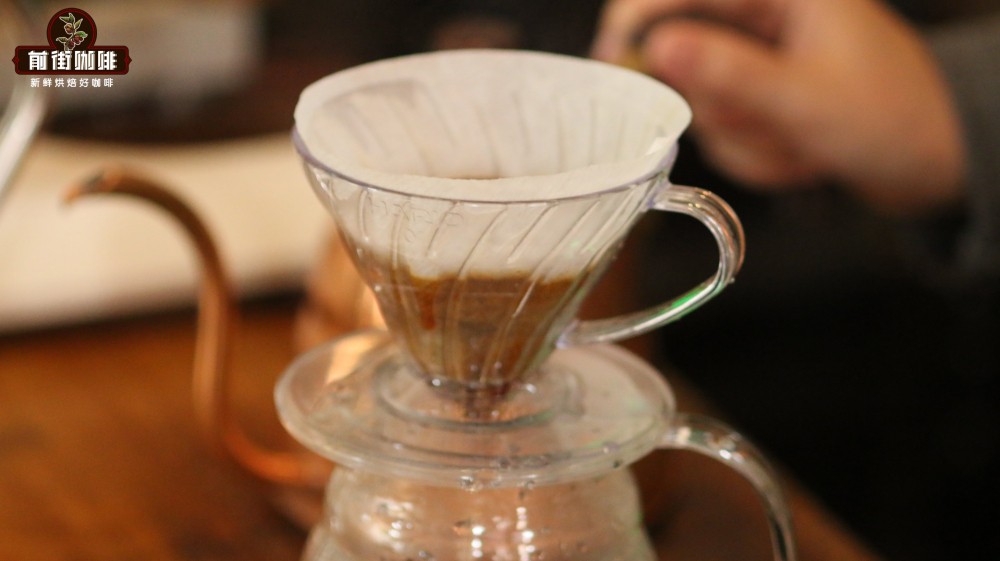
FrontStreet's baristas note that Gesha is lightly roasted, and light-roasted beans dissolve less readily than dark-roasted ones. To ensure full extraction, they brew with a higher water temperature and choose a finer grind size.
FrontStreet Coffee recommends these parameters: Hario V60 dripper, 90°C water, 15g coffee dose, 1:15 coffee-to-water ratio, and a medium-fine grind (80% pass-through rate on China standard #20 sieve).
FrontStreet Coffee's Brewing Technique
FrontStreet uses segmented extraction — three-stage brewing. Bloom with 30g of water for 30 seconds, then continue pouring in small, circular motions up to 125g to complete the second stage. When the level drops and is about to expose the bed, pour up to 225g and stop. Once the water finishes dripping, remove the dripper. Timing starts with the first pour; total extraction time is 2'00". Finally, pick up the whole server, swirl to mix, and pour into cups for tasting.
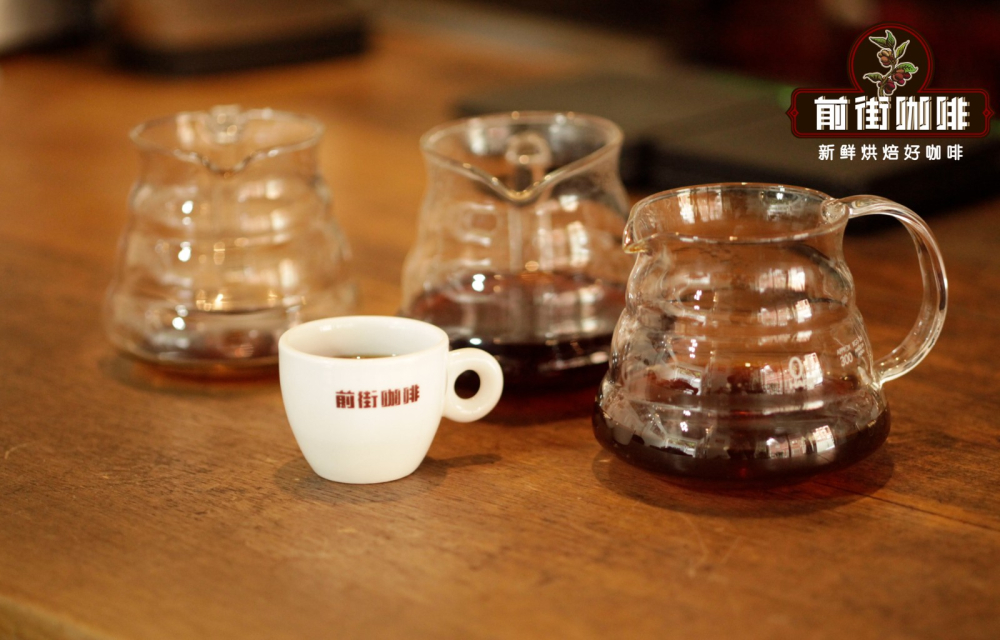
[Red Label Brewing Flavors]: Bright rose and citrus aromas, brown rice, berries, apricots, complex fruits, honey, with a thick juice-like mouthfeel, rich flavor layers, and noticeable sweetness.
[Green Label Brewing Flavors]: Rich jasmine flower aroma on entry, high sweetness, citrus, berries, juice-like mouthfeel, cream, green tea, orange peel, cantaloupe, overall rich flavor layers with a floral and citrus finish.
[Blue Label Brewing Flavors]: Gentle lemon and grapefruit acidity on entry, which as it cools slightly reveals oolong tea, honey, and sugarcane sweetness in the aftertaste, with a relatively clean and bright mouthfeel.
For professional coffee knowledge exchange and more coffee bean information, please follow Coffee Workshop (WeChat official account: cafe_style).
FrontStreet Coffee Recommendation
There is far more to Geisha than one estate. Panama is where Geisha made its name — its 2004 Best of Panama triumph, at an average cupping score of 94.6, shattered the competition's records and turned the variety into the world's most sought-after bean overnight — but Ethiopia is where it was born, and both origins deserve a tasting. For the classic Panamanian profile of orange-blossom honeyed sweetness, choose the Esmeralda Red Label ("Esmeralda Special"): grown at 1600-1800m, cupping above 90 points, with each numbered batch drawn entirely from a single plot so buyers can match their flavor preferences precisely. The Green Label ("Private Collection") blends batches from multiple high-altitude plots instead of highlighting one terroir, which makes it noticeably more affordable — outstanding value, in FrontStreet's view. And newcomers who simply want a first taste of "Gesha flavor" should start with the entry-level FrontStreet Boquete Gesha: classic orange aroma and honeyed sweetness, oolong-tea texture, delicate fruit acidity, and clear layering at a modest price.
Ethiopia's answer is Geisha Village, a 475-hectare estate founded by a couple just 12 miles from the Gesha forest, who brought native Geisha plants back to the farm and grades them even more strictly than Esmeralda. Its lineup spans three varieties — Gori Gesha, Geisha 1931, and Illubabor Forest — across Gold (RARITIES), Red (GROWERS RESERVE), Green (SINGLE-TERROIR), and Chaka tiers. Gold Label (Geisha 1931, only 10% of production) is the estate's top non-auction coffee and a frequent competition choice, offering intricate complexity in a refined natural process; Red Label (Gori Gesha, 15% of production, 88+ on the SCA scale) is a fully traceable single-terroir series. For a gentler Ethiopian introduction, the FrontStreet Genlana Gesha from a 700-hectare, mostly virgin-forest growing area near Kochere — cherries hand-picked fully ripe and sun-dried on raised beds for 14-20 days — shows bright citrus acidity, elegant ginger-flower aroma, mature fruit sweetness, and Gesha's signature refined finish at a medium-light roast.
However you buy, brew it right: Geisha is a hard, medium-light, floral-forward bean that tends to sink and clog the dripper, so grind to a 78% pass-through on a #20 sieve (fine-sugar texture), use 91°C water, 15g in a Hario V60 at 1:16, and pour in three stages — 30g bloom for 30 seconds, then small circular pours to 125g and 225g, for a total extraction of about 2'10"–2'20". For espresso lovers, the medium-roasted Genlana Gesha makes a superb SOE (20g dose, 1:2 ratio, 25 seconds, 40g yield): straight espresso tastes of dried apricot, caramel, and nuts, an Americano (add 200g hot water) of orange, nuts, and blueberry, and a latte (200g milk) of buttery shortbread.
Important Notice :
FrontStreet Coffee is a long-established specialty coffee roaster in Guangzhou China, selling freshly roasted beans from its own farm in Yunnan as well as dozens of carefully selected single-origin beans from around the world for both pour-over and espresso. The products deliver consistently excellent quality and great value, with shipping within 24 hours. Guangzhou's FrontStreet Coffee shop is recommended by many coffee lovers, and the beans are now available online at the Tmall 。
FrontStreet Coffee has moved to a new address:
FrontStreet Coffee Address: 315,Donghua East Road,GuangZhou
Tel:020 38364473
 Scan and follow the En Gafei WeChat official account. Please indicate that the reprint comes from "En Gafei".