What is Yirgacheffe Coffee Variety? Introduction to the Flavor and Taste Characteristics of Washed Yirgacheffe Americano
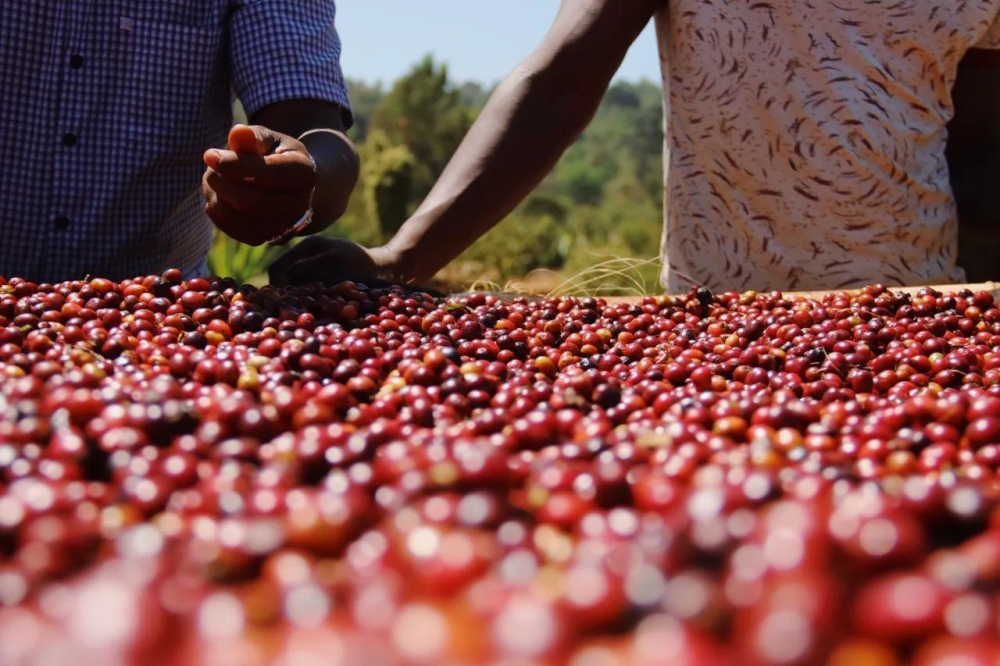 In Ethiopia there is an unparalleled diversity of coffee species, locally referred to as "Heirloom" to describe these unclassified mixed varieties collectively. The Yirgacheffe we hear about most often belongs to these local native varieties and is known for its delicate floral and fruit flavors, making it the "gateway bean" for many coffee lovers.
What are the characteristics of Heirloom varieties?
In the dictionary, Heirloom refers to "valuable property passed down through generations," meaning that coffee is an irreplaceable treasure for Ethiopians. As the birthplace of Arabica coffee, Ethiopia preserves tens of thousands of native Arabica varieties. Heirloom coffees are typically identified and confirmed by growers on the basis of years of experience, because the sheer number of varieties makes it nearly impossible to conduct genetic testing and verification on a large scale. At the same time, the local government wanted to protect these unknown varieties from practitioners in various countries competing to obtain them, so it decided to name them "Heirloom."
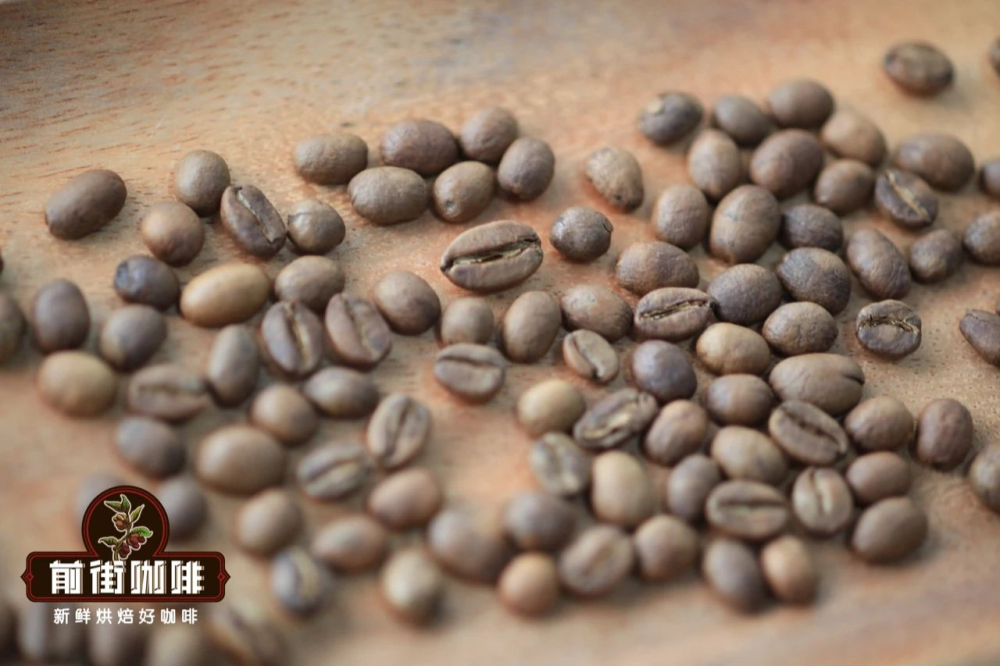 Ethiopia is the birthplace of Arabica, and its thousands of Heirloom varieties make it a unique coffee-producing region. Heirloom native varieties generally have small, relatively round beans with uneven shapes, mostly between 14 and 15 mesh. After processing and roasting, they often show elegant floral and fruit flavors in the cup, which people deeply love.
Coffee, as an agricultural product, naturally owes its flavor expression to the innate factors of variety and terroir. FrontStreet Coffee believes that Ethiopian coffee's charming aroma and fruit tonality owe much to its exceptional growing environment and the superior quality of its native varieties.

Characteristics of FrontStreet Coffee's Washed Yirgacheffe Coffee
The famous Yirgacheffe is a small town in the southern region of Ethiopia, originally under the administration of Sidamo state. Later, thanks to the establishment of washing stations, it developed a distinctive "Yirgacheffe flavor," becoming an independent representative producing region and gaining fame throughout the coffee world. The classic FrontStreet Coffee Yirgacheffe is known for its bright, uplifting lemon acidity, white floral notes and honey sweetness. Unlike traditional bitter coffee, FrontStreet Coffee Yirgacheffe lacks the burnt-bitter taste of old-school coffee and instead presents a refreshing flavor spectrum like fruit tea, leaving a lasting impression on the first sip.
The reason FrontStreet Coffee Yirgacheffe beans can possess such a distinctive style, beyond the innate terroir conditions, is largely the washed processing method.
 As we all know, Ethiopia, on the African continent, has extremely scarce water resources. Traditionally, coffee was naturally dried in a "crude" manner—without sorting or flotation, thrown directly on muddy ground or rooftops to receive the "baptism" of sunlight, generally requiring more than 20 days. This rough processing method not only causes the beans to absorb the earthy flavor of the ground but also easily leads to uneven drying and rotten flavors, ultimately affecting coffee quality.
With the establishment of more and more farmer cooperatives, people began to want to build washed processing plants to improve the quality of green coffee for export, thereby increasing everyone's income while serving multiple communities. Unlike sun-drying, washing stations first need to solve the water-resource problem, then invest in machines to remove the fruit pulp, and then have sufficient manpower. So from a production standpoint, places with people, water and roads are the best locations for a washing station, and Yirgacheffe is precisely such a treasure land.
 The town of Yirgacheffe, in the Gedeo zone, sits downstream of large lakes, with abundant springs and rivers flowing through, providing ample freshwater for washing stations. FrontStreet Coffee also noticed that in the ancient Ethiopian language, "Yirgacheffe" consists of two words: Yirga (ይርጋ Yərga), meaning calm or settled down, and Cheffe (ጨፌ Č̣äfe), meaning swamp-like wetlands. So Yirgacheffe carries the meaning "let us settle down and make a living in this wetland."
We often hear about Kochere, Wonago, Worka and so on, all very famous micro-producing regions under the Yirgacheffe coffee area. They all have excellent cooperative production teams, and their coffees are extremely distinctive. For example, the Wonaka producing area in the southeastern part of Yirgacheffe has a mature production team, the Gotiti Cooperative, with about 300 member farmers. Because the Yirgacheffe flavor it produces is bright and uplifting, it was independently established in 2012. Many small farmers were also members of the original Wonaka cooperative, so their coffee production skills go without saying.

Gotiti Cooperative
Unlike many specialty coffees that are processed and produced on a large scale in an estate model, Ethiopian coffee is mostly grown by small individual farmers, typically on plots of about 1 hectare with limited yield, so the cherries are sent to towns or nearby cooperatives for unified processing. Cooperative management not only improves coffee quality but also provides farmers with more stable income. When we buy coffee, we often see many lots that have been post-processed, graded, roasted and finally named after a cooperative, such as FrontStreet Coffee Gotiti, FrontStreet Coffee Worka, FrontStreet Coffee Konga and FrontStreet Coffee Adado.
As a Yirgacheffe that enthusiasts specifically request, the Gotiti Cooperative, although not established for long, has already become a "star product" of the industry thanks to its outstanding coffee production skills and unique flavor characteristics.

FrontStreet Coffee: FrontStreet Coffee Gotiti Cooperative Coffee Beans
Region: Yirgacheffe producing area
Altitude: 1900-2000m
Processing method: Washed
Variety: Heirloom native varieties
Flavor: Jasmine, citrus, berries, tea-like sensation
What is the variety of Gotiti coffee?
Friends who often drink Ethiopian coffee will have noticed that the variety of Ethiopian beans is always written as local native varieties or Heirloom native varieties. In the dictionary, Heirloom refers to "valuable property passed down through generations," meaning that coffee is an irreplaceable treasure for Ethiopians.
 It is estimated that Ethiopia today has roughly 10,000 to 15,000 heirloom varieties, most of which have not yet undergone formal genetic identification. Because Ethiopia's coffee varieties are so numerous and complex, completely organizing and categorizing them is extremely difficult. Additionally, out of consideration for protecting various wild varieties, the local government decided to mix and process different varieties together, uniformly naming them "Ethiopia Heirloom." That is also why we always see Ethiopian beans that are not as uniform and consistent as those from certain producing regions, but instead vary in size and shape.
The flavor profile of FrontStreet Coffee Yirgacheffe Americano
In recent years, Luckin Coffee has launched SOE coffee made from Yirgacheffe beans, a single-origin espresso extracted on an espresso machine. Extracting Yirgacheffe on an espresso machine ideally yields an espresso with rich floral and fruit aromas. Adding a certain proportion of water makes it a Yirgacheffe SOE Americano, while mixing with milk makes it an SOE latte.
 However, considering that Yirgacheffe's floral and fruit aromas are light and delicate, compared with a high-concentration SOE, FrontStreet Coffee prefers to present its charm through pour-over, since this lets you experience the classic Yirgacheffe flavor more completely. If you are a novice just starting with pour-over, FrontStreet Coffee suggests choosing this "FrontStreet Coffee Washed Yirgacheffe Daily Bean." It is selected from Ethiopian local native varieties and uses medium-light roasting. FrontStreet Coffee's daily bean series lets friends new to coffee taste the basic flavors of producing regions at affordable prices, while the small packaging design also avoids waste from unfinished consumption.
FrontStreet Coffee Washed Yirgacheffe Pour-over Recommendations
Ethiopian coffee has rich and diverse flavors with prominent floral and fruit aromas. FrontStreet Coffee suggests choosing freshly roasted beans to enjoy the complete flavor of the coffee. Beans enter an optimal tasting period 4-7 days after roasting, after which the aroma accelerates its loss. The beans sold by FrontStreet Coffee are roasted within 5 days, so everyone can start brewing immediately after purchase.
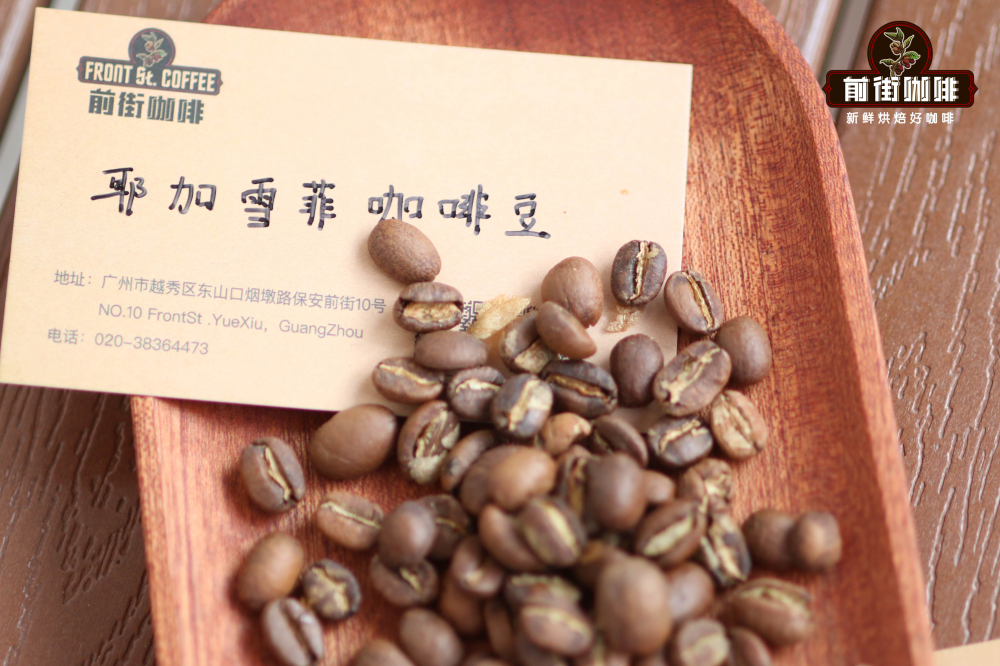
Here, FrontStreet Coffee uses its own roasted FrontStreet Coffee Washed Yirgacheffe beans, paired with a Hario V60 dripper. The V60's spiral rib design lets the grounds release gas better, maximizing the volatilization and dissolution of acidic aromatic substances. Since FrontStreet Coffee Yirgacheffe uses light roasting, the beans have a hard texture and need high-temperature water of 92°C-93°C to stimulate the floral and fruit flavors.
Dripper: V60
Water temperature: 92-93 degrees Celsius
Dose: 15g
Coffee-to-water ratio: 1:15
Grind size: Fine sugar size (sieve through #20 sieve to 78%)
First, inject 30g of water for a 30-second bloom, then inject 95g (the scale shows around 125g), finishing the pour in about 1 minute. When the water level drops to 2/3 of the coffee bed, inject the remaining 100g (the scale shows around 225g), finishing in about 1 minute 35 seconds. Complete dripping at 2'10", remove the dripper and finish the extraction.
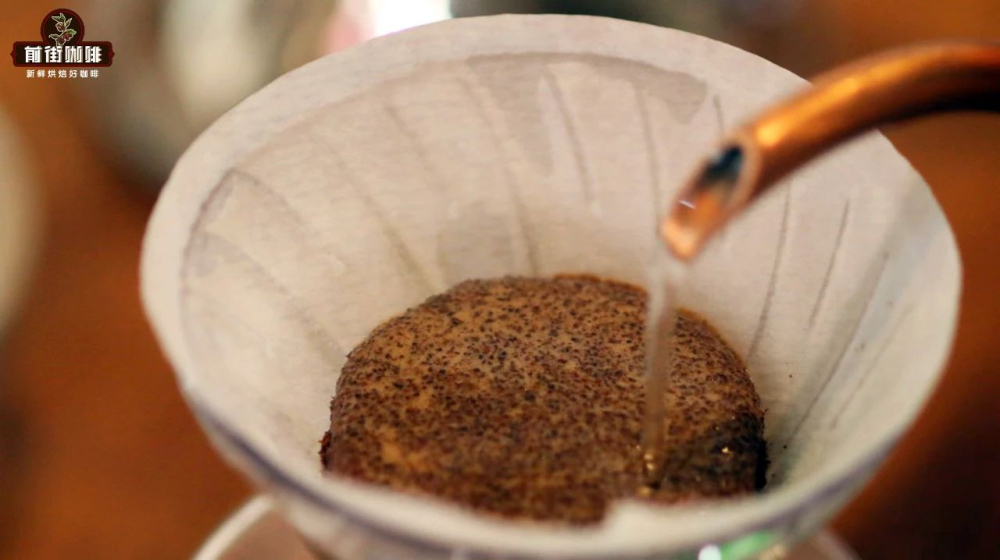
FrontStreet Coffee Washed Yirgacheffe coffee flavor: on entry, jasmine flowers, lemon, citrus and green tea. As the temperature changes, there are afternotes of berries, cream and sugarcane, with an obvious sweet aftertaste and a clean, sweet mouthfeel.
FrontStreet Coffee Recommendation
The Heirloom varieties discussed here are exactly what give Yirgacheffe its identity, and FrontStreet Coffee's lineup makes that easy to explore. FrontStreet Coffee's washed Yirgacheffe is the classic daily bean: white jasmine, bright citrus and lemon acidity and a clean tea-like body, and at a friendly price it has become many drinkers' first specialty coffee. To taste the cooperative model this article describes, FrontStreet Coffee's washed Gotiti Cooperative coffee comes from the Worka area at the southeastern edge of Yirgacheffe—originally part of the YCFCU Worka cooperative before becoming independent—and shows citrus and lemon acidity with elegant white florals and a jasmine, citrus and berry profile. And for the fruitier, natural side of the region, FrontStreet Coffee's Natural Red Cherry uses whole ripe red cherries dried on raised beds for three to five weeks, delivering tropical fruit aroma with citrus acidity, berry juiciness, honey sweetness and a creamy texture. Read together, they show both what Heirloom can do and why the washed Yirgacheffe has become the region's best-known expression.
Important Notice :
FrontStreet Coffee is a long-established specialty coffee roaster in Guangzhou China, selling freshly roasted beans from its own farm in Yunnan as well as dozens of carefully selected single-origin beans from around the world for both pour-over and espresso. The products deliver consistently excellent quality and great value, with shipping within 24 hours. Guangzhou's FrontStreet Coffee shop is recommended by many coffee lovers, and the beans are now available online at the Tmall 。
FrontStreet Coffee has moved to a new address:
FrontStreet Coffee Address: 315,Donghua East Road,GuangZhou
Tel:020 38364473
 Scan and follow the En Gafei WeChat official account. Please indicate that the reprint comes from "En Gafei".