Brazilian Pour-Over Coffee Brewing Guide: Queen Estate Yellow Bourbon Coffee Brewing Method
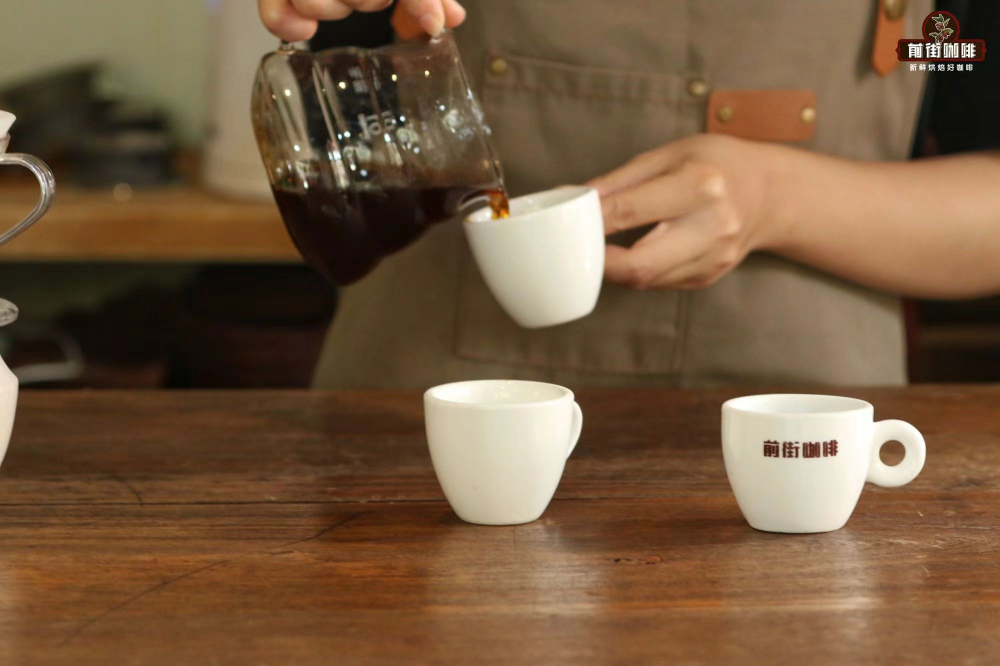
When it comes to Brazil, most people immediately think of football. For coffee professionals, though, the first thought is coffee beans. Brazilian coffee belongs to the classic mellow category, renowned for its exceptionally balanced taste. Today FrontStreet Coffee will discuss how to brew that "Brazilian flavor."
Brazilian Yellow Bourbon Variety
FrontStreet Coffee's research shows that the world's Arabica varieties are built from Typica and Bourbon and their descendants. Of these, Bourbon and its descendants, popular across Central and South America, have spread worldwide and remain the main cultivated varieties in many countries, including excellent types such as Caturra.

The name Bourbon comes from Bourbon Island, today's Réunion Island off the eastern coast of Africa. In the 17th century, as a French territory, it was named Bourbon Island and was not renamed until the late 18th century. In the 18th century the French brought round coffee beans from Yemen to Bourbon Island, where they took root and grew. It was not until 1860 that Brazil brought round Bourbon back for cultivation, and it then spread across Central and South America, making it the oldest Latin American parent variety.
Bourbon fruits are small and round, and the beans are dense. Grown at high altitude, Bourbon has high sweetness and bright acidity. Like Typica, it is an ancient, excellent variety. Bourbon resists leaf rust better than Typica, and its flavor is no less impressive. The greatest thing shared by Bourbon and Typica is that both need shade trees to block sunlight for growth and flavor development, so both place certain demands on the growing environment.
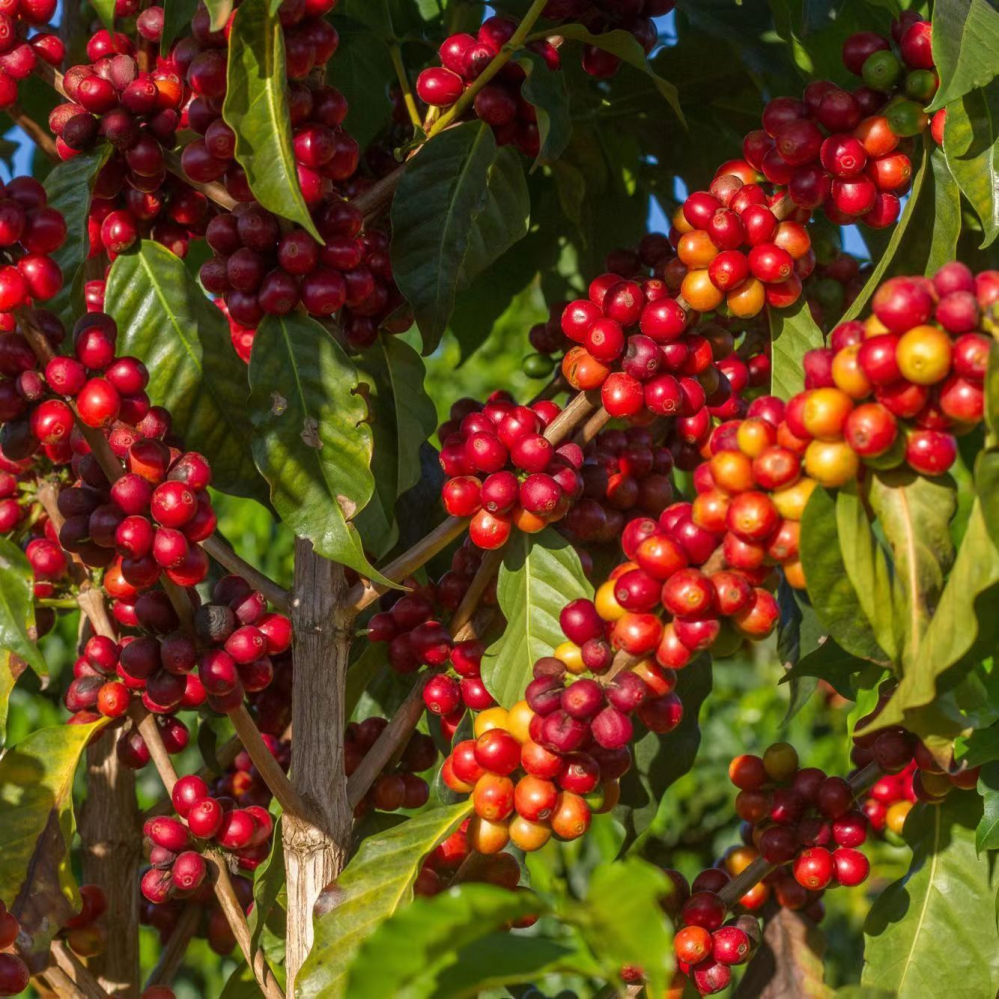
Common Bourbon varieties gradually change color from green to light yellow, then red, and finally deep red when fully ripe, hence the name Red Bourbon. There are also Bourbon varieties that do not turn red when ripe, instead becoming the rarer yellow or pink, namely Yellow Bourbon and Pink Bourbon. Yellow Bourbon grown at high altitude carries delicate flavors and has won top honors in Brazil's Cup of Excellence in consecutive years. FrontStreet Coffee's Queen Estate coffee is made from Yellow Bourbon, produced in Brazil's Mogiana region.
Brazil Queen Estate Coffee
Traditional Brazilian coffee regions prioritize mass production and plant mainly in flat areas at relatively low altitude, producing a mild, unremarkable flavor. Queen Estate (Fazenda Rainha) is a rare high-altitude farm in the region. Its ideal hilly terrain and suitable climate give the Yellow Bourbon grown there a rich pectin layer and, in turn, higher sweetness in the cup.
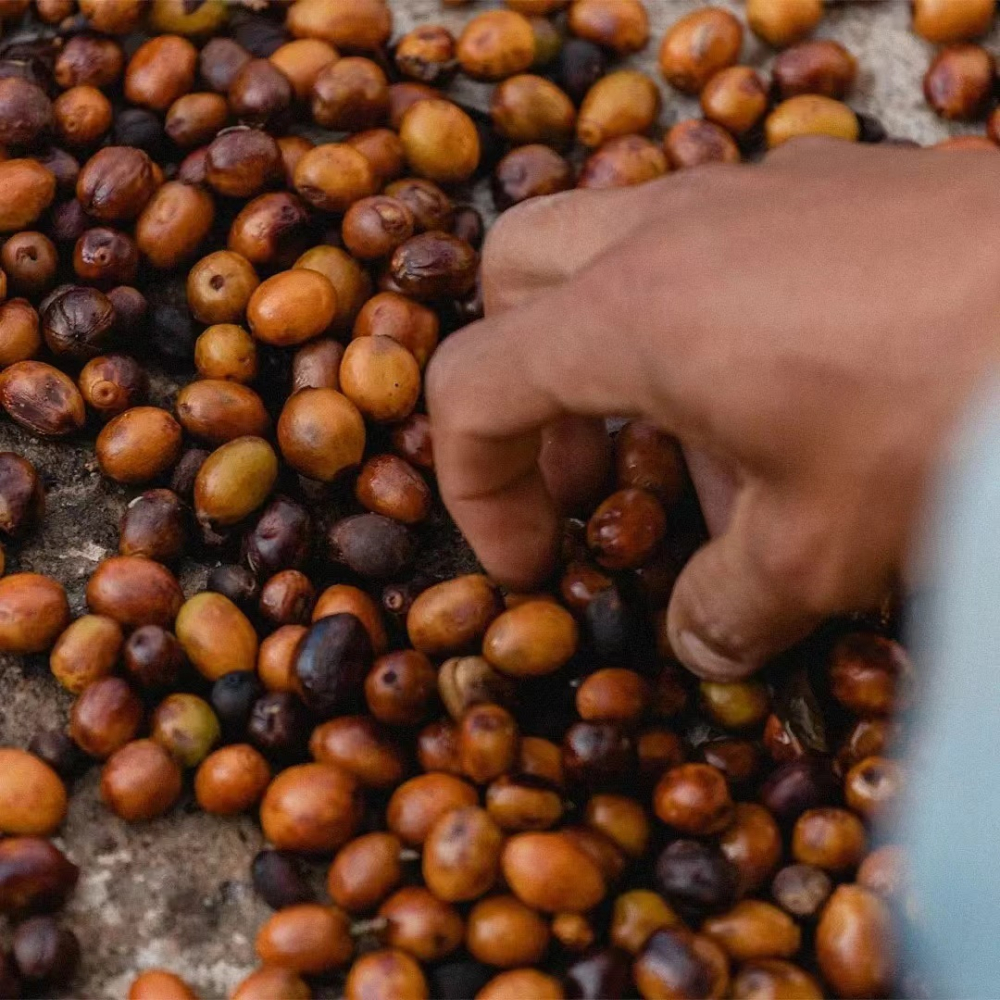
Traditional dry processing pours cherries straight onto concrete to dry in the sun. The rough handling easily leaves earthy and other off-flavors, along with unpleasant over-fermentation notes. Queen Estate pours the cherries into water tanks before drying, using flotation to remove underripe fruit. To avoid earthy and fermentation flavors, the estate spreads the cherries on African raised beds throughout, with staff turning them regularly to reduce uneven heating and preserve cleanliness as much as possible.
Queen Estate Coffee Pour-Over Reference
FrontStreet Coffee wants to highlight the classic regional flavor of Queen Estate, its rich chocolate aroma, so it uses a medium-dark roast. In cupping, FrontStreet Coffee found very obvious sweetness in this coffee, so it uses a three-stage pour to bring out more layers in the cup.
Coffee beans reach their optimal tasting window 4-7 days after roasting. Beyond that, at roughly one and a half months after roasting, the aroma may have dissipated and some woody flavors may have developed. To avoid this, FrontStreet Coffee only ships beans that were roasted within 5 days, so that everyone can taste coffee at its best.
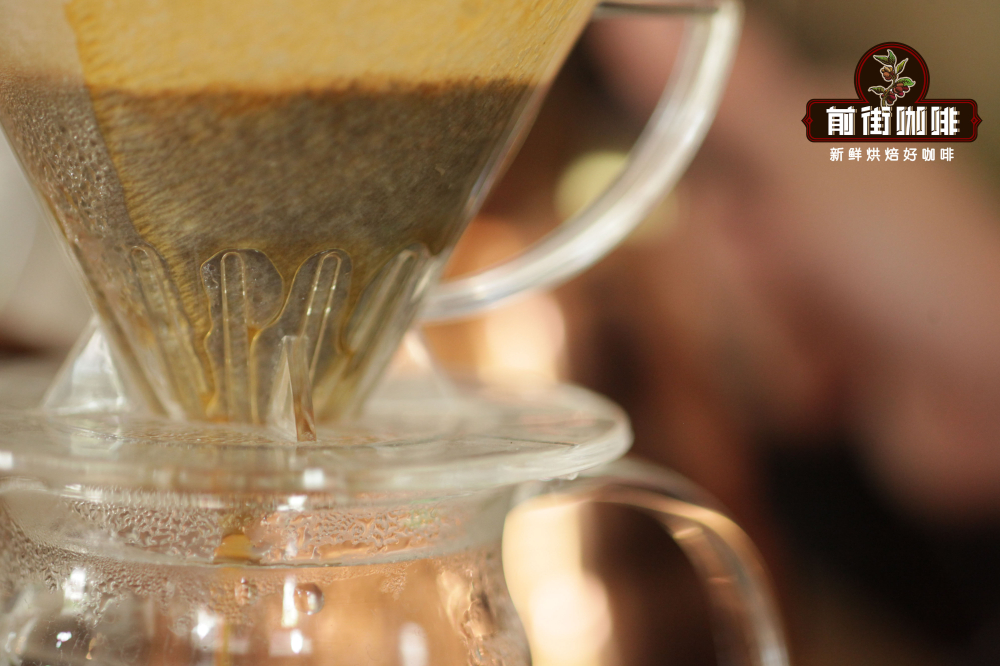
Dripper: Medium-dark roasted beans mainly present a mellow, round mouthfeel. For this character, FrontStreet Coffee uses the slower-flowing KONO dripper. The upper part of the KONO is a smooth curved surface, while the lower part has diversion ribs one-third of its length. This lets the filter paper fit more closely to the dripper, restricting upward airflow and forcing hot water downward, creating a siphon-like extraction that releases the aromatic compounds in the grounds more fully.
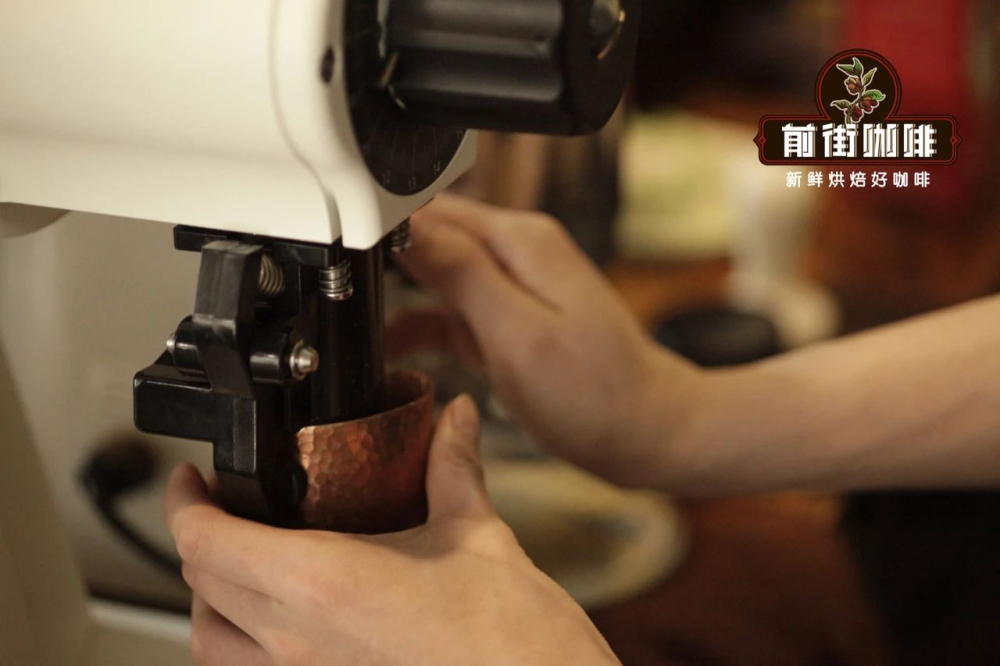
Grind Size: At a higher roast level the texture of the beans becomes looser. Ground, they easily absorb more moisture and release more soluble material, which can bring out unpleasant woody and bitter off-flavors. FrontStreet Coffee's barista adjusts the grind coarser, making the particles larger to reduce over-extraction. Here a medium grind is used (70-75% pass rate through a China standard No. 20 sieve).
Water Temperature: For light to medium roasted beans, FrontStreet Coffee uses higher water temperatures to extract aroma from the dense beans. Medium-dark roasted Brazilian coffee, however, has undergone longer caramelization, and the same high-temperature water can easily produce thick, burnt bitterness. Lowering the water temperature appropriately helps reduce some bitterness, so FrontStreet Coffee uses 87-88°C.
Coffee grounds absorb about twice their weight in water. FrontStreet Coffee generally uses 15 grams of grounds, extracting at a 1:15 ratio and finally yielding nearly 200ml of coffee liquid, which is 1-2 servings.
Dripper: KONO dripper
Water Temperature: 87-88°C
Coffee Amount: 15 grams
Coffee-to-Water Ratio: 1:15
Grind Size: Medium grind (70% pass rate through a China standard No. 20 sieve)
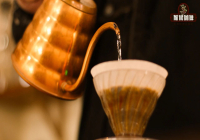
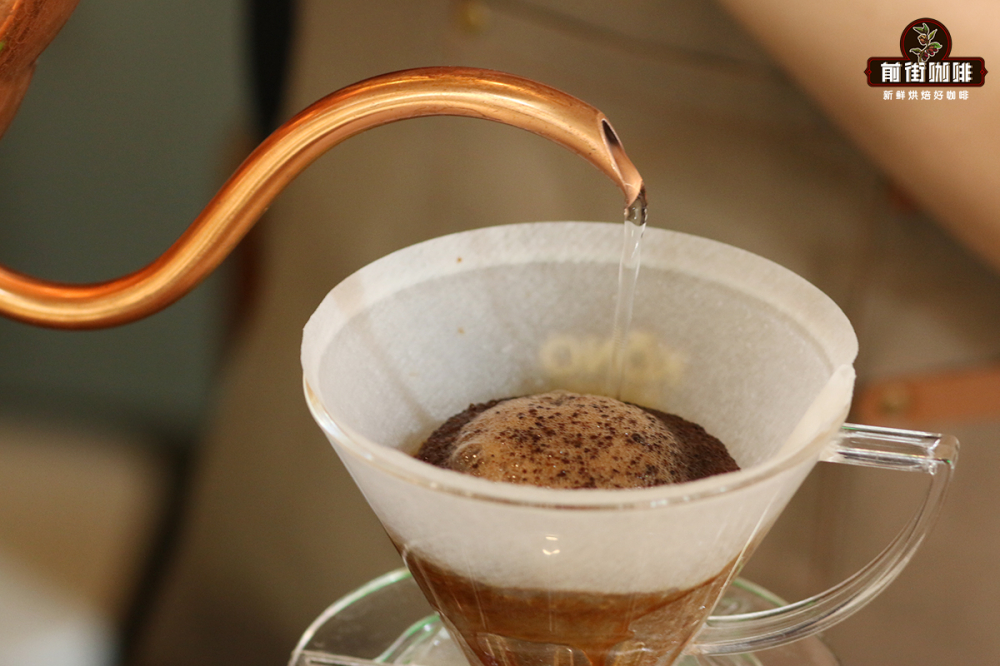
Use twice the weight of the grounds in water to wet the bed, forming a dome, and let it bloom for 30 seconds. Then use a small stream to pour in circles from the inside out to 125g, then pause. When the bed drops to half the height of the dripper, continue with the same fine stream to inject the third stage to 225g, until all the liquid has filtered through, then remove the dripper. The total time is about 2 minutes.
Hand-poured Brazilian Queen Estate coffee smells of lemon, nuts, and peanuts. On the palate it has very mellow nutty, dark chocolate, and caramel flavors with distinct sweetness. The mouthfeel is as smooth as cream, with an overall rounded character.
FrontStreet Coffee Recommendation
FrontStreet Brazil Queen Estate Yellow Bourbon. FrontStreet Coffee's other Brazilian single origin, Queen Estate, comes from Mogiana, close to South Minas, where fertile red volcanic soil lets the fruit absorb abundant nutrients and develop a full aroma. Part of the region keeps to traditional farming methods while another part has adopted modern, standardized management, and the local coffee quality has improved markedly as a result.
The variety here is the rare Yellow Bourbon, a genetic mutation of Red Bourbon with a cleaner fruit character. Brought out by pour-over, moka pot, or a home espresso machine, FrontStreet Brazil Queen Estate shows the sugarcane sweetness rarely found in other regions, along with fruit and chocolate notes.
For pour-over, FrontStreet Coffee suggests a KONO dripper with 87-88°C water, 15g of coffee at a 1:15 ratio, and a medium grind of about 70-75% passing a China standard No. 20 sieve.
Important Notice :
FrontStreet Coffee is a long-established specialty coffee roaster in Guangzhou China, selling freshly roasted beans from its own farm in Yunnan as well as dozens of carefully selected single-origin beans from around the world for both pour-over and espresso. The products deliver consistently excellent quality and great value, with shipping within 24 hours. Guangzhou's FrontStreet Coffee shop is recommended by many coffee lovers, and the beans are now available online at the Tmall 。
FrontStreet Coffee has moved to a new address:
FrontStreet Coffee Address: 315,Donghua East Road,GuangZhou
Tel:020 38364473
 Scan and follow the En Gafei WeChat official account. Please indicate that the reprint comes from "En Gafei".