Costa Rican Coffee Brewing Tutorial: Extraction and Flavor Profile of Costa Rican Mozart Coffee

Coffee is a globally popular beverage, and beans from different regions show very distinct characteristics. African coffees feature bright fruit acidity, Asian coffees offer rich, full-bodied flavors, while American coffees present a balance of sweet and tart. If coffee were compared to music on the palate, then coffee from Costa Rica could be considered the musicians' union of the coffee world, since Costa Rica truly has coffee beans named after famous musicians.
The Mozart Connection
Among classical composers, Wolfgang Amadeus Mozart is renowned for bringing immense joy to the world, creating many world-famous works including "The Magic Flute" and the "Serenades." Mozart was also an avid coffee enthusiast who could not live without it. Coffee gave this gifted musician endless inspiration and motivation, and his music has benefited listeners around the world. Mozart's music certainly grows more charming with each listen, and this Mozart coffee bean likewise becomes more delightful with each sip.

Costa Rican Coffee Heritage
How could FrontStreet Coffee's bean selection overlook such a charming coffee? This Mozart coffee bean originates from a renowned region: the Tarrazú area of Costa Rica. Today Costa Rican coffee is pursued by connoisseurs and beginners alike as the representative of "sweet as honey," yet over three hundred years ago there were no coffee trees there at all. Coffee trees appeared in the Americas because of Europeans, which made the Americas another homeland for coffee.
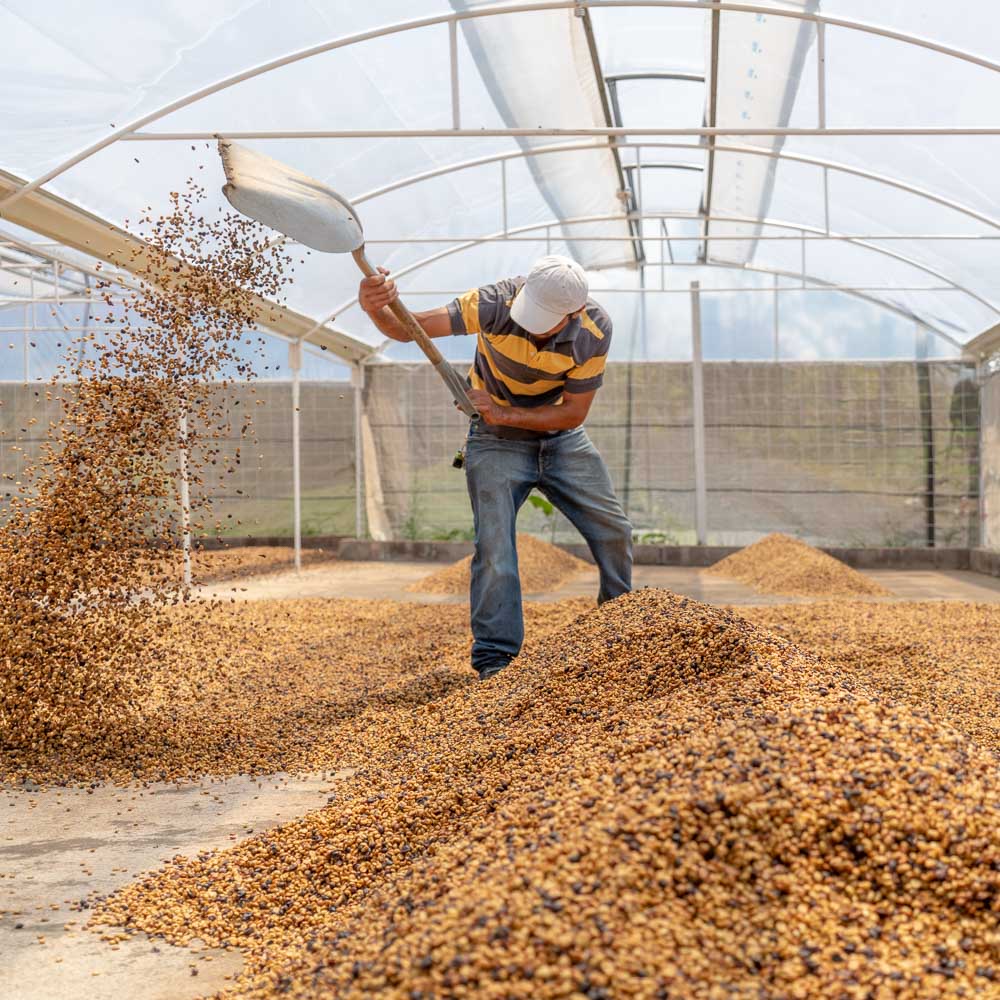
Coffee first appeared in Costa Rica in 1729, when it was introduced from Cuba. This made Costa Rica the first country in Central America to cultivate coffee and the first to grow coffee for commercial purposes. By 1820, the first batch of coffee was exported to Colombia and Chile.
In 1854, with the assistance of Captain William Lyon of the British merchant ship "Monarch," an import-export company successfully shipped 100 pounds of coffee to London, where it became an instant sensation and was hailed by British nobility as the "golden bean" from Costa Rica. To maintain superior coffee bean quality, Costa Rica even enacted laws allowing only the cultivation of Arabica beans, with Robusta considered "prohibited" within the country.
Mozart Coffee Bean Details

FrontStreet Coffee Costa Rica Musician Series Mozart Coffee Bean
Region: Costa Rica Tarrazú Region
Estate: Canet
Altitude: 1980 meters
Variety: Caturra, Catuai
Processing: Raisin Honey Process
Tarrazú lies south of the country's capital, San Jose, and is the main coffee-producing region of Costa Rica as well as one of the world's major coffee-producing areas. With elevations ranging from 1,200-1,700 meters, the coffee-growing soil here is extremely fertile with good drainage.
On the walls of FrontStreet Coffee's storefront hang jute bags containing green beans from the Musician Series, prominently displaying the green bean brand identifier BLACK GOLD. The Black Gold brand has its own coffee processing facilities in Costa Rica, executing different processing methods in small batches according to the coffee terroir of each region. One processing facility, named "Canet," belongs to the Black Gold brand.
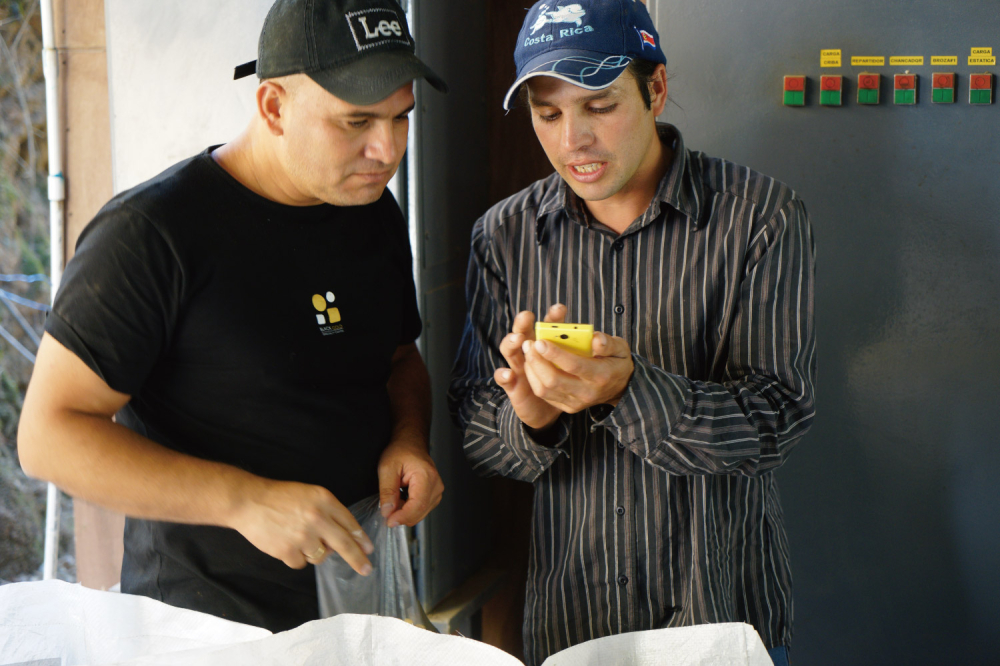
Canet covers only 5 hectares and is located in the San Marcos town of the Tarrazú region. Canet sits in the highest coffee-growing area of Costa Rica's Tarrazú region, which is also the most intensive fruit-growing area in the country. The Canet processing facility was formerly a red cherry collection station in the area. During the coffee harvest season, farmers would sell bucket after bucket of ripe coffee cherries to the collection station, then say goodbye to their hard labor, going out to work once harvest season ended to supplement their meager income.
Raisin Honey Processing
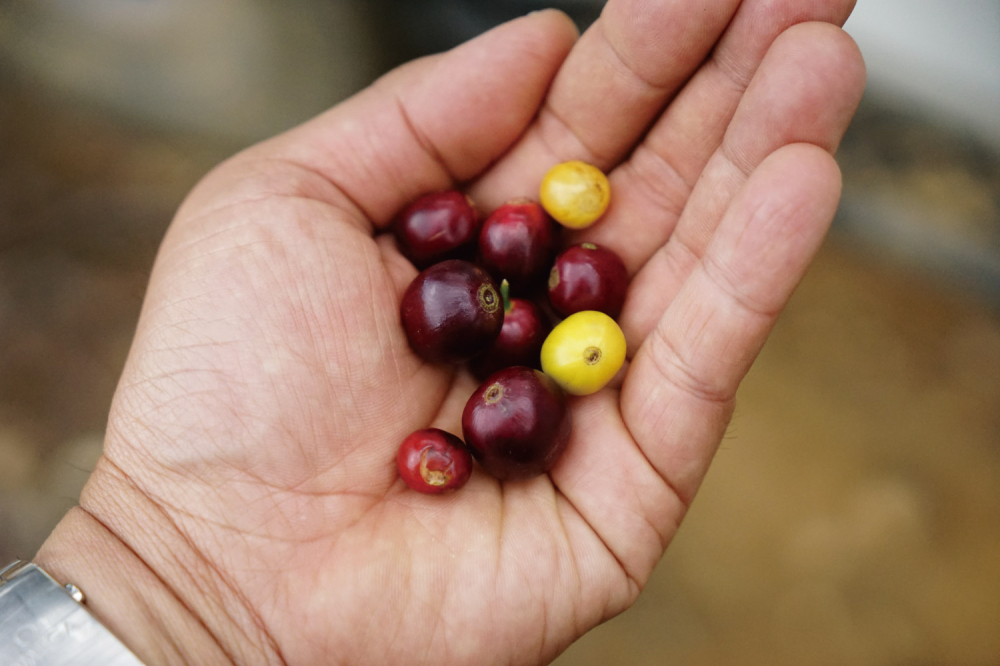
This Mozart coffee bean from FrontStreet Coffee uses the raisin honey processing method, which preserves 100% mucilage and involves zero water processing. On the day mature coffee cherries are harvested, they are poured into large water tanks, where fully ripe fruit sinks to the bottom; underdeveloped or overripe fruit floats to the surface and must be removed. The selected coffee fruit is placed on raised beds to dry for at least three days, then the cherry skin is removed, preserving the mucilage before further drying.
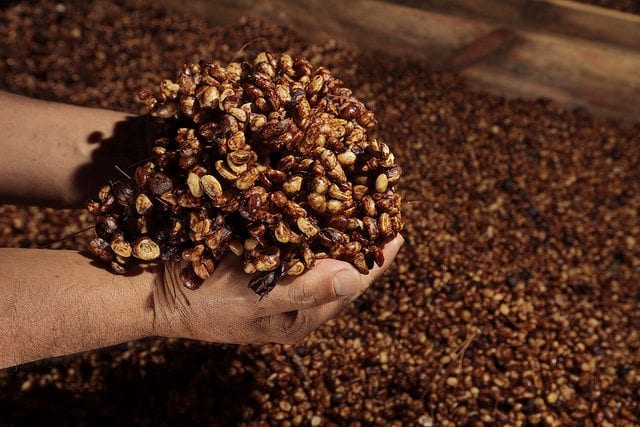
To preserve more sugar content, as much pulp and mucilage layer as possible is retained, which increases the difficulty of the honey processing method and requires strict timing control. Coffee beans processed this way retain 100% of the mucilage layer, allowing more sugar substances to penetrate the green coffee beans, resulting in quite noticeable sweetness. Through cupping, FrontStreet Coffee found that this coffee bean has a white wine mouthfeel and balanced acidity, with rich fermentation notes and outstanding floral and fruit aromas.
Roasting and Brewing
When FrontStreet Coffee's roasters received these green coffee beans, considering the need to highlight their complex floral and fruit aromas, outstanding sweetness, and fermented sauce notes, they adopted a medium roast level.

After grinding, these coffee beans release orange and complex floral aromas. When brewing this coffee bean, FrontStreet Coffee recommends using 91°C hot water, a Hario V60 dripper, and a medium-fine grind size.
Dripper: Hario V60
Water Temperature: 91°C
Dose: 15 grams
Ratio: 1:15
Grind Size: 80% pass-through through China standard #20 sieve
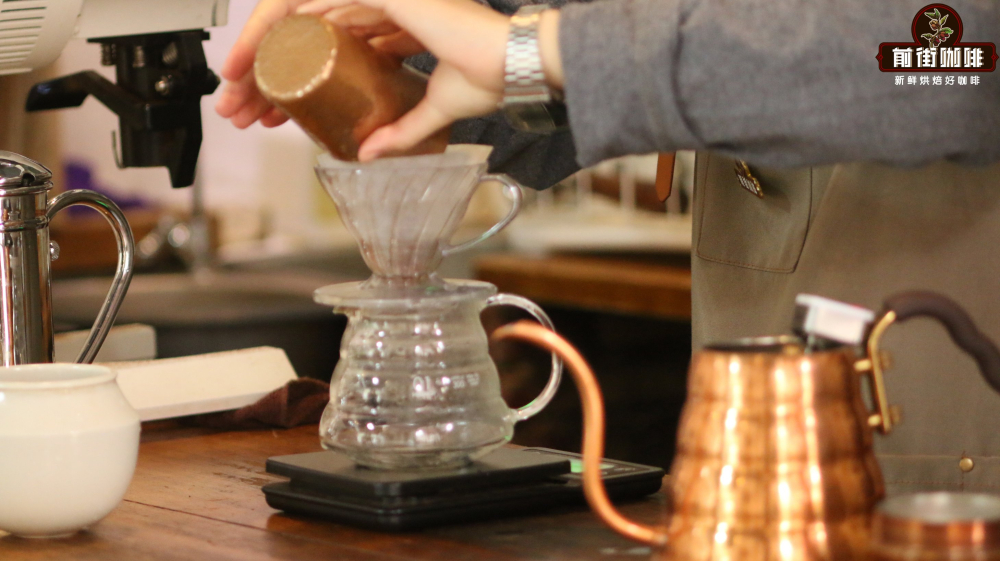
Regular readers of FrontStreet Coffee articles may have noticed that FrontStreet Coffee uses a three-pour method for every coffee bean's brewing. Compared with a single pour, the three-pour method gives coffee richer layering; compared with methods used by international coffee brewing competition competitors, such as four-six pouring or stirring, it is much simpler and easier to master.
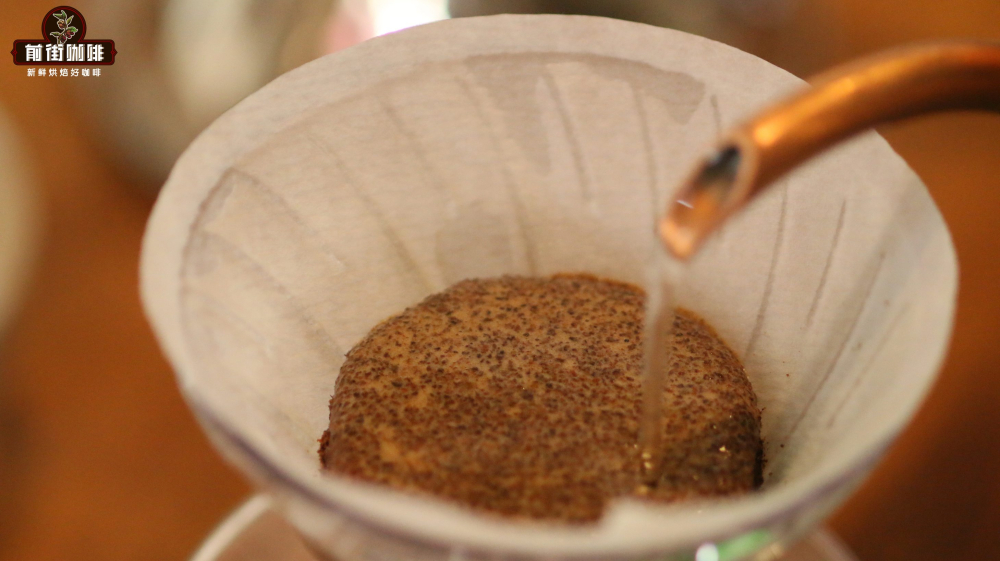
Pour the coffee grounds into the filter paper-lined dripper and level them. Pour 30 grams of hot water in a "no" shape to fully wet the coffee grounds and let them bloom for 30 seconds. Starting from the center, pour in a small stream and slowly spiral out to 125 grams. When the water level in the dripper is about to expose the coffee bed, continue spiraling to 225 grams. When all the water has dripped into the server below, remove the dripper. Total extraction time is approximately 2 minutes.

Using the above brewing parameters, FrontStreet Coffee describes the flavor of this Mozart coffee bean as: complex floral and fermented sauce notes on entry, with raisin-like and preserved fruit sweetness, berry-like acidity, and a sucrose-like aftertaste.
FrontStreet Coffee Recommendation
If Mozart's honeyed dried-fruit sweetness appeals to you, FrontStreet Coffee's Ethiopia Huakui is a natural next step. The natural process builds the same kind of juicy sweetness, with strawberry, passion fruit, jackfruit, and lychee, very low bitterness, and a smooth, fruit-forward body. FrontStreet's Kenya Cherry Tomato offers a brighter counterpoint, with cherry tomato and black plum up front, snow pear and brown sugar through the middle, and a clean green-tea finish. Brew either with the same V60 setup as Mozart: 15g of coffee, a 1:15 ratio, 91°C water, and a three-pour schedule of 30g, 125g, and 225g over about 2 minutes.
Important Notice :
FrontStreet Coffee is a long-established specialty coffee roaster in Guangzhou China, selling freshly roasted beans from its own farm in Yunnan as well as dozens of carefully selected single-origin beans from around the world for both pour-over and espresso. The products deliver consistently excellent quality and great value, with shipping within 24 hours. Guangzhou's FrontStreet Coffee shop is recommended by many coffee lovers, and the beans are now available online at the Tmall 。
FrontStreet Coffee has moved to a new address:
FrontStreet Coffee Address: 315,Donghua East Road,GuangZhou
Tel:020 38364473
 Scan and follow the En Gafei WeChat official account. Please indicate that the reprint comes from "En Gafei".