Natural Conditions for Coffee Cultivation in Yunnan and Coffee Variety Characteristics in the Pu'er Region

Yunnan is China's largest coffee-producing region. Pu'er tea has long been the province's signature product, but coffee has now become another defining feature of the region. In a country as vast as China, why is Yunnan considered the best place to grow coffee? FrontStreet Coffee has noted before that coffee is, at heart, an agricultural crop, shaped by local environment and climate—much like coconuts, which thrive in Hainan's tropical heat but lose their charm almost anywhere else. From a geographic and climatic standpoint, Yunnan holds vast stretches of land highly suited to coffee cultivation.
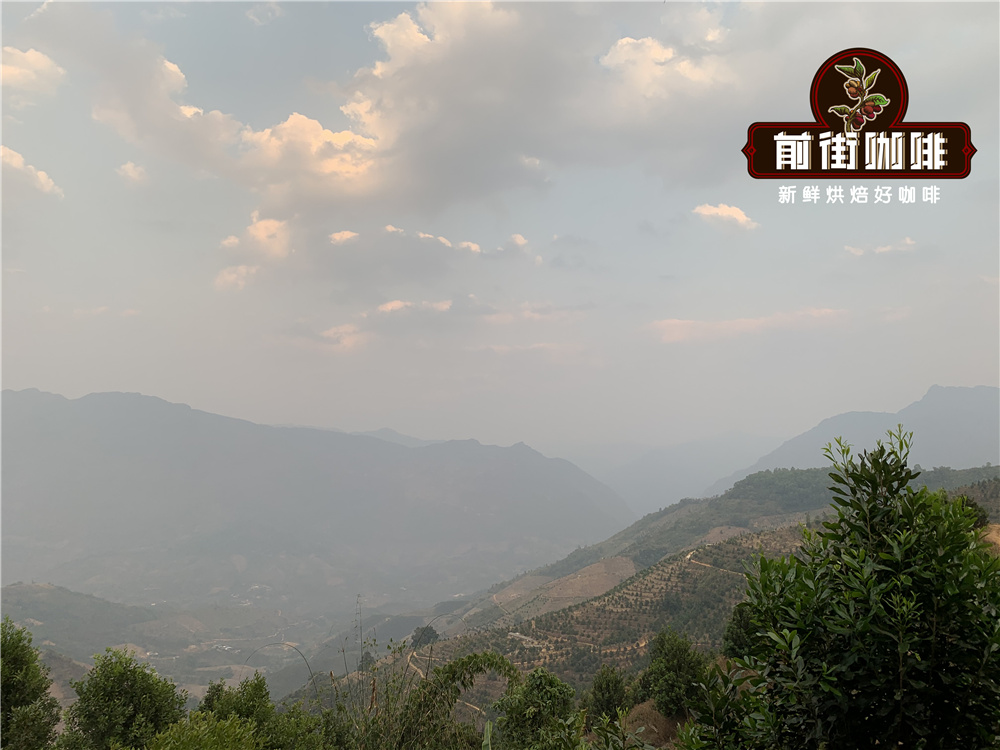
So what is Yunnan's climate actually like? Yunnan sits squarely in the world's golden coffee-growing belt, and its excellent ecology and rich natural resources have shaped the distinctive character of Yunnan coffee. The province's coffee acreage spans roughly 1.8 million mu, accounting for over 95% of China's total coffee cultivation area and production, with an annual output of about 139,000 tons. Coffee is grown across 35 counties and districts in 9 prefecture-level cities including Pu'er, Baoshan, Dehong, Lincang, Wenshan, and Xishuangbanna, and 80% of those areas are classified as impoverished regions. More than 380,000 households farm coffee, involving over 1.14 million people.
Yunnan's natural conditions strikingly resemble Colombia's: low latitude, high altitude, and big day-night temperature swings. The arabica beans grown here are cupped and classed as mellow and aromatic, with quality and taste close to Colombian coffee. The hallmarks of Yunnan coffee: rich but not bitter, fragrant but not overpowering, with subtle fruit notes. Most Yunnan coffee is planted in arid, hot valley regions at around 1,100 meters, yielding moderate acidity with a rich, mellow aroma.
Yunnan Coffee Production Regions
Yunnan's coffee production is currently concentrated in four main regions: Pu'er (180,000 mu), Baoshan (100,000 mu), Dehong (120,000 mu), and Lincang (20,000 mu). The vast majority of the trees are Catimor, and over 80% of the harvest ends up as raw material for instant coffee. Some is sold to Nestle, while the rest is exported to Europe and the Americas through local traders. Judged by specialty coffee grading standards, Yunnan coffee's average quality still falls well short of the bar.
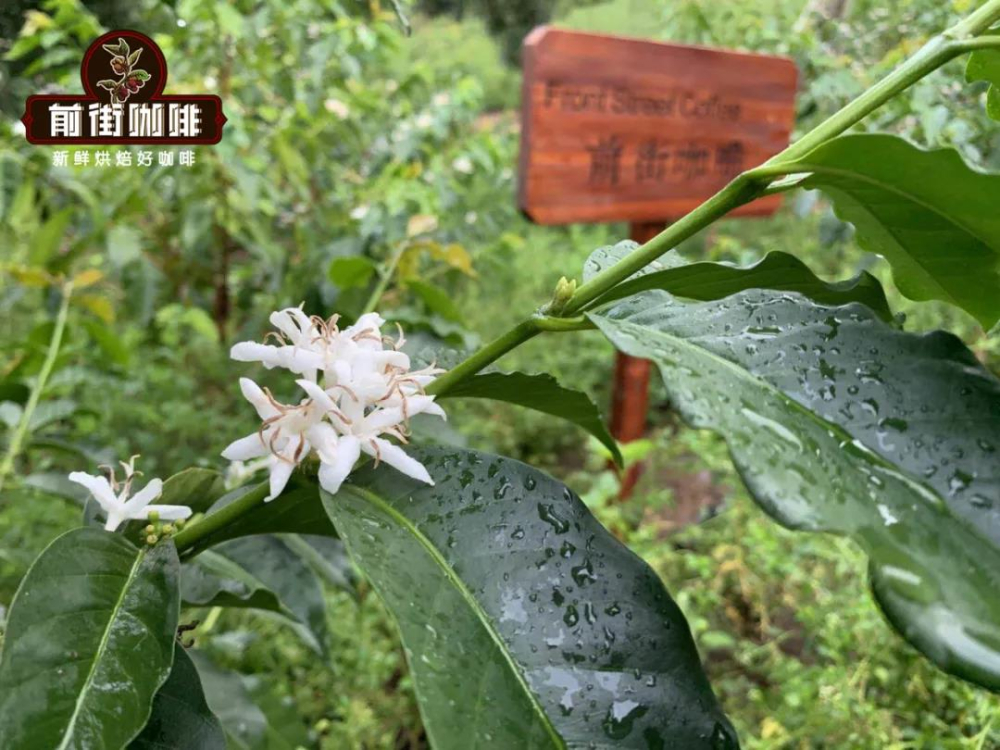
Pu'er: The Heart of Yunnan Coffee
Pu'er may be famous for tea, but the city has grown coffee for more than 100 years, with truly large-scale cultivation starting in 1988. That year, Nestle arrived in Pu'er and made enormous contributions to the local industry, putting Pu'er coffee on the path to industrialization. Today Pu'er is China's largest coffee-growing area and highest-producing region, as well as a key coffee trading and distribution hub. Coffee has become one of Pu'er's signature highland agricultural sectors and a pillar industry for building the national green economy demonstration zone.
Pu'er's three treasures are Pu'er tea, coffee, and dendrobium. Coffee, as one of the three, has earned considerable international recognition. The city's cultivated area reaches 770,000 mu with an annual output of about 54,000 tons—first in Yunnan Province. Pu'er is not only China's main coffee-producing region but also the area that hosts the most coffee study tours and training programs.
Pu'er City Climate
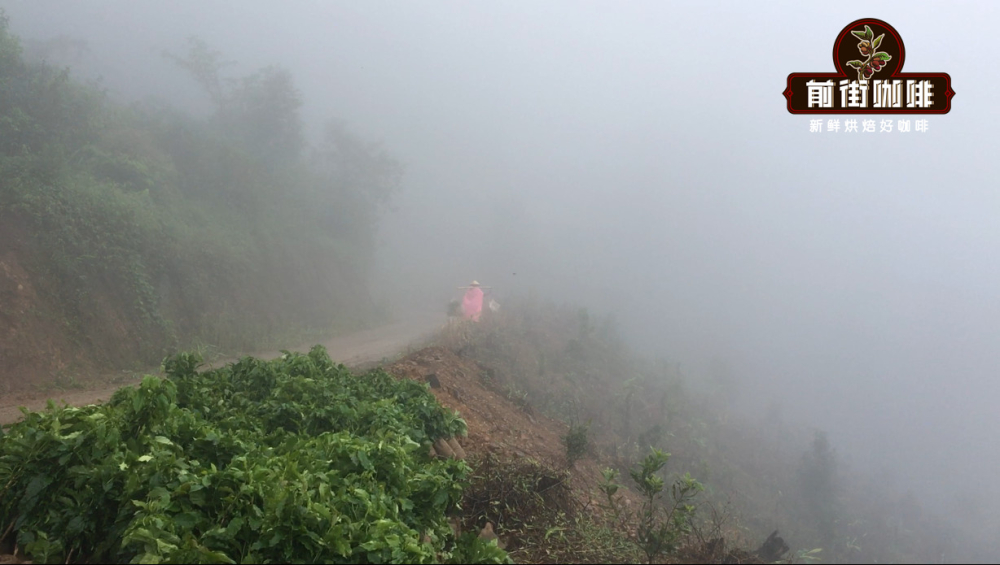
Pu'er's climate shows three defining traits: low latitude, monsoon influence, and vertical zonation. Geographically, it opens southward to the Indian Ocean and Bay of Bengal, under the influence of humid Indian Ocean monsoons. The towering Ailao and Wuliang Mountains to the east block Siberian cold fronts, creating a primary climate of warmth, humidity, and calm winds. The temperature gap between the coldest and warmest months is small, making it a genuinely "spring-like all year" region. The annual average temperature runs 15.3°C to 20.2°C, annual precipitation between 1,000-2,780 mm, and annual sunshine of 1,873.9-2,206.3 hours. Steep vertical altitude differences stack climate types from northern tropical at the lowest elevations through southern subtropical, central subtropical, northern subtropical, and southern temperate up to temperate at the highest. Coffee cultivation is mainly distributed in mountain areas at 800-1,200 meters.

Pu'er City belongs to a highland climate zone dominated by a humid southern subtropical mountain monsoon climate, placing it squarely in the global coffee golden belt. Pu'er coffee features excellent color, superior quality, and unique flavor.
Yunnan Coffee Varieties
Ethiopia is the genetic homeland of coffee—so which varieties has Yunnan adopted? In the beginning, Typica and Bourbon, the two classic high-quality varieties, dominated Yunnan's fields. In 1991, the Catimor series arrived from Kenya, bringing stronger disease resistance and higher yields. Catimor is now the most widely planted variety in Yunnan, with small amounts of Typica and Bourbon still grown around Baoshan.
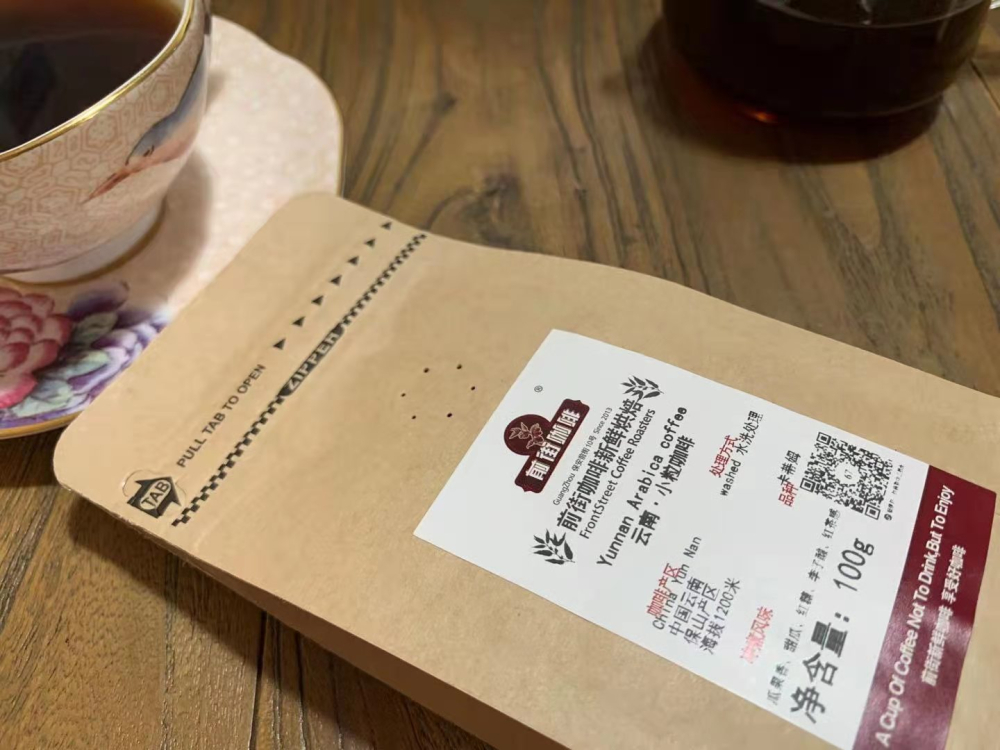
Typica
The most classic premium Arabica variety. World-famous coffees like Blue Mountain and Mocha are almost exclusively Arabica. Typica coffee traces back to southeastern Ethiopia and Sudan and is the most widely cultivated variety in the Western Hemisphere.
Bourbon
This variety descends from Typica and spread after the French planted it on Bourbon Island (today's Reunion Island) in 1708. Bourbon also delivers wonderful aromas and rich flavors, with higher yields and vigor than Typica, and suits cultivation at 1,200-2,000 meters. Bourbon is the second most important arabica variety after Typica.
Catimor
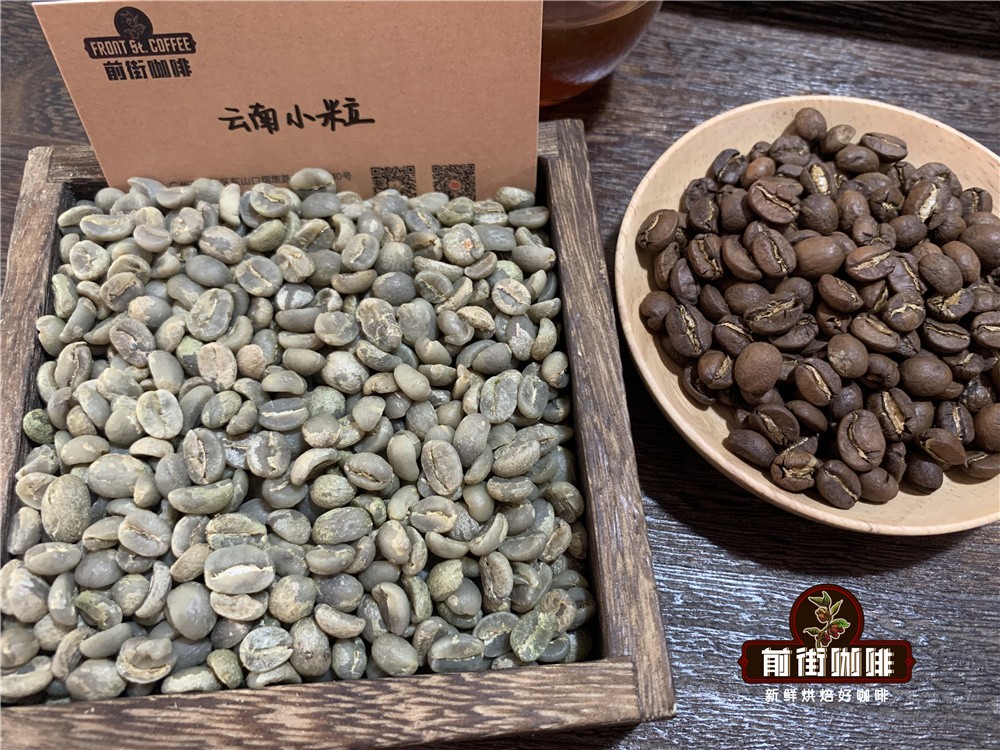
Yunnan's small-bean coffee belongs to the high-generation Catimor family. Catimor is not pure Arabica—it is a hybrid of Timor (a Robusta-derived variety) and Caturra (a Bourbon mutation), meaning Catimor carries roughly 25% Robusta heritage. That cross gives it strong disease resistance and high yields, making it prominent among Central American varieties. Among the Yunnan coffee beans FrontStreet Coffee offers is a Yunnan small-bean lot that is Catimor.

Catimor in Yunnan grows vigorously with stable secondary traits. The crown's terminal buds and young leaves are emerald green, with deep green foliage across the plant. The plant is columnar, with short internodes and many branches, wide adaptability, strong drought resistance, and some cold tolerance. Compared with Typica, Yunnan's Catimor yields are very high.
Although Catimor adapts superbly to Yunnan, its flavor has long worried many drinkers—Han Huaizong famously describes Catimor's flavor as "the devil's aftertaste" in his books. FrontStreet Coffee believes, however, that many factors shape coffee flavor and broad generalizations fail: for example, the variety behind Indonesian Mandheling is Catimor, yet Mandheling's flavor is widely acclaimed.
Catimor CIFC7963 (F6) has been extensively promoted across Yunnan's growing areas—Dehong, Baoshan, Pu'er, Xishuangbanna, Lincang, Wenshan, and Yuxi—as well as in Panzhihua, Sichuan Province, and neighboring Myanmar, with a total planted area exceeding 200,000 mu.
All coffee planted in Yunnan's Pu'er region is Catimor.
Yunnan Coffee Bean Processing Methods
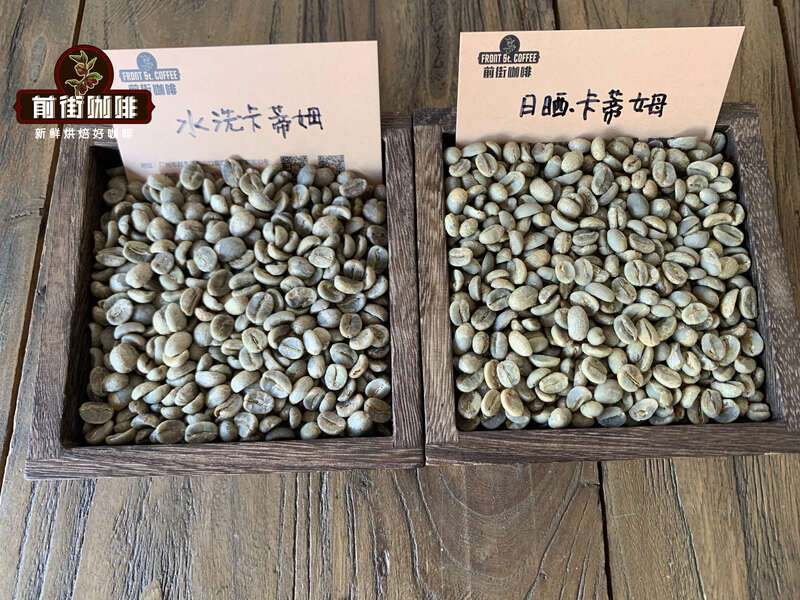
Most Yunnan coffee beans use washed processing, while FrontStreet Coffee's Yunnan lots come in two forms: washed and natural.
FrontStreet Coffee's Comparison of Yunnan Catimor Beans, Washed vs. Natural
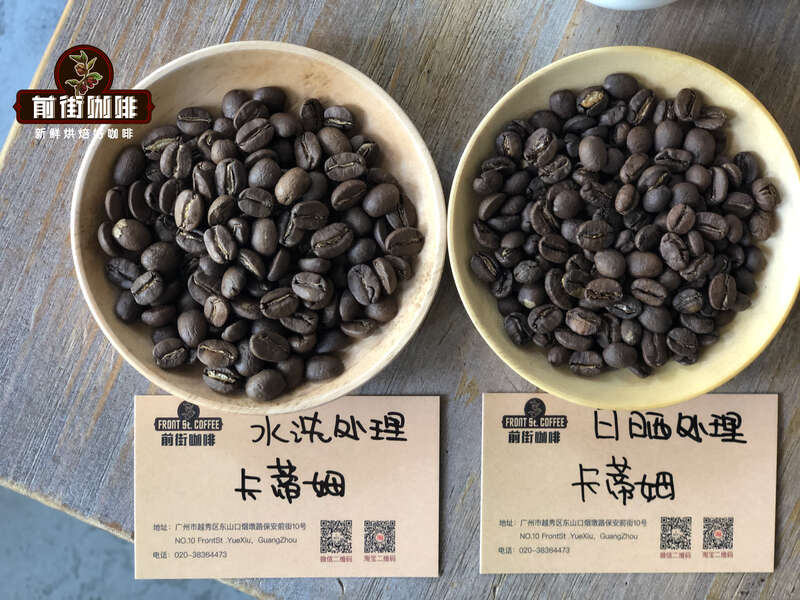
Comparing the raw beans side by side, FrontStreet Coffee found that washed coffee looks blue-green with a faintly acidic aroma in its raw state, while natural coffee looks yellowish with fermented aromas.
FrontStreet Coffee's Brewing Recommendations for Yunnan Coffee
Dripper: Hario V60
Water temperature: 90°C
Coffee amount: 15 grams
Coffee-to-water ratio: 1:15
Grind size: Medium-fine (80% pass-through rate on China standard #20 sieve)
Natural Catimor brewing flavor: Opening notes of red berry juice, nutty, cocoa, and licorice aromas, with caramel-like sweetness in the aftertaste and a rich, smooth mouthfeel.
Washed Catimor brewing flavor: Strong nutty aroma in the nose, with herbal, chocolate, and caramel notes on entry, and subtle fruit acidity in the finish.
For brewing, FrontStreet Coffee recommends freshly roasted beans to capture the fullest flavors. All coffee beans shipped by FrontStreet Coffee are roasted within 5 days, because freshness dramatically affects flavor. FrontStreet Coffee's roasting philosophy is "freshly roasted good coffee," ensuring every customer receives the freshest coffee possible. The bean's degassing period runs about 4-7 days, so coffee arrives right at its flavor peak.
Some customers prefer to have FrontStreet Coffee grind the beans for them, which is perfectly fine. But note: once ground, the coffee should be brewed promptly. Ground coffee needs no further degassing—the pressure from carbon dioxide buildup in the sealed package during shipping actually rounds out the flavor, so you can brew the grounds the moment they arrive.
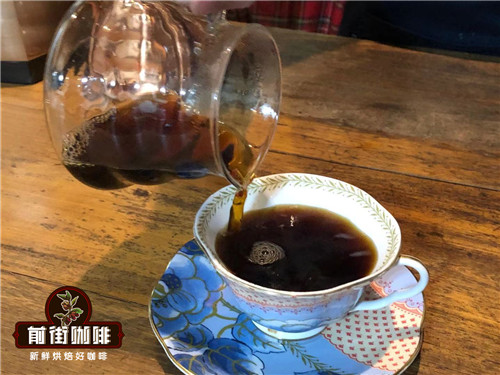
That said, ground coffee oxidizes quickly in open air, so the flavors dissipate relatively fast and the cup suffers. FrontStreet Coffee therefore recommends buying whole beans and grinding fresh before each brew to appreciate the coffee's full character.
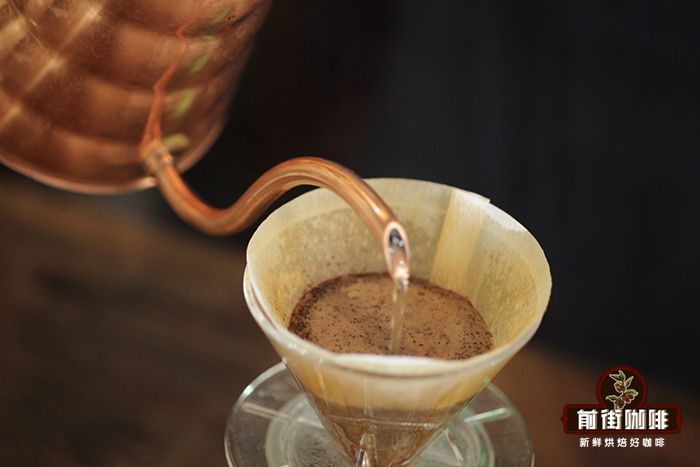
Use segmented extraction with twice the coffee weight in water for blooming—that is, 30 grams of water for a 30-second bloom. Starting at 31 seconds, keep pouring in small circles until you reach 125 grams, then continue to 225 grams and stop. Remove the dripper once the water has fully drained. Timing starts at the first pour; total extraction should run 2'00". Then pick up the entire cup, swirl it well, and pour into cups to taste.

Precisely because Yunnan's climate suits coffee so well, FrontStreet Coffee operates its own coffee plantation in Yunnan, producing its own Yunnan Natural Process Typica Coffee. Its flavor profile: a fuller mouthfeel than washed Yunnan coffee, slightly lower acidity than washed Typica, higher sweetness, better balance, nutty undertones, berry-like acidity, and brown sugar notes laced with subtle tea-like sensations. Welcome to FrontStreet Coffee to explore and discuss!
FrontStreet Coffee Recommendation
To start exploring Yunnan coffee, begin with FrontStreet Coffee's Yunnan small-bean coffee from the Baoshan region. Baoshan's coffee history dates to the mid-1950s, when the patriotic overseas Chinese Liang Jinshan introduced coffee there; the frost-free, warm climate—especially the dry-hot valley microclimate around Lujiangba with its large day-night temperature swings—gives Baoshan beans their distinctive lingering sweetness. This washed, medium-roast lot highlights gentle nutty and chocolate aromas with a touch of plum acidity, and its approachable price makes it many drinkers' first taste of Yunnan.
For clearer, more defined Yunnan flavor, choose FrontStreet Coffee's 2013 Yunnan Natural Typica, grown on FrontStreet Coffee's own plantation. Typica is one of the oldest and purest Arabica varieties, and after natural processing and a medium roast, the cup turns fuller and richer: dark berry tones, caramel sweetness, chocolate, and a hint of dried apricot, finishing with the afterglow of black tea. It also carries a faint fermented wine note, creamy finish, and the citrus-berry character of the region.
If you'd like to taste Yunnan through espresso, pick up FrontStreet Coffee's Black Cocoa blend, a barista favorite that combines Yunnan washed small-bean coffee with Brazil Cerrado. The Brazilian component contributes mixed-nut aromas and balance, while the Yunnan beans bring chocolate and citrus. The Americano it produces balances sweet, sour, and bitter with nutty, brown-sugar sweetness, and lattes made from it are silky with almond and cream notes—perfect for beginners.
Important Notice :
FrontStreet Coffee is a long-established specialty coffee roaster in Guangzhou China, selling freshly roasted beans from its own farm in Yunnan as well as dozens of carefully selected single-origin beans from around the world for both pour-over and espresso. The products deliver consistently excellent quality and great value, with shipping within 24 hours. Guangzhou's FrontStreet Coffee shop is recommended by many coffee lovers, and the beans are now available online at the Tmall 。
FrontStreet Coffee has moved to a new address:
FrontStreet Coffee Address: 315,Donghua East Road,GuangZhou
Tel:020 38364473
 Scan and follow the En Gafei WeChat official account. Please indicate that the reprint comes from "En Gafei".