
Sidamo Coffee Bean Flavor Characteristics and Taste Profile - Sidamo Flower Champion Coffee 6.0 Pour-Over Brewing Flavor Description
The Rise of Sidamo and the Story Behind Huakui Coffee

Coffee is one of the most popular drinks in the world. Some people love the mellow richness of Jamaican Blue Mountain, while others reach for the bright acidity of African beans. Many young customers who walk into a FrontStreet Coffee store end up standing in front of the bean display, overwhelmed by the sheer range of origins, processing methods and varieties. Even when they are looking only at African coffees, they don't know where to begin.
Ethiopia: The Birthplace of Coffee
As the birthplace of coffee and a genetic library of varieties, Ethiopia hides an enormous number of delicious coffees across its vast landscape. It has many producing regions, and among them Harar, Yirgacheffe and Sidamo are world-renowned. For many coffee lovers, the introduction to specialty coffee comes through washed Yirgacheffe and naturally processed Sidamo.

Unlike the fresh, natural character of washed Yirgacheffe, naturally processed Sidamo has won a large following for its wild, rich berry-and-cream flavors.
At the same time, like Yirgacheffe, the name Sidamo has long been world-famous. On the international stage, Sidamo frequently appears at the top of award lists in coffee competitions, and in recent years it has been notably recognized in green bean contests such as COE (Cup of Excellence) and TOH (Taste of Harvest).
Before Yirgacheffe became famous for its fresh floral aromas, it was part of the Sidamo region. Before Guji became a rising star in green bean competitions and was established as an independent region in 2010, it too belonged to Sidamo. On FrontStreet Coffee's shelf there is a bean that won the washed category championship in the 2020 TOH competition's Ethiopia region - produced in the Uraga area of Guji. Its flavor is reminiscent of honey pomelo green tea: fresh and unique, and much praised by coffee lovers.

Of course, the Sidamo region is vast and resource-rich, with many sub-regions. Anyone who has tasted Panama Geisha from Hacienda La Esmeralda knows how much different plots differ, let alone different sub-regions. Within Sidamo, Uraga and Bensa each have their own distinctive character.
The Emergence of Huakui Coffee
Among the sub-regions, Hambela has drawn a great deal of attention. Thanks to a collaboration between an internet celebrity and Luckin Coffee, people across China came to know Huakui coffee beans. For a while Huakui was the rising star: many customers walked into a FrontStreet Coffee store and immediately asked for a bag of Huakui beans.

Naturally, many of them came to ask FrontStreet's baristas about Huakui, while others simply wanted to learn more. So here is an introduction to this coffee.
In 2017, Ethiopia's DW green bean company entered a naturally processed coffee from Hambela's Buku Abel processing station in that year's TOH competition. Its berry-and-cream flavor was so rich that it captivated the international judges and won the natural-processed category championship for the Ethiopia region that year.

Beijing Yisheng Green Bean Company brought the same award-winning lot to China. After tasting it, they named the coffee "Huakui" - meaning "king of the flowers" - with high hopes that it would become the next famous specialty representative, much like Geisha.
In the same year, at the World Brewers Cup China region competition, contestant Li Jianfei used the same award-winning lot of Huakui and took second place. In recent years, because of Geisha's unique flavor, many competitors have chosen Panama Geisha beans. In an era when Geisha dominated competitions, Li Jianfei used an Ethiopian Huakui to surpass many Panama Geisha users, which made Huakui famous throughout the coffee community.

Huakui truly became popular earlier this year, however, when Li Guoqing criticized Luckin for launching its Huakui SOE series. Suddenly more people came to FrontStreet Coffee to ask about the history and flavor profile of Huakui coffee beans.
As 2022 arrived, some customers still asked whether Huakui 4.0 was available - a sign that not everyone fully understands the naming convention. Since Huakui was born in 2017, the "Huakui" label has been managed by the Dali branch of Beijing Yisheng Green Bean Company, and it has now reached its sixth generation.

2017 was the starting year for Huakui; 2018 brought Huakui 2.0; 2019, Huakui 3.0; 2020, Huakui 4.0; 2021, Huakui 5.0; and 2022, naturally, Huakui 6.0. The series is clearly named in the "Huakui X.0" format, and over the years FrontStreet Coffee has updated with each new seasonal Huakui.
What Makes Huakui Unique
Generally speaking, only naturally processed coffee produced and processed at Buku Abel can be called "Huakui." Huakui is grown at high altitudes above 2,000 meters, where the coffee trees are surrounded by tropical plants such as sugarcane and bananas that provide suitable shade. Those conditions yield a Huakui that is sweet, pleasant in its acidity and smooth, and natural processing further deepens the beans' sweet aroma.

Coffee is, after all, an agricultural crop, easily affected by uncertain factors such as climate and rainfall from year to year. It is normal for the beans to taste different each season. When FrontStreet Coffee received the new-season Huakui 6.0, the green coffee contained many flat beans, shell beans and broken beans - signs of less-than-ideal appearance.
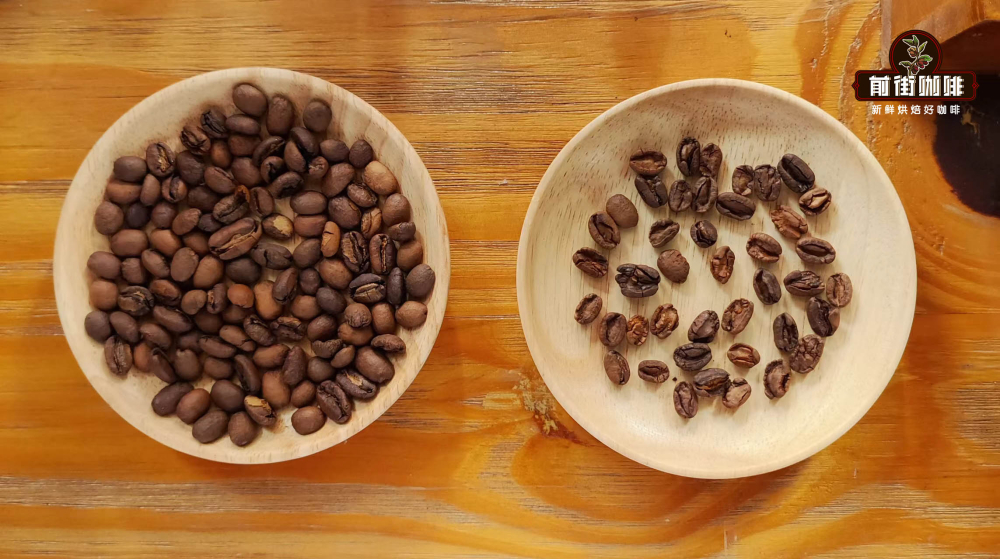
FrontStreet's roaster sorted out 20% to 30% of the defective beans before roasting. Even after roasting, many irregular beans could still be found in the batch, more than in previous years.
Cupping revealed that this Huakui 6.0 had flavors of berries, honey and passion fruit, with prominent sweetness.
Because the defect rate of that Huakui 6.0 was high, FrontStreet looked for another new-season Huakui through Hambela's Buku processing station. This lot also comes from the Hambela region, naturally processed by the Buku station, with full, complete beans similar to the Huakui of previous years. Cupping showed citrus acidity, honey sweetness, light white florals and a strong juice-like quality.

Huakui 8.0: The Latest Evolution
Without quite noticing it, Huakui has entered its eighth year since debut, and the latest seasonal batch of 2024 follows the long-standing convention, launching as "Huakui 8.0." Trying the new Huakui has become a top priority for loyal fans. To present Sidamo's refined fruit and floral flavors while keeping the coffee's caramelized aroma, FrontStreet's roaster used a medium-light roast to bring out the best in these beans.

FrontStreet Coffee: Sidamo, Guji Huakui 8.0 Coffee Beans
Country: Ethiopia | Region: Sidamo, Guji | Altitude: 2,250-2,350 meters | Variety: Local native varieties
Processing Method: Natural processed
Flavor: Floral, jackfruit, dried fruit, apricot, juicy
FrontStreet Coffee holds to the principle of "freshly roasted good coffee," shipping beans that were roasted within five days to maximize their rich flavors. By the time they reach you, they have already gone through a 4-7 day degassing period and are at their peak.
Brewing Recommendations
Brewing Parameters:
Dripper: Hario V60
Water Temperature: 90C
Dose: 15 grams
Ratio: 1:15
Grind: 80% pass-through through a standard #20 sieve

FrontStreet Coffee suggests a 30-second bloom. After roasting, beans are full of gas, and blooming lets carbon dioxide escape so the flavors can be extracted more completely. Start with 30 grams of hot water and let it bloom for 30 seconds. Then, beginning at the center, pour in a fine stream, slowly spiraling outward to 125 grams. When the water level in the dripper drops to just above the coffee bed, keep spiraling up to 225 grams. Total extraction time: 2 minutes.
FrontStreet Coffee Recommendation
If you love the wild, berry-forward character of natural Sidamo, FrontStreet Coffee's naturally processed Red Cherry is an ideal next step. It is made from fully ripe red cherries, dried in the sun for three to five weeks until the fruit's sugars and essence soak into the bean, then hulled. Because it carries that natural, fruit-forward intensity, it shows the same tropical aromatics as a natural Sidamo while keeping a classic Yirgacheffe backbone - citrus-like acidity, a berry-juice body, honeyed sweetness and a creamy smoothness.
Prefer your Ethiopian coffee a little cleaner and more floral? Then FrontStreet's washed Yirgacheffe everyday bean is the place to start. It is the cup that introduces most drinkers to the region: white jasmine on the nose, bright citrus and lemon acidity, and a clean, tea-like finish. Together, a washed Yirgacheffe and a natural Ethiopian let you taste both great traditions of the country side by side.
Important Notice :
FrontStreet Coffee is a long-established specialty coffee roaster in Guangzhou China, selling freshly roasted beans from its own farm in Yunnan as well as dozens of carefully selected single-origin beans from around the world for both pour-over and espresso. The products deliver consistently excellent quality and great value, with shipping within 24 hours. Guangzhou's FrontStreet Coffee shop is recommended by many coffee lovers, and the beans are now available online at the Tmall 。
FrontStreet Coffee has moved to a new address:
FrontStreet Coffee Address: 315,Donghua East Road,GuangZhou
Tel:020 38364473
 Scan and follow the En Gafei WeChat official account. Please indicate that the reprint comes from "En Gafei".

