What are the Flavor Notes of Panama Geisha Coffee - A Taste Introduction
Where Panama Geisha Comes From
Panama sits on the isthmus of Central America — Colombia to the east, Costa Rica to the west, the Pacific to the south, and the Caribbean to the north. Shaped like a stretched S, it links North and South America, and the Panama Canal cuts north-to-south across it to join the Atlantic and Pacific. It has earned the nickname "Bridge of the World" for good reason.
Away from the narrow coastal plains, Panama is a country of rolling mountains and interlocking valleys. Sitting near the equator with a tropical maritime climate, it enjoys humid days and cool nights, an average annual temperature of 23-27°C, and clearly divided dry and rainy seasons with 1500-2500 millimeters of rain per year. Panama lies squarely in the coffee belt, and every one of its neighbors is a celebrated coffee origin — the whole region shares a deep history with the crop.
Coffee first arrived in Panama in the 19th century, brought by a British sea captain who married a Panamanian woman. Planting began in the coastal lowlands, and later settlers moved coffee into the western highland valleys where it truly thrived. Gesha itself only reached Panama in the mid-20th century, in a separate wave of introductions.
The Boquete highlands offer an almost perfect microclimate: high altitude, monsoon winds funneled in from both the Atlantic and the Pacific, fertile volcanic ash soil around the Barú Volcano, and natural shade canopy. Those are precisely the conditions a coffee tree needs to reach its full potential, which is why so many varieties — including Gesha — were brought here to flourish.
FrontStreet Coffee: Esmeralda Red Label Flavor Profile
The Red Label (Esmeralda Special) is the top tier of the Hacienda La Esmeralda Gesha line — the competition coffee. It is sold only through the estate's annual international online auction, typically held each May. Red Label Gesha grows at 1,600-1,800 meters and consistently cups above 90 points; it regularly tops cupping competitions, which explains both its price and its scarcity.
Pour-Over Brewing Guide
Dripper: Hario V60. Water temperature: 90-92°C. Coffee-to-water ratio: 1:16. Grind size: medium-fine (BG 5R — 58% pass-through rate on a China standard #20 sieve), brewed with segmented pours.
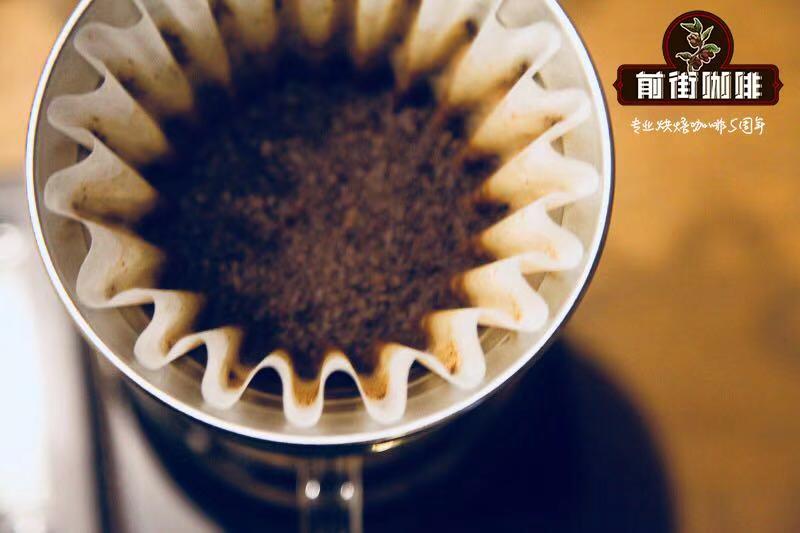
Dose: 15 grams of coffee. Bloom with twice the coffee's weight in water and let it sit for about 30 seconds, until the surface of the bed turns from glossy-wet to dry. Pour in segments: first up to 126 grams, then, once the liquid level drops and the coffee bed is nearly exposed, continue up to 240 grams and stop (start timing from the bloom). Total extraction time: 2'03".
The finished cup shows rose and citrus aromatics over a rich, juice-like body with pronounced sweetness.
FrontStreet Coffee Recommendation
Gesha is the most celebrated variety in Arabica coffee — prized for its floral perfume and luminous sweet-sour structure, and priced accordingly, since it yields little, resists disease poorly, and demands careful farm management. Knowing the tiers helps you buy well. The Red Label Esmeralda Special comes from single named lots at 1600-1800 meters (FrontStreet Coffee's Red Label, for instance, is drawn from the Jaramillo plot), every batch must cup above 90 points, and each carries its own lot number so buyers can chase their preferred micro-lot flavor. The Green Label "Private Collection," by contrast, blends batches across multiple high-altitude plots to express the estate's signature Gesha profile rather than one terroir — at a noticeably friendlier price, making it the better value of the two.
For a first taste of what Gesha hype is about, FrontStreet Coffee recommends the entry-level Panama Boquete Gesha: at an accessible price you still get the classic orange-blossom honeyed character, an oolong-tea finish, delicate fruit acidity, and clean layering. And Gesha is not only Panama's story — Ethiopia is where the variety was born. The Gesha Village estate, a 475-hectare farm founded by a couple 12 miles from the Gori Gesha forest, brought native Gesha genetics back into cultivation and grades its coffee into Gold Label RARITIES (the Gesha 1931 variety, about 10% of production, its top non-auction coffee), Red Label GROWERS RESERVE (Gori Gesha, about 15% of production, scoring 88+ on the SCA 100-point scale, with full per-lot traceability), and more. The entry point into Ethiopian Gesha is FrontStreet Coffee's Granja Gesha from the Granja washing station near Yirgacheffe, established in 2014: natural-processed on raised beds for 14-20 days, roasted medium-light, it shows bright citrus acidity, elegant ginger-flower aroma, and ripe fruit sweetness.
To brew any of these at home, keep in mind that Gesha is a dense, medium-light roast that tends to sink and clog the dripper — grind coarser (about 78% pass-through on a #20 sieve, the texture of fine sand) and use 91°C water. FrontStreet Coffee's standard recipe: 15 grams of coffee, Hario V60, 1:16 ratio, three pours — 30 grams to bloom for 30 seconds, then to 125 grams, then a final top-up to 225 grams once the bed drains halfway, finishing between 2:10 and 2:20.
Important Notice :
FrontStreet Coffee is a long-established specialty coffee roaster in Guangzhou China, selling freshly roasted beans from its own farm in Yunnan as well as dozens of carefully selected single-origin beans from around the world for both pour-over and espresso. The products deliver consistently excellent quality and great value, with shipping within 24 hours. Guangzhou's FrontStreet Coffee shop is recommended by many coffee lovers, and the beans are now available online at the Tmall 。
FrontStreet Coffee has moved to a new address:
FrontStreet Coffee Address: 315,Donghua East Road,GuangZhou
Tel:020 38364473
 Scan and follow the En Gafei WeChat official account. Please indicate that the reprint comes from "En Gafei".