How to Brew Panama Coffee? What Parameters for Pour-Over Emerald Special Geisha Coffee?
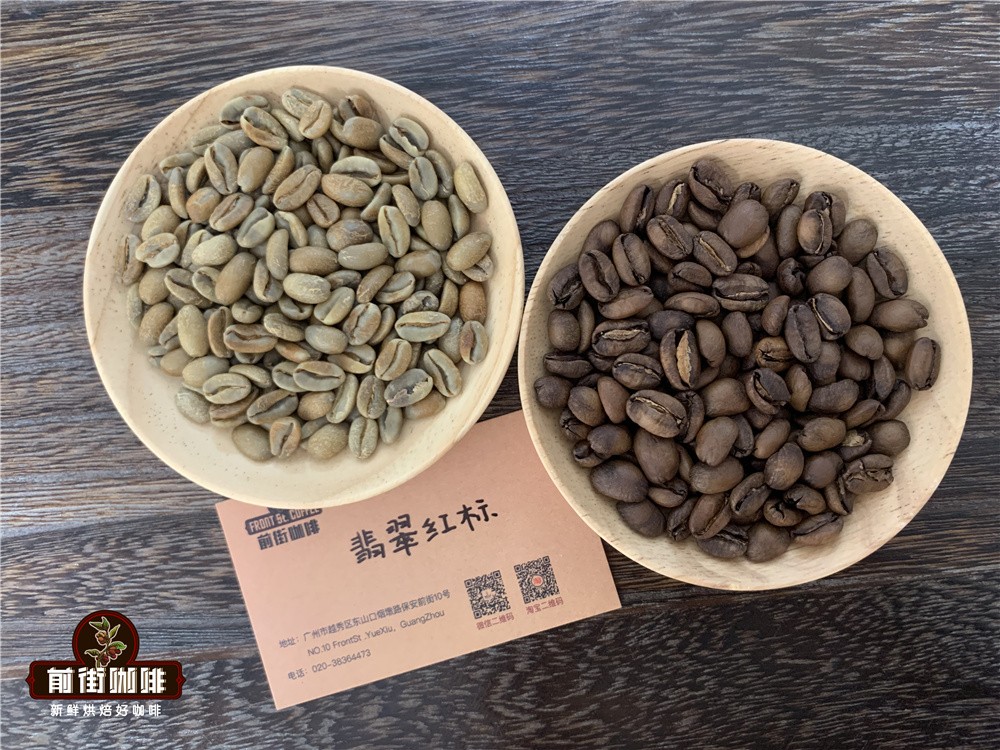
When it comes to Geisha coffee, many people immediately think of Hacienda La Esmeralda. Geisha did not attract much attention at first: its yield is low, the plants grow tall and harvesting is difficult, which made it far less popular than varieties such as Caturra and Catuai. In Panama it was mostly used as a windbreak tree for other varieties. It was not until Hacienda La Esmeralda separated it from the other varieties in 2003, and it became the BOP competition champion in 2004, that Geisha truly entered the spotlight. That is why the flavour of Hacienda La Esmeralda's Geisha is considered slightly superior to that of Geisha Village, and why it leaves such a lasting impression.
Naturally, such wonderful flavours make Geisha very expensive, and a single cup can hurt your wallet for a long time. Once you finish it, though, you will find it well worth it. The reason Geisha beans have such delicate and elegant flavours lies in their specific growing environment. The variety is very demanding: it needs high altitude, cloud cover or extensive shade, and fertile soil to develop its rich, captivating florals, its delicate and elegant fruit acidity and its tea-like aftertaste.

Geisha gives many people the impression of a luxury item in the coffee world. In reality, the name comes from the transliteration of "Geisha" and refers to a coffee variety, classified alongside Typica and Bourbon. We rarely hear product names called directly "Typica coffee beans" or "Bourbon coffee beans"; those are usually written quietly in the variety field. Geisha, however, appears frequently in product names.
Geisha clearly originates from Ethiopia, so why is the coffee grown in Panama better in flavour than elsewhere? A coffee variety sets the basic flavour profile, but coffee is an agricultural product, and it is shaped by climate, soil, altitude and environment. It is like apples of the same variety grown in two different regions: they taste distinctly different. The same applies to Geisha. The various conditions in Panama allow the beans to develop delicate and elegant fruit acidity as well as a distinct floral aroma, and it is precisely these flavours that have made Panama's Geisha popular worldwide.
Estate owners in other countries also grow Geisha, and some have been growing it longer than Panama. FrontStreet Coffee recently launched three new Geisha coffees from Ethiopia, Colombia and Costa Rica. Below, FrontStreet Coffee explains how these three differ from Panama's Geisha.
FrontStreet Coffee - Costa Rica Region - Geisha Coffee Beans
From the spread of the Geisha variety described above, Costa Rica started growing Geisha earlier than Panama. Costa Rica's coffee terrain provides fertile volcanic ash, mild and suitable temperatures and stable, abundant rainfall, all important factors for producing excellent coffee. Since Panama Geisha became famous overnight, many estates in Costa Rica have begun growing Geisha as well, especially in the Tarrazu region.
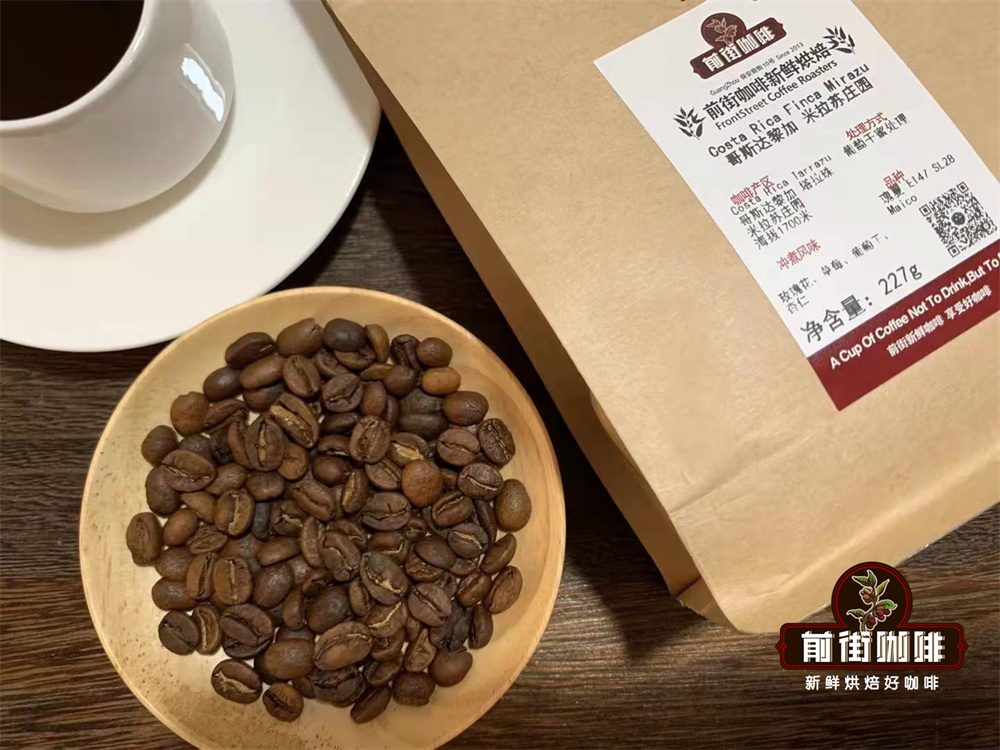
The rich microclimate of the Tarrazu region creates a 26C day-night temperature difference. This wide swing lets the coffee cherries accumulate nutrients better and develop more delicate flavours. Through cupping, FrontStreet Coffee found that Costa Rican Geisha has a profile similar to Panama's, with floral aromas, a clean lemon acidity and a juice-like mouthfeel, and an overall relatively full body.
Because Costa Rican Geisha has a relatively full body, FrontStreet Coffee recommends brewing at 91C with a 1:15 coffee-to-water ratio. The recommended grind size is medium-fine (Chinese standard 80% pass-through rate on a #20 sieve).

FrontStreet Coffee - Ethiopia Region - Geisha Coffee Beans
Ethiopia's most representative Geisha comes from the Geisha Village estate, one of few estates focused primarily on growing the variety. Because the Geisha grown at Geisha Village is a wild variety, it shares plant characteristics and flavour with the Panama Geisha we know, but overall it is still quite different from Panama's.

To distinguish the two, Geisha Village named Ethiopia's variety "Gori Geisha," because it was discovered in the Gori Geisha forest. Through cupping, FrontStreet Coffee found that the flavour is dominated by yellow stone fruit, particularly yellow peach, with medium-high sweetness, and that better batches even show toffee-like notes.
Because Ethiopian Geisha has excellent sweetness, FrontStreet Coffee suggests brewing at 91C to extract more of it. The recommended grind size is medium-fine (Chinese standard 80% pass-through rate on a #20 sieve), with a 1:15 ratio.

FrontStreet Coffee - Colombia Region - Geisha Coffee Beans
Colombia only began importing Geisha from Panama in recent years. Most of Colombia's coffee regions are mountainous, with rich microclimates, mild temperatures and abundant water, providing excellent growing conditions. Through cupping Colombian Geisha, FrontStreet Coffee found floral aromas, a soft orange and tangerine acidity, honey sweetness and a tea-like aftertaste.
Because Colombian beans are overall relatively soft and balanced, FrontStreet Coffee recommends brewing at 90C with a 1:15 coffee-to-water ratio. The recommended grind size is medium-fine (Chinese standard 80% pass-through rate on a #20 sieve).

FrontStreet Coffee - Panama Geisha Hacienda La Esmeralda Introduction
Geisha beans have been on an amazing journey since winning the Panama BOP competition in 2004. Later, expert identification revealed that these beans were the Geisha variety from Ethiopia. After that, the Peterson family focused most of its energy on building the infrastructure needed for excellent lot separation and fine processing.
In 1964, American banker Rudolph Peterson retired, moved to Panama and bought Hacienda La Esmeralda in Boquete, initially focusing on dairy farming. Later his son Price resigned from his medical practice to help run the farm. In 1987 they introduced Caturra and Catuai, and in 1994 they built a washing station and from then on had their own processing plant. Today Hacienda La Esmeralda has three main estates growing Geisha: El Velo, Canas Verdes and Jaramillo. In 1996 they acquired nearby Jaramillo, which had superior geographical conditions and good-tasting existing varieties. El Velo was acquired by Hacienda La Esmeralda in 2012.

FrontStreet Coffee believes that Hacienda La Esmeralda's strategy of acquiring estates with good production quality and high altitudes was a unique decision at the time, and it allowed the estate to occupy a certain position in the coffee industry. Among them, Jaramillo is the estate that grows Geisha. Because of its low yield, the previous owner used it only as a windbreak, and its extraordinary flavour was discovered only after the acquisition. This is precisely the charm of Geisha coffee: the more extreme the growing environment, the better the flavour.
Although Hacienda La Esmeralda first discovered beans with good flavour expression, it cupped beans from different areas of the estate and determined planting plots based on altitude. That is why we now have the Geisha grades Red Label, Green Label and Blue Label, all graded according to altitude.

Hacienda La Esmeralda's marketing strategy differs from other estates. Based on cupping performance, cultivated varieties and planting plots, it divides its coffee into five major brands. Geisha has three brands, Esmeralda Special, Private Collection and Geisha 1500, while the Catuai varieties have two, Diamond Mountain and Palmyra.
Red Label: Esmeralda Special
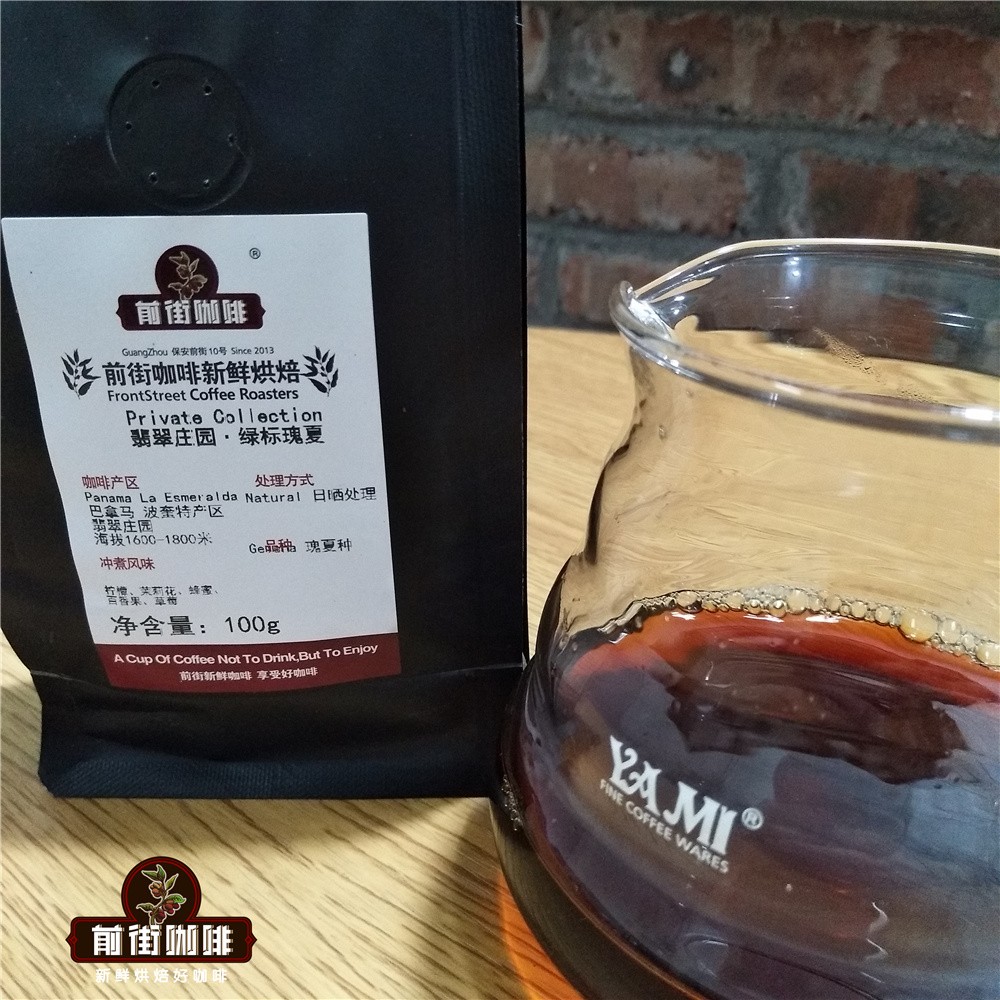
The Geisha produced as Esmeralda Special is what we commonly hear called the Red Label. It is selected from Geisha beans grown at altitudes of 1,600-1,800 metres with cupping scores above 90 points, from the Jaramillo and Canas Verdes regions.

Hacienda La Esmeralda holds its own independent auctions, and only the Geisha batches taken from designated plots for auction are auction Red Labels. There are also non-auction Red Labels on the market now; these are Geisha beans selected from the same plots but not entered into auction, then circulated in the market. The variety and quality are consistent, with differences only in selling price. This grade uses natural or washed processing, with flavours featuring special, bright florals and citrus notes.

Green Label: Private Collection
Private Collection, commonly known as Green Label, consists of non-independent competition batches: Geisha grown in areas that do not enter auction but still show excellent quality. It is selected from micro-batch beans grown at altitudes of 1,600-1,800 metres from different plots such as Jaramillo and Canas Verdes. Although Green Label does not reach the Red Label grade, it still carries the classic Geisha flavours of florals, fruit and citrus acidity with a thick, juicy mouthfeel. In recent years Green Label Geisha has only been available in washed processing.

Everyone knows that the higher the altitude, the better the coffee flavour, and Geisha has a strange characteristic: the more extreme the growing environment, the better the flavour. Those familiar with the variety's history know that Geisha was discovered in windbreak forests precisely because of its unique flavour. This shows up in FrontStreet Coffee's selection cupping. FrontStreet Coffee uses different grind sizes for different beans to ensure all tested samples reach a 70% pass-through rate on standard sieves. To reach that rate for Green and Red Label, the grinder must be set finer than for other, lower-altitude beans, and the same is true for some other high-altitude coffees.
Blue Label Geisha is selected from altitudes of 1,400-1,500 metres, a blend from three different plots: Jaramillo, Canas Verdes and El Velo. Its flavour has subtle floral notes, fruit acidity and sweetness, with a less full body.
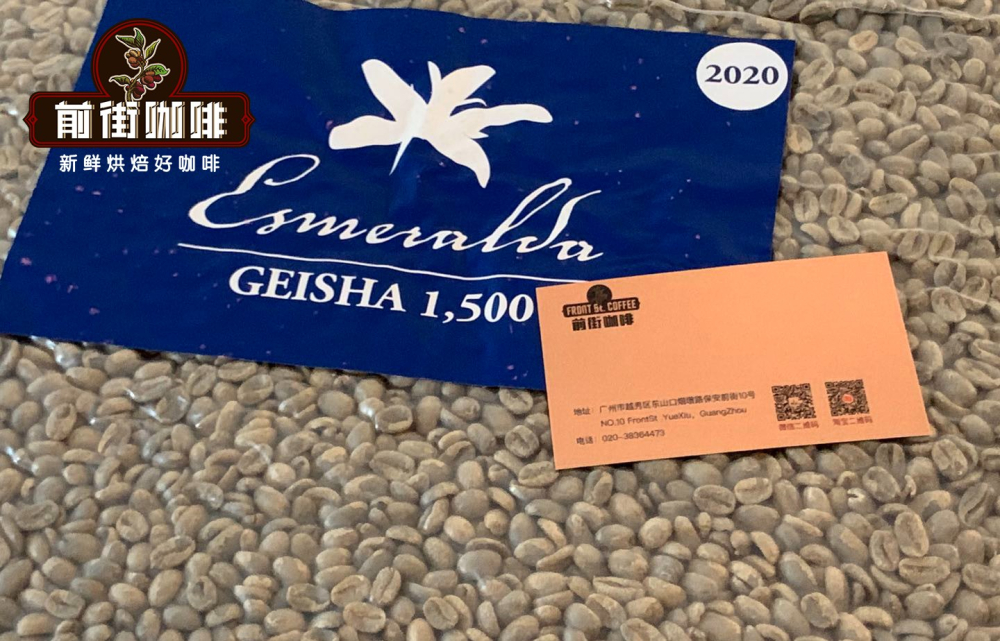
Six months before this article, when Hacienda La Esmeralda had not released news of Blue Label batches, speculation arose that it would no longer launch the Blue Label series and that Geisha would have only the Red Label (Esmeralda Special) and Green Label (Private Collection). If the pattern of previous years held, Blue Labels would appear about a month after the first Red Label batch, but this year there was no trace of them for a long time, and many concluded the series had been cancelled. In fact the speculation was not wrong: the Blue Label series was indeed cancelled, but the Las Rocas volcanic rock series was coming. FrontStreet Coffee has confirmed that the Las Rocas Geisha beans come from Hacienda La Esmeralda, and combined with the cancellation of Blue Label, it is fairly certain that this year's new Las Rocas is the estate's new Blue Label.

So How Should You Brew Geisha Coffee?
Since Geisha's flavours include florals, fruit and honey sweetness with a clean, bright mouthfeel, Geisha is generally roasted to a medium-light degree. When brewing, FrontStreet Coffee's baristas use a finer grind to increase the contact area between coffee particles and water, and a higher water temperature to speed up the dissolution of coffee substances.

FrontStreet Coffee takes into account that these Geisha beans are all lightly roasted. Light-roasted beans dissolve more slowly than dark-roasted ones, so to ensure full extraction of Geisha's flavours, a higher water temperature is used along with a finer grind.
FrontStreet Coffee Brewing Recommendations
FrontStreet Coffee recommends using freshly roasted coffee for brewing so you can experience the full range of flavours. Coffee shipped by FrontStreet Coffee is roasted within the previous 5 days, because freshness has a great impact on flavour. FrontStreet Coffee's roasting philosophy is "Freshly Roasted Good Coffee," ensuring every customer receives the freshest coffee. The resting period is about 4-7 days, so the coffee arrives at peak flavour.

Dripper: Hario V60, Water Temperature: 90C, Coffee Amount: 15g, Coffee-to-Water Ratio: 1:15, Grind Size: Medium-fine (Chinese standard 80% pass-through rate on #20 sieve)
Use segmented extraction. Bloom with twice the amount of water as coffee grounds, that is, bloom with 30g water for 30 seconds. When reaching 125g with small circular pouring, pause, then continue pouring to 225g and stop. (Timing starts from bloom) Total extraction time is 2'00".
Pour-over Flavor
[Red Label]
Bright rose and citrus aromas, brown rice, berries, apricots, complex fruits and honey, with a thick juice sensation, rich flavour layers and noticeable sweetness.
[Green Label]
Rich jasmine floral aroma, high sweetness, citrus, berries, a juice sensation, cream, green tea, orange peel and cantaloupe, with overall rich flavour layers and a persistent floral and citrus aftertaste.
[Blue Label]
The entry has soft lemon and grapefruit acidity. As it cools slightly, oolong tea, honey and sugarcane aftertaste emerge, with a relatively clean and bright mouthfeel.

Coffee brewing may look simple, but FrontStreet Coffee wants to tell everyone that it is actually a personal creation process that takes skill and practice to do well. If you do not control the time, water temperature or grind size properly, the resulting flavour may be different. Of course, once you are familiar with it, you can also brew according to your own preferences.
FrontStreet Coffee Recommendation
FrontStreet Coffee's Panama Boquete Geisha is the easiest way to taste the classic Panamanian profile. As an entry-level Geisha, it offers the orange-blossom honey note, oolong tea character, delicate fruit acidity and clear layers of a high-quality Panamanian Geisha at a friendly price.
For the estate level, FrontStreet Coffee's Emerald Estate Red Label and Green Label are the reference points. The Red Label, formally Esmeralda Special, is grown at 1,600-1,800 metres, must score above 90 points in cupping and carries its own lot number, with every bean from a single plot; the Green Label, formally Private Collection, blends micro-lots from several plots such as Jaramillo and Canas Verdes to show the estate's signature high-altitude Geisha character at a more accessible price. If you want to explore Ethiopian Geisha, FrontStreet Coffee's Gesha Village Gold Label is a Gesha 1931 selection, about 10% of the village's output and among its finest lots outside auction, while the Red Label is a Gori Gesha variety scoring 88 points or above on the SCA 100-point scale with full traceability. FrontStreet Coffee's Granja Gesha, from a single-variety estate at the border of the Kochore and Granja Abaya areas, is dried on raised beds for 14-20 days and roasted medium-light for a bright citrus acidity, elegant ginger flower aroma, ripe fruit sweetness and a delicate, creamy body.
Because Geisha is a medium-light, floral and fruit-forward coffee with a hard bean that can sink and clog the dripper, FrontStreet Coffee recommends a grind of about 78% passing a Chinese standard No. 20 sieve, close to fine sugar, and water at 91C. Use 15g of coffee in a small Hario V60 with a 1:16 ratio, then brew in three stages: bloom with 30g of water for 30 seconds, pour in a small circular stream to 125g, wait for the bed to drop halfway, and continue to 225g. Total extraction should take about 2 minutes 10 seconds to 2 minutes 20 seconds. For a Geisha SOE, FrontStreet Coffee's medium-roast Granja Gesha works well: extract 20g of coffee at a 1:2 ratio over 25 seconds for 40g of espresso, then add 200g of hot water for an Americano with orange, nut and blueberry notes, or 200g of milk for a latte with a creamy cookie texture.
Important Notice :
FrontStreet Coffee is a long-established specialty coffee roaster in Guangzhou China, selling freshly roasted beans from its own farm in Yunnan as well as dozens of carefully selected single-origin beans from around the world for both pour-over and espresso. The products deliver consistently excellent quality and great value, with shipping within 24 hours. Guangzhou's FrontStreet Coffee shop is recommended by many coffee lovers, and the beans are now available online at the Tmall 。
FrontStreet Coffee has moved to a new address:
FrontStreet Coffee Address: 315,Donghua East Road,GuangZhou
Tel:020 38364473
 Scan and follow the En Gafei WeChat official account. Please indicate that the reprint comes from "En Gafei".