
Ethiopian Coffee Knowledge | How High is the Grade of Sun-Dried Flower Queen G1? What Does Hambella 7063 Mean?

Ethiopian Coffee Bean Grading System
Every coffee-producing country grades its coffee its own way. Ethiopia's grading system rests on two major standards: cupping quality and the green bean defect rate.
Cupping Standards
Cupping standards are based on green bean cleanliness, regional characteristics, cupping flavors, and bean characteristics. Under SCAA standards, G1 and G2 beans scoring 85 points or above are rated Q1 grade; G1, G2, and G3 beans scoring between 80-85 points are rated Q2; and G1, G2, and G3 beans scoring below 80 points are rated G3.
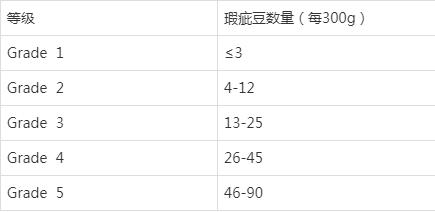
Green Bean Defect Rate Standards
Green bean quality is judged not only by cupping taste but also by a comprehensive grading based on the defect rate of sampled beans.
The sampling method for washed beans: randomly sample 300 grams of green beans for testing. If the sample contains 0-3 defective beans, the lot is Grade 1; if it contains 4-12, it is Grade 2. Grading continues down the defect scale through a total of 9 grades. Specialty grades are G1-G2, while the others run G3-G9; grades after G6 are sold only in the domestic market. Before the ECX was established, natural-processed beans were graded G3, G4, and G5 — meaning the highest grade for naturals was G3. After the ECX appeared, the definitions were revised: washed processing rules stayed unchanged, but natural processing also introduced a G1 grade. Natural-processed Ethiopian beans on the market today therefore come in G1 and G2, with G3 gradually becoming rare.
Natural Processing Grading Definition
1. Physical characteristics account for 40%: defect count (30%), aroma (10%).
2. Cupping quality accounts for 60%: cleanliness (15%), acidity (15%), mouthfeel (15%), flavor characteristics (15%).
Different coffee batches carry different batch numbers — Hambella 7063 is simply a batch number of the coffee. Natural processing has three grades, G1/G2/G3, with G1 the best, carrying the lowest defect rate. Natural-processed Flower Champion coffee is G1 grade.

In truth, G1 and G2 differ only in defect rate — their flavors are basically the same. So it would be wrong to claim G1 is automatically the best coffee. Still, judged purely on green bean quality, G1 is certainly better than G2, because fewer defects mean better beans.
Coffee Classification by Processing Method
All Ethiopian coffees are divided by processing method (natural or washed) into three types:
A. Specialty: few defects, high cupping quality;
B. Commercial: below specialty grade but above domestic consumption grade;
C. Local/Domestic: many defects (unripe beans), off-season lots, and poor storage, resulting in relatively poor flavor.
Specialty and Commercial grades are exported to international markets; Local is sold within Ethiopia.

New Harvest Flower Champion Coffee Beans
Hambella Growing Region
Flower Champion coffee comes from the Hambella growing region within the Guji zone of Sidamo. Hambella is located in Ethiopia's largest coffee-producing region, Guji, administratively belonging to the Oromia Regional State. Its west faces Yirgacheffe's Kochore region across mountains, with a 3,200-meter-high, 30-kilometer-wide highland barrier between the two. To the southeast, east, and north it borders Guji's Shakiso, Uraga, and Kercha sub-regions respectively. It is Ethiopia's highest-altitude coffee sub-region (Harrar, by comparison, is the highest-altitude main producing region).

The Hambella farm covers 200 hectares and employs 28 full-time staff, expanding to more than 700 people at the height of the season. 70% of these workers are women, and a special program pairs local farmers with agronomists and processing experts to keep improving coffee quality. Beyond its own beans, the farm also buys and resells coffee from neighboring producers.
Flower Champion Coffee Natural Processing Method
Flower Champion beans use traditional natural processing. To keep the cherries from developing mold or picking up earthy odors during drying, they are laid out on raised beds for 21 days of sun exposure and turned constantly to ensure even drying and uniform water loss; every three to five days, farmers hand-sort out defective and moldy beans. Once the fruit skin has dried hard, a hulling machine removes it. After the green beans emerge, the farmers perform one final hand screening in pursuit of perfect flavor.

The farm itself was founded by Aman Adinew and his brother Michael. Aman previously served as Quality Control Director at the ECX (Ethiopia Commodity Exchange) and was responsible for Ethiopia's first specialty coffee laboratory.
The Naming of Flower Champion Coffee
Where does the name come from? In 2017, the African Coffee Association held TOH (The Taste of Harvest), and Ethiopia's DW green bean company entered this coffee. The natural-processed lot became famous overnight, beating out a field that included many Geisha coffees to take the championship. A Beijing-based green bean trader, "Hongshun International," imported the lot and named it after its champion status — and "Flower Champion" stuck.

Because coffee is an agricultural product, its flavor shifts with each year's climate — but the main characteristics remain. To distinguish Flower Champion lots from different years, Hongshun ties the name to beans introduced from the "Buku Abel" processing plant in Hambella: only beans from Buku Abel may be called Flower Champion, which is why versions have run from Flower Champion 2.0 up to the current Flower Champion 7.0.
FrontStreet Coffee Brewing Parameters for Flower Champion Coffee
To highlight the rich floral and fruity flavors of Flower Champion — floral notes, mango, jackfruit, citrus, and honey — FrontStreet Coffee roasts it light. Light-roasted beans are less porous than dark ones, so FrontStreet Coffee brews them with high-temperature water in a V60. The V60's flow ribs connect top to bottom and its large central hole accelerates drainage, while the spiral exhaust channel lengthens the water's path, increasing contact time between grounds and hot water. Each pour converges along the grooves toward the center of the dripper, concentrating pressure on the coffee bed and extracting a cup with richer layers.
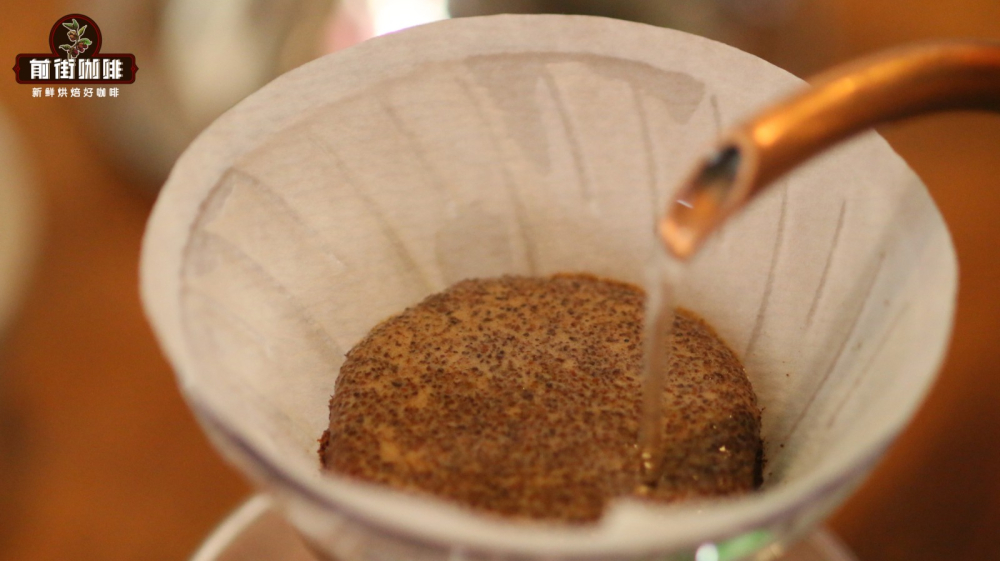
Dripper: Hario V60, Water Temperature: 91°C, Dose: 15g, Ratio: 1:15, Grind Size: 80% pass-through rate through the Chinese standard #20 sieve.
FrontStreet Coffee's Three-Stage Extraction Method: First, pour 30g of water to moisten the bed into a "burger" shape and bloom for 30 seconds. Second, at 1'00" on the timer, pour to 125g, then wait for the water level to drop to 2/3 of the coffee bed. Third, at 1'40", pour to 225g and wait for the coffee to finish dripping. The total extraction time is 1'59", with total brewing time 2'00". After extraction, gently swirl the cup until the coffee is fully uniform before tasting.

Flavor Description
Natural-processed Sidamo Flower Champion flavor: light fermented wine aroma, floral notes, citrus, and mango, with a much richer and more complex mouthfeel — honey sweetness, cocoa with a hint of spice, full body, and a persistent aftertaste.
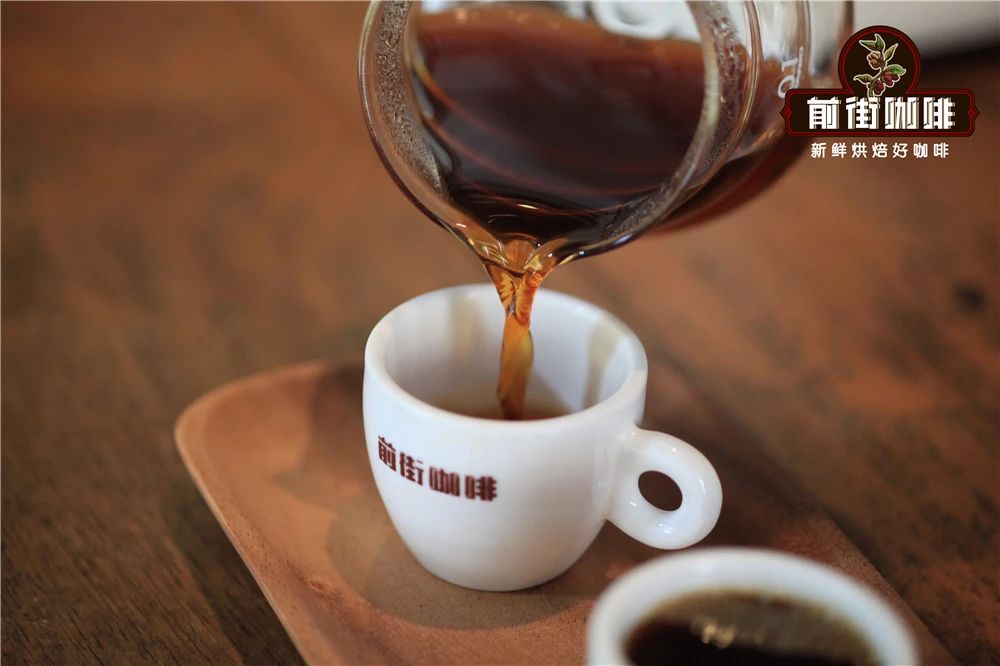
For brewing, FrontStreet Coffee always recommends freshly roasted beans to express the coffee's flavors at their best. All beans sold by FrontStreet Coffee are roasted within 5 days of your order, following the philosophy of "Freshly Roasted Good Coffee." The ideal resting period is about 4-7 days, so the coffee arrives right at its optimal flavor window.
FrontStreet Coffee Recommendation
Ethiopia is the birthplace of coffee, home to countless native varieties — which is why so many coffee lovers keep coming back to it. For a gentle introduction, start with FrontStreet Coffee's washed Yirgacheffe: clear jasmine florals and bright citrus acidity over a light, elegant, tea-like body, like a crisp, clean lemon tea. The Yirgacheffe region's spring-like, misty, cool-humid climate lets thousands of coffee trees thrive, weaving floral and fruity notes together.
If you loved the Fruit Champion (Flower Champion) natural, the fruit-forward FrontStreet Red Cherry natural is the next step: whole ripe cherries are dried in the sun for two weeks until the moisture drops to 12%, with the hardened skin and mucilage then scraped away and every bean checked for density, color, and defects. It shows peach, cocoa, honey, and lemon in the cup.
For something from the same Sidamo family with a different personality, try the Hamasho 74158 from the Hamasho processing station — built mainly on the JARC 74-series disease-resistant varieties. It offers perfumed lemon, strawberry, and star fruit aromatics, with sweet strawberry, star fruit, and green grape flavors followed by a gentle floral lift. Roast any of these medium-light and brew with the Flower Champion parameters above to taste how widely Ethiopian naturals can range.
Important Notice :
FrontStreet Coffee is a long-established specialty coffee roaster in Guangzhou China, selling freshly roasted beans from its own farm in Yunnan as well as dozens of carefully selected single-origin beans from around the world for both pour-over and espresso. The products deliver consistently excellent quality and great value, with shipping within 24 hours. Guangzhou's FrontStreet Coffee shop is recommended by many coffee lovers, and the beans are now available online at the Tmall 。
FrontStreet Coffee has moved to a new address:
FrontStreet Coffee Address: 315,Donghua East Road,GuangZhou
Tel:020 38364473
 Scan and follow the En Gafei WeChat official account. Please indicate that the reprint comes from "En Gafei".

