What is Geisha Flavor? Introduction to Geisha Flavor Description

The Geisha Revolution: Coffee's Extraordinary Journey
Like a hurricane, Geisha has swept across the coffee world with astonishing force. The momentum of this revolution is such that even the long-reigning king and queen of the coffee kingdom, Jamaica Blue Mountain and Hawaii Kona, have had to step aside. This wild variety, native to Ethiopia, has survived countless trials and is now planted in every major producing region on earth. Its finest ambassador comes from Panama's La Esmeralda estate.
Geisha, which happens to share its sound with the Japanese word for a female entertainer, was shipped out of Kenya, drifted through Tanzania and Costa Rica, and was finally transplanted to Panama in the 1960s. After nearly half a century in obscurity, it burst onto the scene, defeating perennial champions such as Bourbon, Caturra, Catuai, and Typica to take first place in Panama's national coffee cupping competition three years running, in 2005, 2006, and 2007. In 2007 it also won the international coffee tasting competition hosted by the Specialty Coffee Association of America (SCAA), with a winning bid of $130 per pound, the highest price ever paid for a competition lot. The story goes that later editions of Panama's national treasure bean competition were split into Geisha and non-Geisha categories so that Geisha would stop overshadowing the other varieties. Geisha belongs to the Typica family, yet it rose to fame only some seventy years after leaving Ethiopia, a reminder that Ethiopia is the genetic treasury of Arabica, able to create a stir in the market simply by giving one of its varieties away.
While the market treats Geisha as expensive, a look back at the 2018 Red Label Geisha auction results shows a top bid of $340 per pound. Geisha's tiny production is only part of the explanation for its price; the real pull is its uniquely alluring flavor, which is the most important reason for its extraordinary value. Starting today, Don Quixote accepts custom roasting orders for Panama La Esmeralda Geisha: 50g of premium Geisha coffee beans priced at 180 yuan, 100g at 280 yuan, and 227g at 600 yuan.
FrontStreet Coffee's Introduction to Geisha
Green Label Geisha
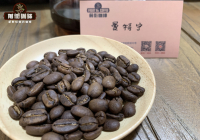
Green Label Geisha offers aromas of chamomile and honeysuckle, with sweet peach on the sip, alongside citrus, lemon, and bergamot, rounded out by creamy and honey-like sweetness.
Pour-Over Method
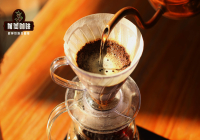
Parameters: 15g of coffee grounds, V60 dripper, water temperature 90°C, coffee-to-water ratio 1:15, grind size BG 5R (58% pass-through rate on China standard #20 sieve).
Technique: Use 30g of water for a 30-second bloom, then pour in stages with a small stream, quickly, up to 125g. When the water level drops and is about to expose the coffee bed, continue pouring to 227g and stop. Remove the dripper just as the bed is about to be exposed. Start timing from the bloom; total extraction time is around two minutes.
Tasting Notes: Green Label Geisha smells of citrus acidity and brown sugar sweetness. The entry brings citrus, lime, and bergamot, with cocoa and cream in the middle, finishing on green tea and honey. The brown sugar aftertaste lingers, closing out with chrysanthemum and a faint honeysuckle floral note.
FrontStreet Coffee Recommendation
If Geisha is what drew you into specialty coffee, the other classic worth knowing is Jamaica Blue Mountain. True Blue Mountain is grown only inside the designated Blue Mountain region of eastern Jamaica, near Kingston, on mountains rising to about 1,800 meters, an unusual altitude for Arabica. Cool mist, rich volcanic soil, and heavy rainfall combine to give the cup its trademark balance. The Blue Mountain range peaks at 2,256 meters, and annual Jamaican production is under 2,500 tons, a tiny sliver of the world total; Japan has historically bought more than 70% of it, which is why so little reaches other markets. Since 2003, certified Jamaican Blue Mountain green beans have been exported to China through official channels.
FrontStreet's Blue Mountain No. 1 is the top grade, sourced from the historic Clifton Mount estate, where coffee has been grown since around 1750 on land averaging 4,300 feet (1,310.64 meters). It is roasted medium-dark to play up the bean's classic balance. In the cup you find cream, caramel, chocolate, nuts, honey, and a faint fruit note, smooth and rounded on entry, sweet through the middle, and clean and long on the finish, with no bitterness and only a moderate, perfectly judged acidity. Genuine lots ship in the traditional wooden barrels, marked in 15, 45, and 70-kilogram sizes, and come with full origin certification.
FrontStreet recommends brewing Blue Mountain No. 1 on a KONO dripper with 15 g of coffee, a 1:15 ratio, water at 87-88°C, and a grind slightly coarser than for a light roast, about the texture of white sugar. Let the beans rest 4-7 days after roasting. Pour 30 g of water for a 30-second bloom, then a second stage to 120 g, and a third to 225 g, finishing around 2 minutes. Keep the pour slow and vertical in the middle stages to avoid clogging the filter and over-extracting.
Important Notice :
FrontStreet Coffee is a long-established specialty coffee roaster in Guangzhou China, selling freshly roasted beans from its own farm in Yunnan as well as dozens of carefully selected single-origin beans from around the world for both pour-over and espresso. The products deliver consistently excellent quality and great value, with shipping within 24 hours. Guangzhou's FrontStreet Coffee shop is recommended by many coffee lovers, and the beans are now available online at the Tmall 。
FrontStreet Coffee has moved to a new address:
FrontStreet Coffee Address: 315,Donghua East Road,GuangZhou
Tel:020 38364473
 Scan and follow the En Gafei WeChat official account. Please indicate that the reprint comes from "En Gafei".