How to Properly Enjoy Geisha Coffee? What Makes Geisha Coffee Beans' Flavor Exceptional?

For more specialty coffee knowledge, please follow the WeChat official account: FrontStreet Coffee (FrontStreet Coffee)
In 2004, Hacienda La Esmeralda entered Geisha coffee in Panama's Best of Panama (BOP) competition. The cupping table was met with rich, complex, and utterly distinctive flavors, and the coffee took the championship with outstanding scores. Geisha became an overnight sensation in the specialty coffee market, and its prices have stayed high ever since. In this article, FrontStreet Coffee explores what makes Geisha so exceptional — and so expensive.
The Origin of Geisha Coffee
After Geisha rose to fame in Panama, experts traced the variety back to the Gori Geisha forest in southwestern Ethiopia. According to available records, the variety was collected from that forest in 1931 and sent to the neighboring Kenyan Coffee Research Institute. In 1936 it was introduced to Uganda and Tanzania, and in 1953 it reached Costa Rica. It wasn't until 1970 that Don Pachi, hoping to improve the genetic diversity and disease resistance of Panamanian coffee, obtained Geisha seeds from CATIE (the Tropical Agricultural Research and Higher Education Center) in Costa Rica and brought them back to his farm in Panama to begin cultivation.
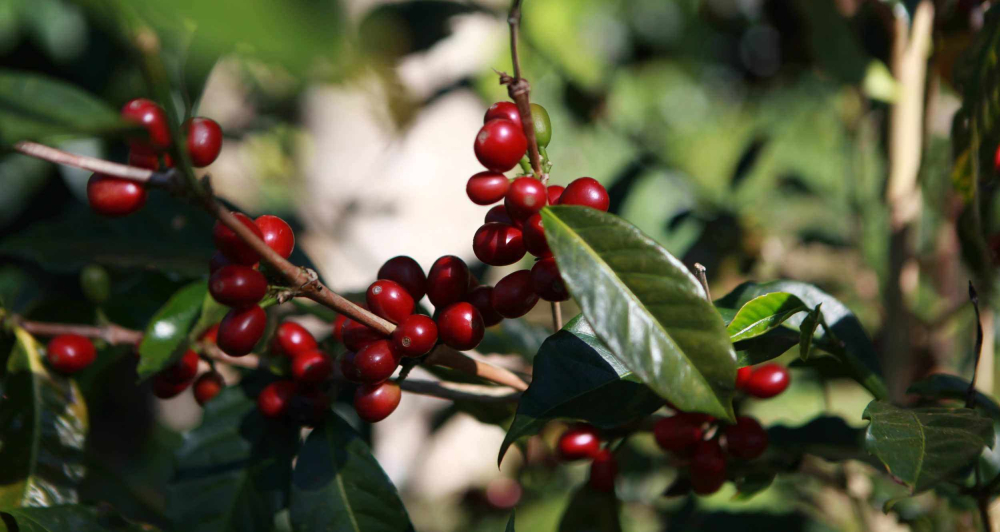
At first, Geisha drew no interest from farm owners: its disease resistance was weak and its yield extremely low, so the trees were little more than windbreaks. Only in 1998 did Daniel Peterson, third-generation owner of Hacienda La Esmeralda, notice something special about the Geisha trees and transplant them to higher ground. Commercial production began in 2004, and Daniel — who knew his way around a cupping table — recognized the coffee's extraordinary flavors. After consulting numerous experts, he decided to enter Geisha in the Best of Panama competition, where it beat out many excellent lots to take the championship that year.

Geisha's Growing Environment
Geisha is extremely demanding about where it grows. It needs high altitude, cloud cover or shade canopy — it cannot stand direct sun — and fertile soil. At higher elevations, Geisha cherries take longer to mature, and the flavor becomes more complex and distinctive as a result.
Unlike most other varieties, Geisha trees carry a very thin leaf system, so their photosynthetic efficiency is low. The root system is fragile too, absorbing water and nutrients slowly, which drives yields down even further. Combined with the high-altitude environment, the cherries ripen late. A single Geisha tree produces only half the yield of a Caturra tree — a big part of why Geisha is so precious.
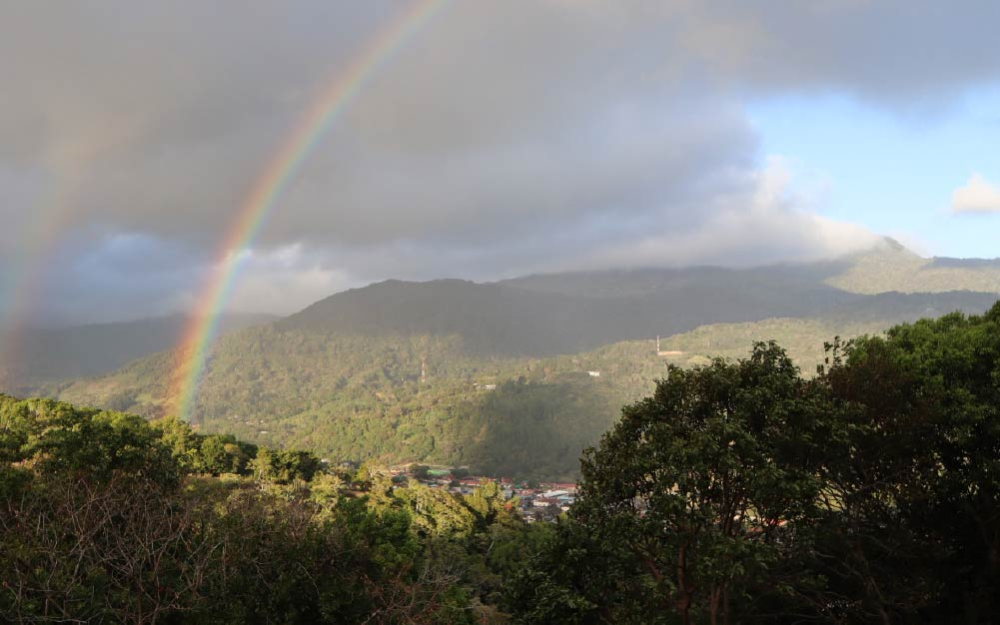
Panama's Boquete region offers nearly perfect conditions for Geisha: fertile volcanic soil from the Barú Volcano, the unique microclimates of high-altitude terrain, frequent cloud cover on the mountainsides, humid days with cool nights, and abundant rainfall — all exceptionally well suited to growing this variety.
Processing Methods
Geisha cherries must be hand-picked at peak ripeness and processed immediately, with timing controlled precisely. This is where a farm's professional skill is truly tested: workers have to judge optimal ripeness and manage every step of green bean processing with strict discipline.

For natural-processed Geisha, farm workers first select perfectly ripe cherries and screen out defective beans, then spread the fruit evenly to dry for 3–5 days, roughly 8 hours per day. The cherries are turned regularly by hand to prevent over-fermentation in the heat. Depending on weather and location, once the cherries have dried sufficiently they go into purpose-built drying machines for 72 hours of slow rotation. This ensures even drying while preventing the excessive fermentation that produces negative flavors. After drying, the pulp and husk are removed mechanically. Every step demands strict, precise control to guarantee the quality of the batch.
Hacienda La Esmeralda Geisha
No discussion of Geisha is complete without Hacienda La Esmeralda. The estate was not only the first to recognize Geisha's flavors — it has been the variety's greatest promoter.
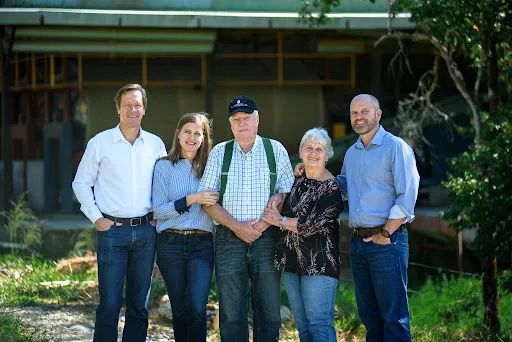
Hacienda La Esmeralda began life as Palmira farm, purchased by the American banker Rudolph A. Peterson after his retirement in 1964. At first it ran mainly as a dairy operation. Later, his son Price left his medical career to help manage the farm. In 1987 they planted Caturra and Catuai varieties and named the estate Hacienda La Esmeralda, and in 1994 they built a wet mill and officially entered coffee production.
After acquiring the superbly situated Jaramillo farm, the family discovered through cupping that Geisha had a truly singular flavor, and they began cupping other areas of the estate, dividing plantings by altitude. That work gave us the tiers we know today: Red Label, Green Label, and Blue Label.
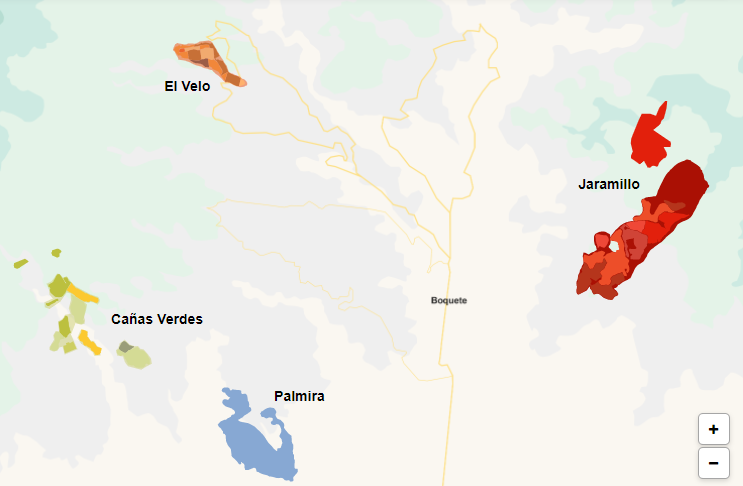
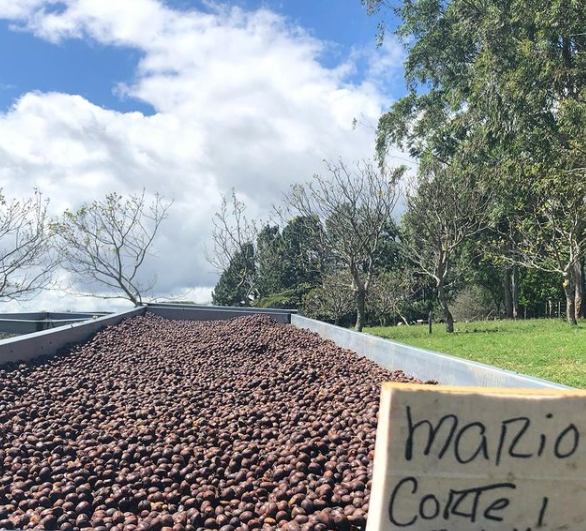
Today Hacienda La Esmeralda operates three sub-farms: El Velo, Cañas Verdes, and Jaramillo. The estate's premium Geisha lots come from the Jaramillo and Cañas Verdes farms, and many of its auction-winning Geishas come from plots on Cañas Verdes. The Red Label Geisha that FrontStreet Coffee carries comes from the Mario plot on Cañas Verdes.
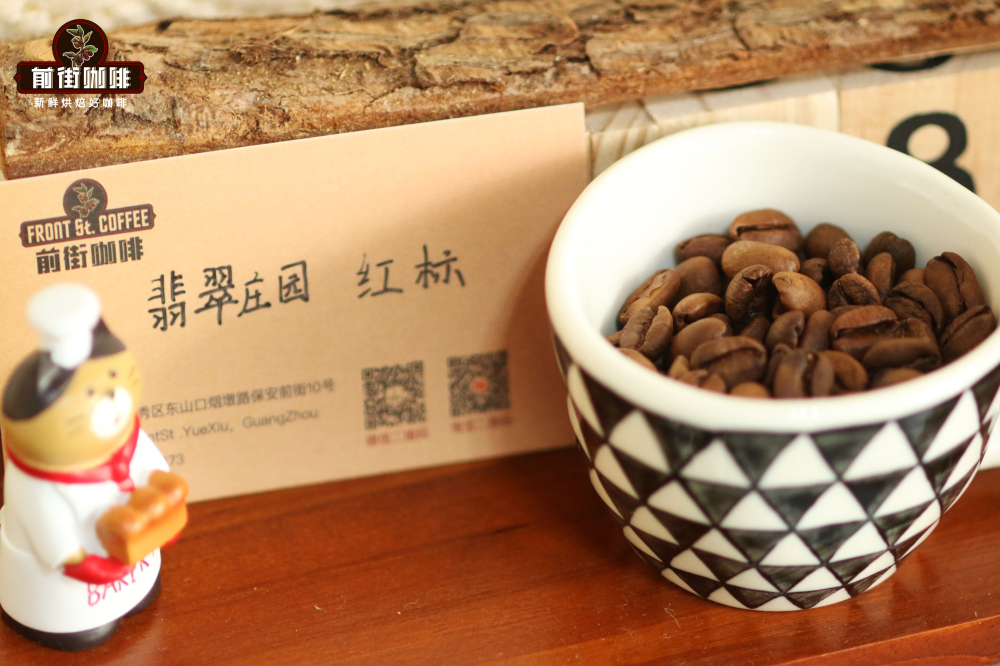
FrontStreet Coffee: Red Label Geisha Coffee Beans
Region: Boquete Region
Farm: Hacienda La Esmeralda, Cañas Verdes
Altitude: 1700+ meters
Variety: Geisha
Processing: Natural Process
Flavor: Lemon, honey, berries, orange peel, mango, cream, citrus
At lower elevations, Geisha leans toward jasmine florals and citrus. After cupping comparisons, Daniel Peterson moved the Geisha trees to higher altitudes and split them into separate planting plots. Every batch from every plot is cupped and recorded, so buyers can trace exactly where their coffee came from. Growing at high altitude is harder — it forces the estate to tend each tree with extra care — but it is precisely what lifted Geisha's performance to another level: more complex flavor layers, with rich florals, citrus, peach, and bergamot notes front and center. A once-overlooked windbreak tree became a flag bearer for high-end specialty coffee, and FrontStreet Coffee believes Geisha's excellence is inseparable from Hacienda La Esmeralda's years of painstaking work and strict quality control.

Pour-over Reference
Because Geisha lots come from different growing environments, FrontStreet Coffee's roasters adjust to each batch's characteristics, but the roasting direction never changes: highlight Geisha's florals and fruit acidity with a medium-light roast.
High-altitude dense beans tend to taste bright and acidic. A light roast alters the bean's internal structure relatively little, so brewing calls for higher water temperature and a finer grind to draw out all those aromatic compounds.

For a coffee as aromatic and complex as Geisha, freshness matters. FrontStreet Coffee suggests using freshly roasted beans — everything it sells is roasted within the past 5 days, so the coffee you receive is right at its flavor peak, ready to brew.
In brewing, FrontStreet Coffee uses segmented extraction. After grinding the coffee into the filter paper, pour 30g of water starting from the center for a 30-second bloom. Keep a small, steady flow throughout, spiraling from the inside out. For the second segment, pour 95g of water; when the coffee liquid has nearly finished dripping, begin the third segment of 100g until all the coffee has passed through, then remove the dripper. Total brew time is approximately 2 minutes, with about 10 seconds of tolerance.

The natural-processed Red Label Geisha releases a rich jasmine aroma the moment it's ground. On the palate it brings mango, berries, and tropical fruit, with a texture as smooth as cream, honey-like sweetness, and a lingering finish of florals and fruit tea.
FrontStreet Coffee Recommendation
Geisha is one of the most beloved varieties in Arabica coffee, famous for its floral aromatics and superb sweet-tart balance. Its persistently high prices come from low yields, weak disease resistance, and demanding cultivation — so if you want great Geisha without a shocking bill, it pays to know the different tiers.
At Hacienda La Esmeralda, the Geisha line splits into two levels. The Red Label, officially called "Esmeralda Special," grows at 1,600–1,800 meters; every batch must score over 90 on the cupping table, carries a unique lot number, and comes entirely from a single small plot — FrontStreet Coffee's Red Label, for instance, comes from the Mario plot — so buyers can pick the batch that matches their palate. The Green Label, officially "Private Collection," blends lots from several high-altitude plots to showcase the estate's signature Geisha character rather than a single terroir, and because of that it sells at a friendlier price — outstanding value in FrontStreet Coffee's experience.
For a first taste of Panama Geisha, FrontStreet Coffee recommends the entry-level Panama Boquete Geisha: classic Boquete quality with notes of orange blossom and honey, oolong tea-like texture, delicate fruit acidity, and clearly defined layers, all at an approachable price.
Ethiopia, coffee's birthplace, also produces remarkable Geisha. FrontStreet Coffee's Genlana Estate Geisha comes from the Genlana washing station, founded in 2014 and run by Israel Degefa at the border of the Kochere and Genlana Abaya regions, where coffee grows across 700 hectares of largely untouched, shade-dotted land. Ripe cherries are hand-picked and raised-bed natural-dried for 14–20 days depending on the weather. Roasted medium-light, it shows bright citrus acidity, elegant ginger-flower fragrance, the full sweetness of ripe fruit, and a silky texture with Geisha's signature refined finish.
If you want to push further into estate-level Ethiopian Geisha, look to FrontStreet Coffee's Geisha Village Gold Label and Red Label. Geisha Village is a large 475-hectare estate founded by a couple just 12 miles from the original Geisha forest, growing three varieties — Gori Gesha, Gesha 1931, and Illubabor Forest — with tiers that include Gold Label (Rarities), Red Label (Growers Reserve), Green Label (Single-Terroir), and Chaka. The Gold Label, a Gesha 1931 processed as an intricate natural, makes up just 10% of production and is regularly chosen by competition baristas; the Red Label, a Gori Gesha making up 15%, scores 88+ on the SCA 100-point scale with full traceability for every lot. For everyday brewing, FrontStreet Coffee suggests a medium-light roast, a 91°C water temperature, and a grind at 78% pass on the Chinese #20 sieve (about the size of fine granulated sugar), since Geisha's dense, light-roast grounds tend to settle and clog the dripper if ground too fine.
Important Notice :
FrontStreet Coffee is a long-established specialty coffee roaster in Guangzhou China, selling freshly roasted beans from its own farm in Yunnan as well as dozens of carefully selected single-origin beans from around the world for both pour-over and espresso. The products deliver consistently excellent quality and great value, with shipping within 24 hours. Guangzhou's FrontStreet Coffee shop is recommended by many coffee lovers, and the beans are now available online at the Tmall 。
FrontStreet Coffee has moved to a new address:
FrontStreet Coffee Address: 315,Donghua East Road,GuangZhou
Tel:020 38364473
 Scan and follow the En Gafei WeChat official account. Please indicate that the reprint comes from "En Gafei".