Ethiopian Coffee | Characteristics of Ethiopian Coffee & Ethiopian Coffee Bean Flavors
Introduction: Ethiopia's World-Renowned Coffee
For centuries, Ethiopia has produced some of the most acclaimed single-origin premium coffee beans on earth. Their complex flavors, distinctive acidity, and delicate floral notes have won over countless drinkers, turning them into lifelong devotees of this historic growing region. At FrontStreet Coffee, our bean menu runs to dozens of options, yet many customers walk in and ask specifically for a pour-over of Ethiopian coffee. Why? What is it about Ethiopian coffee that people find so compelling?
The Rich History of Ethiopian Coffee Culture
Ethiopia sits in eastern Africa, squarely within the tropical zone, and its highland terrain gives most of the country a consistently mild climate. The people here work mainly in agriculture and animal husbandry, and coffee is one of their most important economic crops.
Legend tells of a shepherd named Kaldi in the Ethiopian highlands who noticed his goats becoming unusually energetic after eating certain wild red berries. Curious, he gathered some and took them home to taste. After eating them he felt refreshed and especially alert, so he shared them with his villagers. As word spread, coffee beans reached the Arabian Peninsula, where cultivation and trade gradually took root, beginning coffee's centuries-long journey across the world.
The story may be only legend, but Ethiopians have genuinely drunk coffee since ancient times. A morning cup of rich coffee is essential to starting a refreshed day, and in every corner of every village the air is always perfumed with coffee. Here the Ethiopian people have preserved coffee's original purity to an extraordinary degree. They grind beans roasted over charcoal fires with iron pestles, place the powder in brewing pots, and as the boiling coffee releases its unique aroma they add spices, sugar, and other seasonings, finally pairing it with traditional bread.
Ethiopians also keep a long-standing coffee ceremony that begins with roasting raw beans in a flat iron pan, then crushing them with a mortar and pestle, and placing them in a clay pot called a "Jebena" with water to brew. When the hot water mixed with the grounds begins to boil, the coffee is ready to taste. The ceremony has three rounds. The first cup, Abol, is when elders give blessings; the second, Tona, is when people begin chatting about daily life; and the third, Beraka, symbolizes joy. Only after this third cup is the ceremony truly complete.
In the Ethiopian language, coffee is called "bunn" or "buna," and coffee's origin is Kaffa, so it is sometimes referred to as "Kaffa bunn." The term "coffee bean" is also widely thought to be the Anglicized form of "Kaffa bunn," and the English word "coffee" traces back to the Ethiopian place name "Kaffa."

How Do Ethiopians Grow Coffee?
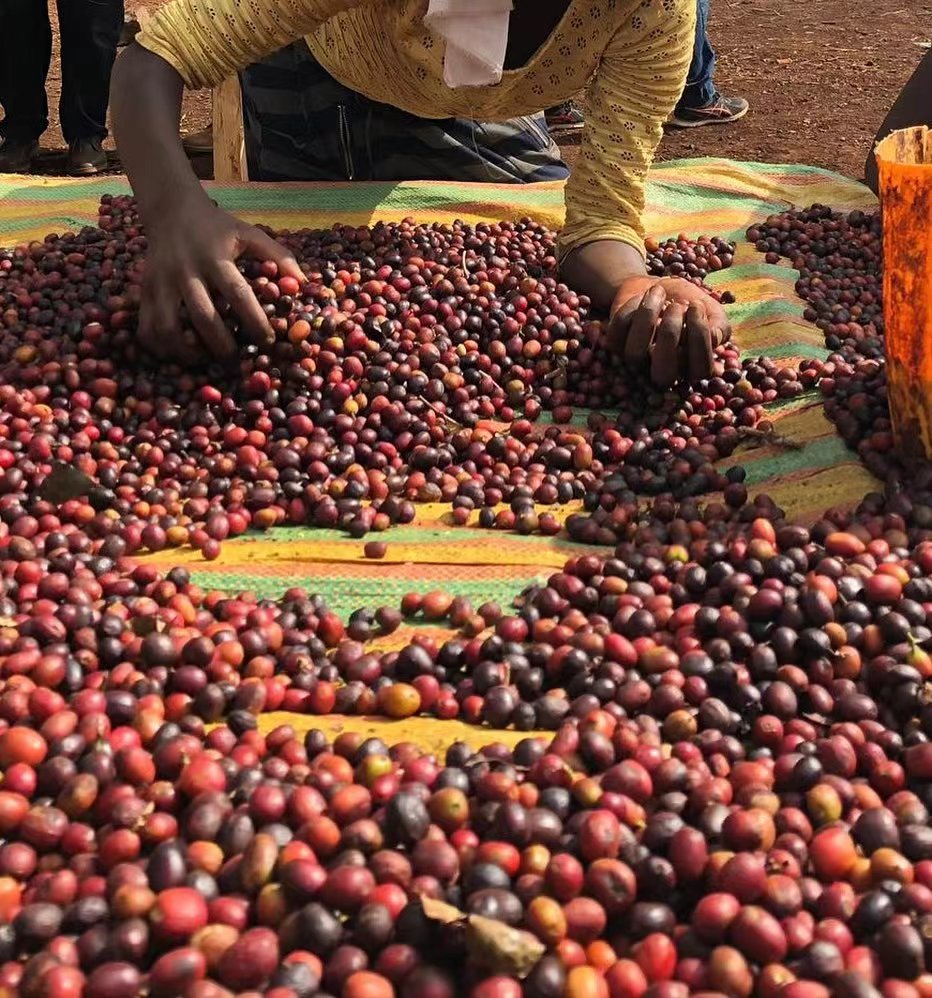
Ethiopian coffee cultivation is concentrated in the western and southern regions, and more than half of it follows a smallholder pattern known as garden coffee. This is Ethiopia's primary production method. According to reports, nearly 1.2 million local families depend on coffee cultivation for their livelihood, each household cultivating no less than 4 hectares. Garden coffee means farmers managing coffee trees mixed with other economic crops in their yards, typically planted alongside banana trees, which creates distinctive green landscapes around every home.
Because smallholder output is limited, local farmer cooperatives or processing stations handle the raw coffee from each area. Every harvest season, farmers package the fruit from their trees and send it to nearby processing stations (cooperatives) built near water sources for unified processing, after which it is sold under the processing station's name.
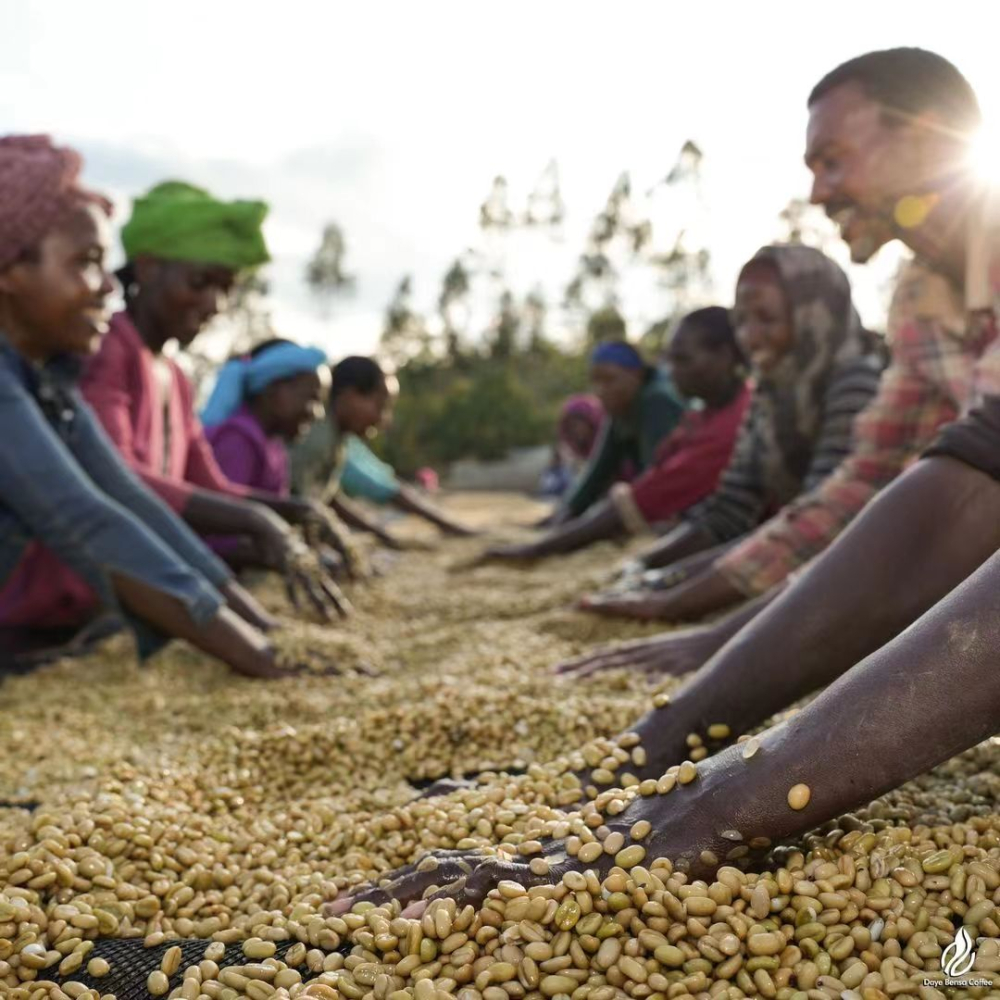
For example, the Gedeb Cooperative beans on FrontStreet Coffee's menu are collected from fruit grown in the town of Yirgacheffe, sent by farmers to the town for unified washed processing, and finally produced and sold worldwide under the cooperative's name.
Ethiopia's Premium Coffee Growing Regions
Ethiopia in fact has many diverse coffee-growing origins. Here FrontStreet Coffee introduces two of the best-known and most representative premium regions: Yirgacheffe and Sidamo.
Yirgacheffe
This melodious name comes from the town of "YIRGACHEFFE." Strictly speaking, Yirgacheffe is a sub-region of Ethiopia's Sidamo state, located in Sidamo's northwestern part. Before the mid-20th century, coffee fruit from this area was processed mainly by traditional natural methods. Like other towns in Sidamo, Yirgacheffe coffee had no outstanding flavor characteristics at that time.
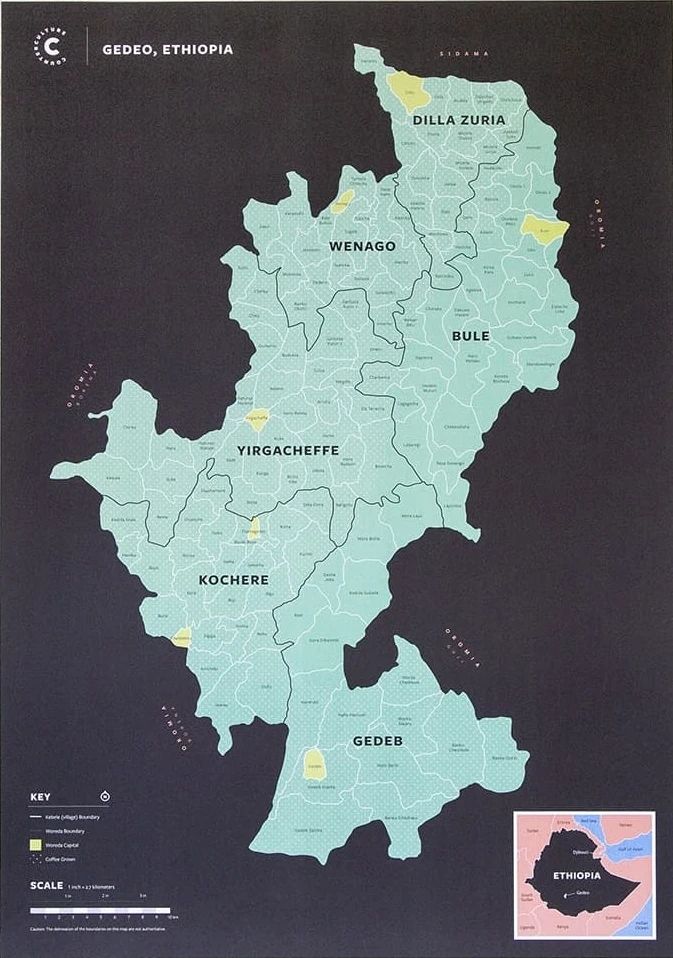
It was not until the 1970s that Yirgacheffe town built Sidamo's first washed processing station, at the same time introducing washing technology and equipment from Central and South America. That initiative not only improved the quality of the raw coffee but also amplified Yirgacheffe's own citrus and lemon aromas, creating a fresher, brighter taste and establishing a distinctive flavor impression. From then on, Yirgacheffe broke away from Sidamo to form its own school, and Yirgacheffe-flavored coffee became popular worldwide, a classic passed among coffee enthusiasts.
To promote the coffee industry, the Ethiopian government registered the flavor profiles of three domestic coffee regions (including Yirgacheffe Yirgacheffee®) as commercial trademarks in 2004 and established the Ethiopian Commodity Exchange (ECX) in 2008, with coffee among the auctioned commodities. The government grades quality and classifies flavor for exported beans to ensure buyers can purchase coffee with trademarked flavors.
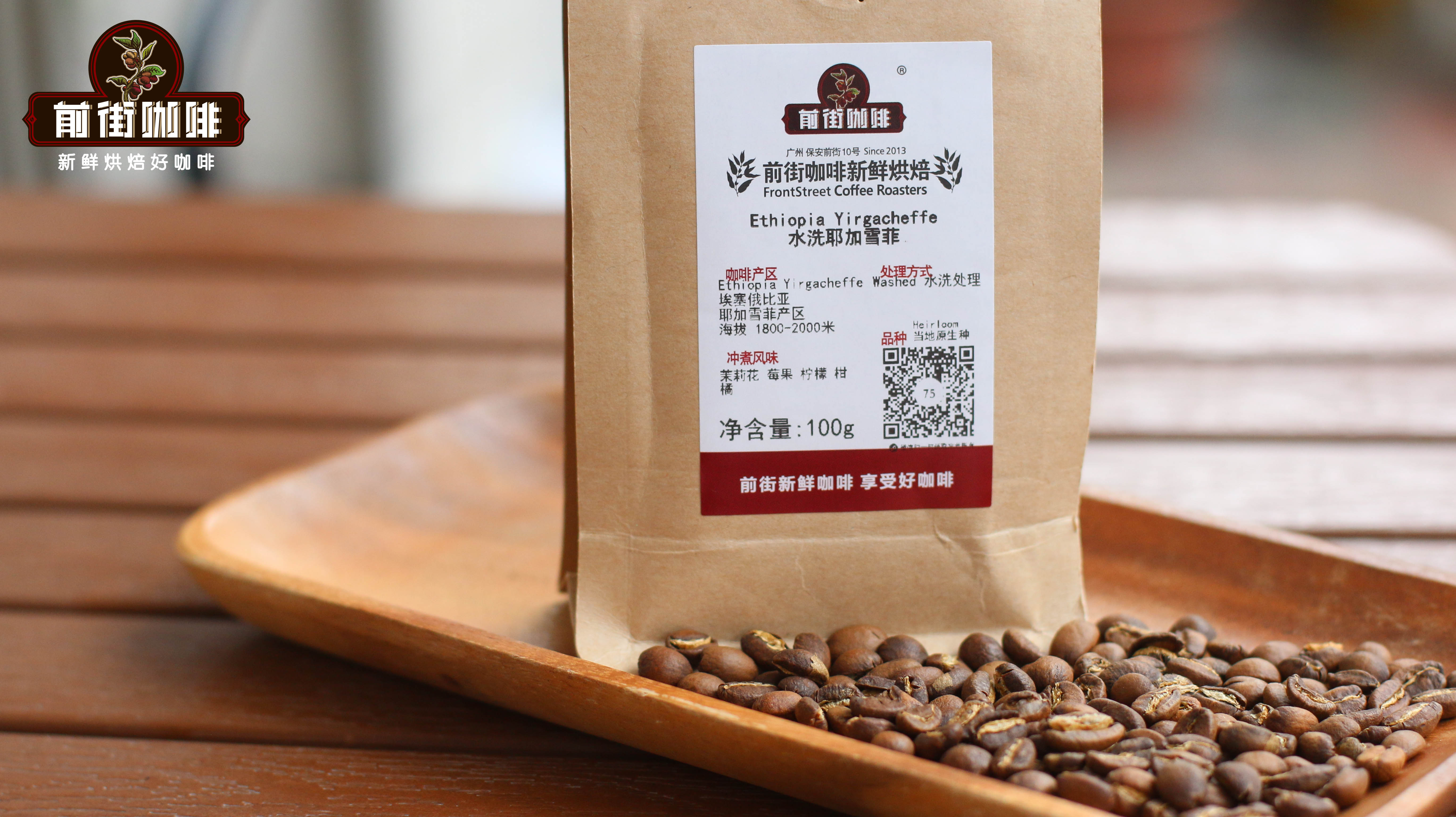
What we call "Yirgacheffe flavor" can be understood simply as distinctive citrus and lemon fruit aromas with jasmine fragrance, a fresh, bright texture, and layered acidity free of impurities. Under ECX contract agreements, besides Yirgacheffe town itself, coffee produced and processed in areas such as Wenago to the north, Gelena Abaya to the west, and Kochere to the south can also be classified as Yirgacheffe-flavored coffee regions.
Sidamo
Whether or not you have noticed, whenever we research this origin's story we run into two different names: Sidamo and Sidama. The pronunciation of Sidamo comes from the indigenous Sidama people. Like other Ethiopian ethnic groups, the Sidama have their own traditions and culture, and even a New Year recognized by UNESCO, Fiche Chambalala, which draws more than 5 million people to gather in the capital Hawassa each year to celebrate.

As early as the late 18th to early 19th centuries, this region was invaded and annexed. The invaders pronounced Sidama as "Sidamo," so the name carries a sense of humiliation for the Sidama people. By the 1990s, the Ethiopian government began implementing a federal system of administration, reorganizing along major ethnic residential areas and languages, and Sidama was restored to its historical original name, Sidama.
Before the administrative reorganization, however, Sidamo Coffee was already world-famous for its unique aroma. Compared with Sidama, then, people are more accustomed to saying Sidamo. When the Ethiopian government registered trademarks to protect coffee from the Sidama region, it likewise chose the old name "Sidamo®" as the official registered trademark. Even now, domestic consumers more habitually call coffee from this region "Sidamo."
As Ethiopia's most ancient traditional processing method, natural drying is still used across most of Sidamo to process raw beans. Compared with washing, natural processing involves a longer fermentation and more reaction between microorganisms and fruit pulp. As the fruit begins to ferment, microorganisms produce more volatile compounds, especially esters, which transform into other aromatic compounds during caramelization (roasting). These aromatic substances give roasted coffee more floral and tropical fermented-fruit aromas, such as furan compounds, giving natural-processed coffee a broader flavor spectrum and sweeter taste.
For a long time, Sidamo coffee has been famous for its rich, full-bodied flavor, with complex sweetness and aroma, refreshing and soft acidity, and a long aftertaste. For example, Santa Vini and Flower Queen on FrontStreet Coffee's menu both come from the renowned Sidamo region.

FrontStreet Coffee: Sidamo Santa Vini 74158 Coffee Beans
Country: Ethiopia
Grade: G1
Region: Sidamo
Processing Station: DWD Santa Vini Processing Station
Altitude: 2050 meters
Processing Method: Full red cherry 96-hour anaerobic natural
Variety: 74158
Flavor: Citrus, pineapple, guava, red wine finish
Brewing Suggestions for Ethiopian Sidamo Coffee
Dripper: V60
Water Temperature: 92-93°C
Coffee Amount: 15g
Coffee-to-Water Ratio: 1:15
Grind Size: Fine sugar size / EK43s setting 10 (sieve to 78% with #20 sieve)
Pouring Method: Three-stage pour

First stage: pour 30 g of water for a 30-second bloom, then pour 95 g more (the scale reads about 125 g), finishing in roughly one minute. When the water level drops to two-thirds of the coffee bed, pour the remaining 100 g (the scale reads about 225 g), finishing in about 1 minute 35 seconds. Complete the extraction at 2'10", then remove the dripper.
FrontStreet Coffee Recommendation
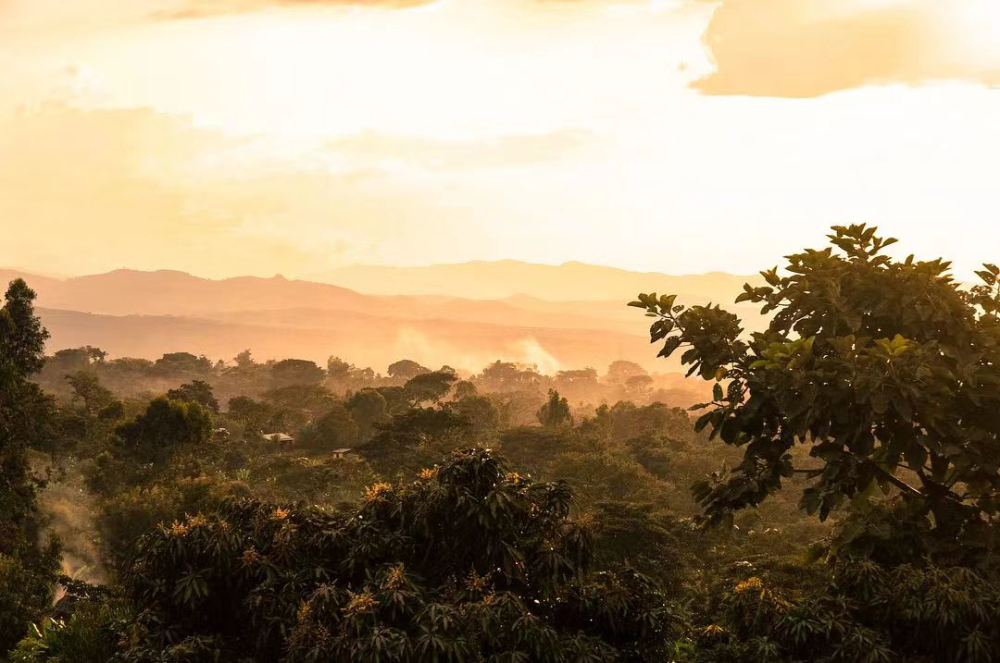
If this tour of Yirgacheffe and Sidamo has left you wanting a cup of your own, the best place to begin is FrontStreet's washed Yirgacheffe, the classic entry point to Ethiopia. It offers a clear jasmine floral note and bright citrus acidity, the profile people mean when they say Yirgacheffe: a southern highland town where spring-like weather, drifting mist, and cool humidity let thousands of coffee trees thrive, and where the cup comes out light, elegant, and tea-like, like a clean, refreshing lemon tea.
Most Ethiopian coffee is grown in a smallholder "garden" system, with each farmer delivering cherries to a village-level washing station, which is why cooperatives dominate the landscape. FrontStreet works with several, including the Gudingding Cooperative in the Worka area at Yirgacheffe's southeastern edge. Independently established in 2012 by about 300 member farmers, Gudingding pulps its fruit before drying, so the coffee's intrinsic character comes through with unusual clarity, showing citrus and lemon tones beneath an elegant white floral, bright and finely structured.
To compare washed and natural side by side, FrontStreet's natural Flower Queen (Hambella, Guji) is the standout: cherries dried whole on raised beds for 21 days, turned constantly and hand-sorted every three to five days, then roasted medium-light to reveal a gentle fermented wine note, florals, citrus, and mango, with honeyed sweetness, cocoa, a hint of spice, and a thick body and long finish. And for the classic natural expression, the Red Cherry Project Yirgacheffe, sun-dried for two weeks to 12% moisture and then density- and color-sorted and hand-picked, offers peach, cocoa, honey, and lemon in an exceptionally clean cup.
To brew them, FrontStreet's roasters generally use a medium-light roast for Ethiopian beans. Because lighter roasts release their flavor compounds more slowly, the shop recommends a Hario V60, 90°C water, 15 g of coffee, a 1:15 ratio, and a grind of about 80% pass-through on a Chinese-standard #20 sieve: a 30 g bloom for 30 seconds, a slow centered circling pour to 125 g, then, as the bed nears exposure, a continued circling pour to 225 g, for a total extraction of about two minutes.
Important Notice :
FrontStreet Coffee is a long-established specialty coffee roaster in Guangzhou China, selling freshly roasted beans from its own farm in Yunnan as well as dozens of carefully selected single-origin beans from around the world for both pour-over and espresso. The products deliver consistently excellent quality and great value, with shipping within 24 hours. Guangzhou's FrontStreet Coffee shop is recommended by many coffee lovers, and the beans are now available online at the Tmall 。
FrontStreet Coffee has moved to a new address:
FrontStreet Coffee Address: 315,Donghua East Road,GuangZhou
Tel:020 38364473
 Scan and follow the En Gafei WeChat official account. Please indicate that the reprint comes from "En Gafei".