Differences in Coffee Flavor between Kenya's Nyeri and Kirinyaga Production Areas | Introduction to Kenyan Coffee Varieties

Kenya is one of the most celebrated coffee origins in the world and, alongside Ethiopia, the other great representative of African specialty coffee. Its intense berry character has won over countless coffee lovers. In our own cupping notes, we at FrontStreet Coffee often describe Kenyan coffee through its berry-toned profile. As specialty coffee has developed, drinkers have paid growing attention to specific growing regions and gradually come to understand how the same origin can taste different from one area to another. In this article, FrontStreet Coffee takes a closer look at Kenya's coffee-growing regions.
Kenyan Coffee Growing Regions
Kenyan coffee is best known for seven major growing regions: Thika, Kirinyaga, Mt. Kenya West, Nyeri, Kiambu, Ruiru, and Muranga. Among them, Thika, Kirinyaga, and Nyeri are particularly renowned.

Thika
Thika is a small town located not far from Nairobi, Kenya's capital. Much of the land around Nairobi is planted with coffee, and Thika is an industrial town surrounded by farmland and waterfalls. The Thika region has roughly 2,000 coffee farmers. Coffee cultivation here dates back to the late nineteenth century, when varieties were introduced from neighboring Ethiopia to the north. Through local selection and improvement, the varieties now commonly grown include Bourbon, Kent (SL34, SL28), Typica, and Ruiru 11, with about 90% of plantings today being SL34 and SL28. FrontStreet Coffee's cupping notes for this region show bright fruit acidity, a rich berry-juice body, and honeyed sweetness. Elevation: 1,550–1,750 meters.

FrontStreet Coffee - Kenya Asalia Coffee Beans
Region: Thika, Kenya
Processing Station: Asali Processing Station
Elevation: 1,550–1,750 meters
Varieties: SL28, SL34
Processing Method: Kenyan 72-hour Washed
Grade: AA
Nyeri
Nyeri lies in the highlands near Mount Kenya and is one of Kenya's most important specialty-grade producing regions, with an average elevation above 1,500 meters. Many of Kenya's finest coffees come from this area. Located east of the Aberdare Range, on the slopes between Mount Kenya and its foothills, Nyeri combines high terrain with fertile soil, which has made it a central hub of Kenyan coffee with a well-developed processing infrastructure. The high-altitude beans from this region are renowned worldwide for their exceptional quality. FrontStreet Coffee's cupping notes show dark berry flavors, a bright plum sweetness and acidity, and a delicate, long-lasting aftertaste. Nyeri has two harvest seasons, with the main harvest yielding the higher-quality crop: October to December is the main season, and June to August the fly crop.
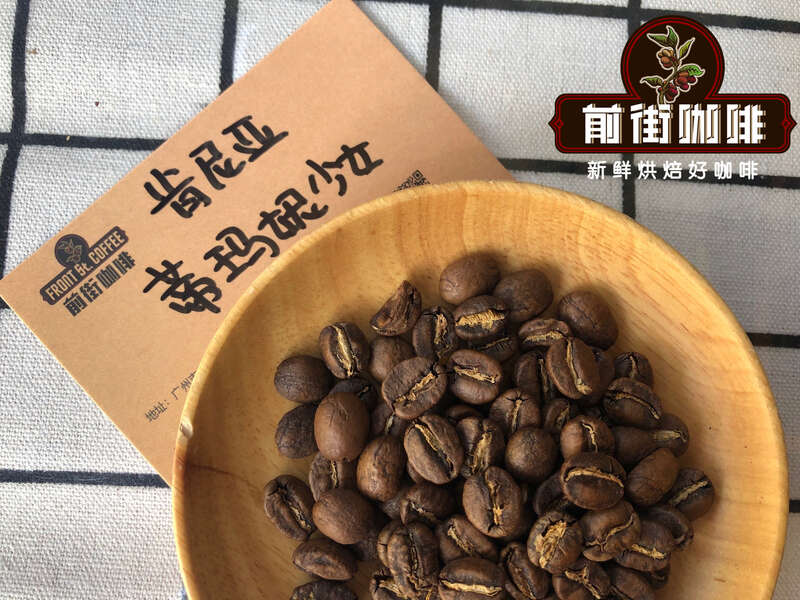
FrontStreet Coffee - Kenya Ndima-ini AA Coffee Beans
Region: Ndima-ini Processing Station, Nyeri
Elevation: 1,700–1,900 meters
Varieties: SL28 & SL34
Processing Method: K72 Washed
Grade: AA
Kirinyaga
The Kirinyaga region sits on the slopes of Mount Kenya, adjacent to Nyeri, and is famous for coffees with intense flavor, rich layering, and a solid mouthfeel. Together with Nyeri, it is widely regarded as one of Kenya's two best producing regions today. Most producers here are smallholder farmers who belong to cooperatives. The cooperatives play a coordinating role, operating washed processing stations to which farmers deliver their coffee cherries. Elevation: 1,300–1,900 meters. Harvest period: October to December (main season), June to August (fly crop). FrontStreet Coffee's cupping notes describe this region's coffee as berry-forward with moderate sweetness and notes of honey and cream.

FrontStreet Coffee - Kenya Mugaya AB Coffee Beans
Region: Mugaya Processing Station, Kenya
Elevation: 1,400 meters
Varieties: SL28 & SL34
Processing Method: K72 Washed
Grade: AB
Kenyan Coffee Varieties: SL28 & SL34
SL28 is a single variety selected in 1935 from a drought-resistant population of Tanganyika varieties. It is suited to medium and high altitudes, tolerates drought well, but is susceptible to the major coffee diseases. SL28 beans resemble Bourbon in appearance—round and full—and recent genetic testing has confirmed that SL28 belongs to the Bourbon genetic group.
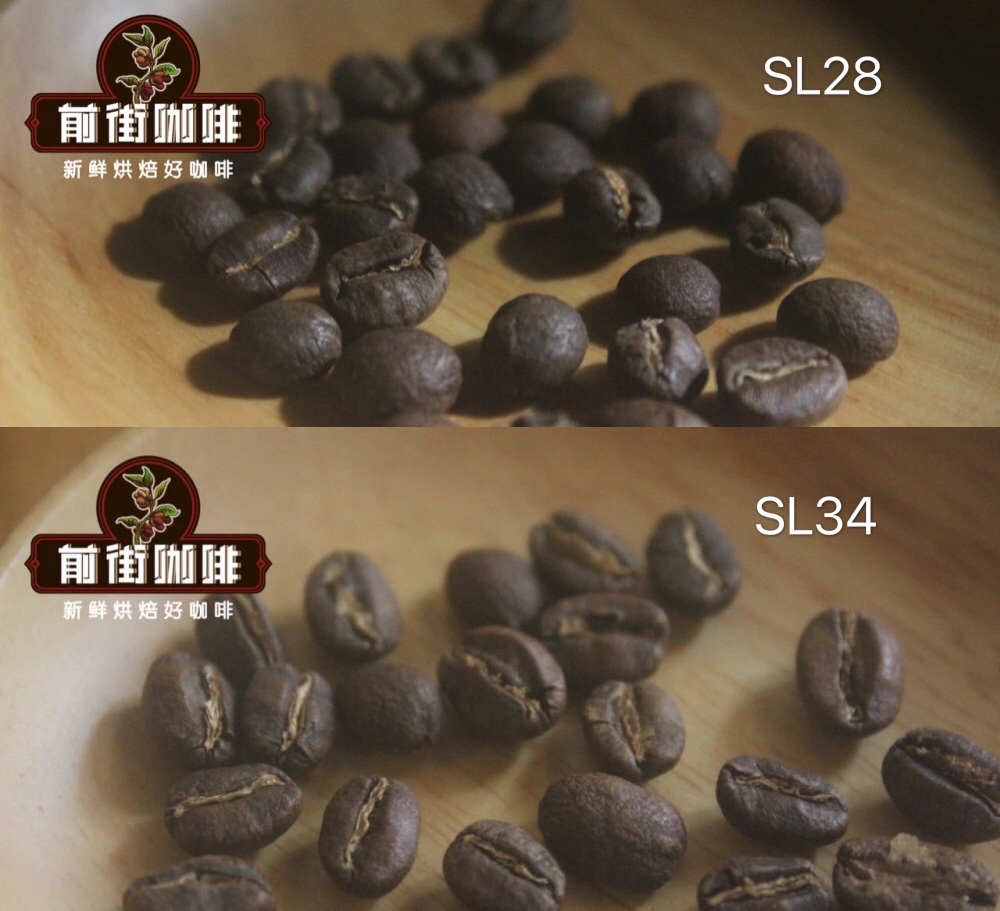
SL34 was first selected in the late 1930s at the Scott Agricultural Laboratories in Kenya, from a single tree at the Kabete Loresho estate known as the "French Mission." SL34 beans resemble Typica. FrontStreet Coffee separates out the Typica-like beans in Kenyan coffee lots—they are elongated, oval, and comparatively flattened in side profile. Recent genetic testing indicates that SL34 is related to the Typica genome.
Kenyan Coffee Processing: The K72 Washed Method
Most Kenyan washed coffee is processed using Kenya's distinctive K72 washed method. Fully ripe cherries are washed and de-pulped, then dry-fermented for twenty-four hours, washed, dry-fermented for another twenty-four hours, washed again, and dry-fermented for a further twenty-four hours—a cycle of intensive fermentation lasting seventy-two hours in total, which is where the name K72 comes from. After the final wash, the beans are soaked overnight in clean-water tanks, and drying begins on the raised drying beds the following morning.

FrontStreet Coffee Roasting Recommendations for Kenyan Coffee Beans
FrontStreet Coffee Kenya Asalia Coffee Beans
FrontStreet Coffee roasts on a Yangjia 800N semi-direct-fire machine with a 480 g charge: when the roaster reaches 200°C, charge the beans, set the damper to 3, and apply heat at 160. The turning point comes at 1'34". When the roaster temperature reaches 147°C, reduce the heat to 130 and open the damper to 3.5. At this point the bean surface turns yellow, the grassy aroma disappears completely, and the beans enter the drying stage. When the temperature reaches 171°C, reduce the heat to 80 while keeping the damper unchanged. At 8'28", wrinkles and dark spots appear on the bean surface and the toast-like aroma clearly shifts toward coffee aroma—the prelude to first crack. Listen carefully for the sound of first crack. At 8'52", first crack begins; adjust the damper to 5, develop for 2'10" after first crack, and drop at 191.6°C.

FrontStreet Coffee Kenya Ndima-ini Coffee Beans
FrontStreet Coffee roasts on a Yangjia 800N semi-direct-fire machine with a 480 g charge: when the roaster reaches 165°C, charge the beans, set the damper to 3, and apply heat at 120. The turning point comes at 1'32". When the temperature rises to 140°C, set the damper to 4. At 6'25", the temperature reaches 153.3°C, the bean surface turns yellow, the grassy aroma disappears completely, and drying is complete. When wrinkles and dark spots appear on the bean surface and the toast-like aroma clearly shifts toward coffee aroma, this marks the prelude to first crack—listen carefully for its sound. At 9'56", first crack begins; keep the damper unchanged, reduce the heat to 90 at 188°C, develop for 2'10" after first crack, and drop at 194°C.
FrontStreet Coffee Kenya Mugaya Coffee Beans
FrontStreet Coffee roasts on a Yangjia 800N semi-direct-fire machine with a 480 g charge: when the roaster reaches 160°C, charge the beans, set the damper to 3, and apply heat at 120. The turning point comes at 1'28". When the temperature rises to 115°C, set the damper to 4. At 6'00", the temperature reaches 154.6°C, the bean surface turns yellow, the grassy aroma disappears completely, and drying is complete. When wrinkles and dark spots appear on the bean surface and the toast-like aroma clearly shifts toward coffee aroma, this marks the prelude to first crack—listen carefully for its sound. At 9'28", first crack begins; keep the damper unchanged, develop for 2'20" after first crack, and drop at 193.8°C.
FrontStreet Coffee Cupping Notes for Kenyan Coffee Beans
FrontStreet Coffee Kenya Asalia Coffee Beans
Dry aroma: cherry tomato
Wet aroma: berries
Flavor: sherry, plum, cherry tomato, blackberry, brown sugar

FrontStreet Coffee Kenya Ndima-ini Coffee Beans
Dry aroma: plum
Wet aroma: berries
Flavor: plum, caramel, cream, grape
FrontStreet Coffee Kenya Mugaya Coffee Beans
Dry aroma: berries
Wet aroma: caramel
Flavor: plum, grape, caramel, nuts
FrontStreet Coffee Brewing Guide for Kenyan Coffee
Dripper: V60 #01
Water temperature: 90°C
Dose: 15 g
Ratio: 1:16
Grind size: medium-fine (77% retention through a #20 sieve)
FrontStreet Coffee Brewing Method
First, rinse the filter paper and preheat the dripper and server. Start with a 30 g bloom for 30 seconds. Once the water level has nearly exposed the coffee bed, pour in slow circles up to 130 g, then pause. When the water level drops again to just above the bed, continue pouring to 240 g and stop. When the bed is once more just about to be exposed, remove the dripper (timing starts from the bloom). Total extraction time: 2'00".

FrontStreet Coffee Kenya Asalia Coffee Beans
On the palate, plum and cherry tomato lead, backed by a strong, thick acidity. The mid-palate shows prominent sweetness with a juicy mouthfeel, and the finish carries berry aroma, brown sugar sweetness, and a touch of green tea.
FrontStreet Coffee Kenya Ndima-ini Coffee Beans
It opens with plum acidity, moves into grape in the mid-palate, and finishes with plum sweetness and acidity.
FrontStreet Coffee Kenya Mugaya Coffee Beans
The front shows a berry-juice sensation, the middle brings plum and grape, and the finish reveals almond aroma and caramel sweetness.
FrontStreet Coffee Recommendation
While Kenyan coffee is famous for its berry-toned acidity, if you'd like to explore a different side of African coffee, FrontStreet Coffee suggests starting with the FrontStreet Washed Yirgacheffe. From the birthplace of coffee itself, this washed lot offers a clear jasmine floral note and bright citrus acidity over a light, elegant, tea-like body—many drinkers find it reminiscent of a clean, refreshing lemon tea.
If you prefer something fruitier to contrast with Kenya's blackberry and plum profile, the FrontStreet Natural Guji (Hambella) coffee is an excellent choice. Sun-dried for 21 days on raised beds, it presents a gentle fermented wine aroma, florals, citrus, and mango, with a thick, complex body, honeyed sweetness, cocoa tones, and a long finish.
Important Notice :
FrontStreet Coffee is a long-established specialty coffee roaster in Guangzhou China, selling freshly roasted beans from its own farm in Yunnan as well as dozens of carefully selected single-origin beans from around the world for both pour-over and espresso. The products deliver consistently excellent quality and great value, with shipping within 24 hours. Guangzhou's FrontStreet Coffee shop is recommended by many coffee lovers, and the beans are now available online at the Tmall 。
FrontStreet Coffee has moved to a new address:
FrontStreet Coffee Address: 315,Donghua East Road,GuangZhou
Tel:020 38364473
 Scan and follow the En Gafei WeChat official account. Please indicate that the reprint comes from "En Gafei".