[FrontStreet Coffee Bean Hunting Journal] Rare Variety Pink Bourbon - Colombia La Mesita Estate Special Feature
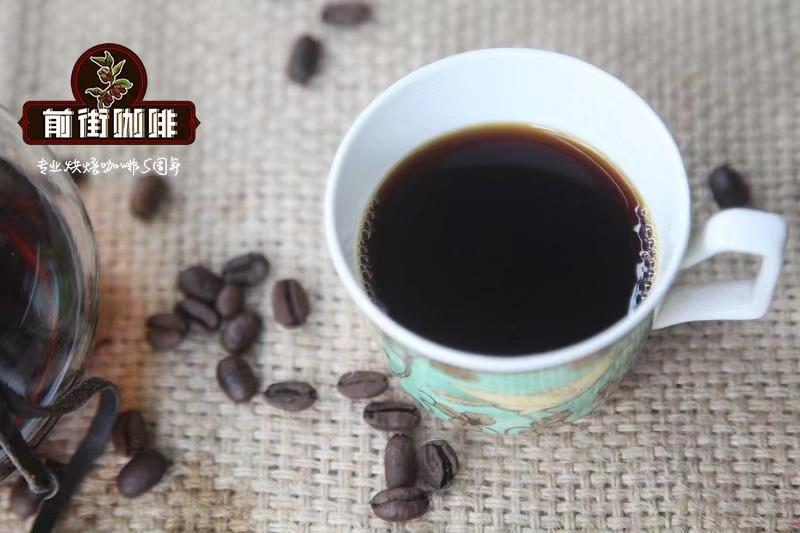
Colombia Huila Finca La Mesita
Country: Colombia
Region: Huila
Estate: Finca La Mesita
Altitude: 1760m
Variety: Pink Bourbon
Processing: Semi-washed
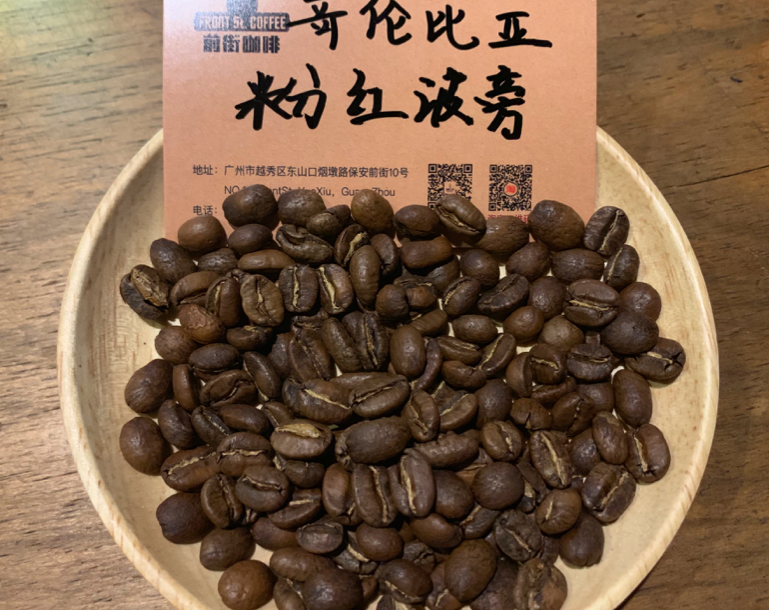
Colombia
Colombia is the world's third-largest coffee exporter, producing primarily Arabica—and it ships more Arabica beans than any other country. Rich in natural resources, the country counts coffee, flowers, gold, and emeralds as its "four treasures."
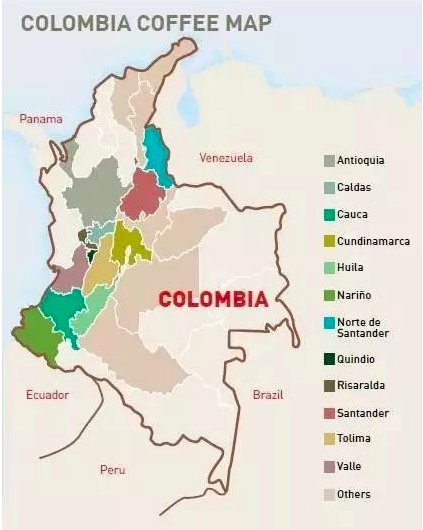
Sitting in the northwestern corner of South America, Colombia borders Panama to the north. Seen from the air, its western side looks as though a cat raked its paw down the land, leaving three vertical claw marks running north to south. The country's famous coffee regions are scattered through these Andes mountains, rooted in fertile volcanic soil.
Colombian coffee cultivation is dominated by small farms: more than 300,000 estates nationwide cover 1.07 million hectares of planted land, and 30% to 40% of the rural population depends directly on coffee for their livelihood.
Colombian coffee generally grows at altitudes above 1,300 meters in the Andes, with tall shade trees such as bananas interplanted among the coffee. Local farmers cultivate with great precision, producing coffee that is smooth, balanced, and fresh in aroma—consistently strong commercial-grade beans on average, alongside outstanding specialty lots.
Because Colombian quality is both high and dependable, the country uses a remarkably simple grading system of just two levels: Supremo (Special Select) and Extra. In addition, roughly 5% of round beans are sorted separately and sold as Peaberry. For buyers seeking commercial rather than single-origin coffee, Colombians blend Supremo and Extra in set proportions; this blend is called Excelso.
Huila Region
Huila Province lies in the southwest of Colombia, where the Andes squeeze into a narrow canyon and coffee climbs the slopes—one of the country's most renowned producing regions.
Fertile volcanic soil, moderate rainfall, and high-altitude microclimates give Huila coffee its notably balanced, gentle flavors. Most production comes from smallholders: roughly 80% of producers in the region farm less than 3 hectares. Because these farming families handle nearly all the work themselves rather than outsourcing labor, both the farms and the beans receive thorough, intensive care.
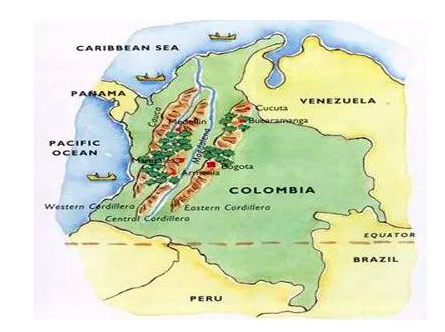
Huila coffee has strong flavor, a heavier body, and aromas of nuts, chocolate, and caramel with suitable acidity—genuinely deserving the label of premium specialty coffee.
Variety Introduction
Bourbon, like Typica, is one of the old heirloom varieties of Arabica. Bourbon was first cultivated on Réunion Island—known as Bourbon Island before 1789—hence the variety's name.
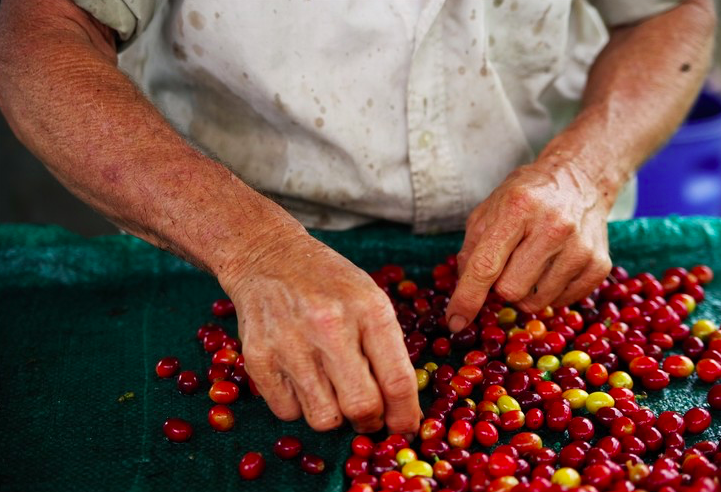
Unlike Typica, Bourbon plants have wider leaves, grow more densely, and yield more coffee. The beans are larger and more uniform in shape, evenly colored and lustrous, and the green cherries turn bright red when ripe.
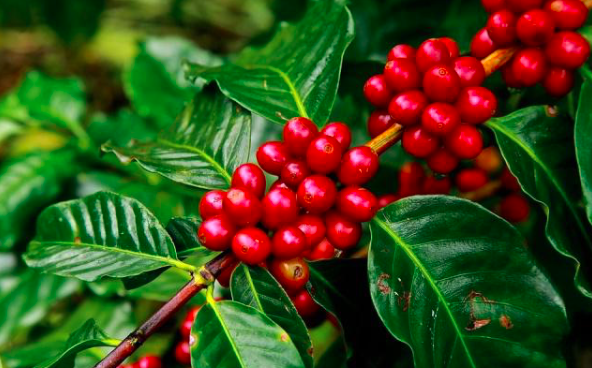
Bourbon yields nearly 30% more than Typica, though it still counts as low-yielding among coffee varieties, and it is equally susceptible to leaf rust.
Most Bourbon cherries are red, but two natural variants show different colors: Orange Bourbon and Yellow Bourbon. Pink Bourbon is a hybrid bred from Red Bourbon and Yellow Bourbon.
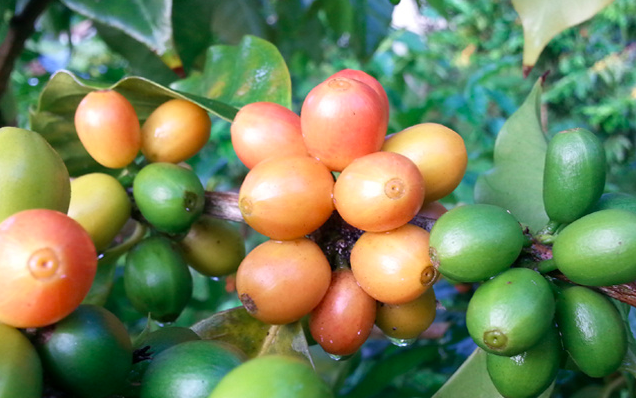
As its name suggests, Pink Bourbon produces romantic pink cherries at ripeness—a genuinely rare variety. What makes it rare is that holding that beautiful pink color is extremely difficult; harvests sometimes include orange Bourbon because a cherry's final color is governed by recessive genes carried in the pollen. The pollen used for hybridization carries both yellow genes leaning toward Yellow Bourbon and red genes leaning toward Red Bourbon—all recessive, and all prone to interfering with one another.
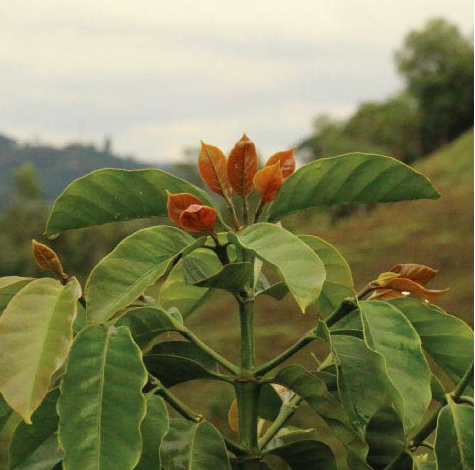
Pink Bourbon is said to have first been cultivated by a Huila coffee farmer named Gabriel Castaño. Initially interplanted with other Bourbons and Caturra, it was later harvested and processed on its own. Its cup profile is special, too: unlike the relatively flat character typical of Bourbon, Pink Bourbon shows far more complex citrus and berry expressions in both acidity and flavor.
Processing Method
In the semi-washed method, defective, rotten, and foreign material is first removed in water channels; the skin, pulp, and part of the mucilage are then stripped away, followed by 1 hour of washing. Because the soaking and fermentation time is short, the mucilage cannot be fully rinsed off, and some still clings to the parchment. The sticky parchment beans are then spread on drying patios. Coffee made this way therefore carries characteristics of both washed and natural processing.
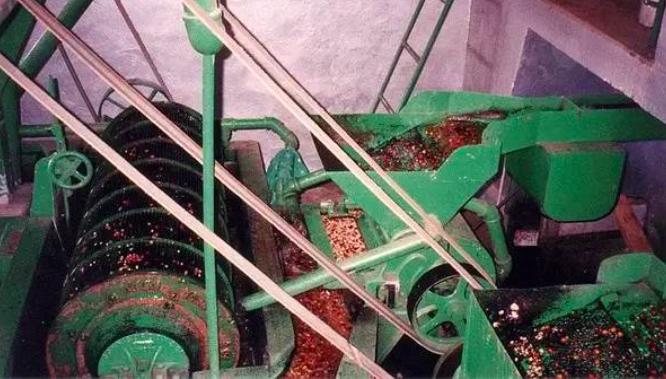
Semi-washed coffee has quite good acidity, sweetness, flavor notes, and aroma; its drawback is that the flavors are not as intense as those of purely natural or fully washed coffees.
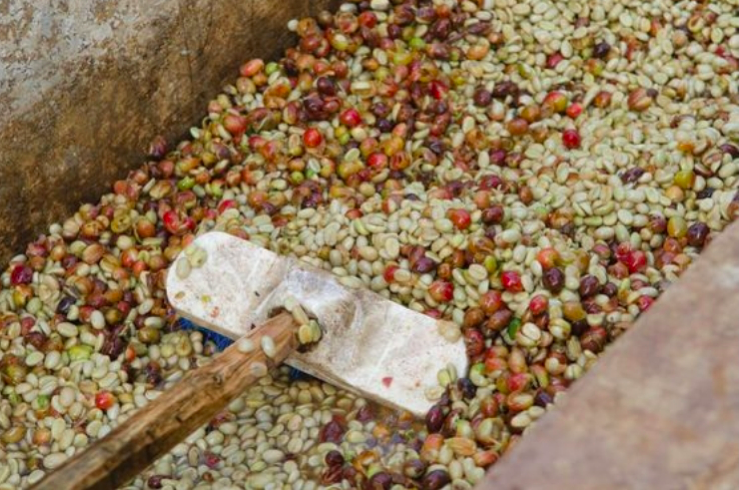
The semi-washed method arose because washed processing consumes enormous amounts of water: on average, 1 ton of coffee cherries requires 10-20 tons of water to yield roughly 200 kilograms of green beans—more than water-scarce producing countries can afford. After 1990, Brazil used its dry climate to invent the natural mucilage-removal method, also known as semi-washed or semi-dry processing.
Roast Profile Analysis
Because this bean comes from the new harvest, with high density and ample moisture, FrontStreet Coffee's roaster used a medium-small flame approach to extend the drying phase.
Roaster: Yangjia 800N (300g batch size)
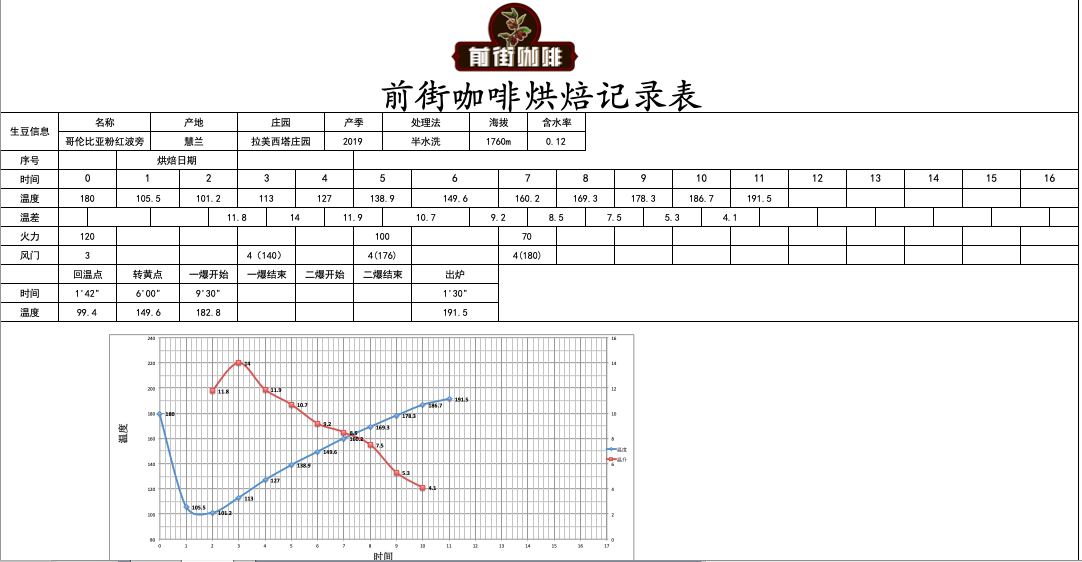
Charge the drum at 180°C, with the damper at 3 and heat at 120. Turning point at 1'42", when the drum reads 140°C; hold heat unchanged and open the damper to 4. At this stage the bean surface yellows, the grassy smell disappears completely, and the drying phase proceeds. At 176°C, reduce heat to 100; at 180°C, reduce heat to 70, damper unchanged.
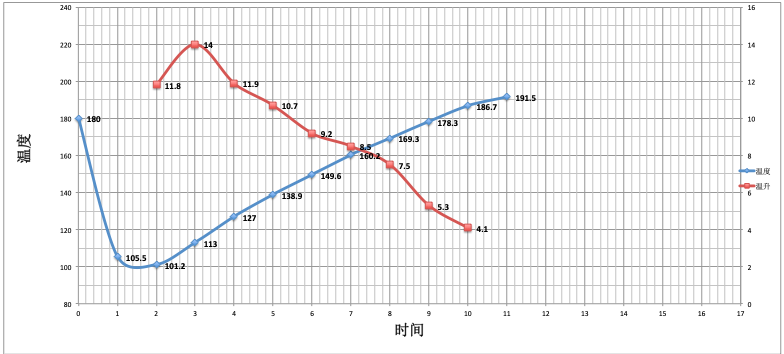
At 8'17", wrinkles and dark markings appear on the bean surface and the toast aroma clearly shifts into coffee aroma—the prelude to first crack. Listen carefully from here. First crack begins at 9'30"; set the damper to 5 (adjust heat very carefully—not so low that the cracks fall silent). Develop for 1'30" after first crack and discharge at 191.5°C.
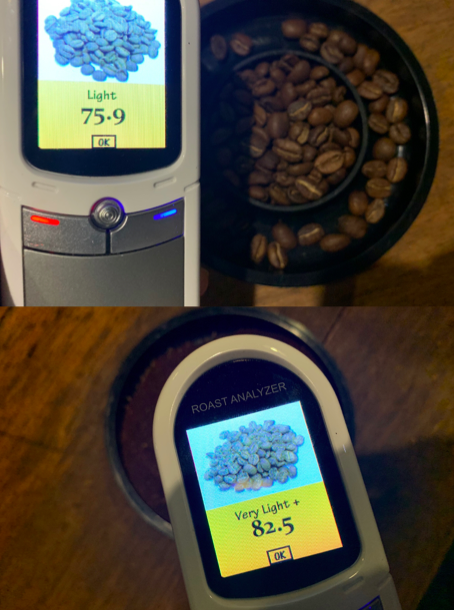
Agtron bean color value 75.9 (image above), Agtron ground color value 82.5 (image below), Roast Delta value 6.6.
Cupping Profile
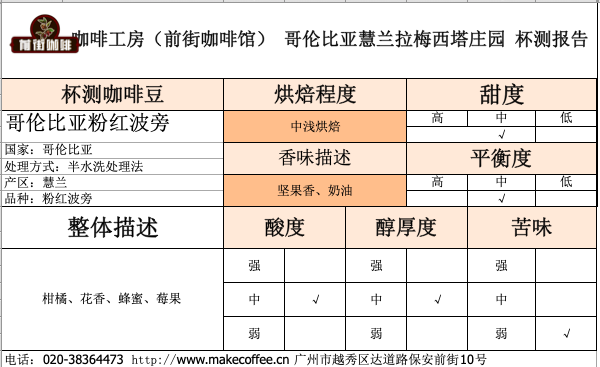
Flavor: Citrus, floral, honey, berries.
Brewing
FrontStreet Coffee's recommended parameters
Recommended brewing method: Pour-over
Filter: Hario V60
Water temperature: 90°C
Dose: 15g
Ratio: 1:15
Grind size: Medium-fine (BG 6k: 58% pass-through on China standard #20 sieve)
Brewing technique: Segmented extraction
Bloom with 34g of water for 35 seconds, then continue pouring in small circles to 127g and pause. When the water level drops and the coffee bed is about to be exposed, pour on to 240g and stop. Once the bed is about to be exposed again, remove the filter cup. Total extraction time (from the start of the bloom) is 2'00".
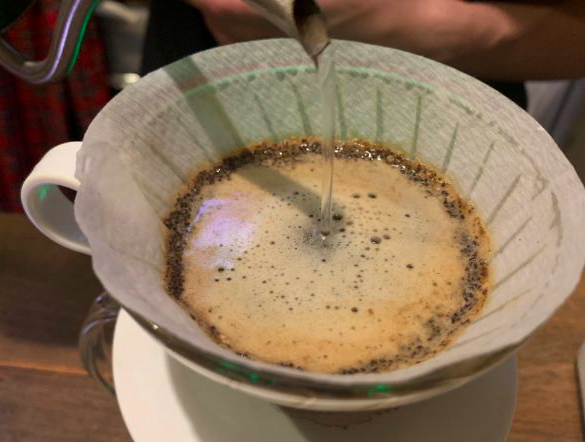
Flavor description: A distinct nutty creaminess on the nose, with caramel and cocoa in the cup. As the cup cools, lemon acidity and berry aromas emerge. Overall very balanced, with a smooth, gentle mouthfeel.
FrontStreet Coffee Recommendation
Colombian coffee is wonderfully versatile—suited to espresso blends and single-origin pour-overs alike, spanning fruity-acidic profiles, full-bodied cups, and fragrant aromatic styles. Huila, in the hills of Colombia's central cordillera at elevations above 1500 meters where the country's major rivers converge, is its most famous specialty region. For a taste of classic Huila, FrontStreet's washed Huila beans are roasted medium-dark to bring out the sweet aromatics of dark chocolate and nuts, with moderate oils and a mellow body—equally good in a pour-over or French press, and capable in a moka pot or espresso machine for Americanos and lattes.
For a more adventurous cup, FrontStreet's Finca La Frontera Sidra lots showcase Colombia's innovative anaerobic natural processing—fermentation in sealed, pressure-rated stainless tanks with controlled temperature, time, and pH—which transforms the coffee into richer tropical fruit aromatics; roasted medium-light for pour-over, cold brew, drip bags, or moka pot, it delivers complex layers of passion fruit, grape, apricot, and dried fruit. Home baristas with an espresso machine or moka pot should try FrontStreet's signature espresso blend, which pairs Brazil's creamy nuttiness with Colombia's deep chocolate bitterness, pouring a fine golden crema that makes a rich, silky latte—friendly for beginners and a solid base for Americano, cappuccino, or mocha.
Important Notice :
FrontStreet Coffee is a long-established specialty coffee roaster in Guangzhou China, selling freshly roasted beans from its own farm in Yunnan as well as dozens of carefully selected single-origin beans from around the world for both pour-over and espresso. The products deliver consistently excellent quality and great value, with shipping within 24 hours. Guangzhou's FrontStreet Coffee shop is recommended by many coffee lovers, and the beans are now available online at the Tmall 。
FrontStreet Coffee has moved to a new address:
FrontStreet Coffee Address: 315,Donghua East Road,GuangZhou
Tel:020 38364473
 Scan and follow the En Gafei WeChat official account. Please indicate that the reprint comes from "En Gafei".