What is the Ideal Water Temperature for Brewing Coffee|How to Master Coffee Water Temperature for Consistent Results

What Water Temperature Should You Use for Pour-Over Coffee?
The mainstream recommendation today runs between 86°C-93°C. Light roasts typically want higher temperatures; dark roasts do better lower.

Once, while FrontStreet Coffee was sharing pour-over coffee with customers, one guest identified the name of the bean within a sip. A simple conversation followed. It turned out this customer brews often at home and had previously bought this very bean from FrontStreet Coffee — so upon tasting our shared cup, they recognized the identical flavor profile and guessed the answer that quickly.
Talking technique, the customer remarked, "I've tried water temperatures between 90-94°C, but only 93°C produces the great taste, just like this cup of yours." The coffee we were sharing, however, had actually been brewed at 90°C!
FrontStreet Coffee's brewing parameters always follow the bean's characteristics, roast level, and flavor profile. Higher water temperatures extract more efficiently, releasing compounds more readily and producing higher concentration. Water near boiling, though, tends to pull out unpleasant bitter compounds. So when brewing medium-dark roasts, FrontStreet Coffee uses different parameters than for light roasts: darker roasts show more pronounced caramelization and release bitter large-molecule compounds more easily, so to avoid extracting excessive undesirable flavors we lower the water temperature slightly. Light roast coffee brews at 91-93°C, while medium-dark roast beans get 87-88°C.

Of course, brewing the same bean with different parameters — grind size, water temperature, and the like, adjusted and combined appropriately — can yield similar flavor profiles. There are countless ways to brew a great cup. But can you really get there by changing the water temperature alone?

The Relationship Between Brewing Water Temperature and Actual Extraction Temperature
When we speak of brewing water temperature, we mean the initial temperature inside the pour-over kettle. If a recipe calls for 91°C water, we simply set the kettle's initial water to 91°C, cover it, and begin brewing. The water that actually contacts the grounds certainly isn't 91°C, though — so FrontStreet Coffee ran a simple temperature experiment.

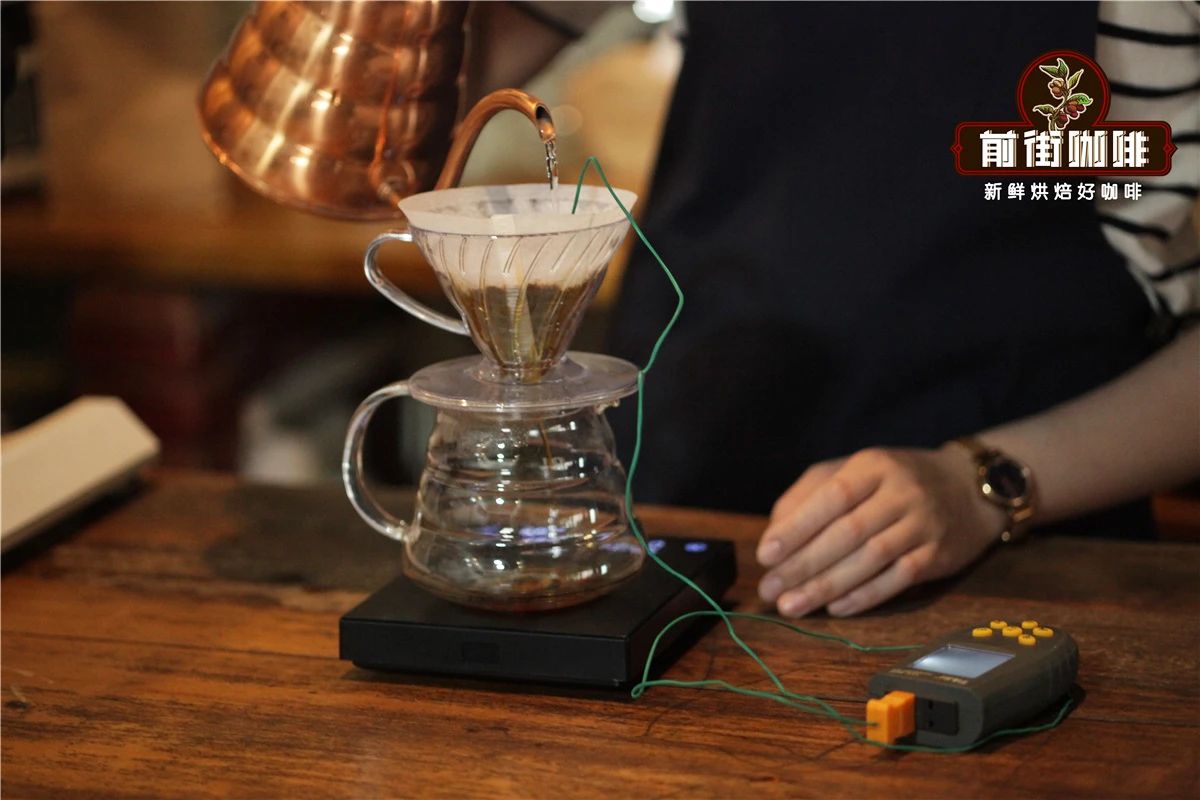
We fixed a probe thermometer into the coffee grounds to track temperature changes during the brew. The dry grounds started at roughly 32°C. Brewing with 90°C water, the bed temperature rose to 85°C at the start of the bloom; as the bloom pour ended, the internal temperature dropped to 78°C. The second pour lifted it back to 85°C, and the extraction temperature then stabilized between 84.5-86°C, peaking at 86.2°C.
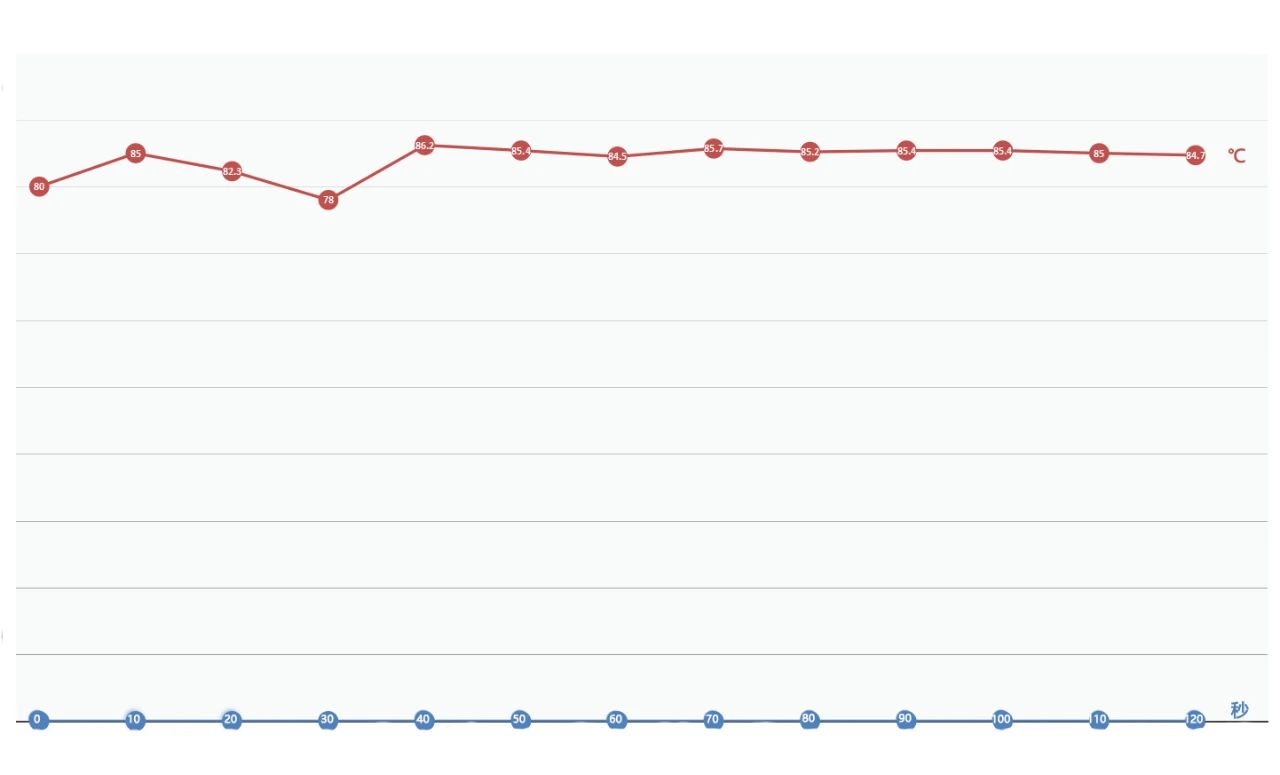
In other words, when we brew with 90°C water, the water actually doing the extraction sits between 84.5-86°C.
Next we brewed with an initial temperature of 93°C. The bed rose to 86.3°C at the start of the bloom, fell to 83°C when the bloom pour ended, climbed back to 87°C with the second pour, and then stabilized between 85-88°C, peaking at 88°C.

Comparing the two: the initial temperatures differed by 3°C, but the actual extraction temperatures differed by less than 3°C. The gap narrowed — yet the taste difference remained clearly distinguishable.
So with all else equal, different water temperatures simply produce different flavors. Wait — let's re-examine the numbers. At 90°C initial, the actual extraction ran 84.5-86°C. Where did those 4-5.5 degrees go? The grounds absorb heat, the dripper absorbs heat, and the water loses heat to the air. Which means if we accelerate heat loss on the journey from kettle to coffee bed, we can close that gap on purpose.

That may sound like a job for some "advanced technique," but in practice it just means raising the height of your pour. FrontStreet Coffee normally pours from around 3-4cm; for this experiment we raised the pour height to 7-8cm using 93°C water.
This time the bloom lifted the bed to 87°C; it fell to 83°C as the bloom pour ended, rose to 86.2°C with the second pour, and then stabilized between 84-86.7°C, peaking at 87°C.
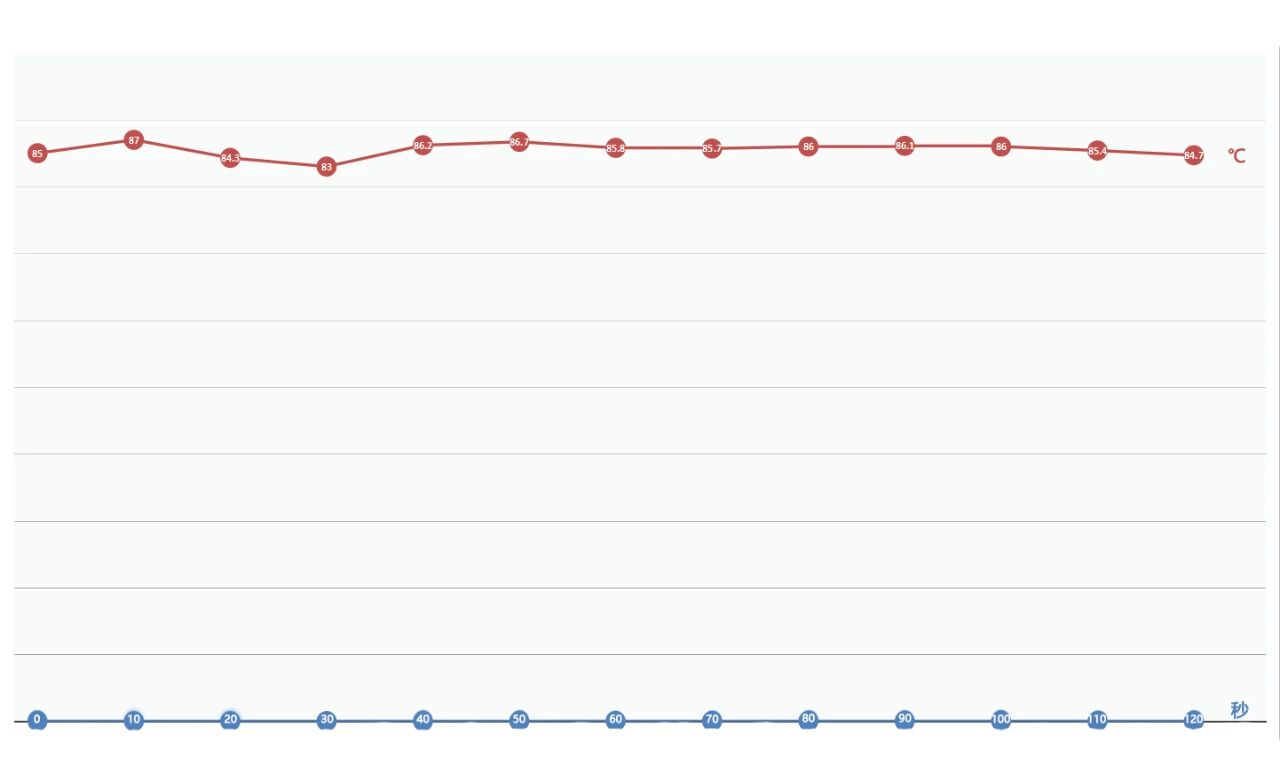
This brew matched the 90°C-temperature cup both in the data and in blind taste. By now you should have a solid grasp of where the real focus of pour-over water temperature lies — and why some brewers pour close to the liquid surface while others raise the water stream high.

In daily brewing, few of us will go to the lengths of probing the temperature inside the coffee bed. The practical parameter is the water temperature in the kettle. But now you understand the relationship between that dial and the actual extraction temperature — and that understanding will make you noticeably more proficient in real brewing!
FrontStreet Coffee Recommendation
Water temperature only matters in combination with everything else, starting with the bean. FrontStreet Coffee's everyday favorites split neatly along that 91-93°C / 87-88°C line. On the light side: the FrontStreet Yirgacheffe Guodingding, the classic gateway to Ethiopian coffee with bright citrus, berry, and floral notes softened by a green-tea-like finish — nothing like the harsh "sour coffee" people fear; the FrontStreet Ethiopia Flower Queen, whose tropical aromas of strawberry, passion fruit, pineapple, and even lychee and its juicy, nearly bitterness-free sweetness earn it the title of "the least coffee-like coffee"; the legendary FrontStreet Panama Esmeralda Red Label Geisha, with its elegant jasmine, citrus, bergamot, and black-tea nuances; and the FrontStreet Kenya Little Tomato from Thika (1550-1750m, SL28 and SL34, 72-hour double washed fermentation, light roast), bursting with cherry tomato and dried plum acidity like fresh-pressed juice, finishing on yellow sugar and green tea.
On the darker side, drop the temperature to 87-88°C: the FrontStreet PWN Golden Mandheling, deep-roasted with low acidity, a long heavy body, and layers of herb, dark chocolate, and faint earth; the FrontStreet Brazil Queen Estate, balanced and smooth with abundant nuts, cocoa, and caramel — excellent with or without crema-intensive espresso; the FrontStreet Jamaica Blue Mountain No.1, that near-perfect balance of cream, caramel, chocolate, nuts, honey, and light fruit that so many professionals call the easiest premium coffee to love; the FrontStreet 2013 Yunnan Natural Typica, clean and citrus-caramel with medium-dark notes of nut, chocolate, and brown sugar; and the FrontStreet Papua New Guinea Paradise Bird from Sigri estate (1600-1800m volcanic soils, Typica, AA grade, triple washed fermentation), nicknamed "Little Blue Mountain" for its clean, sweet, acidity-gentle cup.
For the V60 in particular, FrontStreet favors the resin Hario version for its heat retention and tight manufacturing tolerances, and brews floral-and-fruit beans like Guodingding, Flower Queen, the Geisha-toned Strawberry Candy, and the raisin-toned Mozart with the fast extraction that reveals their three-dimensional aroma — while heavier, sweeter profiles like Golden Mandheling and Brazil Queen shine equally through espresso or moka pot. Match the temperature to the roast, the dripper to the bean, and consistency follows naturally.
Important Notice :
FrontStreet Coffee is a long-established specialty coffee roaster in Guangzhou China, selling freshly roasted beans from its own farm in Yunnan as well as dozens of carefully selected single-origin beans from around the world for both pour-over and espresso. The products deliver consistently excellent quality and great value, with shipping within 24 hours. Guangzhou's FrontStreet Coffee shop is recommended by many coffee lovers, and the beans are now available online at the Tmall 。
FrontStreet Coffee has moved to a new address:
FrontStreet Coffee Address: 315,Donghua East Road,GuangZhou
Tel:020 38364473
 Scan and follow the En Gafei WeChat official account. Please indicate that the reprint comes from "En Gafei".
![[FrontStreet Coffee Bean Hunting Journal] Rare Variety Pink Bourbon - Colombia La Mesita Estate Special Feature](https://en.gafei.com/uploads/allimg/191026/17-19102611455G64-lp.jpg)