Roasting Profile | How FrontStreet Coffee Determines the Roasting Curve for Costa Rica Fire Phoenix Sapphire
Introduction
FrontStreet Coffee recently launched the Fire Phoenix Sapphire coffee beans and shared brewing methods for this variety. With its rich floral and berry notes, it has been warmly received by coffee enthusiasts. Today a reader asked about the roasting profile for these beans, so here is a closer look at how FrontStreet Coffee decides the roasting curve for this particular coffee.
Bean Information
Before roasting, you have to understand the beans themselves — otherwise they can easily end up over-roasted.
Costa Rica Central Valley Cumbres Del Poas Zahiro
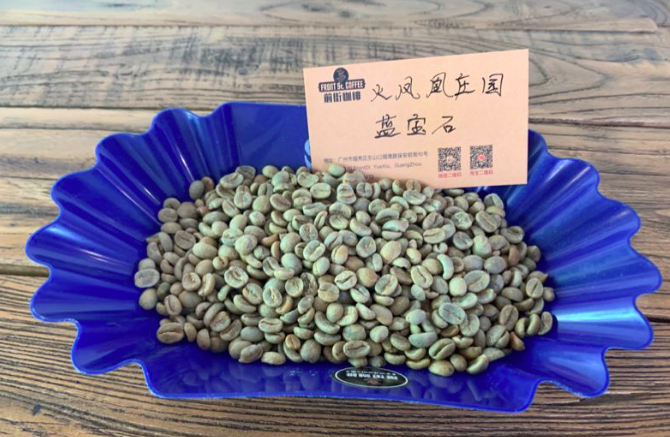
Costa Rica Fire Phoenix Estate Sapphire
Region: Central Valley
Estate: Fire Phoenix Estate
Altitude: 1600m
Varieties: Caturra, Catuai
Grade: SHB
Processing: Natural
Flavor Notes: Floral, Berry, Tropical Fruit, Fermented Wine Aroma, Brown Sugar
Fire Phoenix Estate lies in the hilly terrain around Poas Volcano in Costa Rica's Central Valley and was among the first in Central and South America to specialize in honey and natural processing. The estate is organically managed: the owner has always emphasized environmental stewardship (collecting rainwater for coffee processing) and produces organic fertilizer through vermicomposting, so no chemical fertilizers or pesticides are used in cultivation.
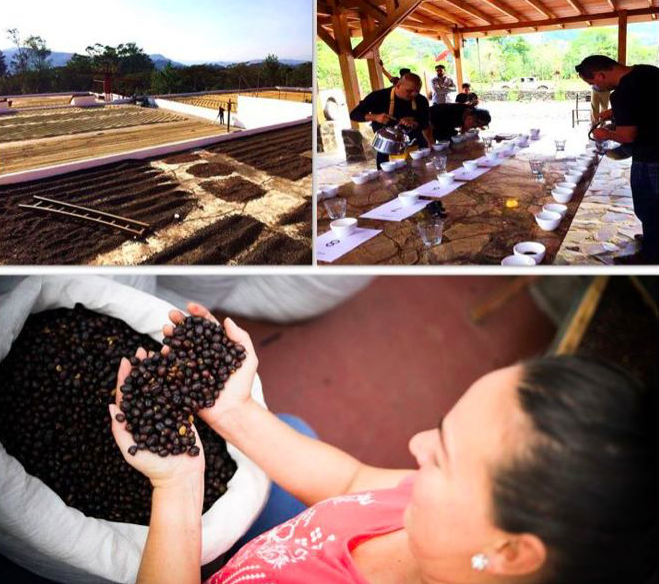
The natural processing of the Sapphire (Zahiro) beans is labor-intensive. Hand-picked, high-sugar cherries first dry on African raised beds for about 10 days, then move into plastic-covered greenhouse structures that build direct heat, continuing until moisture reaches 11.5%. Through this slow drying the beans are constantly turned and tended, until the bright red cherries turn black and give off aromas of fruit cake, brown sugar — even sherry wine.
Roasting Analysis
Costa Rican SHB (Strictly Hard Bean) coffee is dense. Caturra and Catuai both show excellent florals and fruit acidity, and natural processing adds high sweetness. To showcase all of that, FrontStreet Coffee's roasters chose a lower charge temperature than they would for washed coffees and a medium-heat approach with gradually reduced heat. They ran three profiles with the same charge temperature but different drop times.
Profile ①
Charge Temperature: 170°C, Yellowing Point: 5'55", 151.4°C, First Crack: 9'31", 184.5°C, Development after First Crack: 2'25", Drop Temperature: 198.4°C
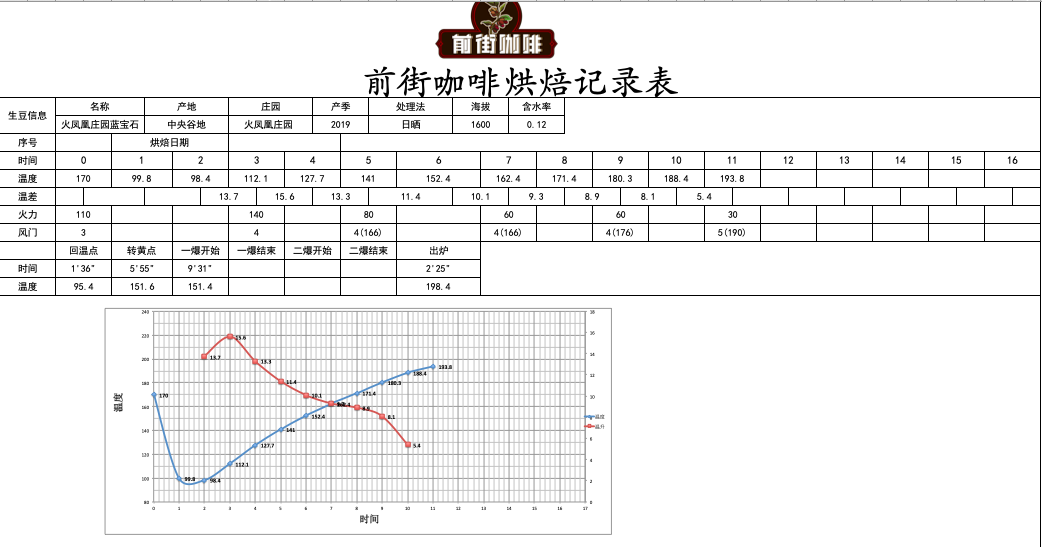
Cupping Notes: floral, berry, brown sugar, fermented wine aroma.
Profile ②
Charge Temperature: 170°C, Yellowing Point: 5'40", 151.6°C, First Crack: 9'00", 183.9°C, Development after First Crack: 2'05", Drop Temperature: 195°C
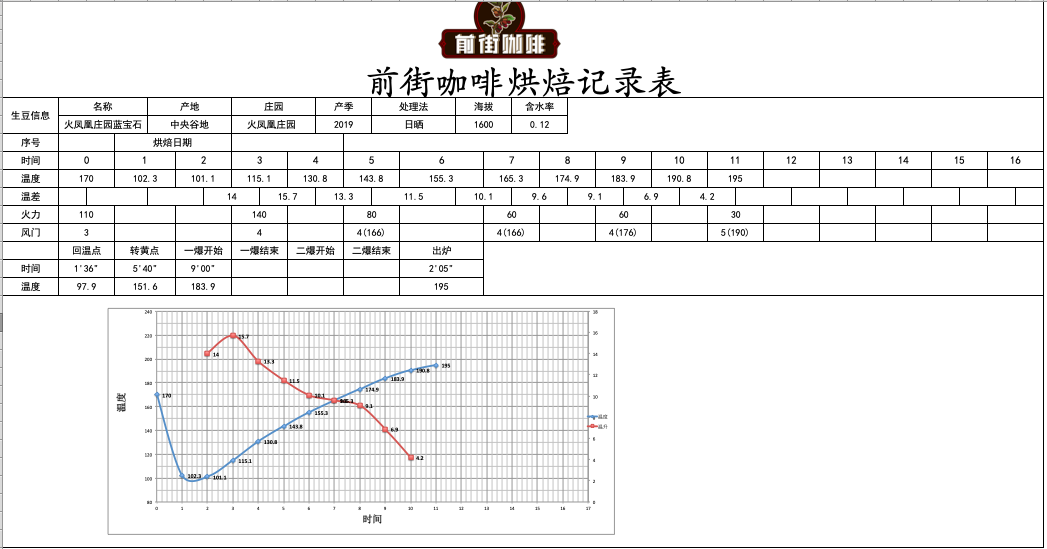
Cupping Notes: rose floral, berry, fermented wine aroma, tropical fruit, honey.
Profile ③
Charge Temperature: 170°C, Yellowing Point: 5'45", 151.1°C, First Crack: 9'05", 184.5°C, Development after First Crack: 1'45", Drop Temperature: 195°C
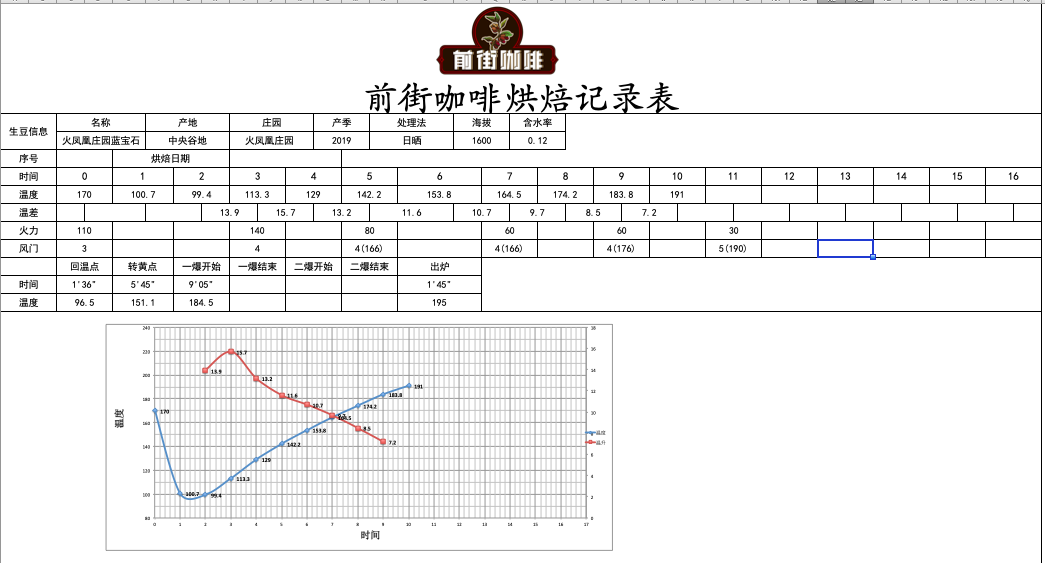
Cupping Notes: berry, sucrose, tea aroma, fruit tea.
Cupping the three side by side, florals, berry character, and sweetness stood out in all of them. But Profile ① tasted somewhat muted, with flavors that didn't separate clearly and an astringent aftertaste as the cup cooled. Profile ② was well balanced overall — pronounced aroma, distinct flavors, full body, excellent performance as it cooled, and a long finish. Profile ③ was cleaner and more refreshing, with distinct flavor layers that turned toward fruit tea as the temperature dropped, quite impressive in its own way. So we brewed separate pots of Profiles ② and ③ to see which would perform better as pour-over.
Pour-Over Brewing (Same Technique for Both)
Dripper: Hario V60, Water Temperature: 90°C, Coffee-to-Water Ratio: 1:15, Grind Size: medium-fine (BG6T: 58% pass-through on the China standard #20 sieve)
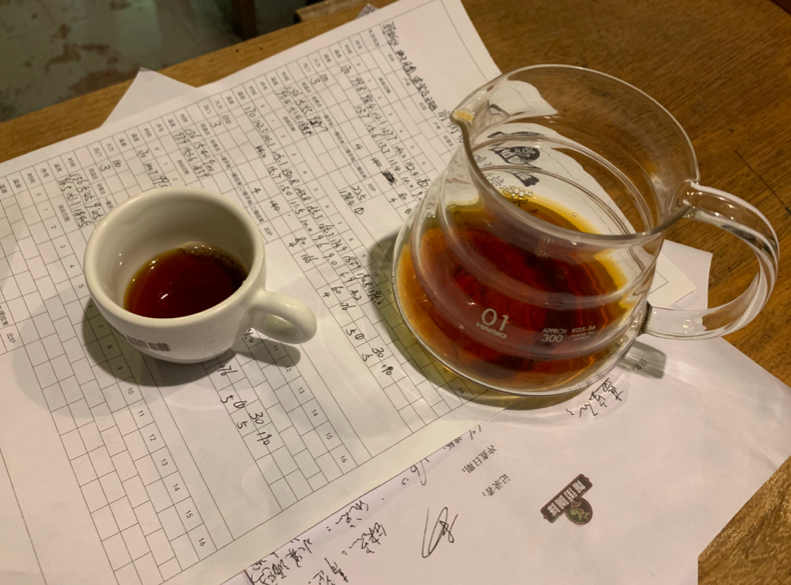
Brewing Method: start with 30g of water for a 30-second bloom, then pour in small circles to 128g and pause. Resume pouring to 225g just before the water level exposes the bed, and remove the dripper when the bed is about to show again (timing from the start of the bloom). Total extraction time: 1'55".
Profile ②: well balanced with clear sweetness. Florals lead, followed by berry and fermented wine aroma, with honey and cocoa in the finish.
Profile ③: noticeably sweet, with fermented wine aroma, florals, and berry up front and cocoa in the finish — but a noticeable astringency in the mouthfeel.
Across both cupping and brewing, Profile ② performed more consistently, so that is the profile we adopted.
FrontStreet Coffee Recommendation
Natural processing is the oldest and most widely used way to dry coffee, and because the fruit dries intact around the bean, naturals carry extra body and rich ripe-fruit character. If the Fire Phoenix Sapphire's floral-berry sweetness is what you love, FrontStreet Coffee's Yirgacheffe Sun-Dried Red Cherry is the natural next step: only fully ripe, all-red cherries are selected and dried on raised beds — kept off the ground to avoid contamination from insects, dust, and bacteria, and turned regularly for even drying. Roasted medium-light, it keeps its elegant florals and bright acidity while adding pronounced tropical fruit, a full fermented depth, and generous sweetness.
Another natural worth trying is FrontStreet Coffee's Huakui from Sidama, Ethiopia, where high altitude and superb growing conditions give the beans a delicate aromatic lift; a medium-light roast brings light fermentation, florals, citrus, and mango with honey sweetness, cocoa undertones, a touch of spice, and a thick body with a long finish — the same lush, fruit-driven style that makes the Fire Phoenix Sapphire so distinctive.
Important Notice :
FrontStreet Coffee is a long-established specialty coffee roaster in Guangzhou China, selling freshly roasted beans from its own farm in Yunnan as well as dozens of carefully selected single-origin beans from around the world for both pour-over and espresso. The products deliver consistently excellent quality and great value, with shipping within 24 hours. Guangzhou's FrontStreet Coffee shop is recommended by many coffee lovers, and the beans are now available online at the Tmall 。
FrontStreet Coffee has moved to a new address:
FrontStreet Coffee Address: 315,Donghua East Road,GuangZhou
Tel:020 38364473
 Scan and follow the En Gafei WeChat official account. Please indicate that the reprint comes from "En Gafei".