Colombia Rose Valley Anaerobic Dual Enzyme Washed Specialty Coffee Beans - Variety, Origin, Estate, Flavor Profile
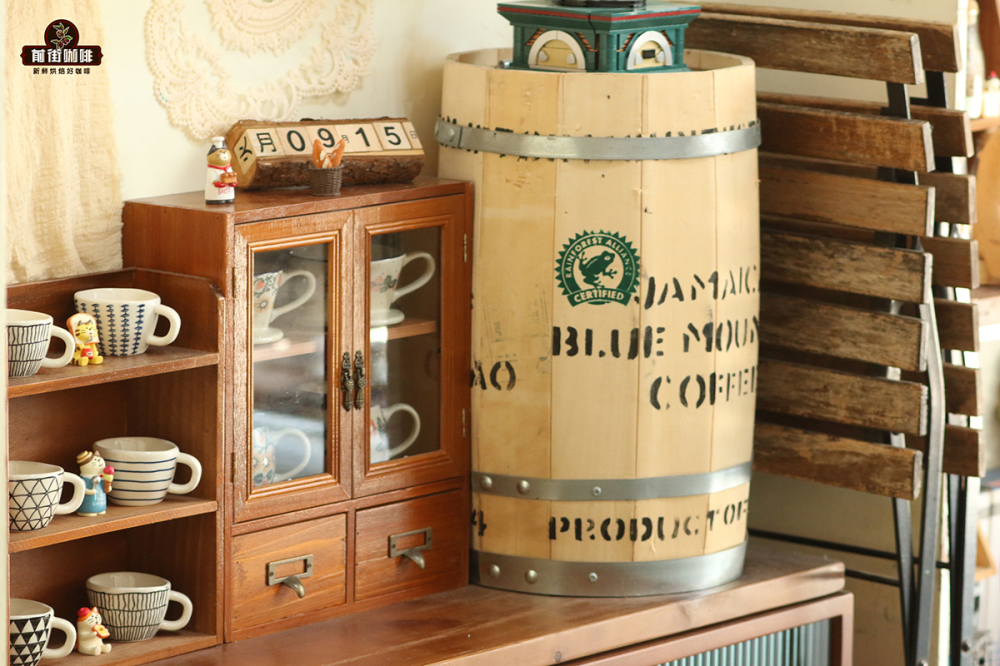
In recent years, as peach oolong flavored products have gained popularity, many customers at FrontStreet Coffee have asked whether we carry peach-flavored coffee beans. The answer is yes. FrontStreet Coffee's barista will bring out the Colombia Rose Valley, open the lid, and the reaction is remarkably consistent: "Wow, I want this. It smells amazing." In this article, FrontStreet Coffee introduces this sweet and enticing Colombian coffee.
Origin and Region
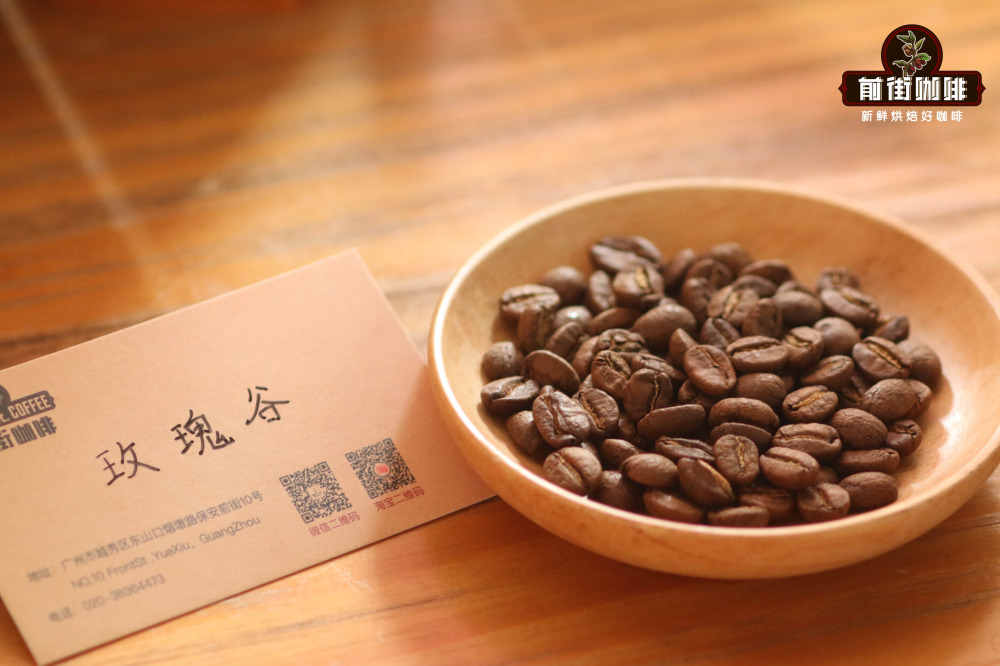
FrontStreet Coffee's Rose Valley comes from the Big Tree Estate in Colombia's Santander region. Santander lies in northern Colombia, bordering the Magdalena River to the west, with cultivation altitudes of roughly 1,400-1,600 meters and an area of 30,537 square kilometers. Santander is an important province that is rarely mentioned; it was in fact the first province in Colombia to grow coffee, and it now accounts for about 5% of the country's total coffee production. Through cupping, FrontStreet Coffee has found that beans from this region are known for intense flavors, a long-lasting aftertaste, and distinctive fresh herbal notes.
Farm and Processing
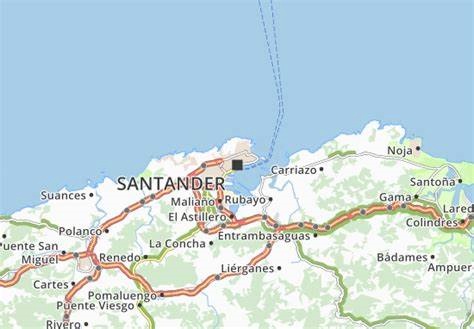
Vargas, the owner of Big Tree Estate, has been growing coffee there for up to 20 years. When the cherries are processed at the estate, only fully mature, bright red fruit is selected for picking. After washing removes the defective floating beans, the coffee goes through two rounds of anaerobic fermentation with special enzyme groups, and great attention is paid to drying. Temperatures that are too high are avoided, and a slow drying method is used instead.
Coffee Processing Method
When FrontStreet Coffee previously introduced Big Tree Estate, we briefly mentioned double anaerobic enzyme fermentation. Anaerobic fermentation is a processing method that has been widely adopted in recent years. It mimics red wine production, injecting carbon dioxide into a sealed container to drive out the oxygen, which slows the breakdown of sugars in the coffee mucilage in the absence of oxygen. The pH also declines more slowly, extending fermentation time and developing better sweetness and a more balanced flavor.

Anaerobic double enzyme washed processing adds special enzymes for a second anaerobic fermentation on top of anaerobic washing. After the cherries leave the anaerobic environment, the skin and pulp are removed by machine, and the beans with their mucilage are placed in plastic bags or other sealed containers for another round of anaerobic fermentation. Any process that undergoes these two rounds of anaerobic fermentation is called double anaerobic fermentation.
Coffee Varieties
Caturra Caturra is a natural variant of the Bourbon variety. It was discovered between 1915 and 1918 on a plantation in Minas Gerais, Brazil, where a group of genes in the Bourbon plants mutated and caused the trees to grow smaller, similar to dwarfism. The variety can be cultivated from low altitudes of 700 meters to high altitudes of 1,700 meters, showing strong altitude adaptability. The higher the altitude, the better the flavor, though the yield drops relatively.
FrontStreet Coffee Roasting Records
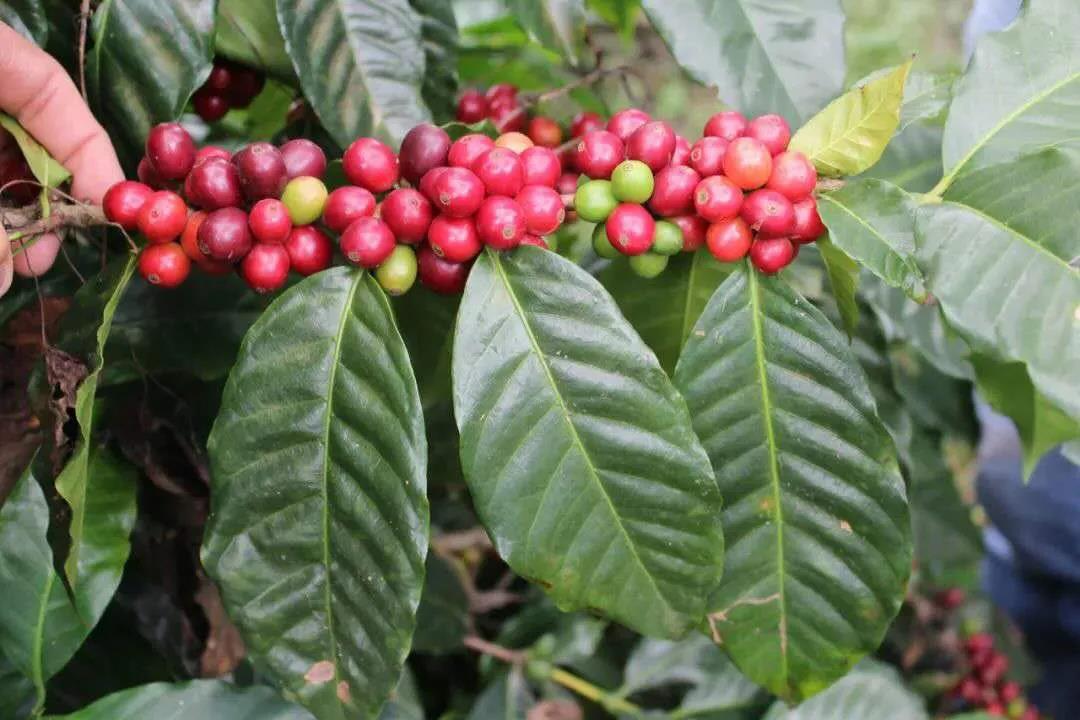
To highlight the sweet peach flavor of FrontStreet Coffee Colombia Rose Valley, FrontStreet Coffee decided to roast it to a medium-light level. The roaster used is a Yangjia 800N with a batch size of 500g. The bean entry temperature was 180°C, with an initial heat setting of 130 and the damper at 3. On reaching 140°C, the heat stayed the same while the damper was opened to 4. During this stage the beans gradually changed from the original green of raw coffee to yellow, and the grassy smell of the raw bean slowly disappeared as the coffee entered the dehydration stage. At 6'25", the beans reached the yellowing point and developed a sweet aroma like toasted bread. At 180°C, the heat was reduced to 100, with the damper remaining at 4.
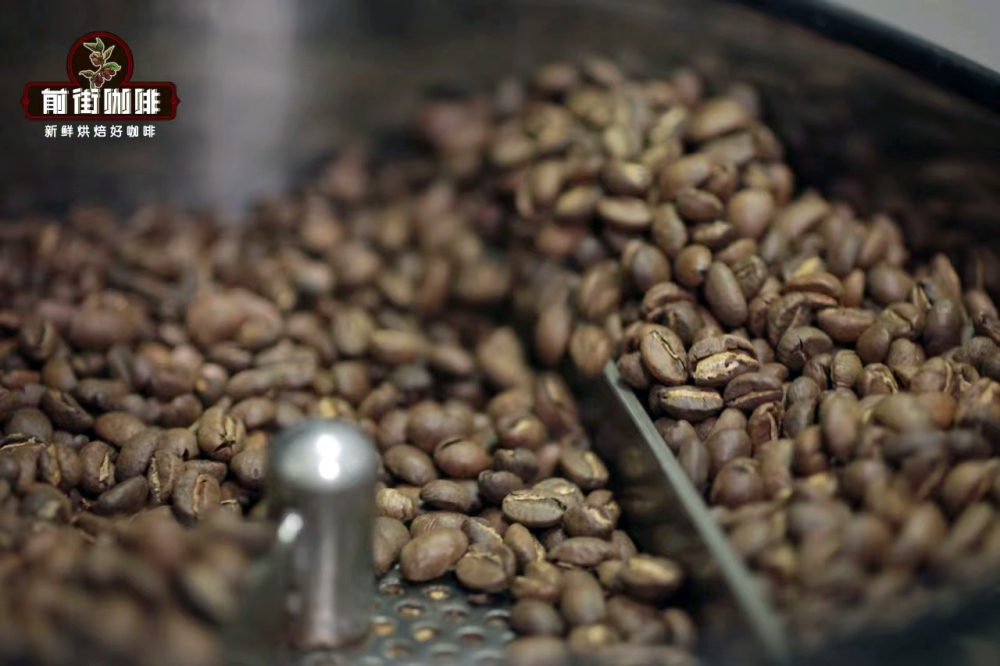
At 9'38", ugly wrinkles and black patterns appeared on the surface of the beans, and the toasted bread aroma clearly shifted into coffee aroma, which can be defined as the prelude to first crack. At this point it is important to listen carefully for the sound of first crack. First crack began at 10'20", with the damper opened to 4. After first crack, the coffee developed for 1'50" and was discharged at 196°C. Because FrontStreet Coffee Colombia Rose Valley is anaerobically processed, the dehydration time was extended to about 9 minutes to 9 minutes and 30 seconds to ensure the beans were thoroughly roasted and to avoid underdeveloped flavors. After first crack, it developed for 1'50" and was discharged at 196°C.
FrontStreet Coffee Cupping Report
FrontStreet Coffee cups its samples within 8-24 hours after roasting. The baristas typically use 200ml ceramic bowls. The cupping water temperature is 94°C, with the grind size controlled to a 70%-75% pass rate through a #20 standard sieve (0.85mm). The ratio is 11.1g of coffee powder to 200ml of hot water, that is 1:18.18, which extracts a concentration precisely within the 1.15%-1.35% golden cup range, with an immersion time of 4 minutes.
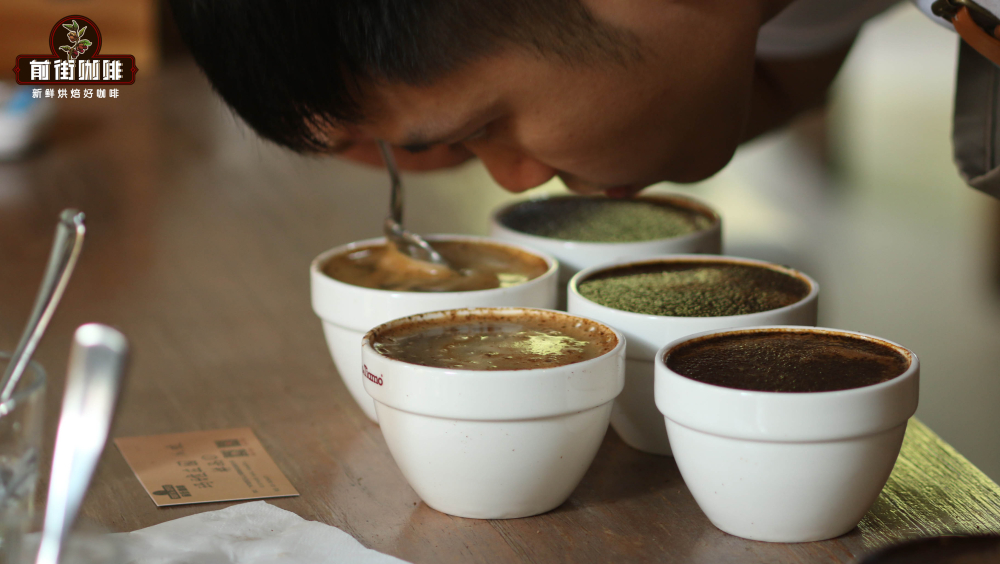
Dry Aroma: Rose, peach
Wet Aroma: Peach
Flavor: Wine chocolate, rose, cranberry, peach, cream
FrontStreet Coffee Brewing Suggestions
- Pay Attention to Grind Size
Because Rose Valley is an anaerobically processed coffee, its grind setting differs from that of traditionally processed beans. If you are used to the setting for traditional beans, the actual particle size when grinding anaerobic beans will come out coarser than you expect.

For example, when FrontStreet Coffee uses a setting of 10 on the EK-43s to grind washed Colombian beans, the pass rate through a #20 sieve is 80%. Using the same setting of 10 on FrontStreet Coffee Rose Valley yields a pass rate of 75% through the #20 sieve. To reach an 80% pass rate for Rose Valley, the grind setting needs to be adjusted finer. That is why, when brewing an unfamiliar coffee, you should never simply reuse your usual grind setting. Calibrate the grind size with a sieve instead; it is the most reliable approach.
- Water Temperature Issues
FrontStreet Coffee Rose Valley beans have a relatively loose structure, good water absorption, and release their compounds easily. FrontStreet Coffee therefore suggests keeping the starting water temperature between 90-91°C. Water that is too hot easily produces obvious bitterness, while water that is too cool leaves the coffee flavors dull and uninspired.

- How to Brew
For brewing parameters, pay attention mainly to grind size and water temperature; the other parameters stay the same as usual: 15g of coffee grounds and a 1:15 ratio.
During the bloom, anaerobically processed beans show pronounced water absorption, expansion, and gas release, which makes it easy to over-bloom. The typical sign is a surface covered with many holes. The bloom time is therefore not necessarily fixed at 30 seconds; watch the bloom itself. You can add water once the expanded coffee bed has stayed unchanged for 3 seconds. That is usually around 25-30 seconds.
FrontStreet Coffee suggests a three-stage pour: first 30ml of water for the bloom, then 120ml in the second stage, and finally 75ml in the third stage. The normal extraction time is about 1 minute and 40 seconds.
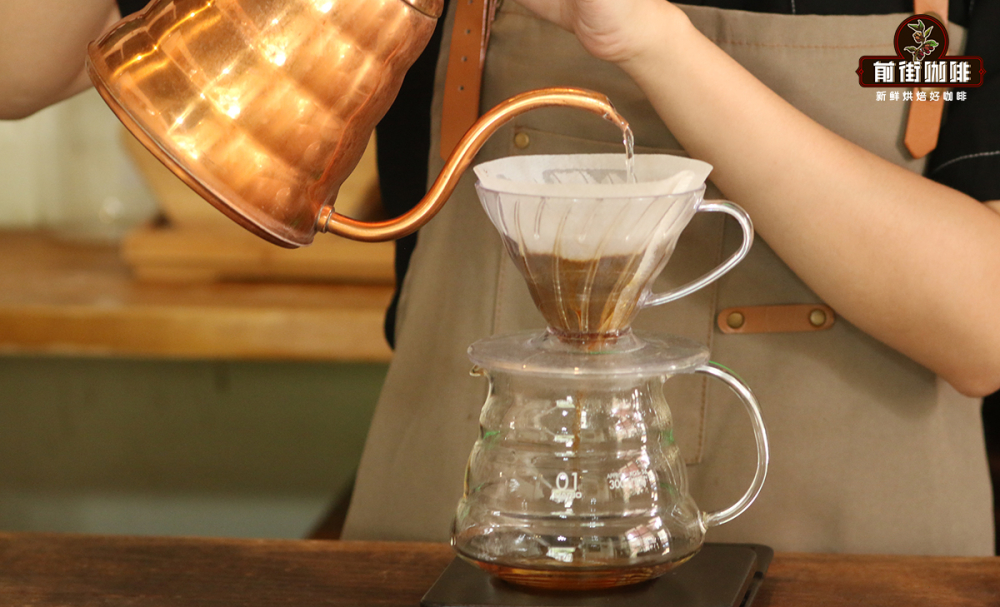
[FrontStreet Coffee Colombia Big Tree Estate Rose Valley]
Brewing Flavors: A stunning peach character with aromas of rose and liqueur-filled chocolate, rich and fragrant. The first sip is like drinking peach juice. It offers both the high-quality sweet-and-sour sensation of black grapes and the silky texture of cream toffee.
FrontStreet Coffee Recommendation
If anaerobic fermentation is what caught your attention here, FrontStreet Coffee's Colombia anaerobic natural coffee is a good companion cup. It is processed anaerobically and then sun-dried, and the oxygen-free fermentation converts more of the coffee into tropical fruit aromatics. Roasted medium-light and brewed as a pour-over, cold brew, drip bag, or in a moka pot, it shows passion fruit, grape, apricot, and preserved fruit notes with a rich, layered aroma.
For a more classic Colombian profile to compare against, FrontStreet Coffee's Huila is an excellent reference. Huila province, in the southern stretch of Colombia's central cordillera, is the country's most famous specialty coffee region, with farms planted above 1,500 meters and abundant water and humidity. FrontStreet Coffee's washed Huila is roasted medium-dark, which brings out dark chocolate and nutty sweetness, a moderate oiliness, and a full body. It suits not only a pour-over or French press but also a moka pot or an espresso machine, making an easy Americano or latte.
To brew the Rose Valley in front of you, follow the guidance above: grind finer than you would for a washed Colombian, use 15g of coffee at a 1:15 ratio, and keep the water at 90-91°C. Pour in three stages, 30ml for the bloom, then 120ml, then 75ml, aiming for a total extraction of about 1 minute and 40 seconds. The reward is the peach juice character, rose, and liqueur chocolate described above.
Important Notice :
FrontStreet Coffee is a long-established specialty coffee roaster in Guangzhou China, selling freshly roasted beans from its own farm in Yunnan as well as dozens of carefully selected single-origin beans from around the world for both pour-over and espresso. The products deliver consistently excellent quality and great value, with shipping within 24 hours. Guangzhou's FrontStreet Coffee shop is recommended by many coffee lovers, and the beans are now available online at the Tmall 。
FrontStreet Coffee has moved to a new address:
FrontStreet Coffee Address: 315,Donghua East Road,GuangZhou
Tel:020 38364473
 Scan and follow the En Gafei WeChat official account. Please indicate that the reprint comes from "En Gafei".