
Can Blue Mountain Coffee be used for iced coffee? Can Blue Mountain Coffee be used for espresso and how does it taste?

Jamaica's strict regulations and exacting requirements for coffee have established Blue Mountain Coffee as one of the world's most renowned premium coffees, pursued by many. FrontStreet Coffee's Blue Mountain comes from Clifton Mount Estate, characterized by a perfect balance of acidity, sweetness, and bitterness. FrontStreet has sold this Blue Mountain Coffee for many years, and it remains one of our most highly recommended coffees. Yet many people drawn by the Blue Mountain name are unsure what to look for, and customers visiting FrontStreet Coffee's physical store often ask what truly constitutes authentic FrontStreet Blue Mountain Coffee. The answer is simple — it's all written in this article. Follow the guide below and you'll understand!
History of Jamaica Blue Mountain Coffee
The history of Jamaican coffee dates back to the 18th century. In 1717, French King Louis XV ordered coffee cultivation in Jamaica. In the mid-1720s, Jamaica's Governor Sir Nicholas Lawes imported Arabica seeds from Martinique and began promoting cultivation in the St. Andrew region. Coffee trees were introduced to Jamaica and planted in the Blue Mountain range, which was divided into different grades — high-altitude Jamaican Blue Mountain Coffee, High Mountain Coffee, and Jamaican Coffee — with each grade commanding a different price.
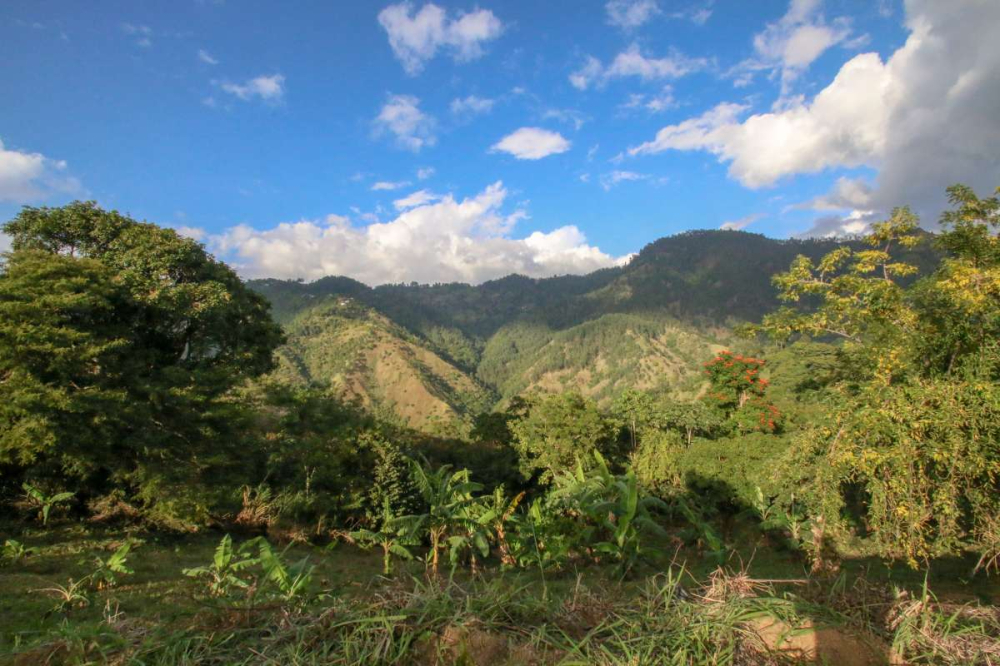
The Blue Mountain Range lies in the eastern part of Jamaica. On clear days, sunlight strikes the azure Caribbean Sea and the peaks reflect its brilliant blue glow — hence the name. The highest peak reaches 2,256 meters (coffee can only be cultivated below 1,700m; higher areas are protected as forest reserves), making it the tallest peak in the Caribbean and a famous tourist destination. Located within the coffee belt, the area boasts fertile volcanic soil, fresh unpolluted air, a humid climate with year-round fog and rain, average rainfall of 1,980 millimeters, and temperatures around 27°C. These conditions created the world-renowned Jamaican Blue Mountain Coffee — for years, the highest-priced coffee in the world.

What truly cemented Blue Mountain's world-class reputation began with a plan in the 1950s, when the Jamaican government launched a coffee revitalization program and established the CIB (Coffee Industry Board) to manage production. Through the CIB's strict regulations, Blue Mountain grades were clearly delineated, with the finest beans designated Blue Mountain No. 1. Only coffee from the core Blue Mountain region may be called Blue Mountain Coffee — the area sits above 900 meters, the highest in the range, where elevation enhances flavor expression.
All coffee grown in the Blue Mountain region is Typica, processed using the washed method, which guarantees the beans' excellent quality. (During the same era, natural-processed coffee showed far more defects.) Only beans screened at 17 or larger from this region can be called Blue Mountain No. 1.
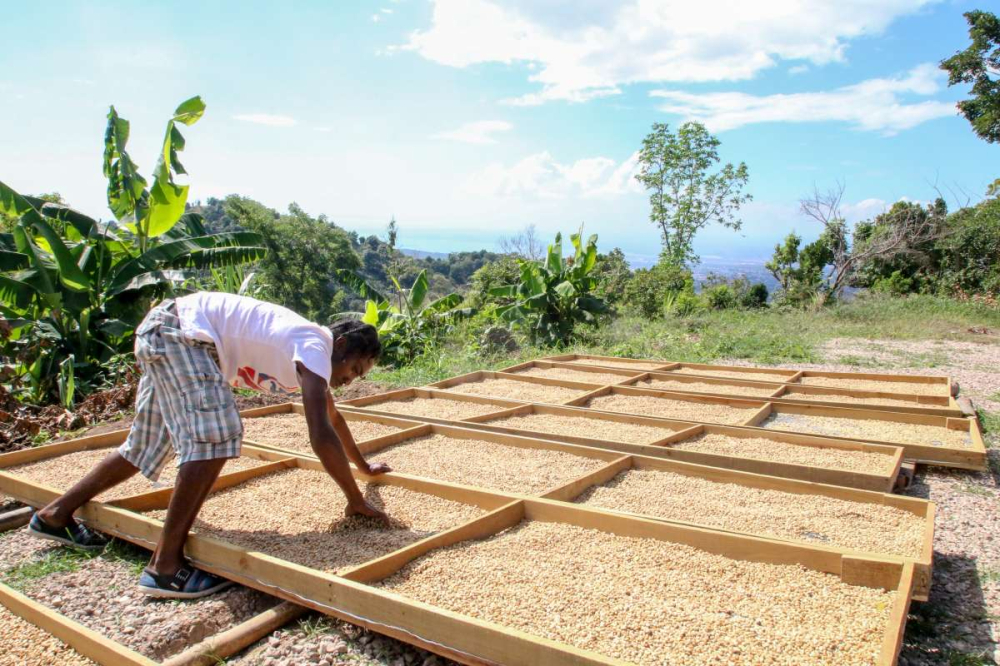
Authentic FrontStreet Blue Mountain Coffee currently on the market is washed-processed. After hand-harvesting, a preliminary screen removes unripe and overripe cherries before pulping, with the whole step completed within 12 hours. This is followed by traditional washed fermentation and then drying on concrete patios; extended slow sun drying enhances the coffee's flavor. The beans are air-dried to 11%-13% moisture, then bagged and placed in warehouses for stable aging. Warehouse temperature is controlled at 24-25°C with humidity managed by dehumidifiers. The coffee ships only after 2-3 months, once the flavors have stabilized and matured.
When customers place orders, the coffee undergoes small-batch, low-temperature hulling, polishing, and removal of silver-skin dust, with manual sorting of defective beans — broken, discolored, or mold-infected. Each skilled worker can sort only about 75 pounds of green beans per day. Beans are moved between workstations in wooden basins to prevent breakage and other handling defects. Finally, the coffee is sealed in Jamaica Blue Mountain's signature wooden barrels, and the CIB Regulatory Section inspects each batch to ensure the flavor meets standards before air export.
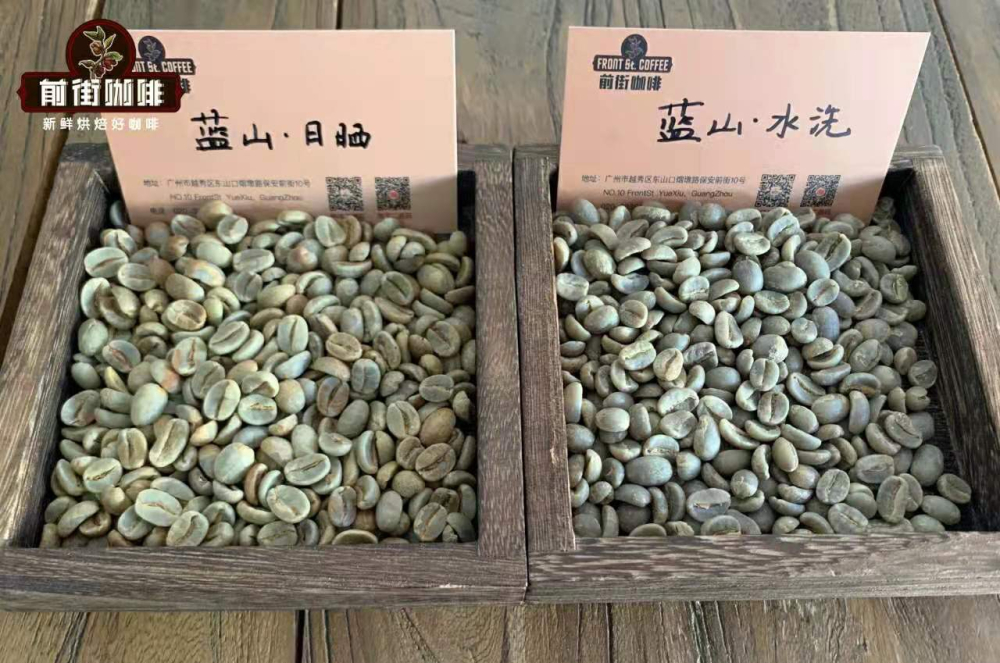
With the significant changes in the coffee market over the past decade, the Blue Mountain production landscape has evolved too. In 2020, Blue Mountain for the first time launched a natural-processed version, breaking the washed-only tradition. Modern high-precision natural processing can indeed achieve low defect counts and high quality, with flavor characteristics distinct from the washed style: natural-processed FrontStreet Blue Mountain beans show noticeably more pronounced sweetness.
Beyond processing experiments, 2020 also saw the release of micro-batch FrontStreet Blue Mountain Geisha beans. This Geisha was cultivated under the guidance of the renowned Hartmann family of Panama, whom Jamaica invited in as consultants. FrontStreet Coffee imported a 15kg barrel in 2020 for trial roasting; the cup distinctly displayed Geisha character — citrus and honey pomelo sweet-tart flavors, jasmine florals, and honey-like sweetness.
Famous Estates Producing Jamaican Blue Mountain Coffee
Jamaica's four major Blue Mountain estates are Clifton Mount Estate, Stoney Grove Estate, Golden Cup Estate, and RWS Coffee Estate. Stoney Grove works primarily with Japanese companies and has limited recognition elsewhere, with 80 years of history. Golden Cup Estate has an even shorter history of just 20 years, but it merged two century-old estates and operates with more advanced management. RWS Coffee Estate merged three century-old estates, likewise aiming for the stable development of Blue Mountain coffee.
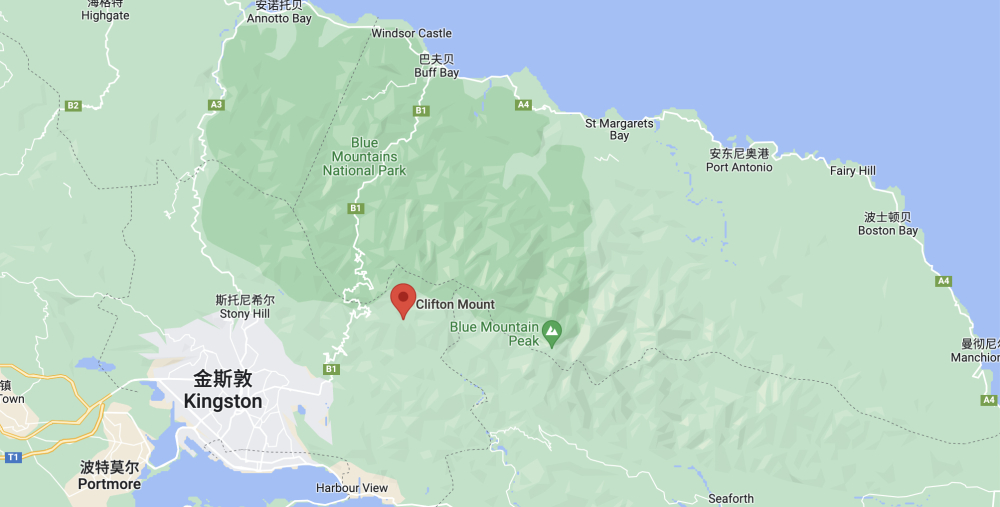
FrontStreet's Blue Mountain beans come from Clifton Mount Estate, which has 200 years of history and is the only estate in the entire Blue Mountain region holding "Rainforest Alliance" certification.

Clifton Mount's Blue Mountain production history dates to the mid-18th century (around 1750), and it has been managed by the current Sharp family since 1978. The estate sits on the scenic Clifton Mount, with cultivation and green-bean processing at an average altitude of 4,300 feet (1,310.64 meters). The elevation, daytime mist, ample sunlight and rainfall, and mineral-rich soil give the trees excellent growing conditions while slowing cherry maturation, allowing the fruit more time to develop aromatic compounds. Coffee grows on rugged mountain slopes, making harvesting extremely difficult. Each spring during harvest, the Sharp family brings in skilled workers to hand-pick appropriately ripe cherries in the mountains.
After taking over, the Sharp family began by clearing the wild, overgrown jungle within the farm, then introduced various processing equipment and invested in solar power stations, sewage treatment plants, and BMCP processing facilities. As the only "Rainforest Alliance"-certified coffee estate in the region, all operations follow environmental principles: water used for green-bean processing is repurposed for agricultural irrigation, and removed fruit pulp is fermented into organic fertilizer for flower cultivation.

Clifton Mount places harvested cherries in water pools, using flotation to separate ripe from unripe beans. Conveyor water flow then transports the ripe cherries for pulping. Beans with their mucilage and parchment go into pools to ferment. After fermentation, water agitation removes residual mucilage, and the clean parchment beans are dried to 11-12% moisture before being sent to the BMCP facility to rest for one month — a step that allows flavor maturation and stabilization of the bean's internal structure and water activity.
Flavor Characteristics of FrontStreet Clifton Mount Estate Blue Mountain No. 1 Coffee
Roasting is the cooking step of gourmet coffee — quality ingredients combined with the right technique elevate the final result. The ultimate goal of roasting is a delicious cup. FrontStreet Coffee's roasting philosophy aims to present the most classic flavor of each growing region while highlighting the character of the individual bean — the bright lemon acidity of Yirgacheffe, for instance, or the herbal richness of Indonesian Mandheling. For FrontStreet Blue Mountain, the emphasis is naturally on classic Blue Mountain flavors. FrontStreet uses a medium-dark roast to bring out the chocolate and nut aromas to the fullest while preserving soft acidity and sweetness, creating an overall balanced cup.

Immediately after roasting, FrontStreet Coffee cupped the Blue Mountain. The dry aroma revealed nuts, sweet melon, and chocolate. After adding hot water, notes of oolong tea, caramel, honey, and dark chocolate emerged. The flavor features rich dark chocolate, roasted hazelnuts, cream, and brown sugar — clean, clear flavors with a rich mouthfeel and lasting aroma. To ensure everyone experiences these aromas, FrontStreet ships beans roasted within 5 days, so customers receive them at the optimal tasting stage. Below, FrontStreet explains the key factors for brewing FrontStreet Blue Mountain Coffee using the pour-over standards from its physical store.

FrontStreet Coffee: Jamaica Blue Mountain No. 1 Coffee Beans
- Farm: Clifton Mount Estate
- Location: Newcastle Region
- Average Altitude: 4,300 feet (1,310.64 meters)
- Processing Method: Washed
- Variety: 100% Arabica Typica
FrontStreet Coffee Barista's Pour-over Recommendations
To enjoy the best flavors of FrontStreet Blue Mountain Coffee, use freshly roasted beans for better flavor preservation. A KONO dripper extracts a fuller, more balanced flavor and mouthfeel.

Use 15g of coffee with a coarse grind (75% pass-through on a #20 sieve), a ratio of 1:15, and water at 86-88°C.
Segmented Brewing:
1. First pour: 30g water, bloom for 30 seconds.
2. After blooming, pour the second segment — 100g water in circles from the center outward. This pour can be done slowly, since Blue Mountain coffee is very extraction-resistant and needs sufficient contact time to release its aromas. Wait until the water level drops to half before continuing.

3. When the coffee bed is about to be exposed, pour the third segment of 95g water, totaling 225g. Wait for filtration to complete, then remove the dripper. Total brewing time is 1 minute 50 seconds.
FrontStreet Blue Mountain No. 1 Coffee Flavor Profile:
Nuts, chocolate, balanced sweet-sour-bitter, creamy richness.
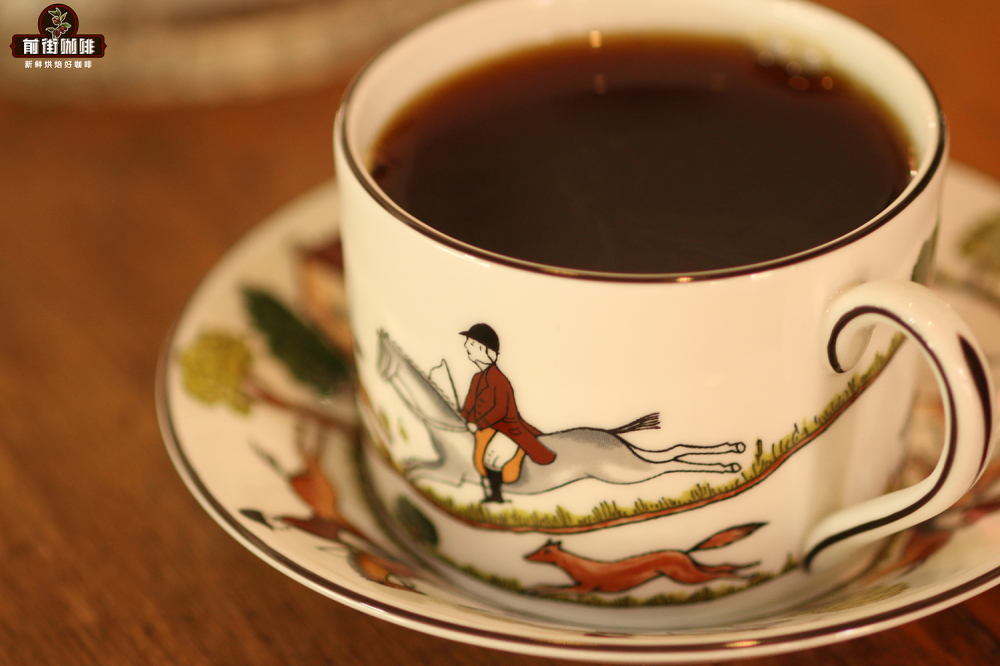
Brewing Blue Mountain SOE (Single Origin Espresso)
As coffee culture spreads, more and more specialty shops no longer limit themselves to pour-over extraction but use more demanding methods to "squeeze out" flavor from quality beans. SOE (Single Origin Espresso), frequently seen in recent years, is one such example. Below, FrontStreet Coffee uses the Jamaica Blue Mountain No. 1 introduced today to briefly explore how to extract a delicious Blue Mountain SOE.
Step 1: Choose a grind size and extract a shot
To make Blue Mountain SOE, start with the standard espresso formula: a 1:2 coffee-to-liquid ratio over 25-30 seconds. Dose depends on basket capacity — FrontStreet's basket holds 20g comfortably, so we extract 40g of liquid from 20g of grounds, keeping the time within 25-30 seconds as our extraction plan. First select a visually appropriate grind size and pull a shot, using the time difference to determine how much the grind needs adjusting.

Before extraction, dry the portafilter basket, grind a double shot, and weigh it on a scale, adjusting until it reaches 20g. Use a distributor to level the grounds, then apply even vertical pressure with a tamper to compact the puck, ensuring more stable extraction.

Step 2: Adjust parameters to keep the time within the extraction formula
The main variable here is grind size: if the flow runs fast and the shot finishes shorter than last time, grind finer; if the flow is slow and the time longer, grind coarser. Dialing in the grind is a matter of feel — with practice you'll know your grinder and get there in one shot. If the time is within 5 seconds of target, adjust in 0.2 increments; if the gap is larger, be bolder and move by 0.5-1 increments. Even if you overshoot from too long to too short, you can lock in the correct range and narrow it down gradually.

Step 3: Taste the espresso straight, then make a Blue Mountain Americano or Latte
Freshly pulled Blue Mountain espresso has thick, beautiful crema. Bring it to your nose and you'll immediately catch caramel biscuit, toasted spice, and dark chocolate aromas. The first sip jolts the taste buds with the inherent bitterness and intensity of the crema layer, but as you swallow, the bitterness dissipates and delicate coffee aromas flood back across the palate along with a pleasant sweet aftertaste.

If the intensity of straight espresso isn't for you, add ice water or warm water at a 1:4 ratio for a refreshing, mellow SOE Blue Mountain Americano, or add steamed fresh milk at a 1:6 ratio to soften the mouthfeel into a delicious SOE Blue Mountain Latte.

FrontStreet Coffee Recommendation
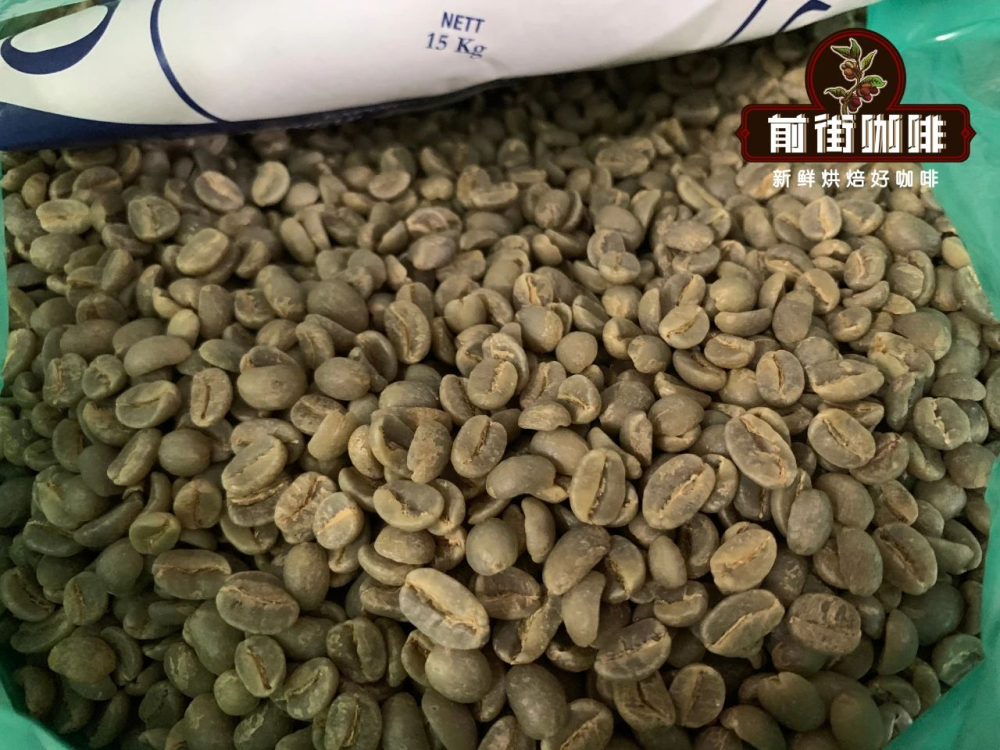
Blue Mountain's greatest strength is balance — no harsh fruit acidity, no heavy roast bitterness, just an even blend of sweetness, acidity, bitterness, and aroma with notes of cream, caramel, chocolate, nuts, and honey. Its rarity adds to the legend: the entire Jamaican Blue Mountain region produces less than 2,500 tons a year, and Japan has historically bought over 70% of that output. To be sure you're getting the real thing, look for certification — authentic FrontStreet Blue Mountain comes with a certificate issued by the Jamaican government and proof of origin, and traditional Blue Mountain ships in wooden barrels of 15, 45, or 70 kg bearing detailed batch information; genuine green beans are also uniformly plump, slightly upturned at both ends, and green in color. Since 2003, certified Blue Mountain green beans have been officially exported to markets worldwide, so consumers can now buy authenticated coffee through proper channels.
FrontStreet's Jamaica Blue Mountain No. 1 — the highest grade — comes from the historic Clifton Mount Estate, growing coffee since around 1750 at an average of 4,300 feet (1,310.64 meters), roasted medium-dark and shipped within 5 days of roasting. For pour-over, rest the beans 4-7 days from the roast date, then brew 15g on a KONO dripper at a slightly coarser-than-light-roast grind (about white granulated sugar), 1:15 ratio, and 87-88°C water — too hot invites scorching bitterness, too low leaves the cup flat — with a three-stage pour of 30g blooming 30 seconds, then to 120g, then to 225g. Blue Mountain also shines beyond pour-over: in a moka pot, use a slightly finer grind, start with hot water, heat over medium-low, and remove from the heat just before the brew finishes to intensify its chocolate, caramel, and nut character while keeping its signature balance — and with milk in a latte or flat white it performs beautifully too.
Important Notice :
FrontStreet Coffee is a long-established specialty coffee roaster in Guangzhou China, selling freshly roasted beans from its own farm in Yunnan as well as dozens of carefully selected single-origin beans from around the world for both pour-over and espresso. The products deliver consistently excellent quality and great value, with shipping within 24 hours. Guangzhou's FrontStreet Coffee shop is recommended by many coffee lovers, and the beans are now available online at the Tmall 。
FrontStreet Coffee has moved to a new address:
FrontStreet Coffee Address: 315,Donghua East Road,GuangZhou
Tel:020 38364473
 Scan and follow the En Gafei WeChat official account. Please indicate that the reprint comes from "En Gafei".

